Castiglion Balzetti: A Medieval Castle in Sovicille, Italy
Site at a Glance
- Rating
- 5
- Popularity
- Very Low
- Country
- Italy
- Primary era
- Medieval
- Eras represented
- Medieval
- Civilizations
- Republic of Siena
- Site type
- Military
- Remains
- Castle
On this page7 sections
History
Castiglion Balzetti is a medieval castle in the Alto Merse nature reserve, in Sovicille, Siena province, Italy. The Sienese statutes of 1262 identify the site through its owner, the Augustinian Baldino Balzetti, a member of a Christian religious order following the Rule of St Augustine. Its beginnings may be older, as the surrounding Metalliferous Hills are rich in iron and water.
Ownership and metalworking
In the early fourteenth century, the site passed from the Scotti, a mercantile family involved in metallurgy, to the powerful Saracini family of Siena. Their holdings also included cultivated fields and vineyards. Around this time, an enterprise divided into shares held the surrounding woods, the building, and the village. Most shares belonged to wealthy Sienese citizens, while local residents held some as well.
Castiglion Balzetti stood above a village whose inhabitants worked in mining and metalworking. As iron production shifted to larger works on the Merse River, many workers from the earlier industry were left without work. During the fourteenth century, the Val di Merse district suffered repeated devastation, and raids by mercenary companies made business increasingly insecure. Siena’s economy also became more dependent on agriculture.
Decline and later ownership
By the end of the Siena War, a mid-sixteenth-century conflict that ended Siena’s independence and brought the city under Medici rule, the village had declined and been abandoned. The settlement at the summit remained, but was converted into a farm.
Toward the end of the nineteenth century, the Spannocchi family transferred Castiglion Balzetti and the neighboring Spannocchia estate to Delfino Cinelli, an entrepreneur who later became a writer. Inspired by the nickname Castiglion che Dio sol sa, meaning Castiglion that only God knows, he wrote a novel of the same name. He also tried to reopen an old mine for silver-bearing galena, a lead-bearing mineral containing silver. At his death, he donated the historic property to the Italian state. Recent restoration work saved the castle’s central part.
Remains
Courtyard and entrance
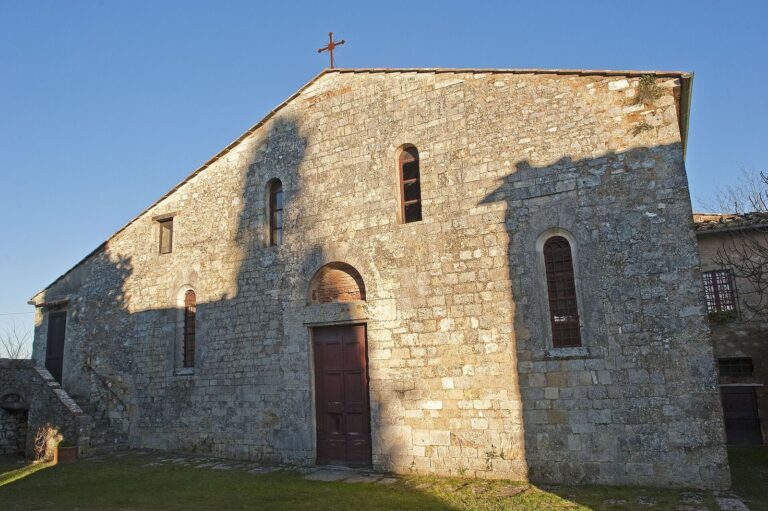
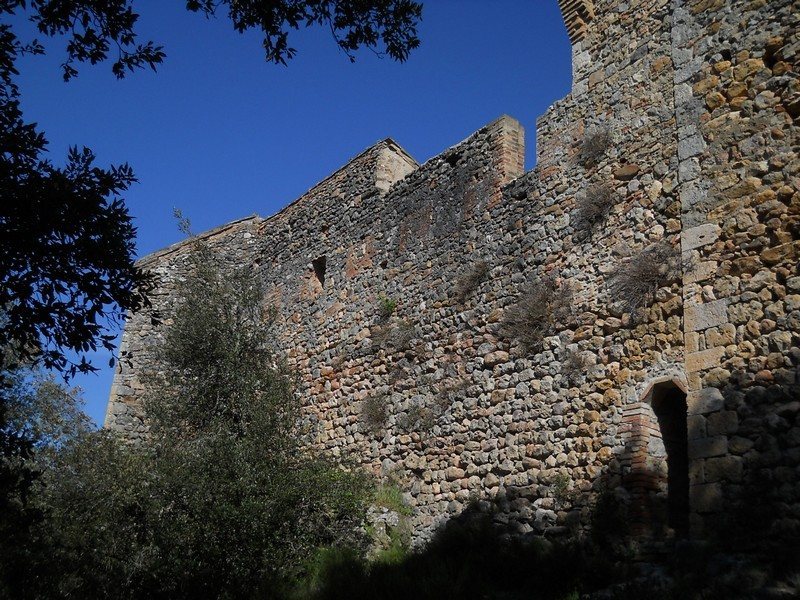
The castle’s layout centers on a courtyard enclosed by walls, with its main entrance on the southern side. A semicircular stone arch marks the entrance, which also has machicolations, defensive openings through which defenders could drop objects onto attackers. A gate now closes the opening.
Keep and attached buildings
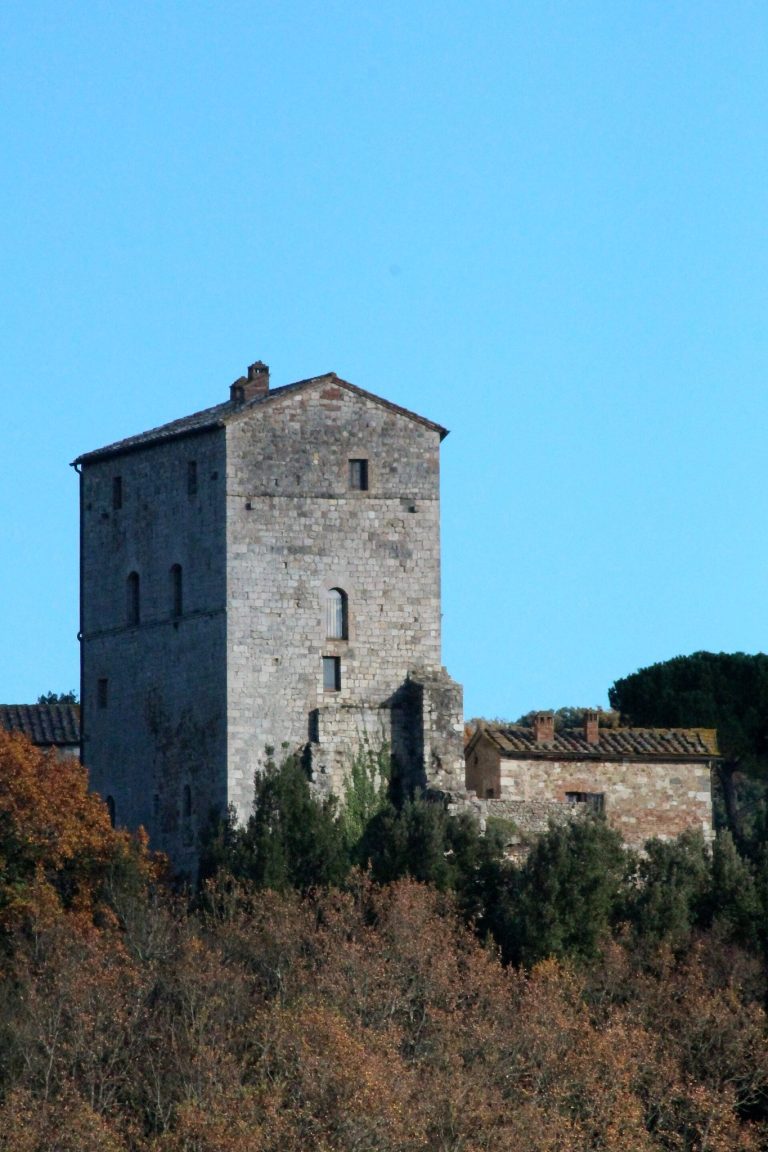
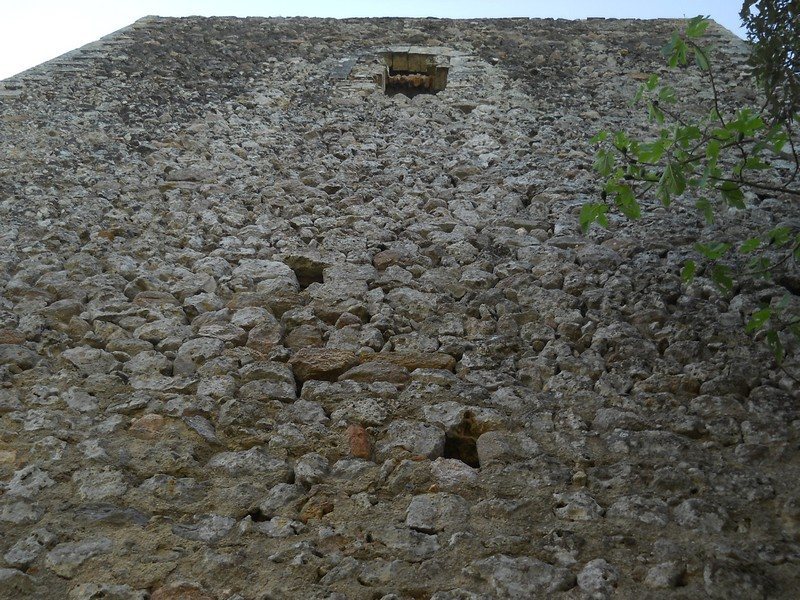
The courtyard’s central feature is a large rectangular stone keep, the castle’s principal fortified tower. Its windows have rounded Romanesque arches, characteristic of this medieval architectural style. An oven, chapel, water cistern, and probable storage rooms and stables are attached to the keep’s walls.
Water-powered works
Tax assessments list a water-powered installation beside the nearby Ricausa stream, probably a forge equipped with a water-powered hammer.