Castello di Montarrenti: A Medieval Mining Castle in Italy
Site at a Glance
- Rating
- 5
- Popularity
- Very Low
- Country
- Italy
- Primary era
- Medieval
- Eras represented
- Medieval
- Civilizations
- Republic of Siena
- Site type
- Military
- Remains
- Castle
On this page9 sections
History
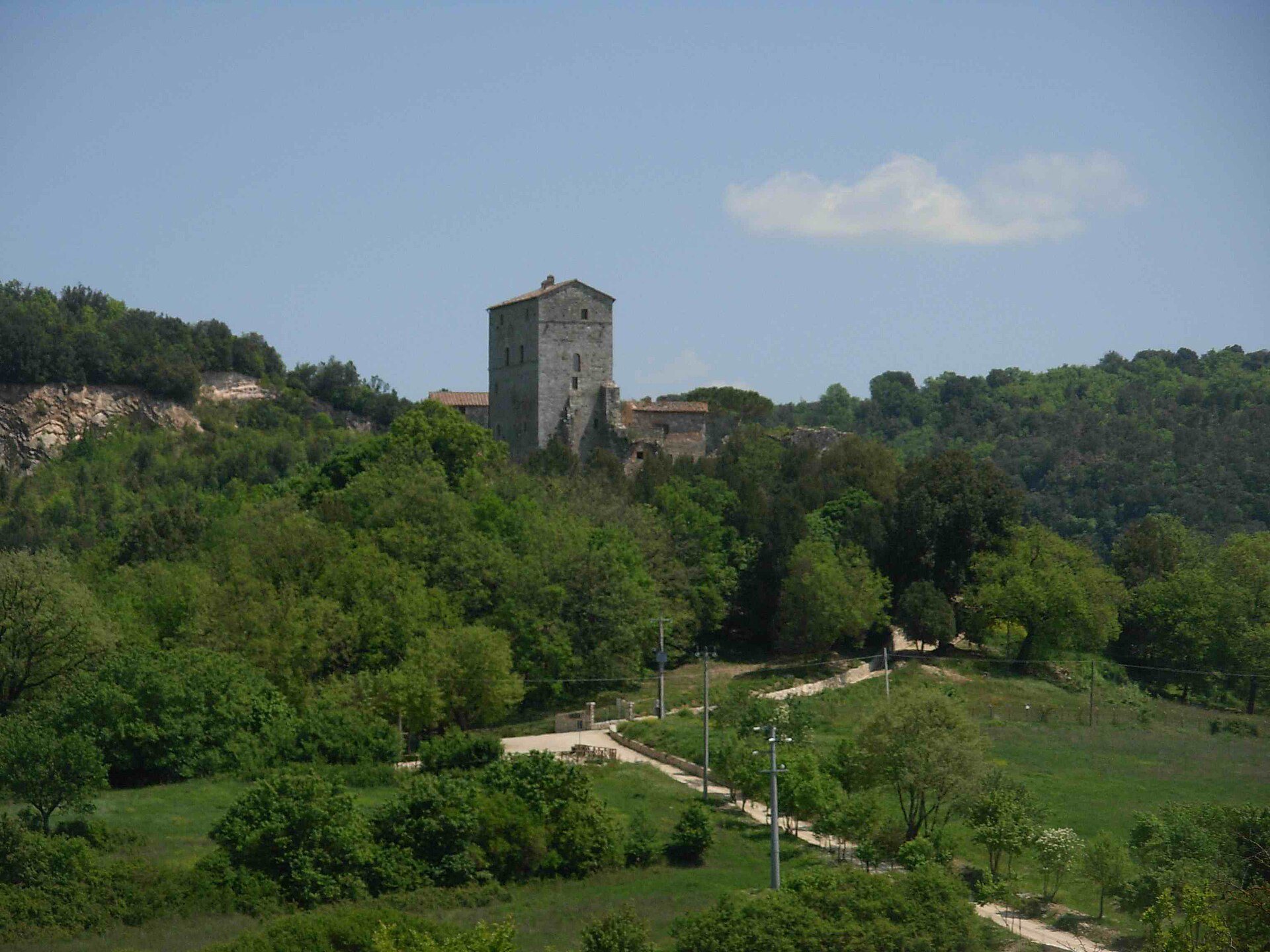
Castello di Montarrenti is a historic castle in Sovicille, Italy, whose origins reach back to the eighth century. It developed from a small settlement associated with mining and metalworking at the foot of the hill and later became a curtis, an early medieval estate-centered settlement combining residential, agricultural, and administrative functions. Its later history was closely tied to the silver mines of the Metalliferous Hills and to Siena’s expansion through the region.
From settlement to fortified site
The settlement was burned in the tenth century and rebuilt behind a palisade, a defensive barrier made from upright wooden stakes. Within this enclosure, an initial fortified nucleus took shape. From the twelfth century, the wooden structures were progressively replaced with stone buildings, apparently as commercial growth made further investment in the site possible.
The earliest surviving record of the castle is an episcopal bull issued in 1156 by the bishop of Volterra. The site was closely connected with nearby silver mines. In 1178, Cattaneo da Montarrenti was appointed by the Diocese of Volterra, the territorial administration of the Catholic Church centered on Volterra, to manage the mines on behalf of the Commune of Siena, the self-governing civic authority of medieval Siena.
Lords and Sienese authority
Documents from 1200 and 1216 link the lords of Frosini, members of the family of the counts of Gherardesca, with the lords of Montarrenti. The Montarrenti family was of Lombard ancestry and belonged to the kinship network associated with the Aldobrandeschi.
On 5 October 1217, the consuls of Montarrenti swore allegiance to the Commune of Siena. This act took place as Siena completed the expansion of its influence across the Metalliferous Hills. Between 1217 and 1271, the castle, the church of Santa Maria, and the village below the hill were enclosed within a perimeter wall and supported a considerable population. Siena appointed a podesta, a civic chief magistrate responsible for administering a town or territory, and later replaced that office with a lower-ranking official directly subordinate to Siena’s podesta.
Decline and changing ownership
The village was gradually abandoned in a later period, possibly in part because the mines were exhausted. After important silver deposits were discovered in Tyrol, the European center of silver extraction shifted there. Records after the fourteenth century become sporadic and focus mainly on valuable marble from a nearby quarry and on changes in ownership.
During the fourteenth century, the castle belonged to Giovanni Meschiati of the Petroni family, which also controlled extensive nearby lands, including the hermitage of Santa Lucia near Rosia beyond the Pia bridge. Ownership passed to the Dati family in 1457 and later to the Ghini family. Documents from 1720 describe the castle and village as already being in ruins.
The Province of Siena, which owns the property, has since recovered the castle’s structures. Part of the restored complex was adapted for the Provincial Montarrenti Astronomical Observatory, managed by the Unione Astrofili Senesi, a Siena-based association of amateur astronomers, and for the Siena section of the Italian Alpine Club.
Remains
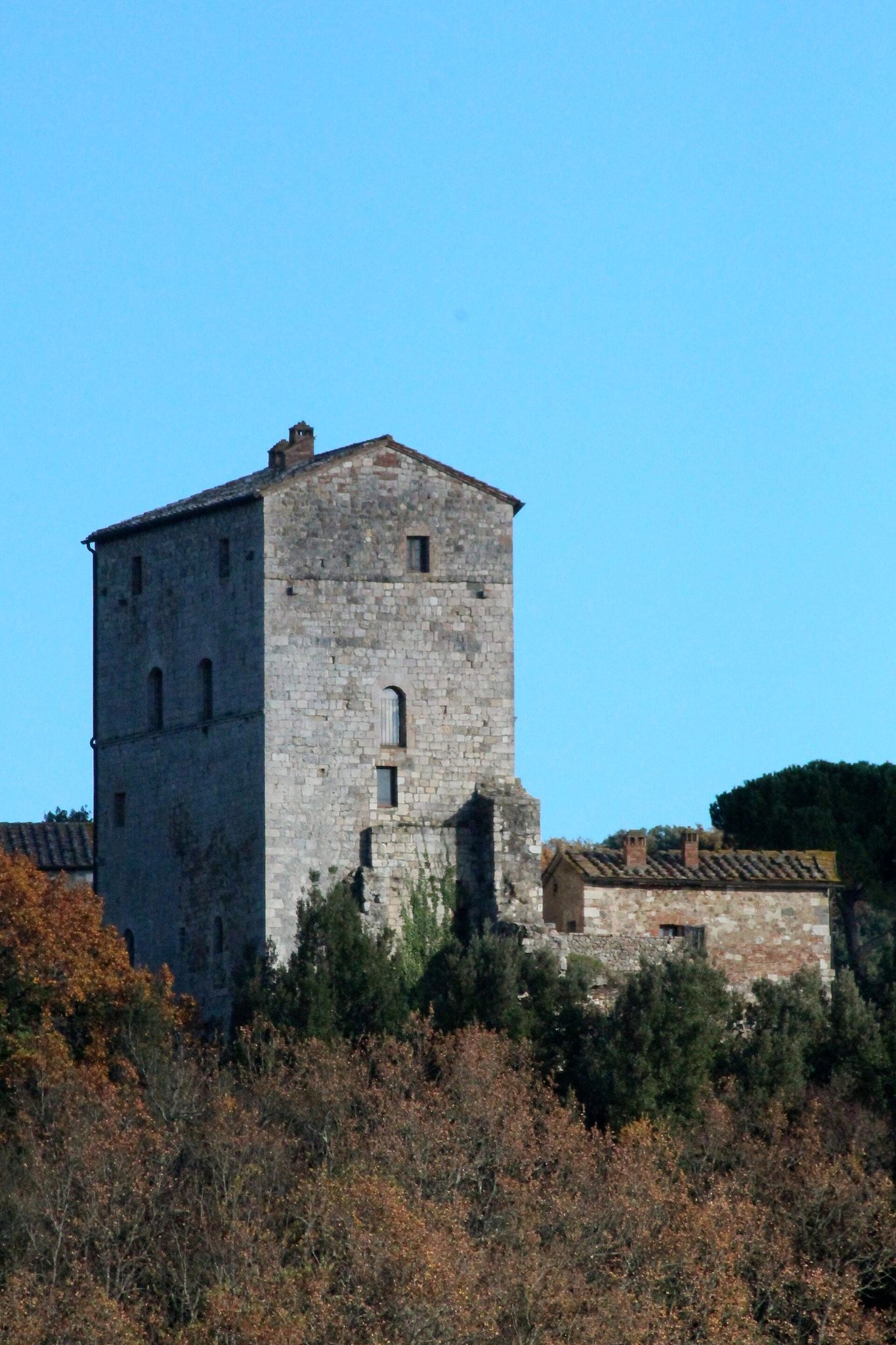
The historic settlement occupied the hill and its lower slopes. The castle, the church of Santa Maria, and the village were enclosed by a perimeter wall at the base of the elevation. Surviving fortifications and two towers preserve elements of the stone defensive complex, while restored buildings now support modern institutional uses.
Fortifications
Castle towers
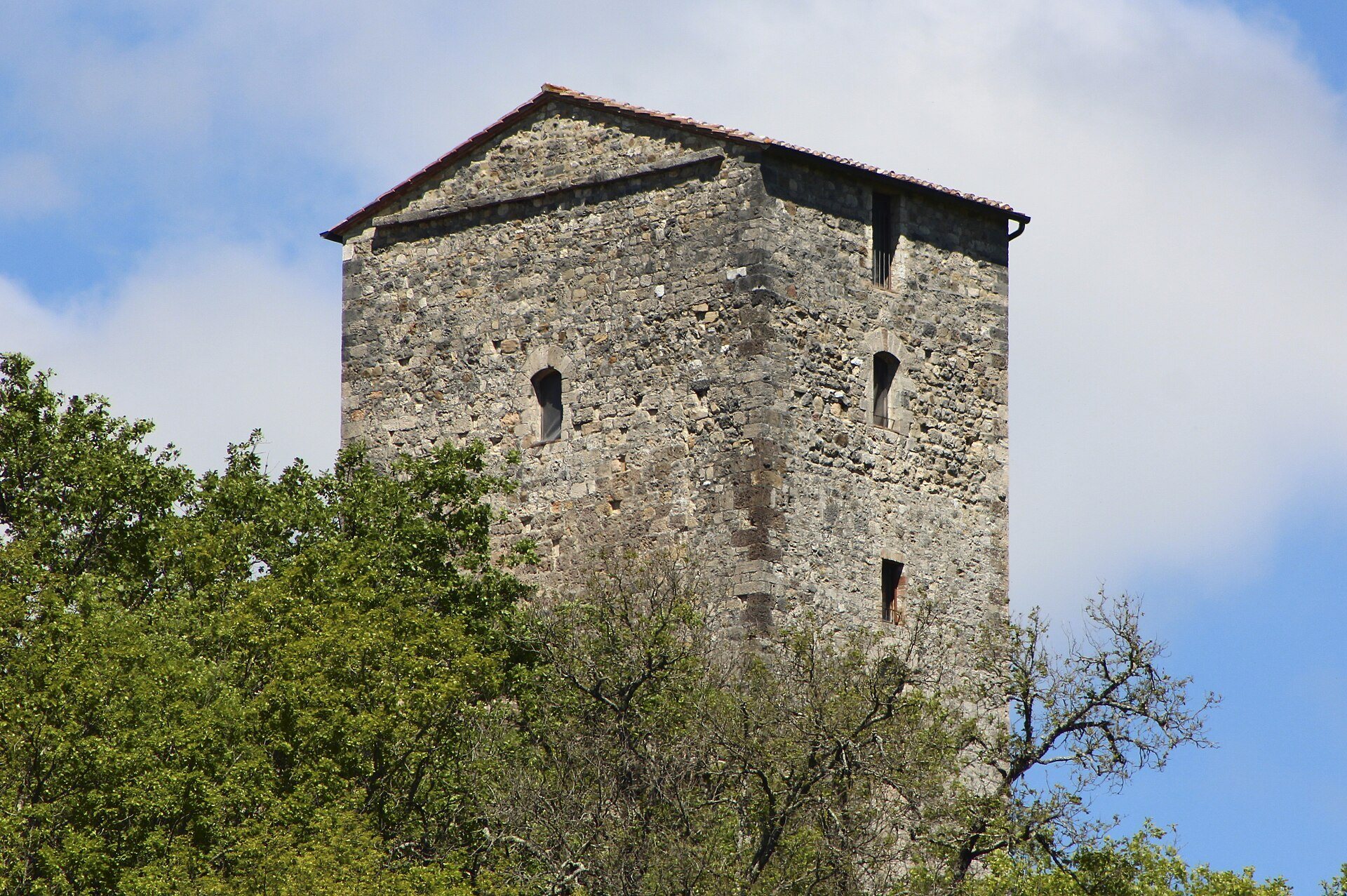
Two castle towers survive, with Gothic or arched windows and narrow loopholes, openings used for observation or defense. The towers were originally crenellated, with raised alternating sections along their tops. Their crenellations were later lowered, and both towers now have conventional gabled roofs. A carved coat of arms remains above the entrance to the taller tower.
Perimeter wall
Sections of the perimeter wall remain around the settlement. The wall includes an entrance protected by a projecting forebuilding, which extends outward from the main line of the enclosure. Together, these elements preserve part of the boundary that once surrounded the castle, the church, and the village below the hill.
Restored complex
The recovered structures accommodate the Provincial Montarrenti Astronomical Observatory and the Siena section of the Italian Alpine Club. Their present use forms part of the continued physical life of the restored castle complex.