Castelvecchio: The Ancient Fortified Village of Castel Goffredo


Site at a Glance
- Rating
- 4.5
- Popularity
- Very Low
- Country
- Italy
- Primary era
- Medieval
- External website
- Open
- Eras represented
- Medieval
- Civilizations
- Holy Roman Empire
- Site type
- Military
- Remains
- Fortified Town
On this page7 sections
History
Castelvecchio is the ancient fortified village of Castel Goffredo in Italy, formed within the ruins of a Roman castrum, a fortified settlement or military camp. Its medieval urban nucleus developed between 900 and 1000, and the settlement later became known as Castellum vetus, meaning “old castle.” Enclosed by walls and a moat, it formed the historic core of the town.
Early settlement and Gonzaga rule
The village entered the political sphere of the Gonzaga, the ruling dynasty of Mantua and its associated territories, in the fourteenth century. An act drawn up by the notary De Gandulfis on 20 September 1337 records the town’s submission to the Gonzaga of Mantua and describes it as the “castle of the lands of Castro Guyfredo.”
Castelvecchio is also mentioned in a document dated 12 June 1480. In that agreement, Ludovico Gonzaga, bishop of Mantua and lord of Castel Goffredo, reached an arrangement with the municipality concerning possession of local land. The record places the fortified village within the territorial and administrative history of the Gonzaga lordship.
Sixteenth-century memory and later change
A lane in Castelvecchio was named after Charles V, the sixteenth-century Habsburg emperor of the Holy Roman Empire, to commemorate his visit on 28 June 1543 to Marquis Aloisio Gonzaga, lord of Castel Goffredo. The medieval castle that once formed part of the village later disappeared, while the settlement’s historic boundaries and several associated buildings continued to define the area.
The Church of Santa Maria del Consorzio, formerly the oldest church in the city, was demolished in 1986. Its fifteenth-century bell tower and frescoed apse were preserved. In 1999, the local architect and artist Stefano Santi renovated Castelvecchio, reorganizing the paving and underground utilities and adding a small amphitheater in the piazza.
Remains
Castelvecchio survives as an urban area whose historic boundaries are marked by the garden of Palazzo Gonzaga-Acerbi to the north, Vicolo Remoto and Vicolo Cannone to the east, Piazza Mazzini to the south, and Piazzetta Castelvecchio and Vicolo Castelvecchio to the west. The settlement was organized as a walled village with a moat, and its recorded components include streets, squares, civic and religious buildings, defensive works, and the former fortress known as the Rocca.
Entrance and defensive features
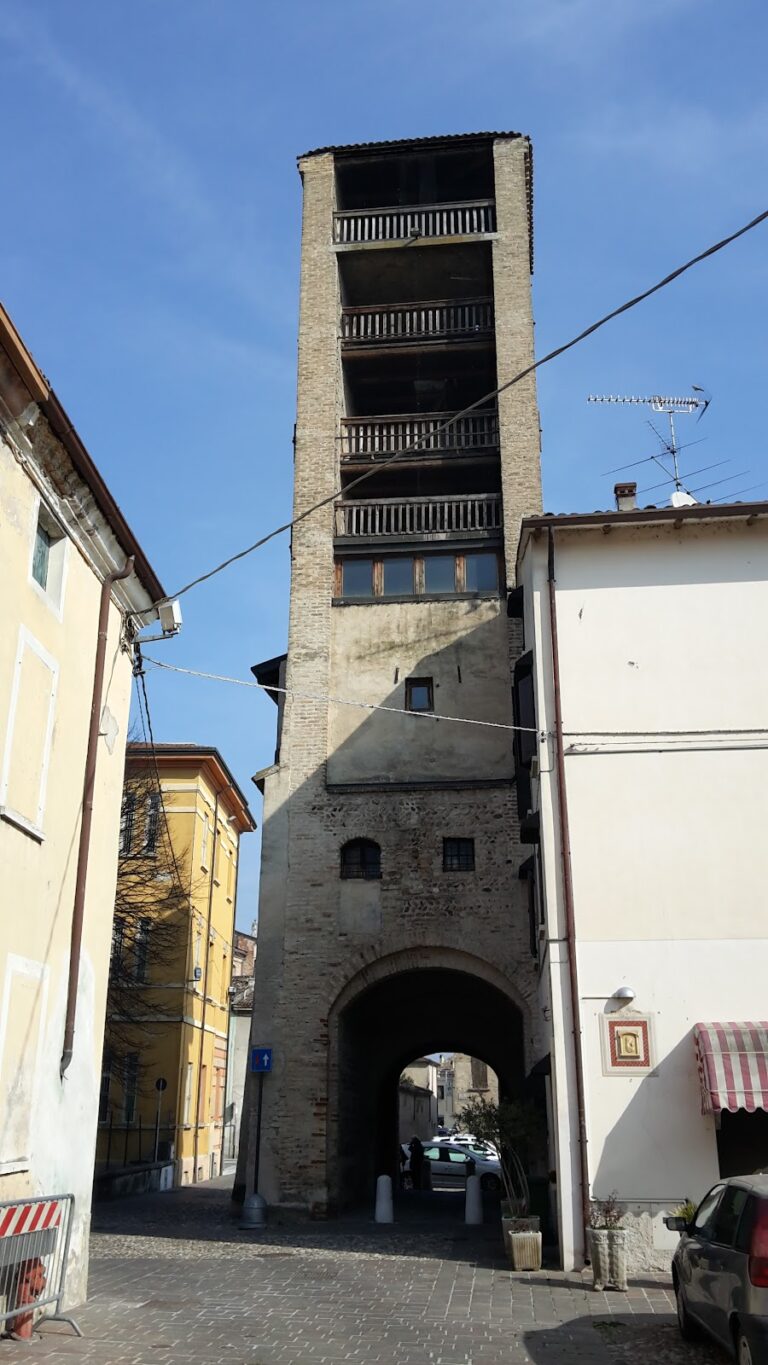
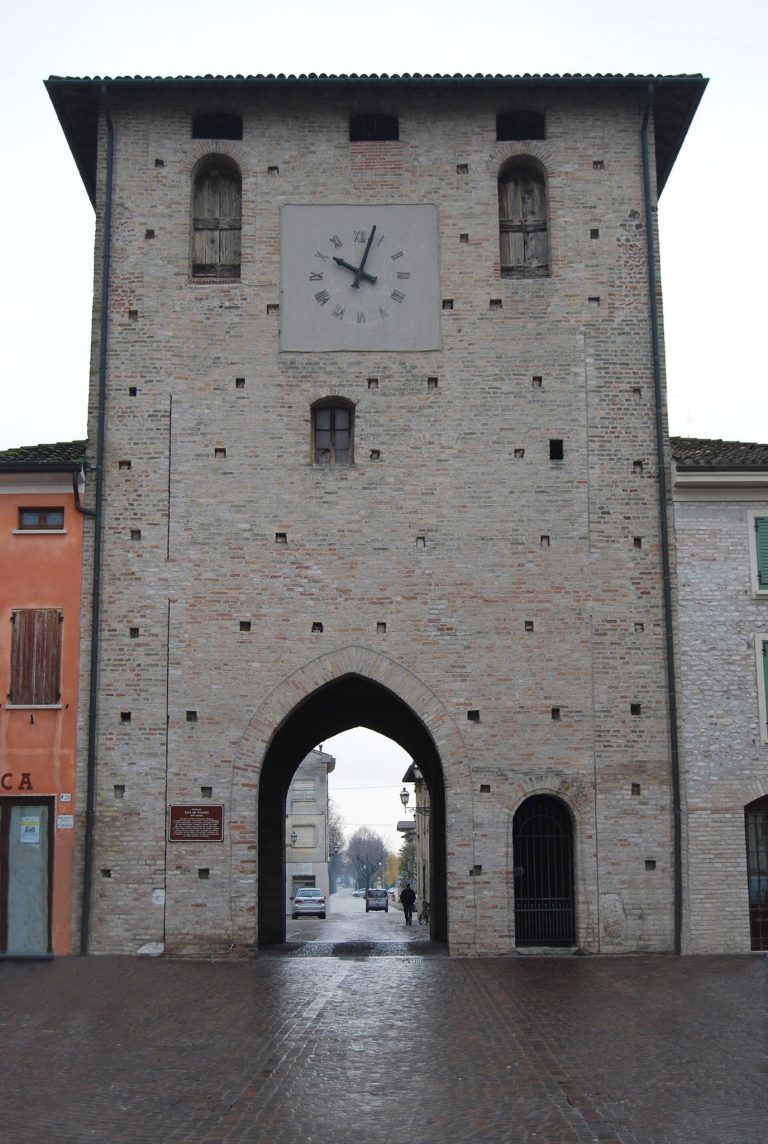
The 27-metre-high Civic Tower served as an entrance gate called Porta castelli veteri, marking access to the ancient village. Other recorded defensive elements include the ancient walls, the ravelin, a detached defensive work outside the main fortification line, the Torrazzo, a large fortified tower, and the Rocca, a fortress or fortified stronghold. Together these features identify the settlement’s former defensive organization, although the medieval castle itself has disappeared.
Buildings and historic spaces
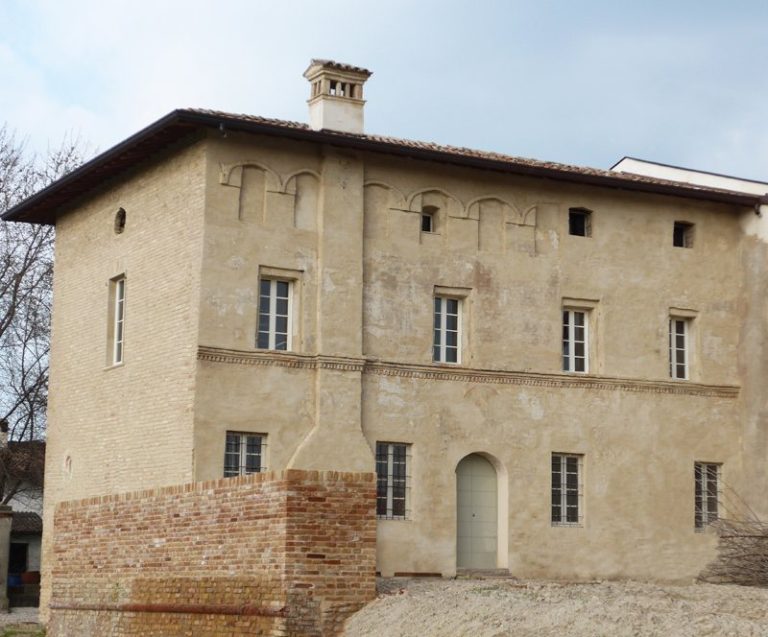
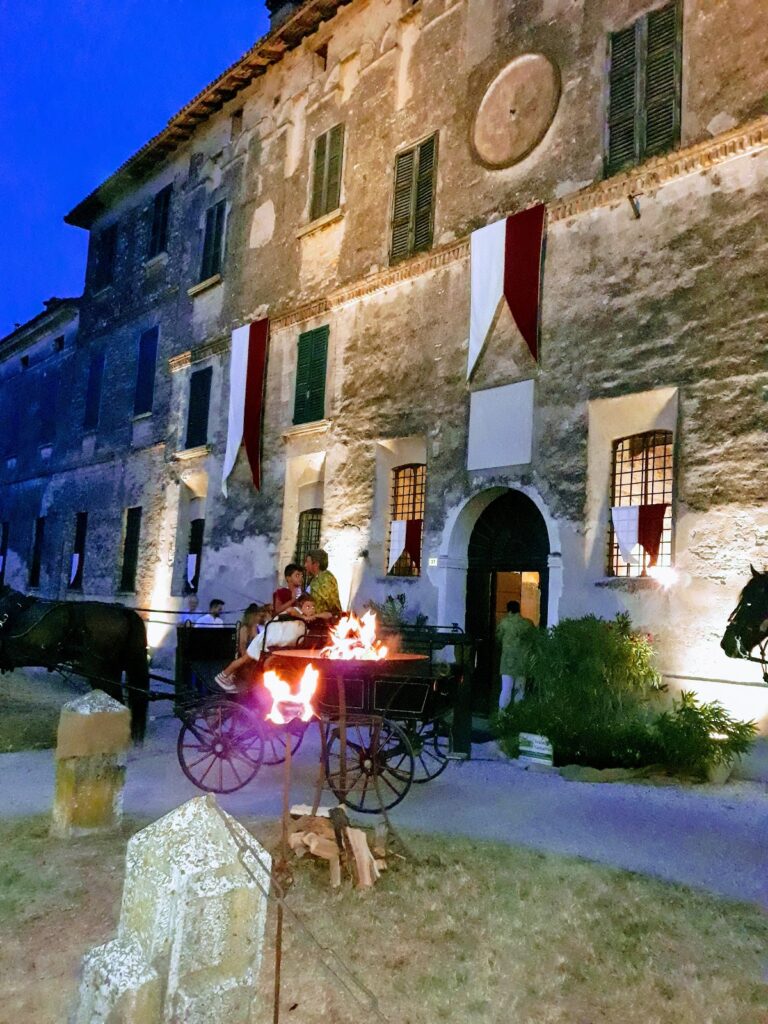
The garden of Palazzo Gonzaga-Acerbi defined the northern edge of the village. Castelvecchio also included Prignaca House, the Vicar’s Palace office, and the Vicar’s Palace residence. Its named spaces included Gonzaga Square, Castelvecchio Square, and the Cavallara district, which formed part of the ancient settlement’s urban structure.
Church remains and piazza
Within the former village, the surviving fifteenth-century bell tower and frescoed apse of Santa Maria del Consorzio preserve elements of the church that once stood there. The piazza was reorganized during the 1999 renovation, which changed its paving and underground utility systems and introduced a small amphitheater.