Castello Spinola-Caracciolo: A Fortified Historic Residence in Andrano, Italy

Site at a Glance
- Rating
- 4.5
- Popularity
- Low
- Country
- Italy
- Primary era
- Medieval
- Eras represented
- Medieval, Early Modern
- Civilizations
- Kingdom of Naples, Spanish
- Site type
- Military
- Remains
- Castle
On this page12 sections
History
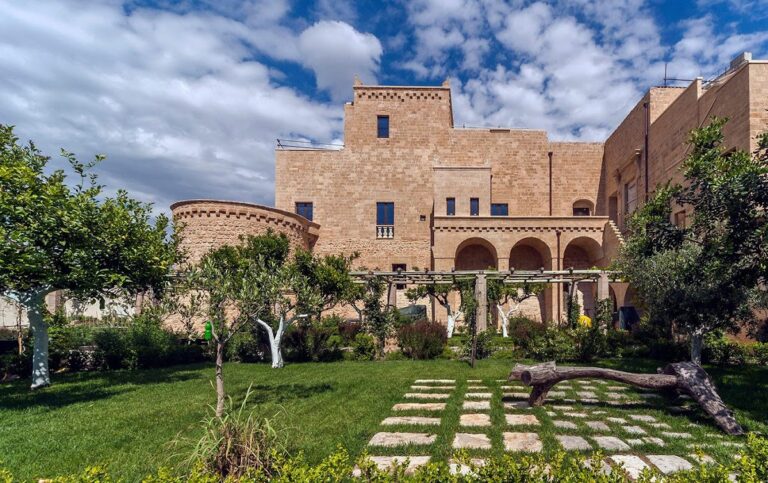
Castello Spinola-Caracciolo is a fortified architectural complex in Andrano, Italy, whose origins reach back to the thirteenth century and whose development continued through the seventeenth century. It began as a rural farmstead and was later strengthened as a fortified agricultural estate, reflecting the military pressures affecting settlements in Apulia.
From farmstead to fortified manor
The building was adapted to changing military requirements during the fifteenth century, when the Saraceno, a medieval noble family, held lordship over Andrano. These works gained urgency after the Turkish invasion and sack of nearby Otranto in 1480, an attack that alarmed surrounding communities. Antonio Saraceno, then lord of Andrano, went to Otranto with his army and was killed there.
Extensions and renovations continued over the following centuries. The changes eventually altered the character of the complex, taking it beyond its original defensive and agricultural role. A baroque loggia on the main facade marked its transformation from a fortified manor into an aristocratic residence, while the northern side was remodeled according to eighteenth-century architectural taste.
Ownership and modern administration
After the Saraceno family, the castle became the residence of the Spinola of Gallipoli in 1606. The Gallone of Tricase held it from 1618 to 1734, after which it belonged to the Caracciolo of Marano, who retained ownership until a few decades ago.
Following the Caracciolo period, one part of the manor was sold to the Bentivoglio family, while another was donated to the Maestre Pie Filippini, a Catholic teaching institute devoted particularly to educating girls. The municipal administration of Andrano acquired the castle during the 1980s. Castello Spinola-Caracciolo is recognized as Italian national heritage.
Remains
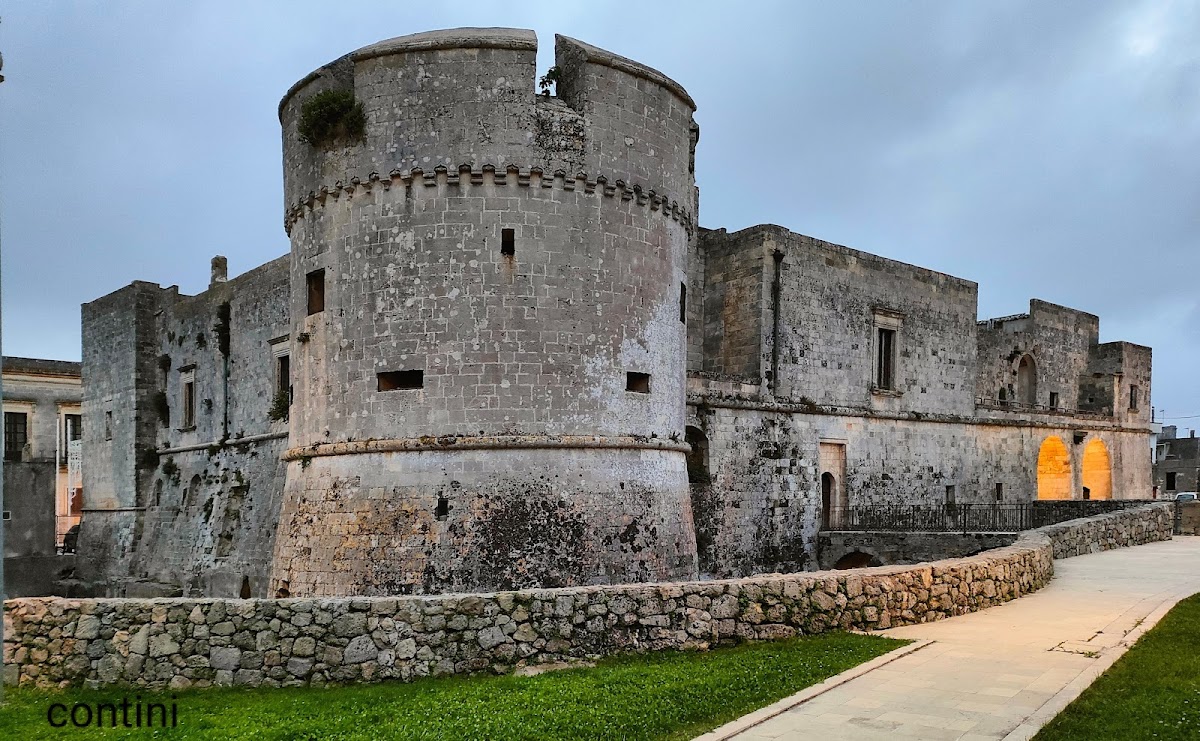
The castle has a quadrangular plan and is built of Lecce stone. Square-section towers reinforce the corners of the principal facade, while a horizontal string-course cornice, a molding that separates building levels, divides the lower level from the main floor. A projecting machicolation, an opening used by defenders to drop or pour objects onto attackers, extends above the entrance portal.
Early defensive elements
Cylindrical tower and moat
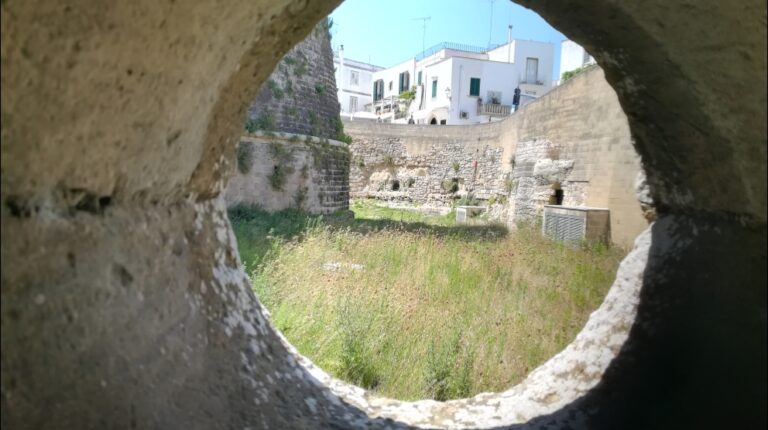
The earliest architectural arrangement includes a cylindrical tower, a moat, and the southwestern tower. The cylindrical tower has its own string-course cornice and is crowned by small arches and corbels. The moat survives visibly along the rear side of the building.
Upper floor
An upper floor was constructed between 1300 and 1500, adding to the earlier arrangement of the complex. Its surviving relationship with the towers and lower defensive structures forms part of the castle’s layered architectural development.
Courtyard and later architectural features
Western side
The western side dates from the sixteenth century. Period moldings around its windows indicate this phase, as does the staircase situated in the inner courtyard.
Baroque loggia
The main facade contains a baroque loggia, the architectural feature associated with the building’s change from a fortified manor to an aristocratic residence. The inner courtyard also contains three refined windows and a dovecote.
Northern arcades
The northern side has two tiers of arcades supported by pillars and pilasters. Their arrangement reflects the eighteenth-century taste that shaped this side of the building.
Inscriptions and condition
Numerous epigraphs are carved on the friezes of windows and doors both inside and outside the castle. The complex is built of Lecce stone and remains in excellent condition.
Nearby sites