Castello Normanno-Svevo: A Medieval Fortress and Archaeological Museum in Italy


Site at a Glance
- Rating
- 4.6
- Popularity
- Low
- Country
- Italy
- Primary era
- Medieval
- External website
- Open
- Eras represented
- Medieval
- Civilizations
- Kingdom of Naples, Kingdom of Sicily, Norman
- Site type
- Military
- Remains
- Castle
On this page14 sections
History
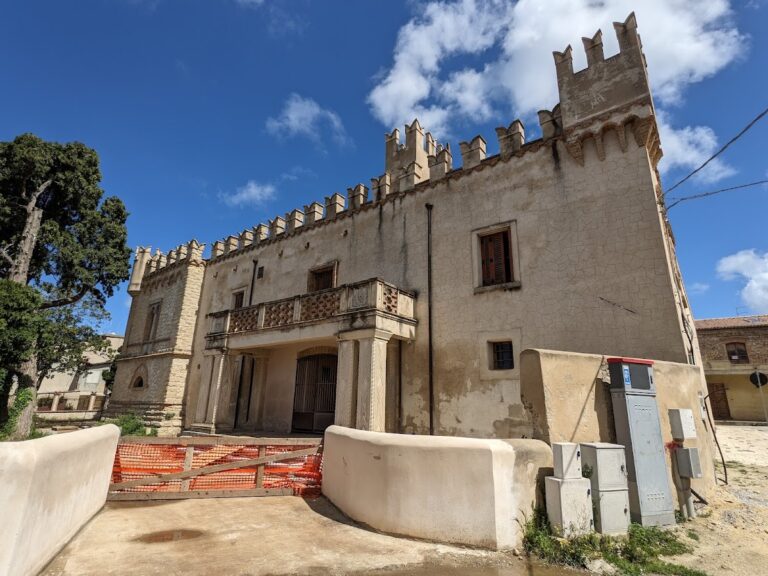
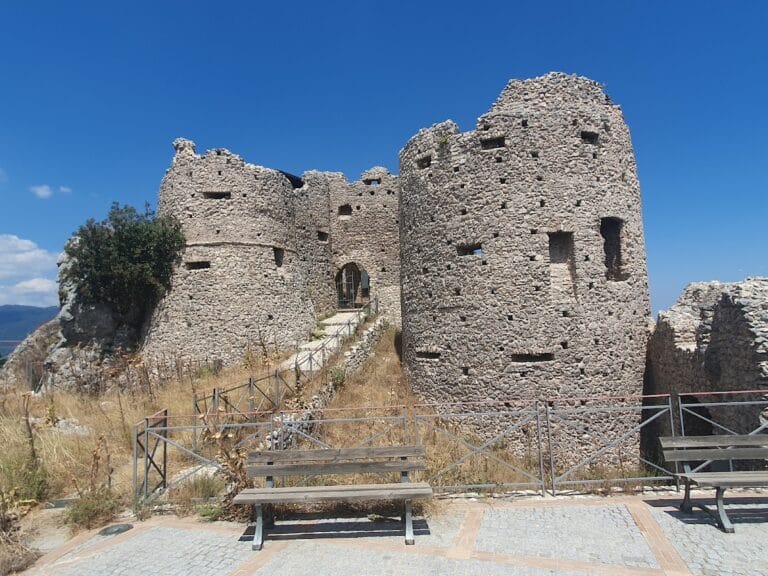
Castello Normanno-Svevo is a hilltop fortress in Vibo Valentia, Italy, whose medieval development is associated with Norman, imperial, and Angevin rule. Its first construction phase remains uncertain: a popular tradition connects the castle with Roger I of Sicily, the Norman ruler who established the county of Sicily in the eleventh century, while another interpretation places its origins in the thirteenth-century period of Emperor Frederick II.
Medieval enlargement
During Frederick II’s reign, the governor of Calabria, Matteo Marcofaba, enlarged the castle. Frederick’s rule in the thirteenth century was accompanied by major imperial fortification projects in southern Italy, providing the broader political setting for this phase of the building’s development.
The Angevin dynasty, which ruled the Kingdom of Sicily and later the Kingdom of Naples, expanded the fortress again during the thirteenth century. This work was apparently intended to establish a permanent military base, reinforcing the castle’s defensive and administrative role.
Residence, prison, and museum
In the sixteenth century, under Ettore I Pignatelli, the castle received minor alterations that adapted it for use as an aristocratic residence. An earthquake at the end of the eighteenth century damaged the building, after which it was used as a prison.
Since 1969, the castle has housed the National Archaeological Museum named after Count Vito Capialbi, a nineteenth-century scholar and archaeologist from the Vibo Valentia area. The museum arranges its collections chronologically and by place, bringing together material from Vibo Valentia, excavation areas in the surrounding region, and collections donated by local scholars during the nineteenth and twentieth centuries.
The museum is organized into four principal sections devoted to sacred buildings, necropolises, private collections, and the Roman period. In December 2014, the castle came under Calabria’s museum administration, which became the Regional Museums Directorate in December 2019. The fortress also stands near the ancient Acropolis of Hipponion, the Greek settlement associated with the later city of Vibo Valentia.
Remains
Fortress and archaeological setting
The surviving castle is a restored hilltop fortress built of rubble stone. It occupies an elevated position at approximately 550 metres above sea level, while its courtyard incorporates archaeological material from the ancient city. The castle’s present form therefore combines a medieval defensive structure with a museum whose displays preserve evidence from the wider landscape of Vibo Valentia.
The courtyard contains a mosaic dating to the third century. It was discovered at the ancient harbor of the city and is now displayed within the castle, linking the elevated fortress with the maritime setting of ancient Vibo Valentia.
Prehistoric and Greek collections
Early settlement and burial finds
The prehistoric displays include material from local excavation sites, among them a hut dating to the Copper Age. A sword made in the thirteenth century BCE was found accidentally in a grave dating to the sixth century BCE, illustrating the long chronological range represented by the archaeological collections.
Scrimbia finds
Material from the Scrimbia district dates from the seventh to the beginning of the fifth century BCE. It includes Corinthian, Rhodian, and Attic pottery, including large vessels, as well as bronze basins and helmets. Votive statues and finely made objects of gold, silver, and other metals include earrings, rings, fibulae, and pins.
Scrimbia also yielded architectural fragments from around 550 BCE. These pieces belonged to a large Doric temple and include elements that help represent the scale and character of an important Greek sanctuary in the area.
Cofino votive material
Finds from Cofino include pinakes, small votive plaques, associated with a production tradition characteristic of Locri Epizephyrii, an important Greek city in southern Italy. Two highly detailed terracotta temple models belong to the same group of religious material.
Necropolises and religious evidence
Lower-level burial collections
The lower level contains objects from necropolises dating from the end of the seventh to the fourth century BCE. Among them is a gold foil from a woman’s grave dated to the fifth or fourth century BCE. Its inscription, written in a Doric-Ionic dialect, gives advice to the dead in the underworld and provides evidence of Orphism, a religious tradition concerned with Orpheus, the soul, and the afterlife.
Piercastello tombs
Material from the Greek necropolises of the Piercastello district reflects the presence of the Bruttians, an ancient Italic people who occupied much of present-day Calabria. Two especially notable ceramic warriors came from a monumental chamber tomb dating to the end of the third century BCE.
Private collections and sacred architecture
The collections donated by private scholars include architectural ceramics from the Scrimbia sanctuary. Particularly notable are Archaic terracotta pieces, lattice-shaped and moon-mask antefixes, which were decorative elements along a roof edge, and painted cymatia, moulded architectural members. Attic red-figure lekythoi, Greek vessels often used for oils or funerary purposes, are also represented.
Vito Capialbi’s coin collection contains several very rare gold coins from Locri Epizephyrii. Together with the sanctuary material, these objects connect local religious and economic life with the wider Greek culture of southern Italy.
Roman-period remains
The Roman-period section includes finds from Sant’Aloe, where several domus, or Roman private houses, and a thermal bath, a bathing complex, were uncovered. The material includes terra sigillata, a fine Roman ceramic ware with a smooth, often red-slipped surface, marble statues, and funerary objects such as finely decorated lamps and valuable glass containers for ointments.
A treasure discovered near Sant’Aloe in the 1970s consisted of 867 Bruttian silver coins dating to the end of the third century BCE. Among the marble sculptures from the same area is a high-quality bust of Agrippa, a leading Roman statesman and military commander of the late first century BCE.
Nearby sites