Castello Normanno-Aragonese di San Nicandro Garganico: A Historic Medieval Castle in Italy
Visitor Information
Google Rating: 4.5
Popularity: Low
Country: Italy
Civilization: Early Modern, Medieval European, Modern
Site type: Military
Remains: Castle
History
The Castello Normanno-Aragonese di San Nicandro Garganico, located in the municipality of San Nicandro Garganico in Italy, was originally established by Norman builders during the early medieval period. Its origins trace back to the 9th century, when a watchtower occupied a strategic hill 224 meters above sea level, supported by a Norman garrison positioned nearby to oversee and defend the territory.
During the later Middle Ages, the castle became associated with important historical figures. It served as both a residence and a hunting retreat for Emperor Frederick II, a member of the Hohenstaufen dynasty, as well as for King Manfred of Sicily. In the late 13th century, after his abdication, Pope Celestine V found secret refuge within the castle’s walls, highlighting its role beyond military defense to include sanctuary and shelter in times of political upheaval.
The 15th century brought significant transformation during the Aragonese rule, likely influenced by the local feudal family known as the Della Marra. The original tower was expanded into a trapezoidal fortress shape, a process called “incastellamento,” which integrated the castle with the nearby settlement. This expansion reshaped the stronghold into a more complex defensive structure encompassing the community surrounding it.
Advancements continued through the 16th century, evident with the construction of a loggia at the eastern entrance. This feature connected the castle to a large palace situated between the gate and the eastern walls. Along the western side, the Palazzo Fioritto was erected during this same period. Today, this palace houses the municipal library and an ethnographic museum, reflecting the adaptation of the site to civic uses beyond its military origins.
Throughout the Baroque era and into the mid-20th century, additional modifications occurred. The castle’s interior was reorganized to accommodate private residential use, including the creation of a new entrance on the eastern side and the permanent closure of the original drawbridge. Ownership transitioned through various families, specifically the Zaccagnino family in the 19th century and later the Centulio and Tozzi families. In modern times, the municipality of San Nicandro Garganico took custody of the castle in early 2020, marking a new chapter in its long history.
Remains
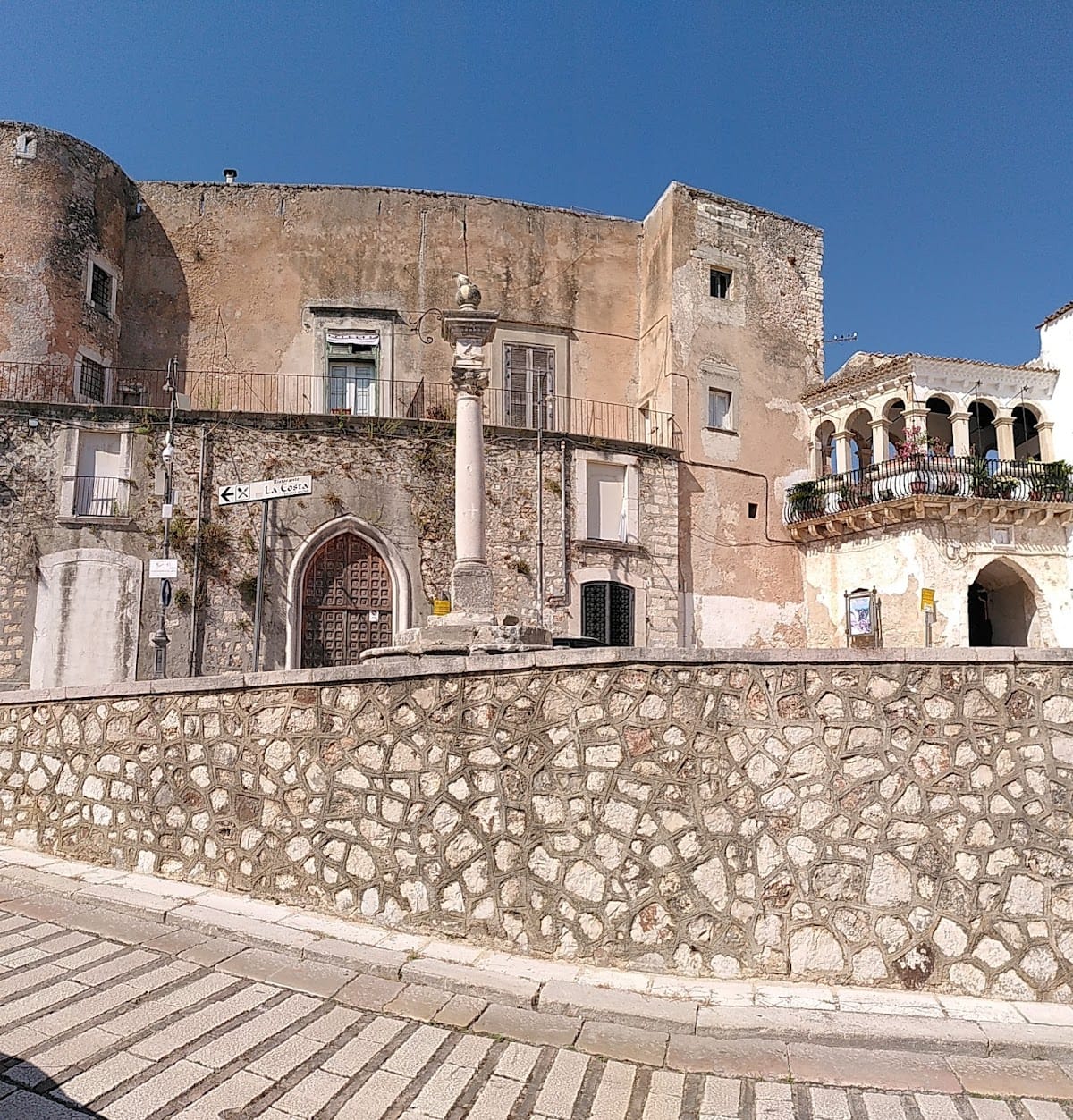
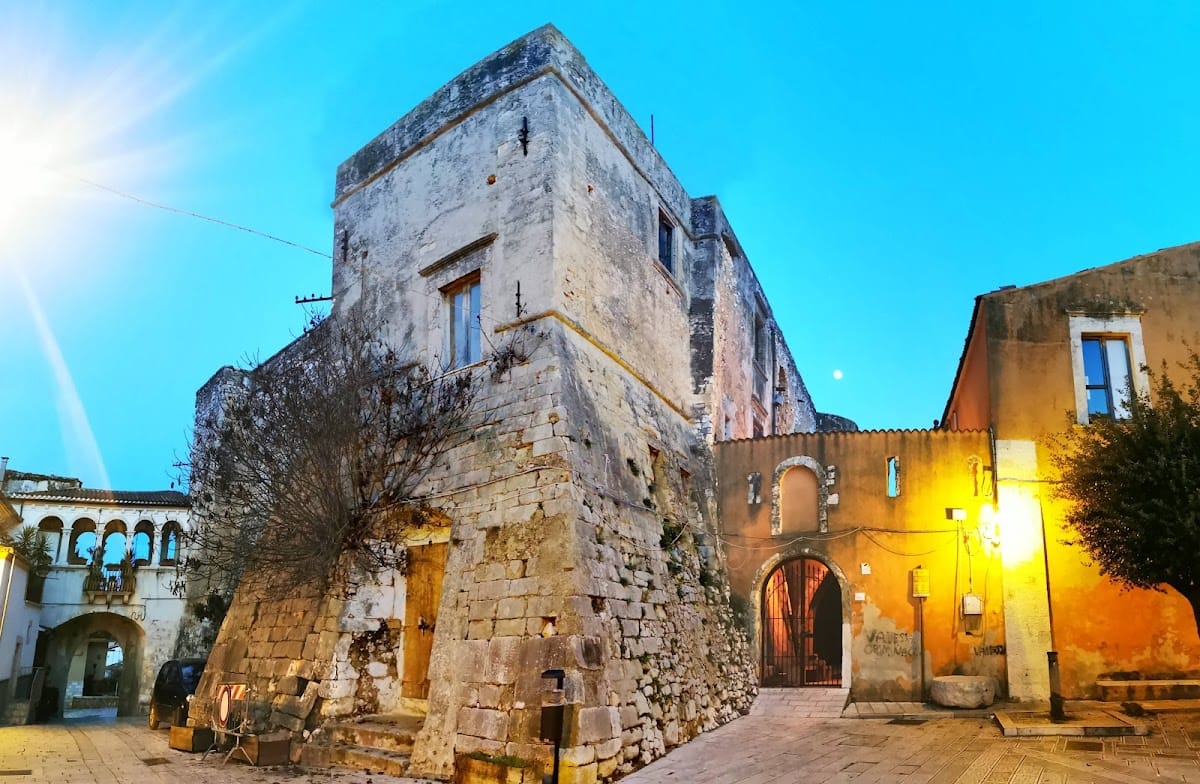
The castle occupies a trapezoidal plan aligned roughly with the four cardinal points, standing atop a commanding hill at 224 meters elevation. This layout reflects defensive priorities, maximizing visibility and control of the surrounding territory. The structure encompasses four towers at its corners, combining elements from different historical phases.
Two of these towers, rectangular in shape and located at the northern and western corners, are remnants from the castle’s earliest phase dating back to the 9th century. They demonstrate the original Norman military architecture with sturdy stone construction designed for surveillance and defense.
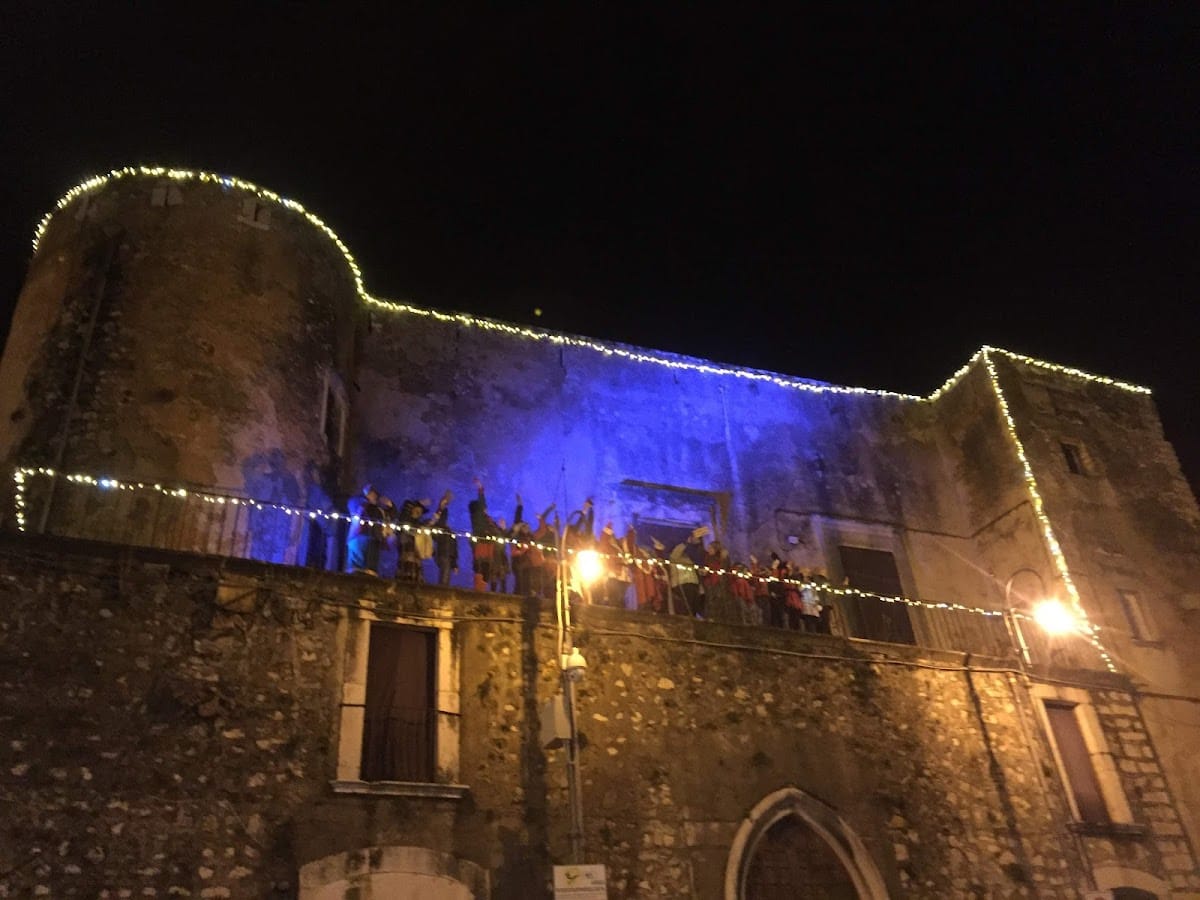
At the southern and eastern angles stand two circular towers, products of the Aragonese expansion during the 15th century. These additions faced the nearby mother church of Santa Maria del Borgo, possibly serving both protective and symbolic functions within the settlement’s layout.
The eastern entrance is notable for its 16th-century portal, richly decorated and linked to a large palace constructed between this gate and the eastern walls. Adjacent to this entrance, a loggia from the same period forms a covered passageway connecting the castle to the palace, blending residential and defensive architecture.
Supporting the western wall is the Palazzo Fioritto, a large palace built in the 16th century. This building now serves cultural purposes by hosting both the “A. Petrucci” municipal library and an ethnographic museum dedicated to rural life, illustrating the site’s layered history and adaptation to community needs.
Renovations during the Baroque period and the 20th century introduced internal changes aimed at residential use. These included constructing a new eastern entrance and sealing off the original drawbridge, which once spanned above the present street level and functioned as the main access point during earlier centuries. These modifications reflect the evolution of the castle from a medieval fortress into a private residence while preserving its historic fabric.
Nearby sites