Castello di Sorci: A Medieval Fortified Residence near Anghiari


Site at a Glance
- Rating
- 4.2
- Popularity
- Low
- Country
- Italy
- Primary era
- Medieval
- External website
- Open
- Eras represented
- Medieval, Early Modern
- Civilizations
- Republic of Florence
- Site type
- Military
- Remains
- Castle
On this page8 sections
History
Castello di Sorci is a small medieval fortified complex in San Lorenzo near Anghiari, Italy, traditionally dated to the twelfth century. The site was already a monastery when its name appeared in a 1111 diploma issued by Henry V, the Holy Roman Emperor who reigned from 1111 to 1125, in connection with the Abbey of Saint Bartholomew of Anghiari.
Origins and the Tarlati period
The origin of the name Sorci is surrounded by two explanations. Local tradition connects it with a conflict between the Sorci and Gatti families after the year 1000. The philologist Nino Boriosi instead linked it to sorco, a Germanic term for heath or scrubland.
Between 1234 and 1388, Sorci was associated with the Tarlati di Pietramala, an influential Ghibelline family of Arezzo. The Ghibellines supported the imperial faction in medieval Italian conflicts between the Holy Roman Emperor and the papacy. The castle served as the family’s summer residence. In 1322 it belonged to Piersaccone Tarlati, who had received it from his brother Guido Tarlati, bishop and lord of Arezzo. Piersaccone’s heirs retained it until 1388.
During the fourteenth century, Sorci also served as the seat of a local universitas, a self-governing association of residents formed to protect their rights. On 19 June 1385, the inhabitants submitted to the city of Florence. After the relevant Tarlati branch became extinct, ownership of the fortress was disputed before passing to Baldaccio Bruni.
Baldaccio Bruni and the Pichi family
Baldaccio Bruni was a professional military commander who led troops under contract, often serving Italian states or powerful families. He stayed at Sorci between campaigns with his wife, Annalena Malatesta of Giaggiolo, and their young son. After Baldaccio was treacherously killed in Florence on 6 September 1441, Annalena withdrew to the castle. Their ten-year-old heir later died of plague, after which Annalena entered a Dominican convent and lived only a few more years.
The Pichi family of Sansepolcro had already challenged Baldaccio’s legitimacy as owner. They subsequently acquired Sorci and held it until 1650. The family used the isolated castle as a retreat from factional disputes in the city and frequently occupied it as a residence-farm attached to an agricultural estate. This economic role continued into modern times.
Ecclesiastical and agricultural changes
In 1520, Pope Leo X transferred the castle and the territory of the parish of Sorci from the Diocese of Città di Castello to the Diocese of Sansepolcro. A diocese was the larger territory governed by a bishop. The church of San Lorenzo a Sorci belonged to the Pieve of Santa Maria alla Sovara, a rural ecclesiastical district centered on a principal parish church.
Taviano Pichi greatly expanded the estate’s agricultural activity, particularly from 1532, when an efficient mill was constructed. During later periods affected by cholera and by the War of Citerna, a conflict declared by Florence, the Pichi strengthened the fortifications and improved the soldiers’ equipment. They also enlarged and decorated the complex.
In 1647, Pope Innocent X, who was pope from 1644 to 1655, granted Francesco Pichi the rank of marquis of Sorci in recognition of the family’s services. Anghiari strongly protested the creation of the new fief, and the pope revoked the lordship while permitting the noble title to remain.
Decline, restoration, and later tradition
From the mid-seventeenth century, Sorci declined as maintenance became inconsistent. After the Pichi family, ownership passed to the Giachetti, Zampa, Bonservizi, and Barelli families. The Barelli carried out careful restorations across much of the historic structure.
The castle also acquired an unsettling reputation for alleged ghostly manifestations, often associated with Baldaccio Bruni. The tradition has been linked either to the unusual historical figures connected with Sorci or to its isolated location. The complex remains privately owned.
Remains
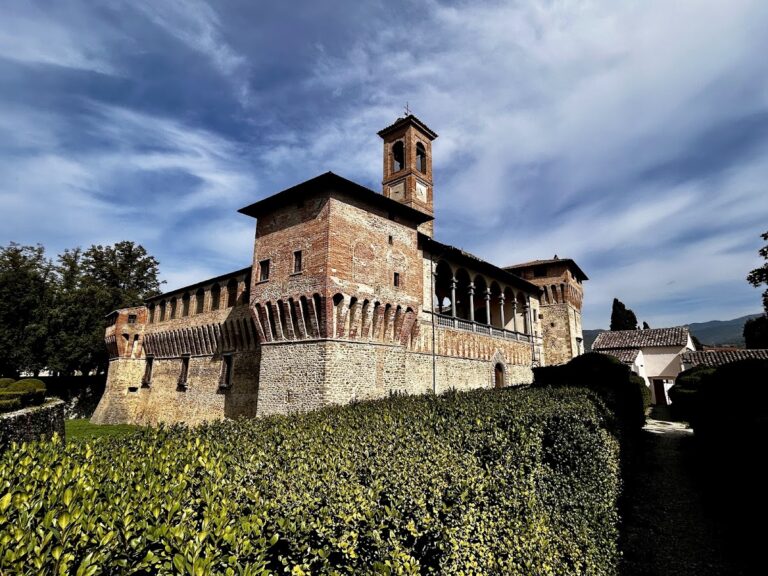
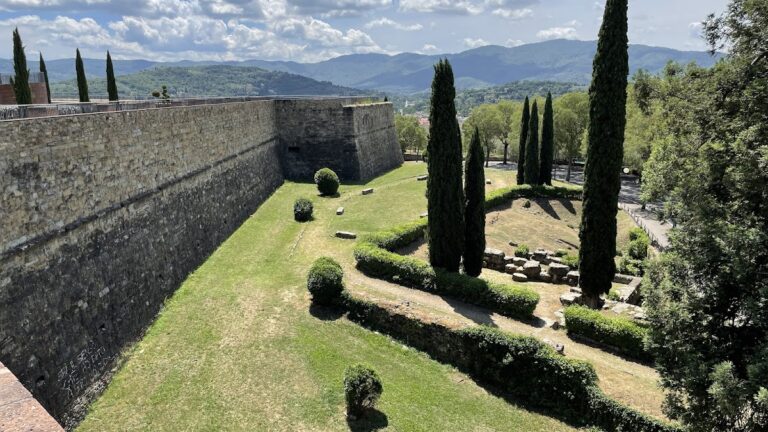
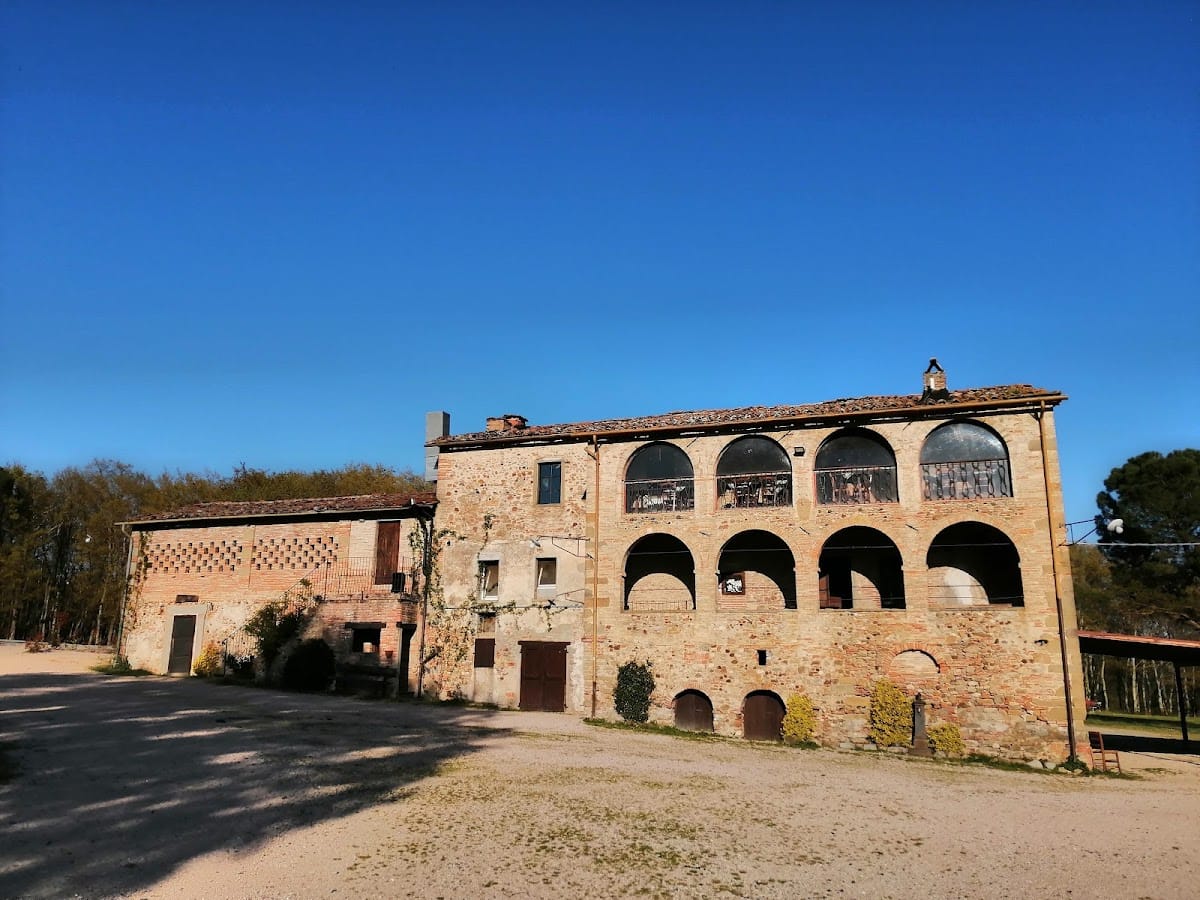
Castello di Sorci is a compact fortified complex formed by two structures joined together. On the southern side, a truncated square tower has been incorporated into the main mass of the buildings. A small temple and a distinctive porticoed building stand about 300 metres from the castle, with the porticoed structure now known as the inn. Together with the estate buildings and mill, these elements reflect the site’s change from a medieval defensive residence into an agricultural complex.
Castle buildings and court
The principal entrance has an attractive portal crowned by the Pichi family coat of arms, an emblem repeated elsewhere in the complex. Inside, a harmonious sixteenth-century court forms a central architectural feature. The Pichi family built a chapel dedicated to Saint Lawrence within the castle, while Florentine-style windows and other Renaissance motifs embellished the buildings.
A staircase leads to the aristocratic apartment, where another Pichi coat of arms is carved on the fireplace. Named interior spaces include Baldaccio’s room, the Hall of Mirrors, the Hall of Armour, the central hall, the billiard room, the large kitchen, and the dungeons. These rooms preserve the range of residential, representational, and service spaces associated with the castle’s later use.
Church and agricultural estate
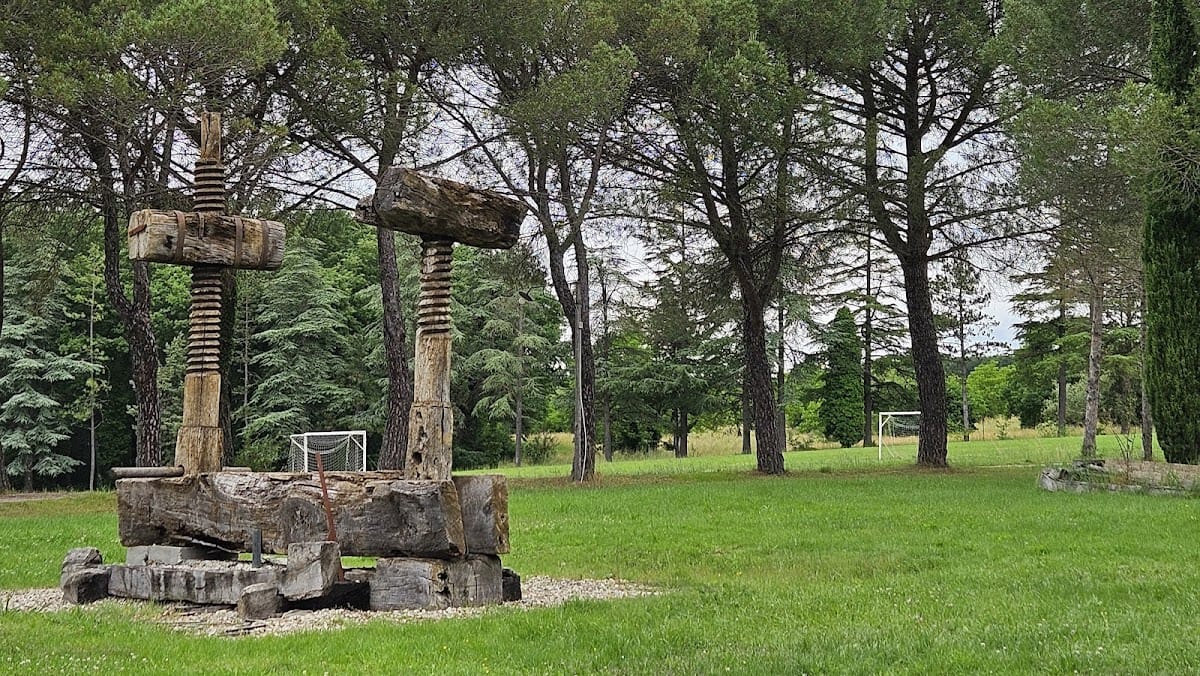
The church of San Lorenzo a Sorci is associated with the castle and belonged to the Pieve of Santa Maria alla Sovara, located about 3.5 kilometres to the northwest. In 1833, the parish of San Lorenzo a Sorci comprised 225 people. The nearby mill, built for Taviano Pichi in the sixteenth century, and the estate buildings embody the agricultural activity that became central to the complex’s later physical form.