Castle of Oppido: A Norman Fortress in Italy
Site at a Glance
- Popularity
- Very Low
- Country
- Italy
- Primary era
- Medieval
- Eras represented
- Medieval
- Civilizations
- Norman
- Site type
- Military
- Remains
- Castle
On this page7 sections
History
Norman foundation and lordship
The Castle of Oppido is a fortress in Italy, probably built between 1047 and 1051 during a conflict between Norman leaders. The Normans, a people of Scandinavian origin who established power in northern France before expanding into southern Italy, included Riccardo Quarel, count of Acerenza and son of Asclittino, and Drogone d’Altavilla, son of Tancred of Hauteville. Drogone defeated Riccardo, and Drogone’s sons ruled Oppido until the early twelfth century.
The castle was intended to watch routes between the Melfi area and inland Basilicata, make use of the surrounding land, house knights, and attract cultivators. It also helped protect both banks of the Bradano River, especially against Saracen advances. Control of the routes between Melfi and Calabria mattered to local survival and to the ambitions of the twelve Norman commanders based at Melfi.
Although Oppido had no cathedral, a church associated with the castle offered the community a shared place to express religious faith and loyalty to the papacy, which was asserting its rights in the region. Giovanni, one of Drogone’s sons, was a musician and scholar of music who converted to Judaism, travelled widely around the Mediterranean, and died in Egypt. A Hebrew chronicle of his life attests to Oppido’s existence and Norman rule in the eleventh century.
Angevin rule and later ownership
Under the House of Anjou, a dynasty that ruled parts of southern Italy, the castle was held as a royal fief, a grant made directly by the king. In March 1348, troops of Louis I, king of Hungary, brought turmoil to the village, which supported Queen Joanna I of Naples. This is the only known military conflict in Oppido’s history.
The fief passed to the Zurlo family in the fifteenth century. In the early sixteenth century, Caterina Zurlo brought it as a dowry to her marriage to Mario Orsini, and the Orsini family held it until the early eighteenth century. A 1642 hearth census, which counted household hearths for population or tax purposes, called the castle the “great fortress,” reflecting its imposing scale.
Decline and alteration
The castle’s strategic value had declined early, so it was not modernized. The Orsinis visited only occasionally, and neither they nor their administrators generally lived there. After debts caused by mismanagement within the family, the fief was seized in the early eighteenth century. The Kingdom of Naples’ highest court commissioned surveyor Pietro Vinacchia to assess the village and its territory; his detailed report later enabled a reconstruction of the castle and the old walled settlement. The De Marinis, marquises of Genzano and Oppido and the last feudal lords, also did not live at the castle.
Around 1880, the De Marinis heirs sold the castle to lawyer Gerardo de Pilato, who partly demolished and altered it. The castle is designated Italian national heritage.
Remains
Plan and defenses
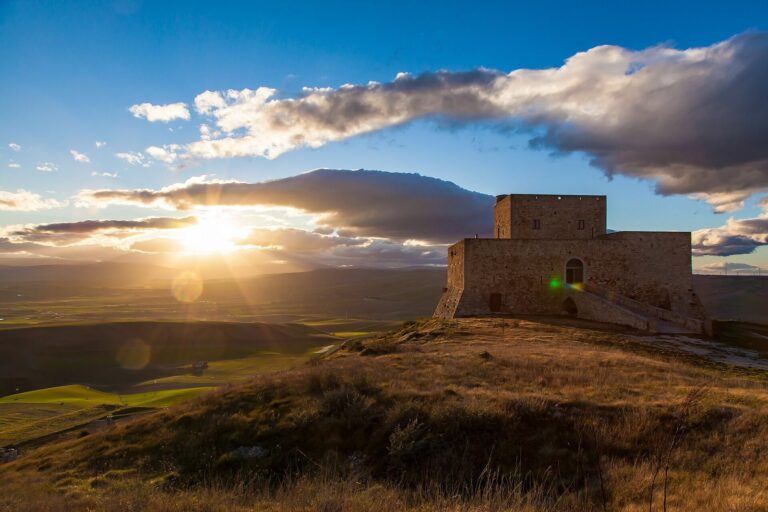
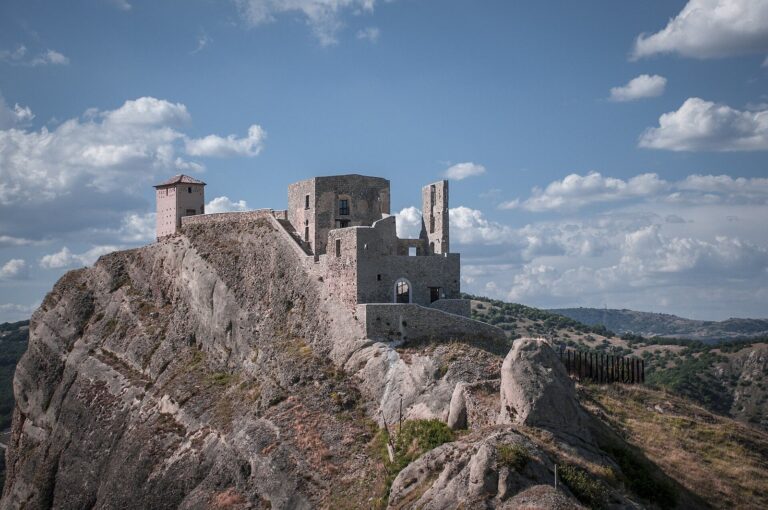
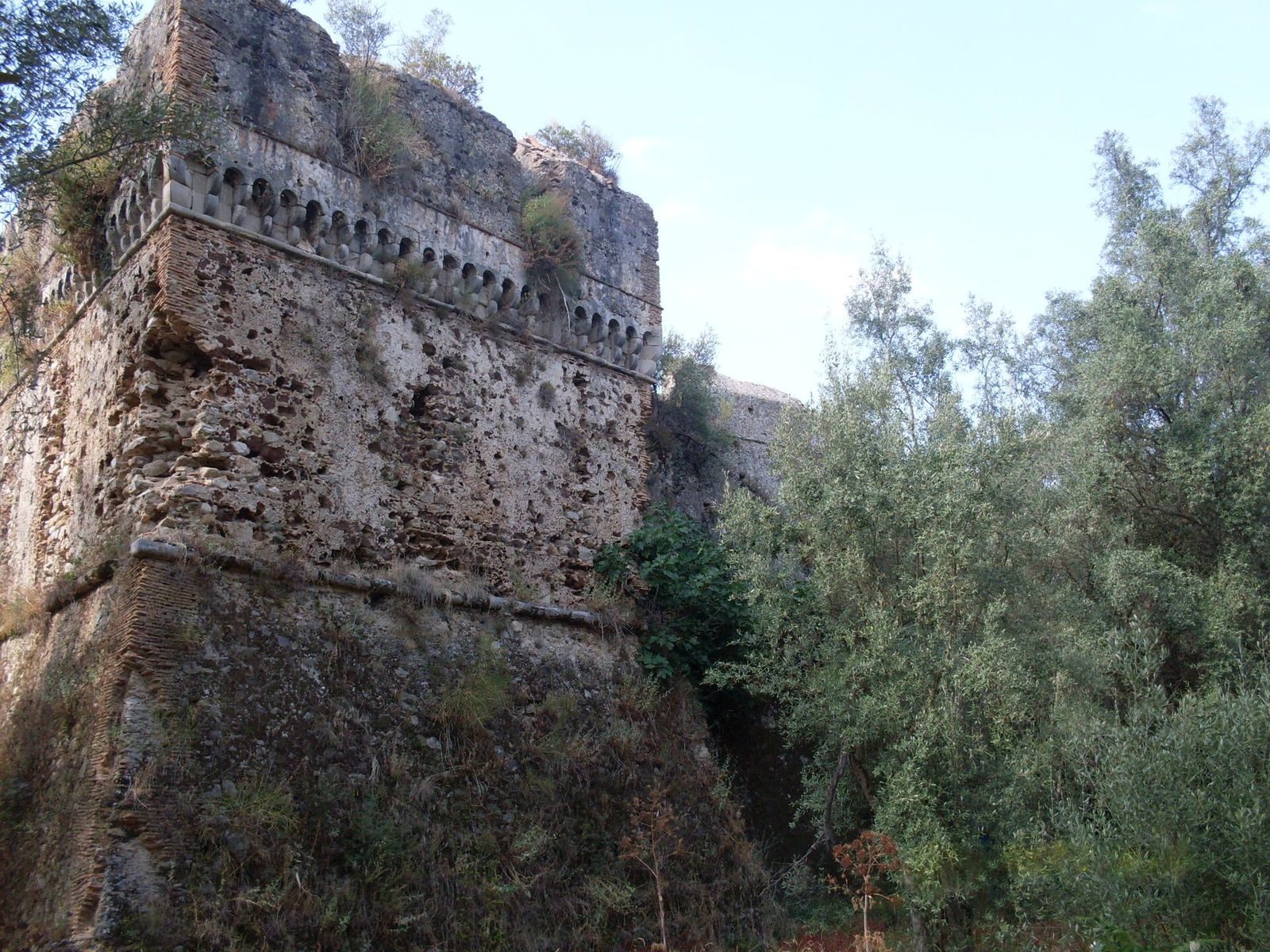
Set on the slopes of Montrone, the castle had an irregular plan shaped by the terrain, roughly four-sided, and a long outer façade. Built of rough, irregular stones, the façade was fronted by four towers topped with battlements, raised wall sections separated by gaps. Two square towers stood at the corners, while two cylindrical towers flanked the main entrance, which was reached by a drawbridge. Vinacchia’s description may indicate a simple castle from the Norman and Hohenstaufen periods of rule in southern Italy, perhaps with cylindrical towers added under the Angevins. This interpretation remains uncertain. Two cylindrical towers have been lost, while one is visible in a 1915 photograph.
Surviving fabric and settlement
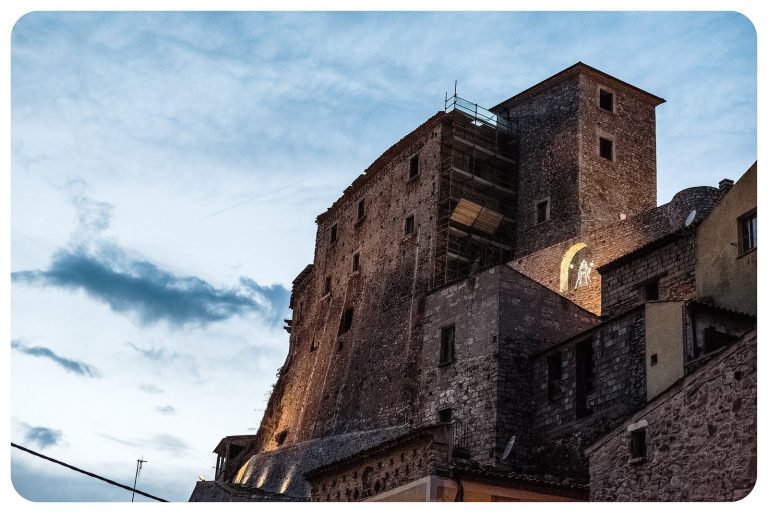
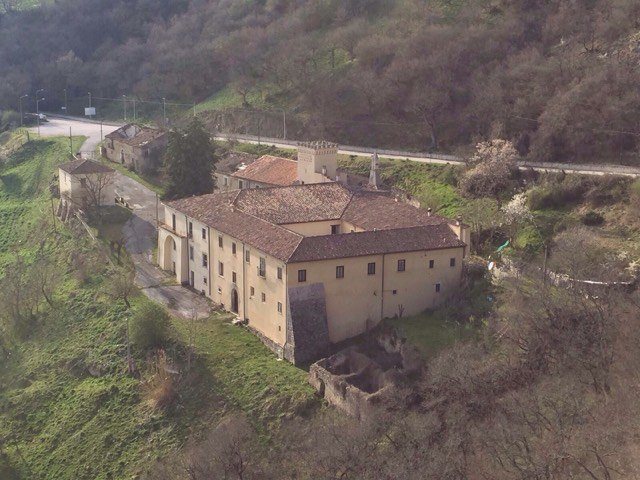
The east wing, once occupied by the castle’s lords, still stands among surrounding houses; most of the building is in poor condition. The earlier settlement was enclosed by a wall.