Castello di Capua: A Renaissance Castle-Palace in Gambatesa, Italy
Site at a Glance
- Rating
- 4.6
- Popularity
- Low
- Country
- Italy
- Primary era
- Early Modern
- External website
- Open
- Eras represented
- Medieval, Early Modern
- Civilizations
- Kingdom of Naples, Spanish
- Site type
- Domestic
- Remains
- Castle
On this page15 sections
History
From Frontier Fortress to Feudal Residence
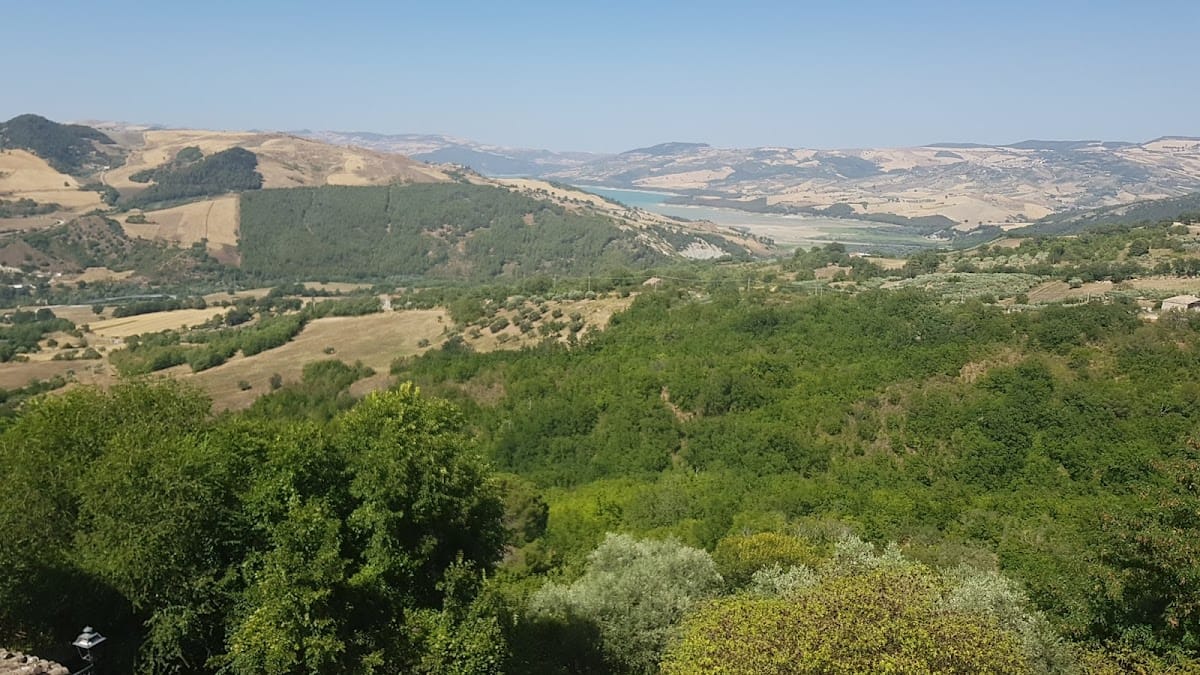
Castello di Capua is a historic castle-palace in Gambatesa, Italy, standing on Serrone hill in the town’s historic center. Its earliest form was a fortified bastion overlooking the Tappino valley, in a frontier territory between Molise and Puglia. The original medieval structure later developed into a feudal residence before being transformed into a Renaissance palace.
In the thirteenth century, Riccardo di Pietravalle became lord of the place that would later be called Gambatesa. The name is associated with a physical defect attributed to him. This early phase belongs to the castle’s development as a fortified stronghold, whose military character was later softened by changes to its residential and ceremonial functions.
The Di Capua Transformation
The Di Capua family acquired the castle in 1484 and converted it into a seigneurial palace. Many of the severe medieval military elements were demolished as the building was adapted for aristocratic residence. The principal transformations took place between the late fifteenth and mid-sixteenth centuries, when the castle acquired Renaissance additions and a more courtly architectural character.
The property subsequently became a baronial and marquisal holding, then passed into private ownership. It is now state-owned and functions as a museum associated with the Ministry of Culture. Since December 2014, it has been administered through the Molise museum system, an arrangement that became part of the Directorate of Regional Museums in December 2019. The castle is identified as Italian national heritage and is preserved in a restored condition.
The 1550 Mannerist Programme
In 1550, Vincenzo di Capua commissioned a fresco cycle from Donato Decumbertino of Copertino, a sixteenth-century painter from Salento. The work reflects Mannerism, an artistic style known for sophisticated compositions, artificial elegance, and complex symbolism. Drawing on the artistic culture of mid-sixteenth-century Naples and Rome, the cycle combines mythology, classical antiquity, Christian themes, historical references, and allegory.
The imagery presented the moral, civic, and military virtues that the Di Capua family claimed to embody. It also shaped the way the residence was presented to guests. Although parts of the frescoes have been lost, the surviving scenes preserve the ideological programme of the Di Capua palace.
Remains
Medieval Structure and Renaissance Exterior
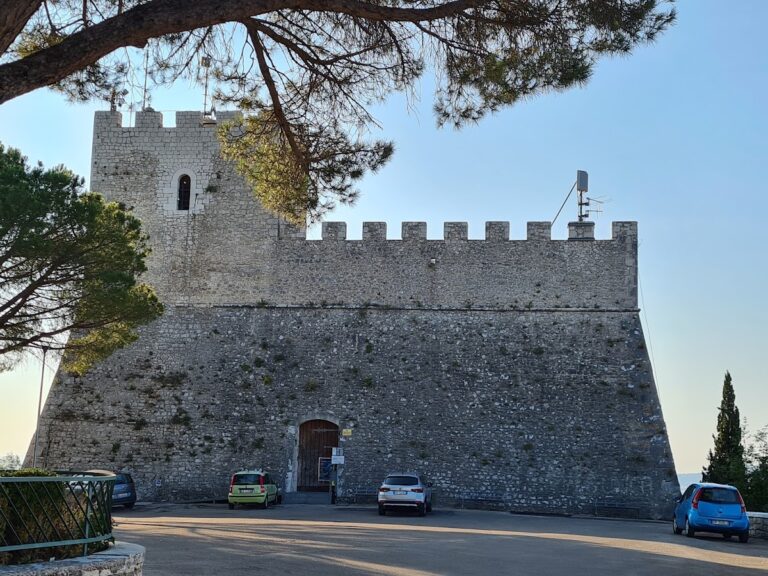
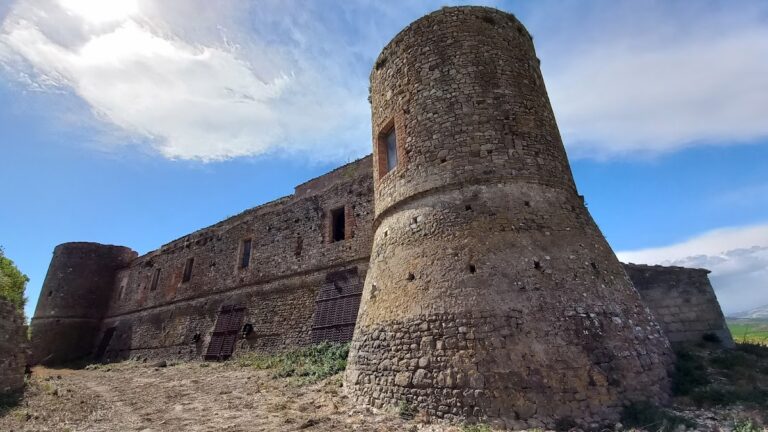
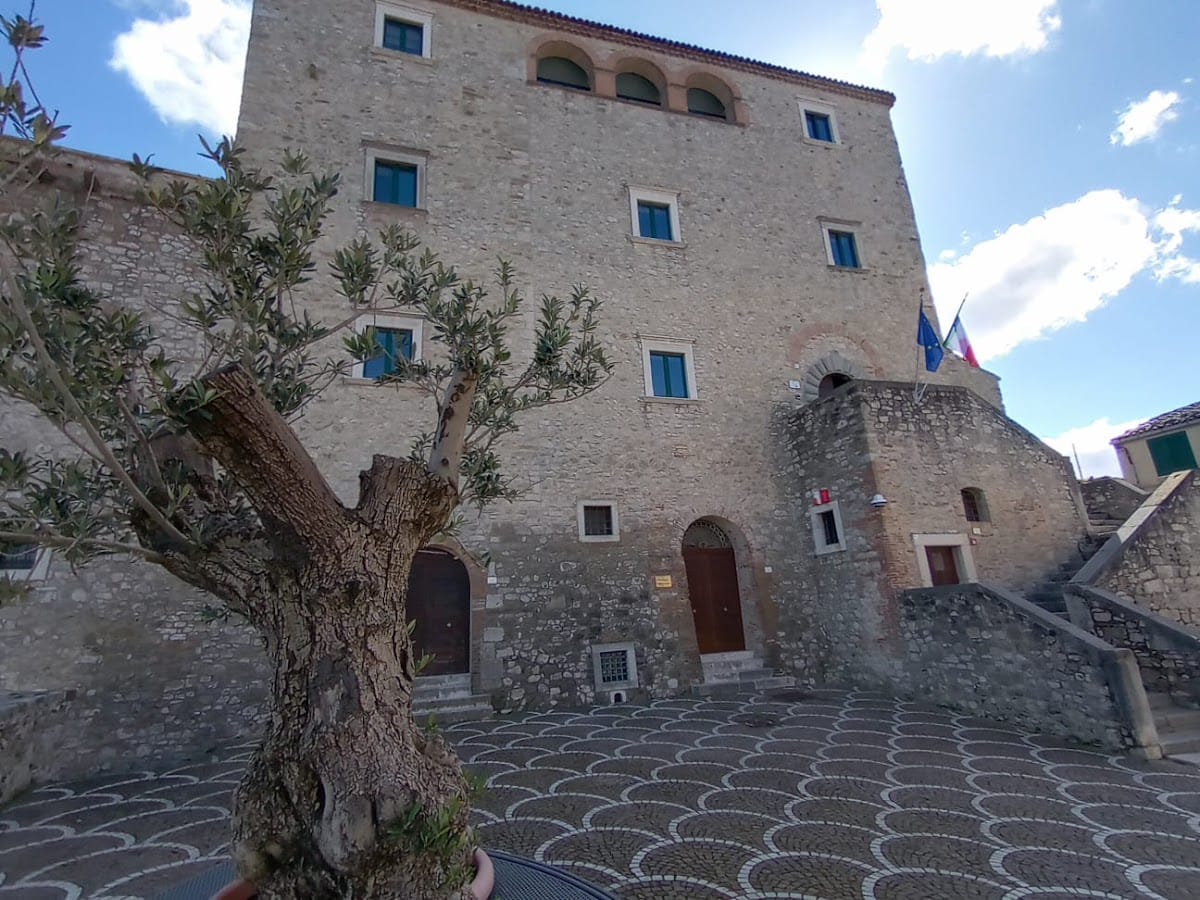
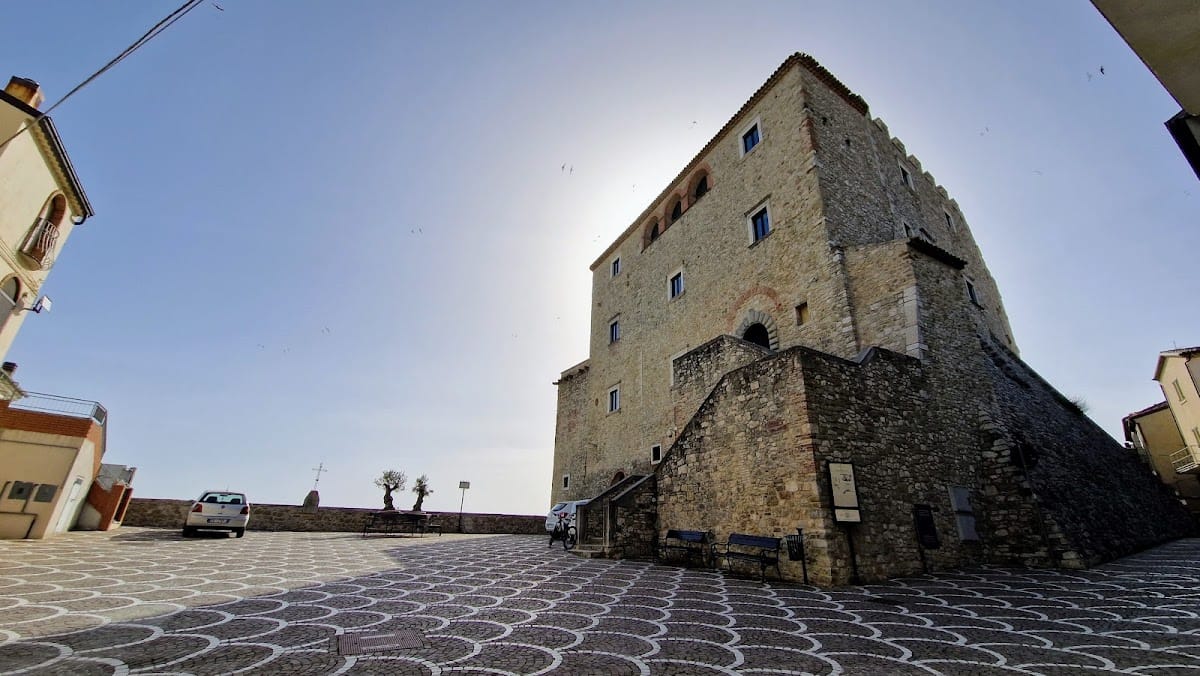
The surviving medieval building is a massive square structure. Its defensive character remains visible in the Guelph merlons, the rectangular crenellations traditionally associated with the Guelph side in medieval Italian architecture, along the southwest side, and in the corner towers toward the northeast.
Renaissance work altered the exterior during the fifteenth and sixteenth centuries. The northwest facade contains a rusticated portal, windows, and a loggia with three round arches. Together, these additions express the building’s change from a primarily defensive castle into a seigneurial residence.
Frescoed Residential Rooms
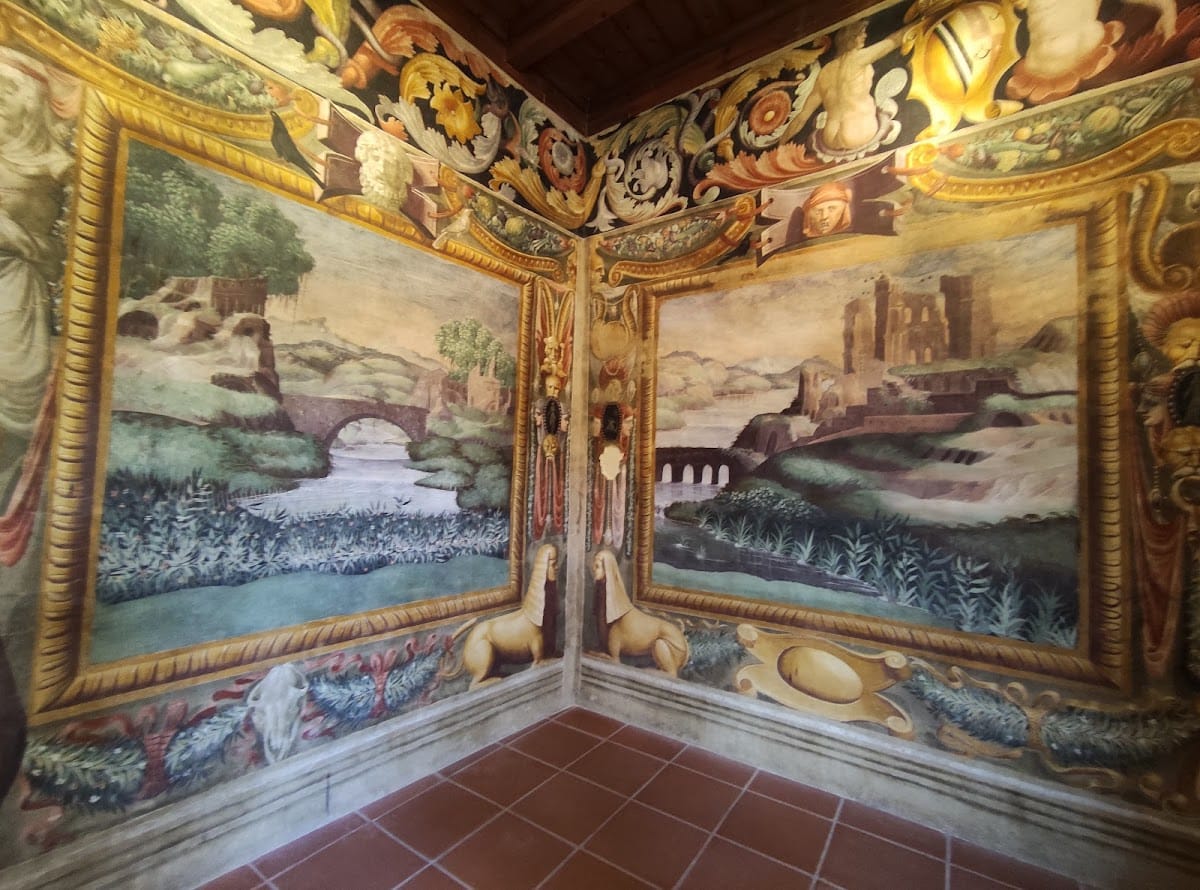
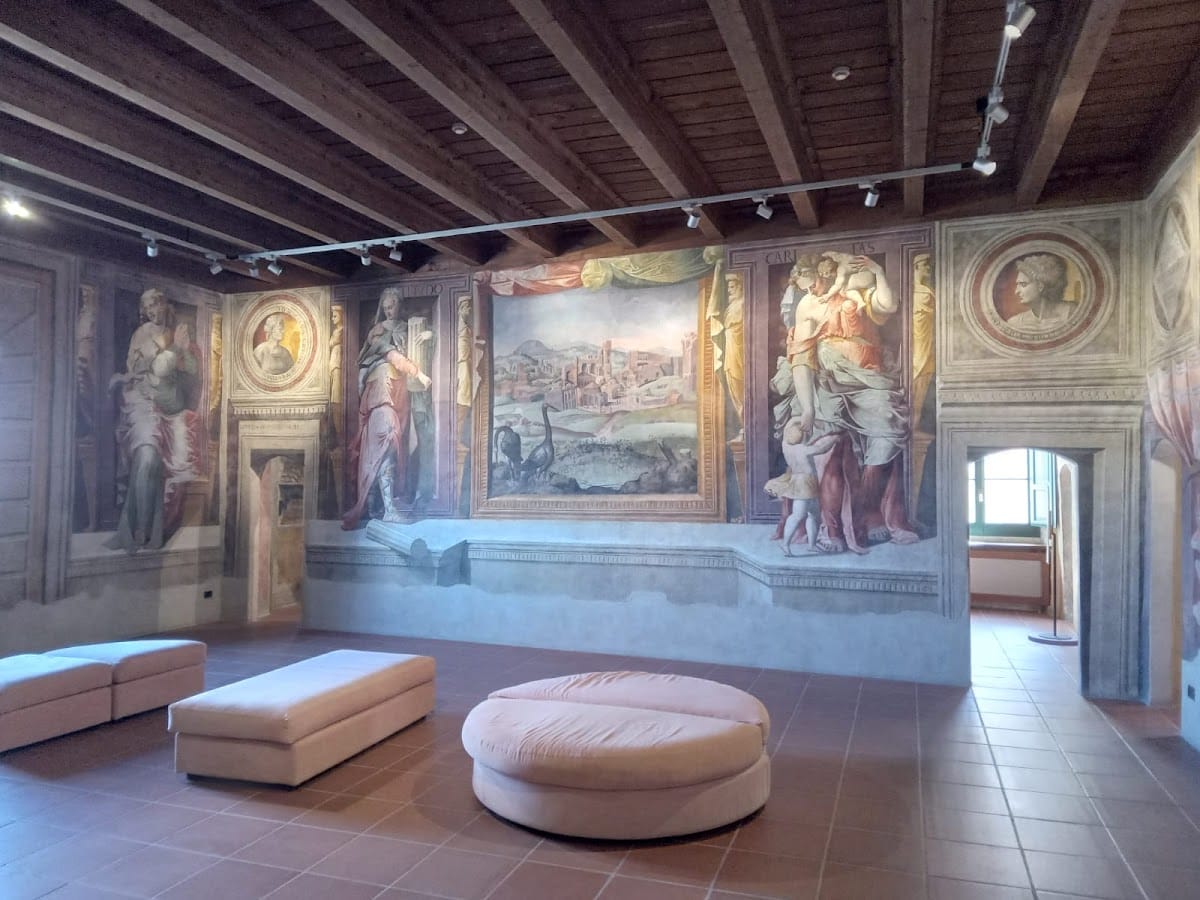
The fresco cycle covers every room of the piano nobile, the principal formal residential floor of an Italian palace. Painted architecture and carefully arranged spatial effects create the impression in some rooms that the walls open onto landscapes or the outdoors. The subjects range from mythological and Christian narratives to allegories, historical scenes, and views of imagined or identifiable landscapes.
Atrium
The atrium contains fragmented scenes of the loves of Zeus, drawn from Ovid’s Metamorphoses, a classical Latin poem about myths of transformation. The surviving episodes show Io possessed by Zeus in the form of a cloud, Europa abducted by Zeus as a white bull, and Danae possessed by Zeus as golden rain.
Sala del Camino
The Sala del Camino has a fireplace on one of the room’s shorter sides. Its rear wall may refer to the family lineage through Giovanni di Capua, who was known for saving the life of King Ferdinand II of Aragon in 1495.
Sala dell’Incendio
The Sala dell’Incendio, also called the Sala dei Paesaggi, is entered through a small door painted with an imitation curtain. Its landscapes include a scene that may represent the Ponte Milvio. The broader programme of the room also includes the destruction of Sodom amid flames.
Sala delle Maschere
The Sala delle Maschere contains the cycle’s most complex metaphorical programme. Its imagery concerns human submission to divine will and uses numerous symbolic figures. Minerva, the Roman goddess associated with wisdom, strategy, and the arts, appears beside an owl, her attribute and a symbol of wisdom. The room also contains a clipeus, a circular medallion or shield-shaped frame, bearing the painter’s signature and the date 1550. The inscription identifies Donato Decumbertino and states that he painted the work in August of that year.
Decumbertino’s name is woven into the story of Arachne, the skilled weaver who challenged Minerva and was transformed into a spider after her defeat. Another clipeus displays the arms of the Di Capua and Del Balzo families. The heraldic union refers to the marriage of Ferrante di Capua and Antonicca Del Balzo at the beginning of the sixteenth century, joining two aristocratic families through marriage.
Sala del Pergolato
The Sala del Pergolato is decorated with a trompe-l’oeil pergola, a painted illusion that makes a surface appear to open onto architecture or landscape. Beyond it are views of the Roman countryside and a naval battle that may represent the Battle of Otranto of 1480, in which Matteo di Capua died.
The possible Otranto scene has been compared with a painting in the Castle of Specchia. In that image, Aragonese troops appear beneath the walls of Otranto, probably led by Matteo di Capua. The fortification shown may be the Porta Alfonsina.
Salone delle Virtù
The Salone delle Virtù has a polychrome radial design on its ceiling and circular medallions on the walls containing personified virtues. The frescoes celebrate qualities attributed to Vincenzo di Capua, including charity, fortitude, prudence, justice, peace, and faith.
Sala del Canneto
The Sala del Canneto contains a river landscape with ruined buildings and medieval architectural forms. The small room may have provided access to the more private Studiolo.
Studiolo
The Studiolo contains mythological scenes involving troubled or contested loves, including Erse and Cupid and Psyche. This subject matter may indicate that the room served as a bedroom.