Castello San Salvatore: A Medieval Feudal Castle in Susegana, Italy
Site at a Glance
- Rating
- 4.6
- Popularity
- Medium
- Country
- Italy
- Primary era
- Medieval
- External website
- Open
- Eras represented
- Medieval, Early Modern
- Civilizations
- Holy Roman Empire, Venetian
- Site type
- Military
- Remains
- Castle
On this page8 sections
History
Castello San Salvatore is a medieval fortified complex in Susegana, Italy, built by the Collalto family between the late thirteenth and early fourteenth centuries. Its position on San Salvatore hill gave it control over nearby settlements, major communication routes, and traffic on the Piave River.
Foundation and Collalto jurisdiction
In 1245, the municipality of Treviso ceded the hill of San Salvatore to the Collalto family, a noble feudal dynasty that already held territorial rights in the neighboring county of Collalto. Construction of the castle began between the late thirteenth and early fourteenth centuries, and the complex was complete by 1312.
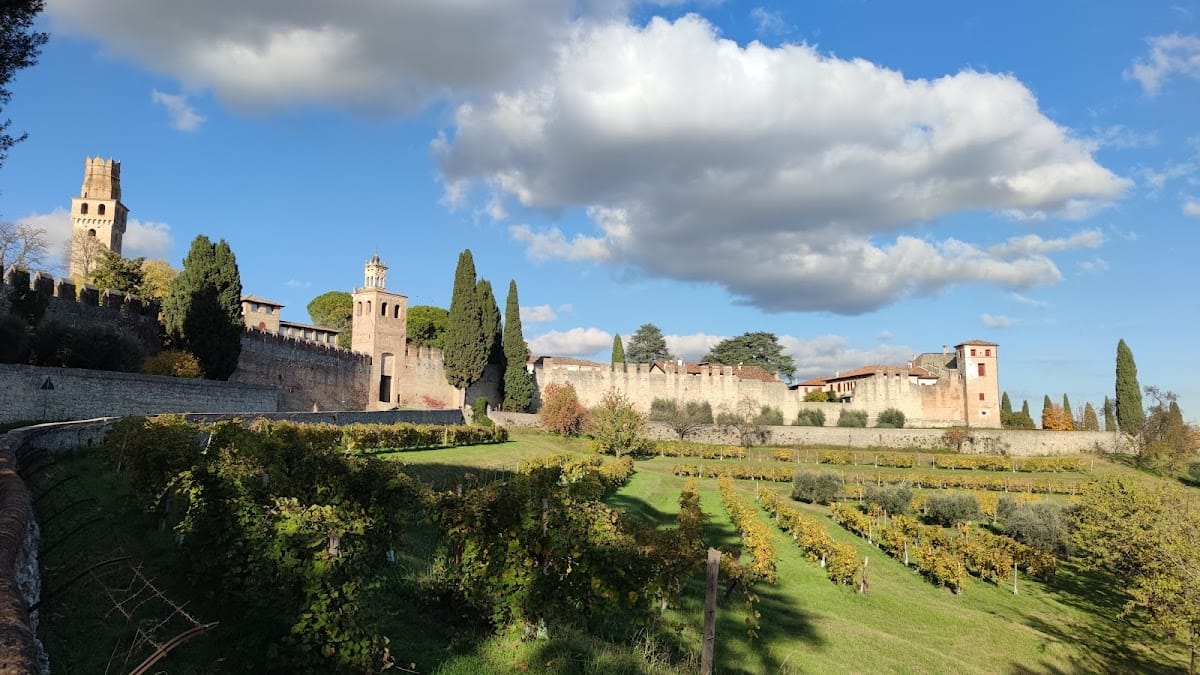
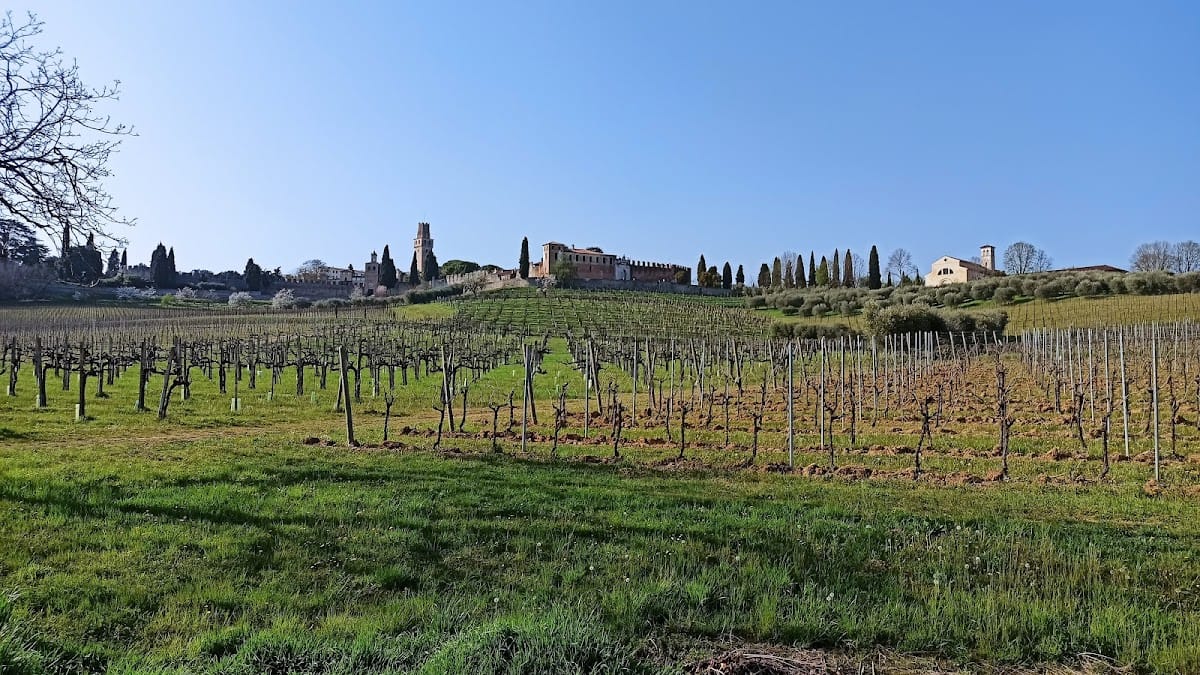
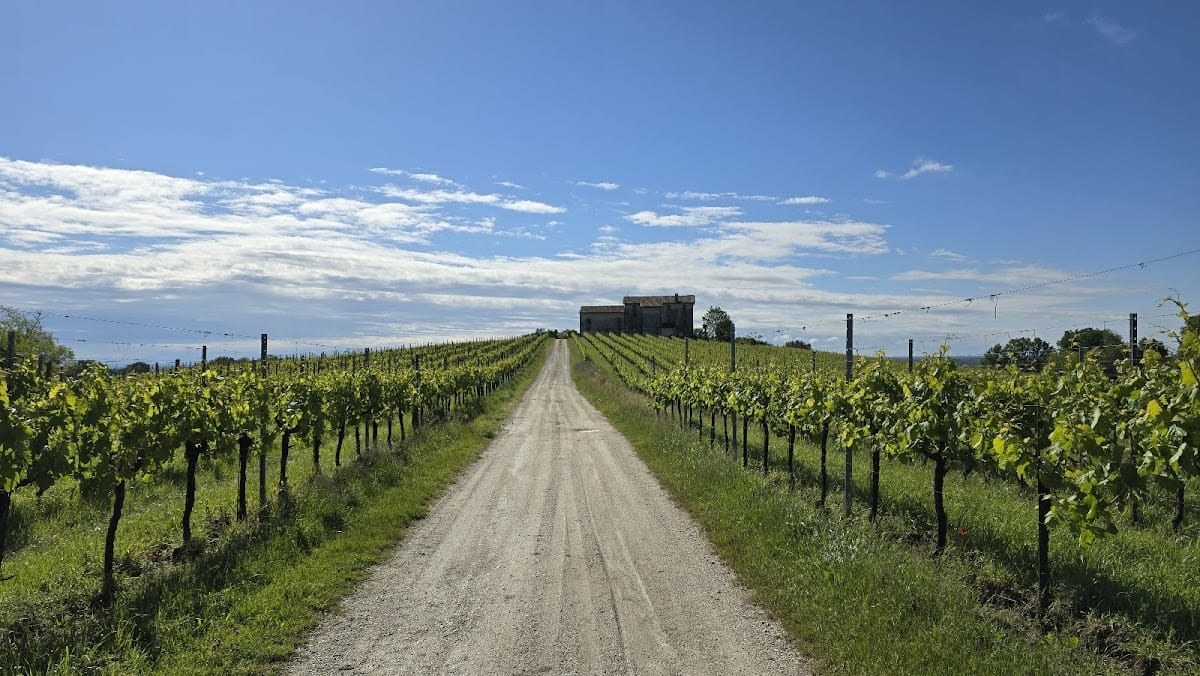
That year, the medieval Holy Roman Emperor Henry VII granted the Collalto family full jurisdiction over the counties of Collalto and San Salvatore. The grant established the institutional basis for a largely autonomous principality, first within the municipality of Treviso and later within the Venetian Republic, the maritime state that governed extensive territories in northeastern Italy. The principality retained extensive autonomy until 1797, when Napoleon arrived. The Collalto family also planted vineyards in the fields surrounding the castle.
Military importance and political transformation
The castle’s commanding position drew it into the late-medieval conflicts involving Treviso, Padua, and Venice. In 1546, Malipensa still included San Salvatore among the works defending the March of Treviso. Its military role changed after the War of the League of Cambrai, an early-sixteenth-century conflict between Venice and a broad coalition of European powers. Thereafter, the complex developed into a seigneurial residence and a center of political power rather than functioning primarily as a military stronghold.
Residence, war damage, and reconstruction
From the sixteenth to the eighteenth centuries, a prolonged period of peace allowed several artists to embellish the complex. Substantial alterations, including destructive changes, continued through the nineteenth century. The castle’s chronology is difficult to reconstruct because the Collalto family archive was destroyed by fire during the First World War.
The complex was heavily disrupted during the First World War because of its proximity to the Piave front. After the Battle of Caporetto in 1917, Susegana came under Austro-German occupation, and occupation forces used the castle. Italian artillery later bombarded it, causing severe damage. A letter from 1919 described the complex as almost entirely collapsed, with especially serious damage to its private oratory, whose frescoes included works by Tommaso da Modena and Pordenone, the name commonly used for Giovanni Antonio de’ Sacchis.
Radical restoration and reconstruction began in 1943 and were completed in 1950–1951. The castle is an Italian national heritage property and is used as a venue for cultural events.
Remains
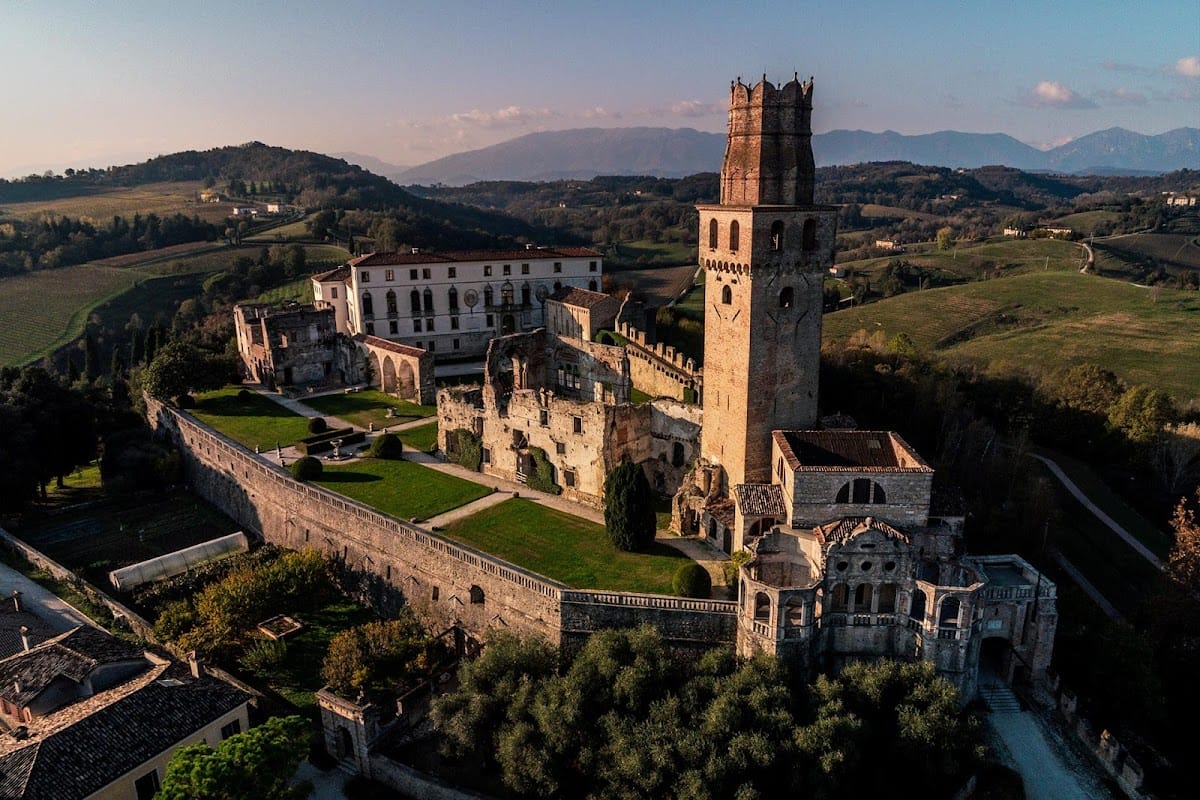
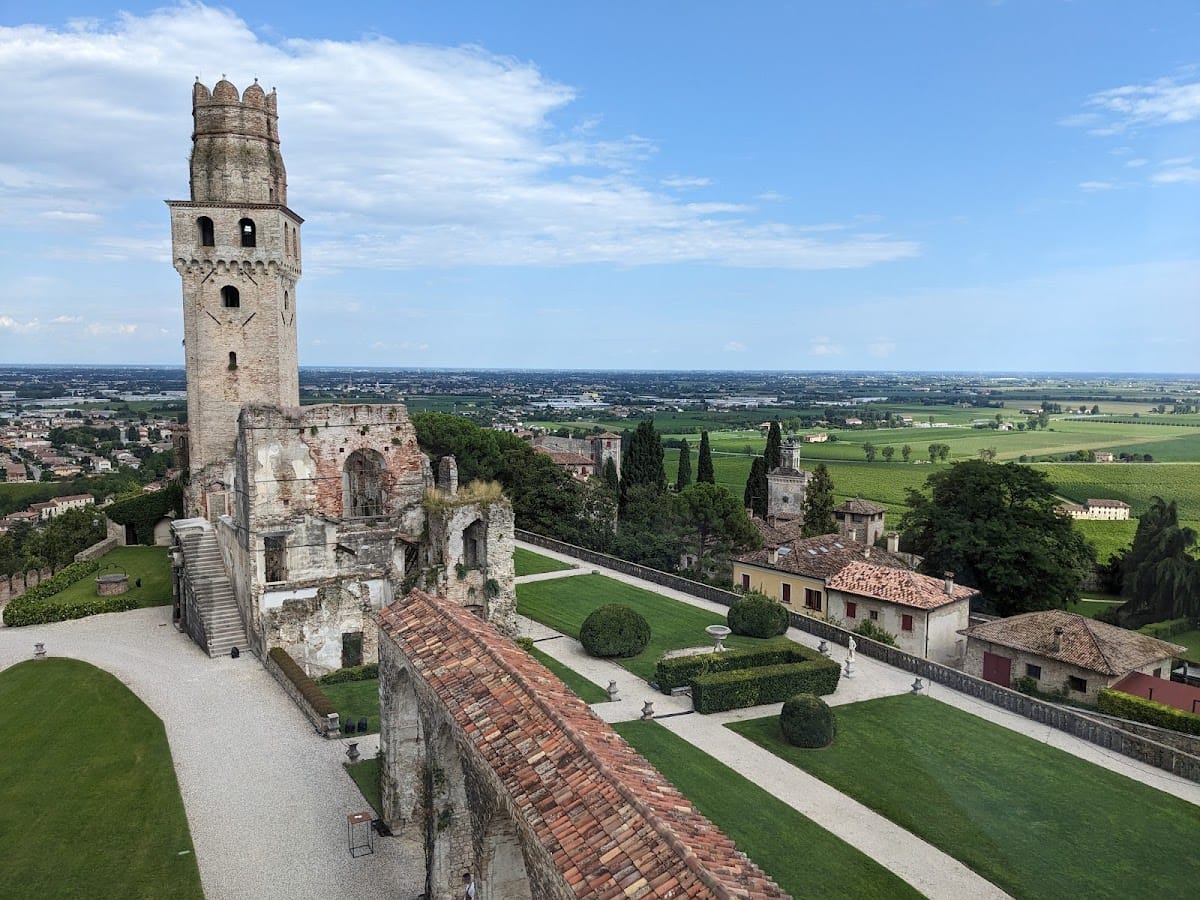
Castello San Salvatore occupies San Salvatore hill and covers approximately 3,000 square metres. The surviving fortified complex is organized around a crenellated enclosure, with the Palazzo Odoardo block, the great tower, and the Church of Santa Croce connected to the ruins of other buildings. A drawbridge and entrance form part of the access system. After the restoration and reconstruction campaign of 1943–1951, the complex is described as restored and intact.
Fortified enclosure and tower
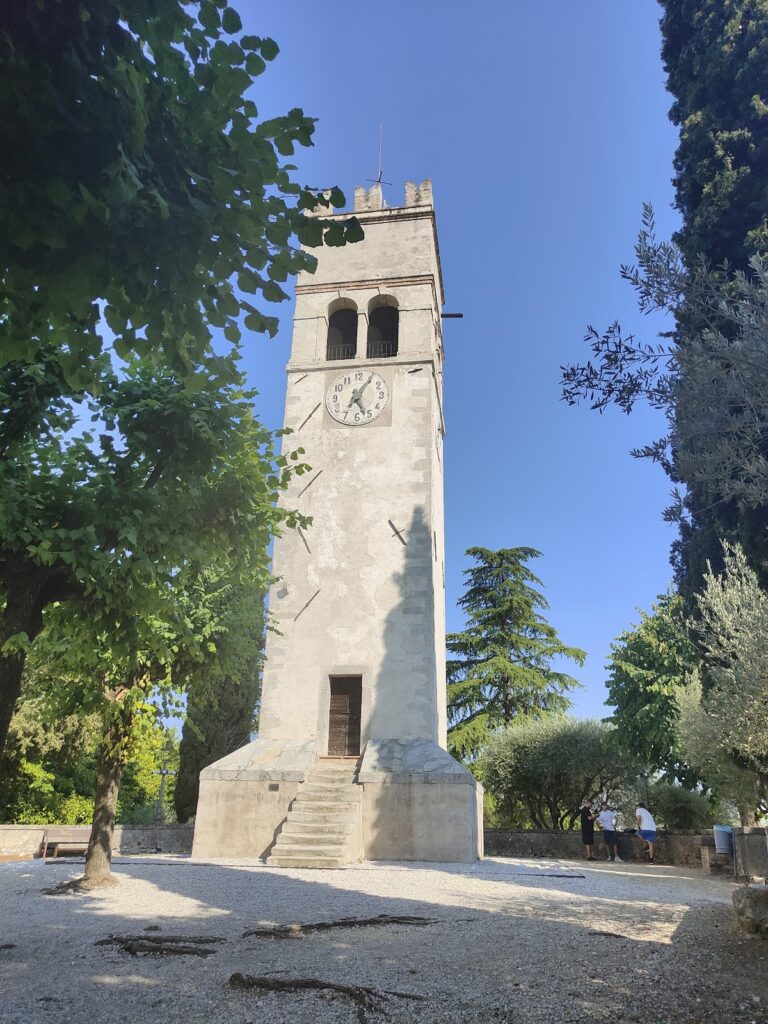
The crenellated enclosure preserves the defensive framework of the castle, while the great tower forms one of its principal surviving elements. The internal enclosure formerly brought together several architectural styles. Its facades later gained a degree of visual unity through homogeneous fresco decoration. The castle is considered one of the largest castles in northern Italy, extending across its hilltop site with the entrance and drawbridge integrated into the fortified arrangement.
Palazzo Odoardo and the church
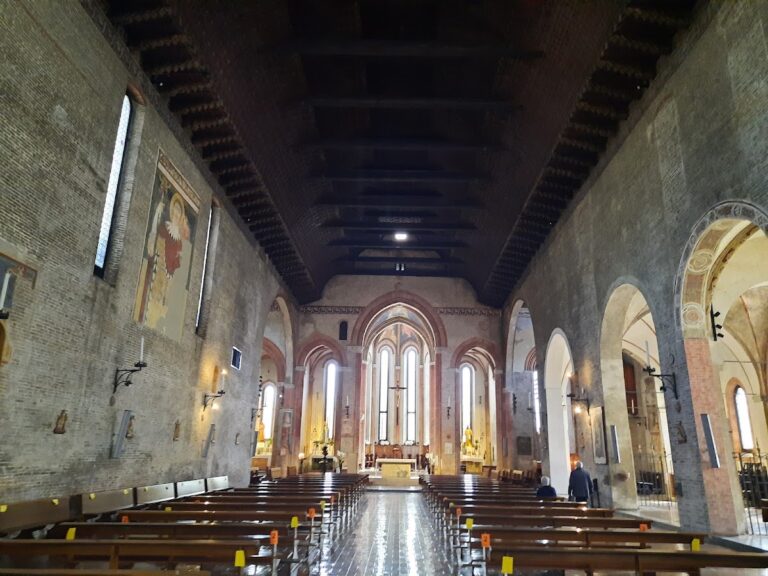
Palazzo Odoardo was built within the castle between the sixteenth and eighteenth centuries. The most important architectural works are believed to have taken place in the sixteenth century, when the complex acquired the characteristic appearance of urban palaces. The Church of Santa Croce forms another surviving part of the complex, which also retains connections to the ruins of other buildings.
Chapel and painted decoration
The castle chapel was decorated with frescoes, and the private oratory contained works attributed to Tommaso da Modena, a fourteenth-century Italian painter associated especially with fresco painting, and Pordenone, a sixteenth-century Italian painter. The oratory suffered severe damage during the First World War, before the later campaign of restoration and reconstruction reshaped the surviving complex.