Castello di Branduzzo: A Lombard Renaissance Fortified Complex in Italy

Site at a Glance
- Rating
- 4.4
- Popularity
- Very Low
- Country
- Italy
- Primary era
- Medieval
- External website
- Open
- Eras represented
- Medieval
- Civilizations
- Duchy of Milan
- Site type
- Domestic
- Remains
- Castle
On this page7 sections
History
Castello di Branduzzo is a fortified complex in Italy, in the hamlet of Castelletto di Branduzzo in the Province of Pavia. Construction began in the fourteenth century, and the complex developed as a medieval-type castle that later reflected the architectural traditions of Renaissance Lombardy.
The Botta family and the medieval castle
The castle belonged to the Botta family, which had lived in the Pavia area since 1298. Although the family’s connection with the territory became definitive only during the fifteenth century, the Botta substantially reshaped the complex. They retained its square towers and strong defensive walls while expanding its residential and agricultural functions.
During the Visconti period, when the Visconti dynasty ruled Milan, Castello di Branduzzo was frequently used as a base for hunting expeditions. The castle later underwent a major campaign of expansion and renovation in the fifteenth century, preparing the complex for its most prosperous phase.
Renaissance prosperity
Castello di Branduzzo reached its greatest prosperity during the Renaissance. Bergonzio Botta, treasurer-general of the Duchy of Milan, was involved in works intended to divert the Po. Leonardo da Vinci, the Italian Renaissance artist and engineer, assisted with the planning of these hydraulic and landscape-engineering works.
In 1488, the castle hosted a large celebration for the marriage of Gian Galeazzo Sforza, duke of Milan, to Isabella of Aragon. Gian Galeazzo was the nephew of Ludovico il Moro, a leading Milanese statesman who exercised power in the duchy. The event reflects the standing the complex had acquired during its period of Renaissance prosperity.
Later ownership and decline
The complex remained prosperous until the sixteenth century. In 1634, the Botta family became related to the powerful Genoese Adorno family through the marriage of a Botta to the last Adorno heiress. This union gave rise to the Botta Adorno family.
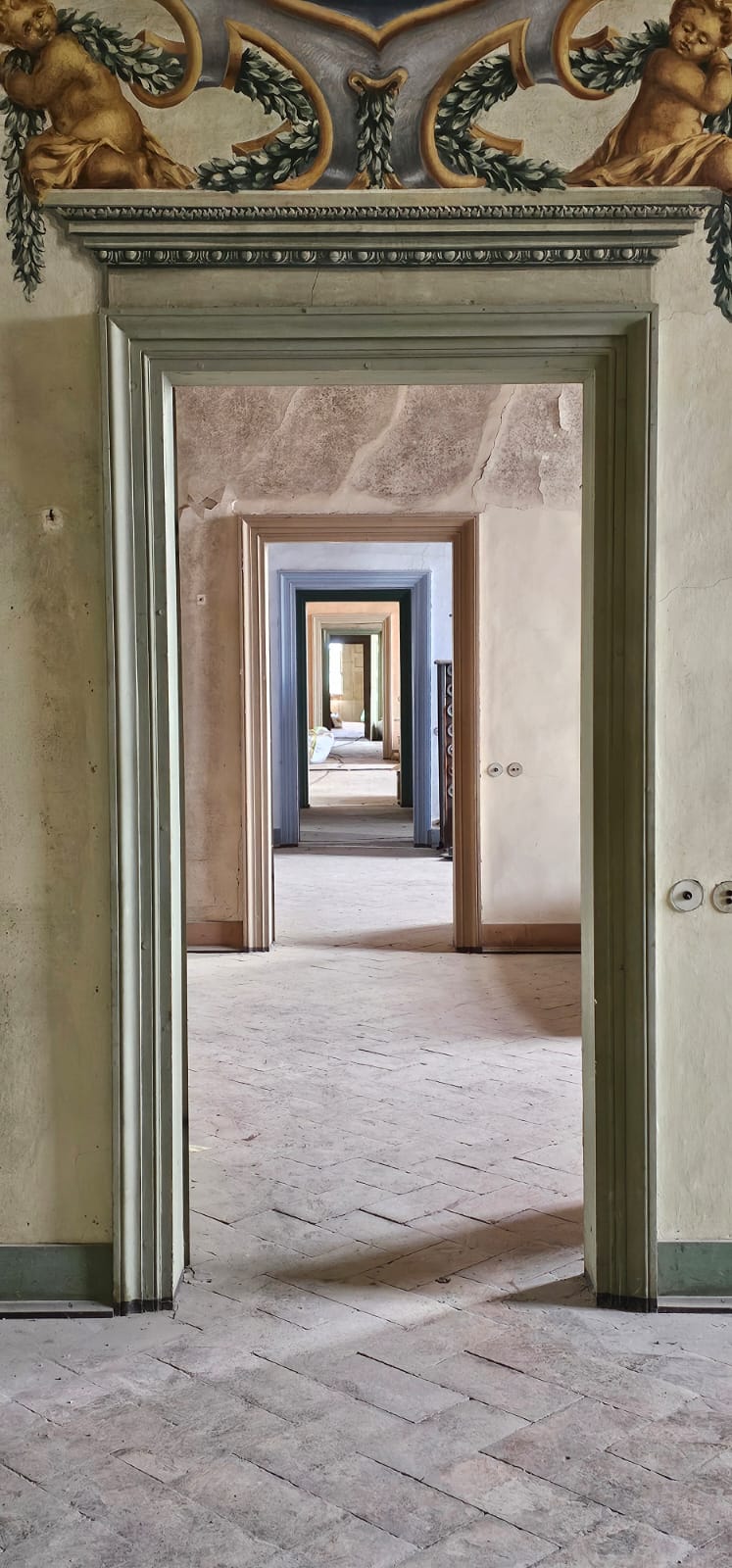
Castello di Branduzzo is now privately owned by the Parrocchetti Piantanida family and has Italian national heritage designation. Approximately three decades of abandonment have led to the complete decay of the castle, leaving its survival in a poor physical condition.
Remains
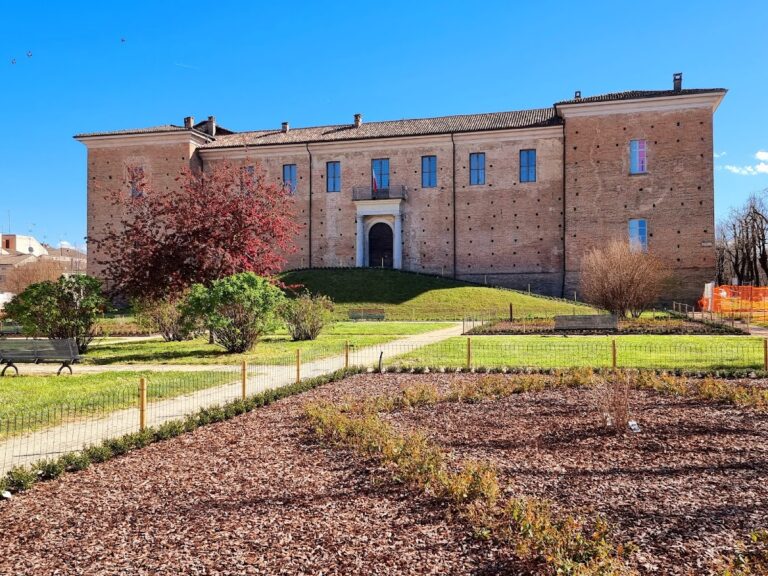
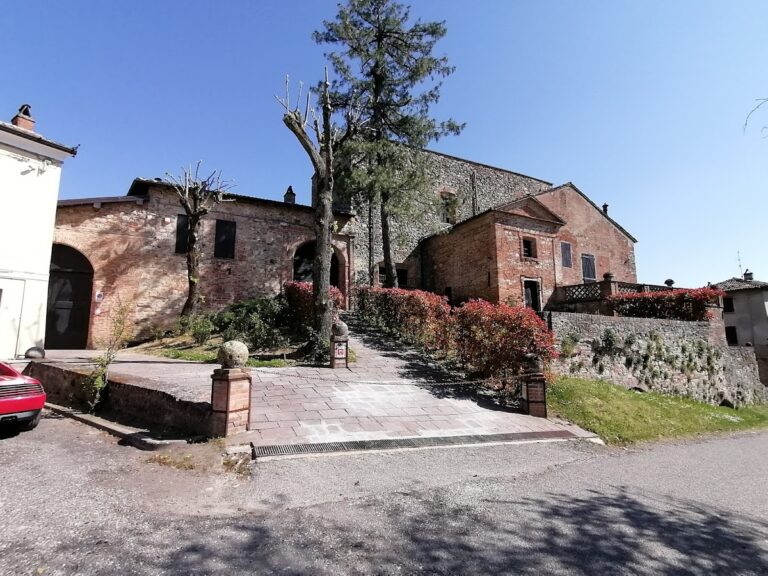
Castello di Branduzzo stands in the open Po Plain near the Coppa stream and its outlet into the Po. The large complex follows the Lombard Renaissance cascina-castello model, a fortified residence combined with agricultural buildings and working facilities. Its seigneurial residential area, extensive stables, large garden, portico, and agricultural annexes are enclosed by long walls. The scale of this arrangement made it effectively a small inhabited center in which hundreds of people lived.
The enclosed agricultural complex
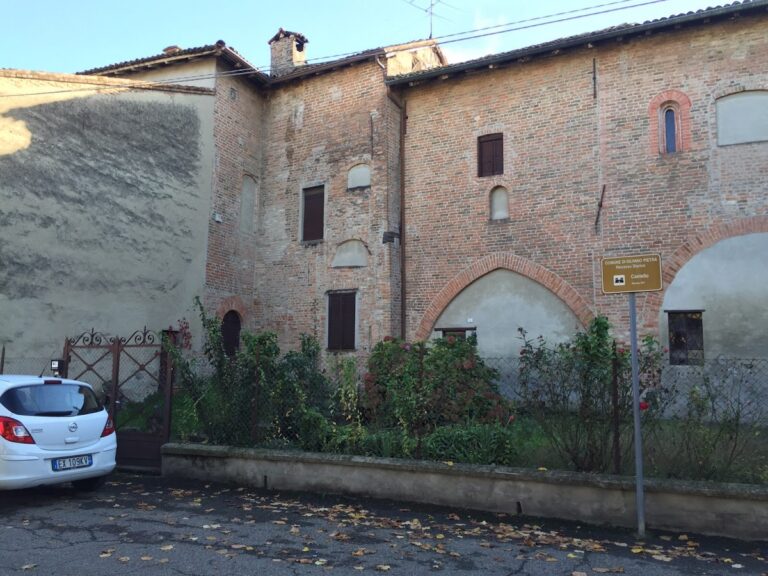
The castle’s organization combines defensive, residential, and farming spaces within one extensive walled layout. This arrangement is compared with the Sforzesca at Vigevano and illustrates how the cascina-castello form joined a fortified residence to the facilities of a large agricultural estate. The buildings are constructed of brick, and the complex is currently in poor condition after its prolonged abandonment.
The palace and corner towers
The main palace is rectangular and contains a large internal courtyard. Four towers occupy its corners, with two smaller towers of Visconti type and two larger towers characteristic of Sforza architecture. The distinction reflects the successive ruling dynasties of Milan whose architectural traditions shaped the complex.
The principal entrance has elaborate decoration, while windows in the older palace are embellished with terracotta ornament. These details contribute to the castle’s place among examples of refined Lombard Renaissance architecture. A monument to Giovanni Ballestra stands in front of the castle walls.