San Gaudenzio Castle: A Medieval Fortification in Italy



Site at a Glance
- Rating
- 4.6
- Popularity
- Medium
- Country
- Italy
- Primary era
- Medieval
- External website
- Open
- Eras represented
- Medieval, Early Modern
- Civilizations
- Duchy of Milan, Spanish
- Site type
- Domestic
- Remains
- Castle
On this page6 sections
History
San Gaudenzio Castle is a medieval fortification in Italy, located in Cervesina in Lombardy’s Oltrepò Pavese, near the Staffora stream. Probably erected by the Visconti in the fourteenth century, it was later transformed from a defensive manor into a residence, with its development continuing from the fourteenth to the seventeenth century. During the Middle Ages, San Gaudenzio was more important than Cervesina because it contained both a castle and a pieve, a medieval parish district governing dependent local churches.
The Beccaria and Taverna fief
When the Beccaria, an aristocratic family from Pavia, held predominance in the area, San Gaudenzio and Cervesina became an autonomous fief under a branch known as the Beccaria of San Gaudenzio. A fief was a territory held within the feudal system. The family’s authority reached its greatest extent in the sixteenth century, when Matteo Beccaria became Marquis of Mortara.
Matteo Beccaria died without male children, and in 1536 the fief passed to the Taverna family of Milan, Counts of Landriano. The Taverna, a Milanese noble family, retained control of San Gaudenzio and Cervesina until the end of feudalism in 1797.
Renovation and preservation
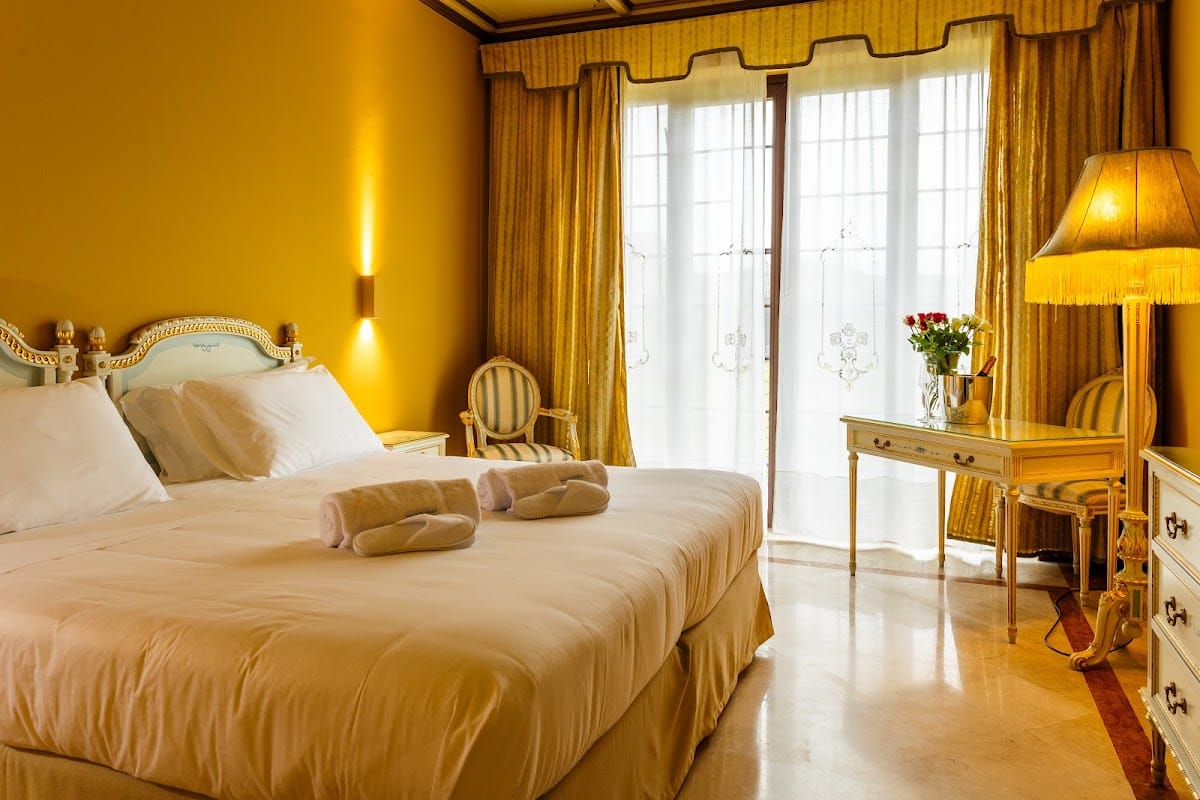
Renovations in the seventeenth and twentieth centuries altered the castle’s fabric and contributed to its present residential character. A restoration completed in 1977 left the building in an excellent state of conservation. The castle is privately owned, houses a hotel facility, and is designated Italian national heritage.
Remains
Castle structure and setting
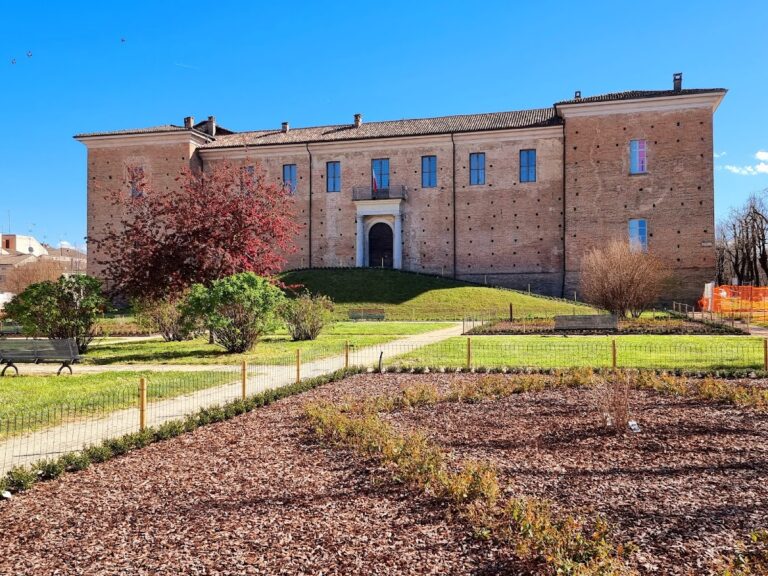
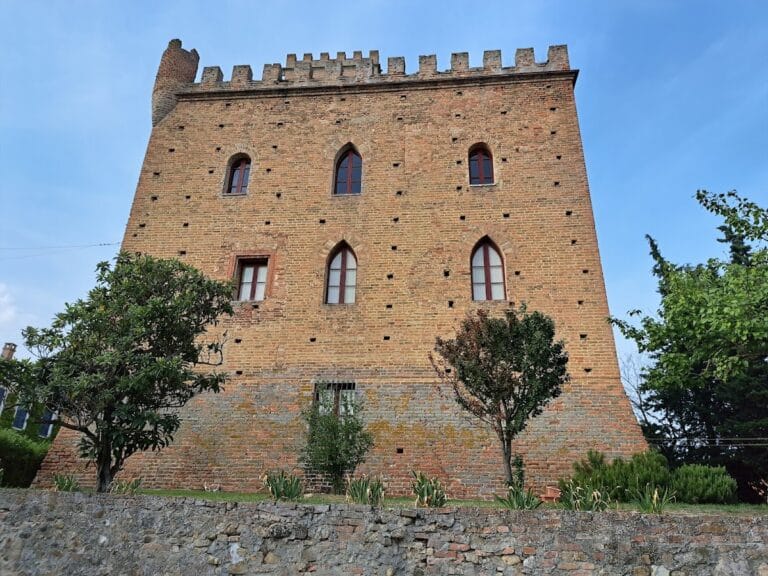
Built of brick, the castle has a square plan with four square-based corner towers. Its layout preserves the basic form of a fortified manor while incorporating the changes that turned the building into a residence. A small internal courtyard lies within the structure and contains a well. Ancillary buildings stand beside the castle, which is set within an extensive park.
Visconti defensive features
The castle and its four towers retain features associated with Visconti building traditions, including pointed-arch windows. The upper sections of the towers have crenellations, the raised sections along the top of a fortified wall or tower. Together with the corner towers and brick construction, these elements express the building’s original defensive purpose while forming part of its later residential appearance.