Dolní Kounice Castle: A Gothic Fortress and Renaissance Residence in Czechia

Site at a Glance
- Rating
- 4.3
- Popularity
- Low
- Country
- Czechia
- Primary era
- Medieval
- External website
- Open
- Eras represented
- Medieval, Early Modern
- Civilizations
- Habsburg, Holy Roman Empire, Kingdom of Bohemia
- Site type
- Domestic
- Remains
- Castle
On this page7 sections
History
Dolní Kounice Castle is a historic castle in Dolní Kounice, Czechia, above the Jihlava River. It probably began as a fortified place protecting a river ford and regional trade routes before becoming a Gothic castle in the 1320s and a Renaissance noble residence in the sixteenth and seventeenth centuries.
Origins and the Rosa Coeli monastery
The earliest known owner was Vilém, a twelfth-century nobleman associated with the Dolní Kounice estate. His silver rooted lily emblem on a red field was granted in 1162. After raids into Austria led to his papal excommunication, Vilém was released after promising to establish and endow a monastery on his estate. He fulfilled that undertaking in 1181 by founding the Premonstratensian monastery of Rosa Coeli, whose name means “Rose of Heaven.” He later transferred his original Dolní Kounice estate to the monastery.
As the monastery increased its wealth, a Gothic castle was built during the 1320s on the site of the earlier fortified place. Construction was completed in 1330. The castle remained associated with the monastery until its dissolution in the sixteenth century, when it passed to Ferdinand I, King of Bohemia and margrave of Moravia.
Renaissance transformation
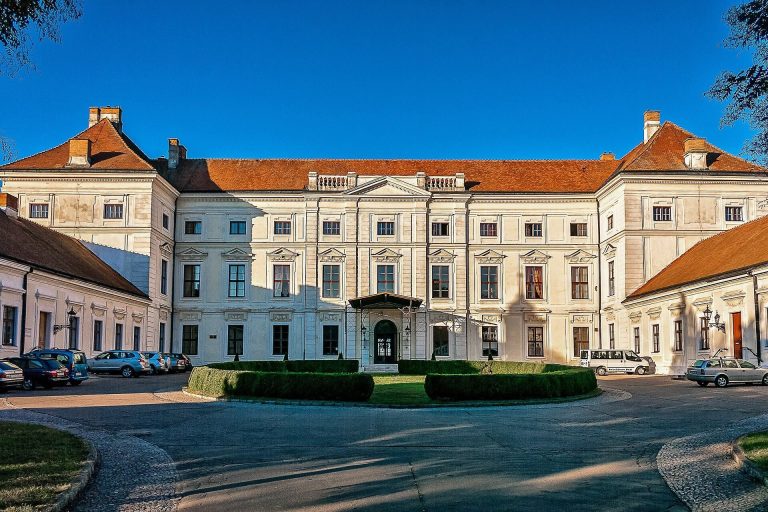
In 1537 Ferdinand sold the castle to Jiří Žabka of Limberk, vice-chancellor of the Kingdom of Bohemia. Žabka commissioned its rebuilding as a representative Renaissance residence. A further Renaissance rebuilding took place around the turn of the sixteenth and seventeenth centuries, when the estate belonged to the Drnovský family of Drnovice. Elements of the earlier fortification nevertheless remained within the transformed residence.
After the defeat in 1620 of the Bohemian Estates’ revolt, an uprising against Habsburg rule that began in 1618, the property was confiscated from the Drnovský family. The Dietrichstein family bought it in 1622. From then on, the residence served only as the administrative seat of the Dolní Kounice estate.
Modern ownership and restoration
The Herberstein family acquired the property in 1862 and used it for agricultural purposes, a change that affected some interior spaces. Following land reform, former administrator Emil Tomec bought the castle in 1927 and sold it to municipal secretary Karel Rubeš in 1937. Václav Edl purchased it in 1945, and from 1948 the local state farm was also a co-owner.
The state nationalized the castle in 1974 and transferred it to the State Enterprise for Heritage Care and Nature Protection in Brno, which intended to establish a representative center there. In 1986 the State Scientific Library in Brno, now the Moravian Library, took over the property with the intention of placing part of its storage facilities there.
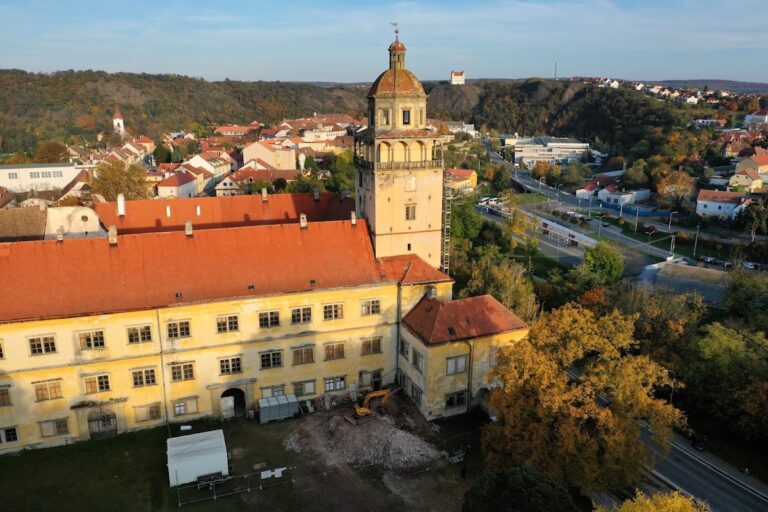
Restitution, the post-communist legal process for returning state-confiscated property to former owners or their heirs, returned the castle to the Edl family in 1992. The family immediately sold it to the Brno-based company L.V.P., which remains the owner. From 2006, L.V.P. began extensive reconstruction and opened the castle complex to the public. The building is protected as a cultural monument of the Czech Republic. Restoration continues, and the owner has prepared a project to convert the complex into a tourist resort.
Remains
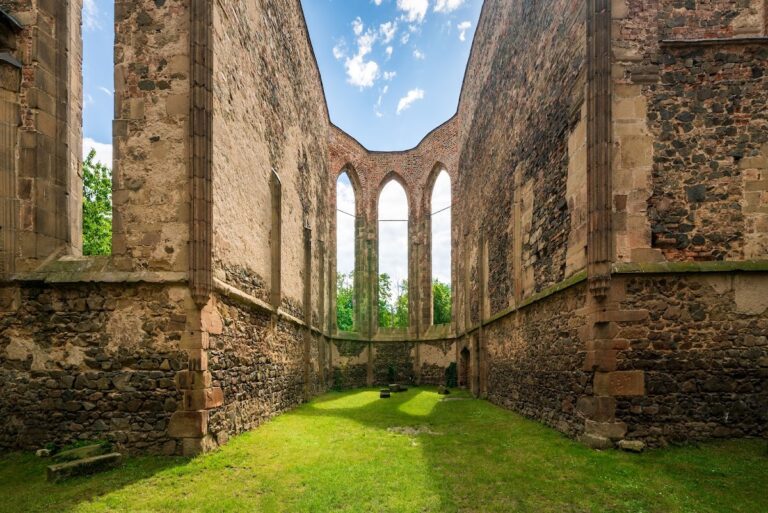
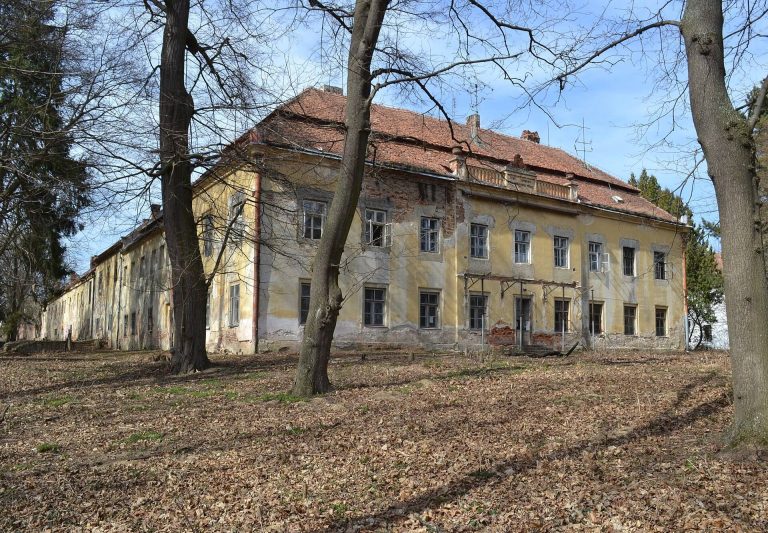
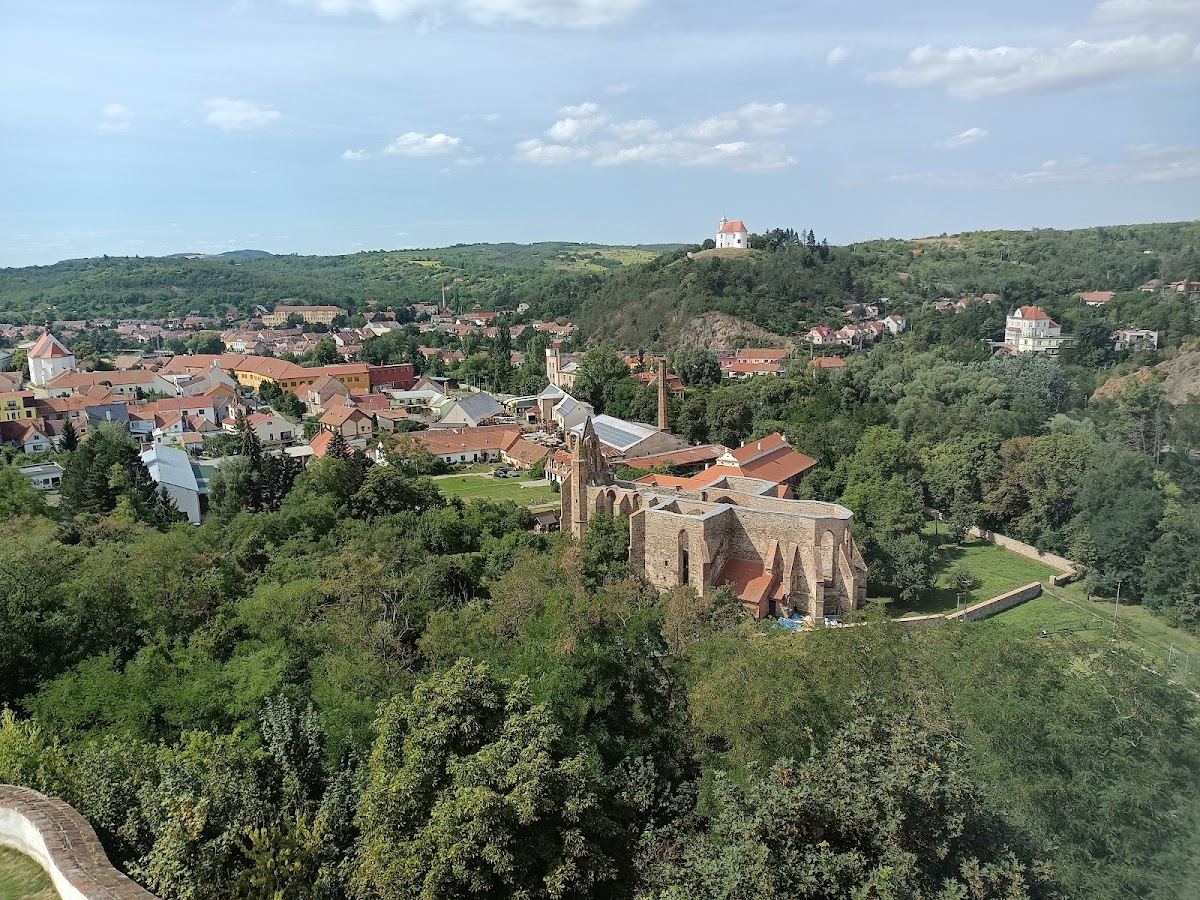
Dolní Kounice Castle stands on a hill above the Jihlava River, near the ruins of the Rosa Coeli monastery. The complex combines the fabric of a Gothic castle with Renaissance alterations that reshaped it into a representative noble residence. Fortification elements survive alongside the later residential architecture, while reconstruction has preserved important historical parts of the building.
Castle structure and surviving interiors
The building originated as a Gothic castle and was transformed during the sixteenth and seventeenth centuries. Its surviving historical features include Žabka’s staircase, the Green Knight’s Chamber, and extensive underground spaces. These elements form part of the architectural evidence for the castle’s change from a fortified medieval site into a Renaissance residence.
Setting and present condition
The castle complex is located on Zámecká Street in Dolní Kounice, in the South Moravian Region of Czechia. Its position above the river and near the Rosa Coeli monastery places the surviving castle within the historic landscape shaped by both the medieval estate and the monastery. Restoration remains in progress while the complex is publicly accessible.