Castello Dell’Arso: A Norman Coastal-Watch Fortification in Calabria

Site at a Glance
- Rating
- 4.5
- Popularity
- Very Low
- Country
- Italy
- Primary era
- Medieval
- External website
- Open
- Eras represented
- Medieval, Modern
- Civilizations
- Crown of Aragon, Kingdom of Naples, Kingdom of Sicily, Norman
- Site type
- Military
- Remains
- Castle
On this page6 sections
History
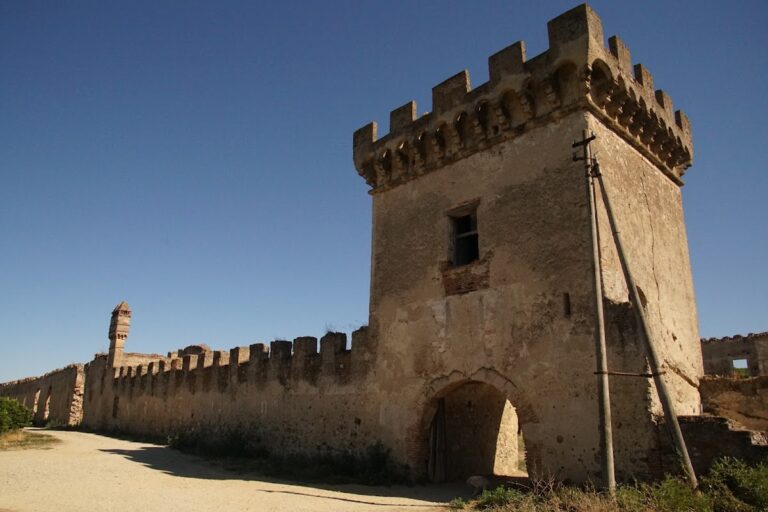
Castello Dell’Arso, also known as Torre dell’Arso, is a Norman medieval castle in Italy near Mandatoriccio, Calabria. Its construction began in the eleventh century at the request of Roberto d’Altavilla, or Robert Guiscard, a leading Norman ruler and military commander in southern Italy.
Norman origins
After the surrender of Cariati, the Normans built a lookout tower at the site around the year 1000. A lookout tower was a defensive structure used to observe approaching people or forces and communicate warnings. The tower served as a coastal-watch post, and its present position relative to the Ionian coast has prompted the hypothesis that the shoreline was once closer to it.
Later modifications
The site was altered as successive ruling powers took authority in parts of southern Italy. Under the Swabians, followed by the Angevins and Aragonese, the tower received architectural additions and modifications that obscured its Norman-Byzantine origins. Its name derives from the nearby Arso stream. The castle has subsequently been altered and restored.
Remains
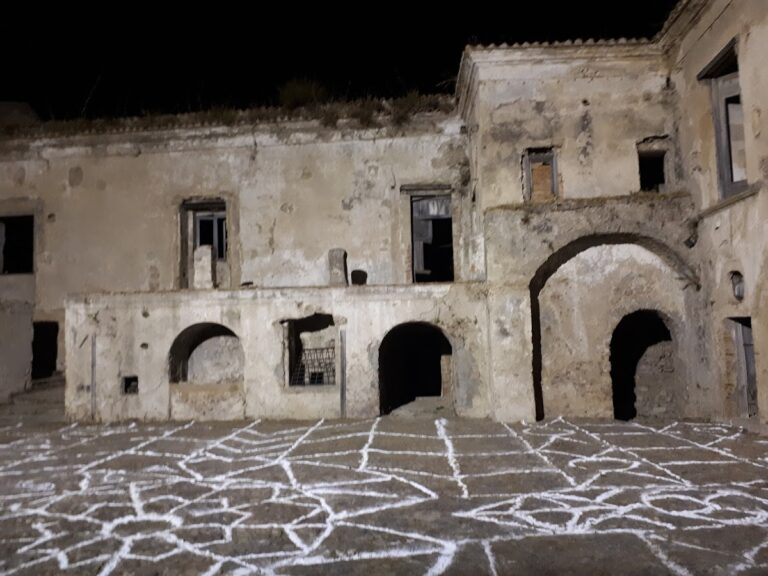
Castello Dell’Arso is a lowland medieval fortification standing near Mandatoriccio at approximately 36 metres above sea level. Its surviving fabric combines rubble stone and brick masonry, while the four facades are formed by walls with a star-shaped bastioned profile. A bastion is a projecting part of a fortification that strengthens the perimeter and improves defensive coverage.
Star-shaped fortifications
Strongly projecting angular corners extend from the walls as triangular buttresses. These elements give the castle its distinctive star-shaped outline and reinforce the perimeter. The present structure reflects the additions and alterations made after its Norman beginnings.
Sea-facing facade
The facade facing the sea was fitted with windows and small balconies during the nineteenth century. This later intervention forms part of the castle’s altered appearance, alongside the surviving medieval stone-and-brick construction.
Nearby sites