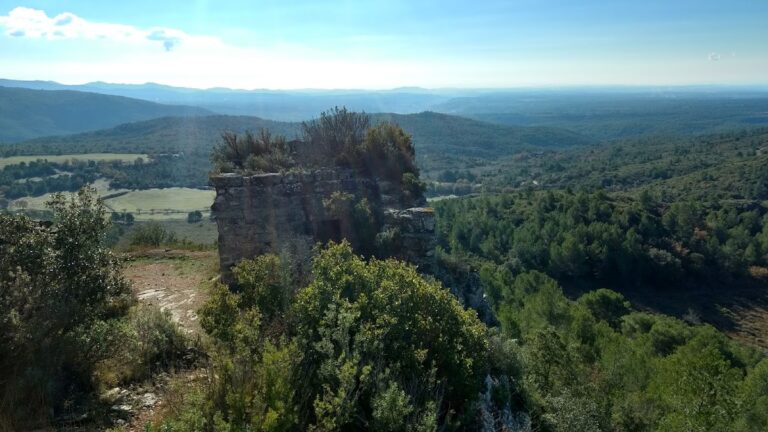
Castell de Selma: A Romanesque Castle and Former Templar Estate in Spain


Site at a Glance
- Rating
- 4.3
- Popularity
- Very Low
- Country
- Spain
- Primary era
- Medieval
- External website
- Open
- Eras represented
- Medieval
- Civilizations
- Unclassified
- Site type
- Military
- Remains
- Castle
On this page6 sections
History
Early references and territorial setting
Castell de Selma is a ruined Romanesque castle in Aiguamúrcia, Tarragona, Spain, with construction listed around 977. The site is recorded around that date as the castrum de Ceume, and its territory bordered the lands of the castles of Albà and Montmell. In 1149, Selma was described as uncultivated territory, alongside the neighboring lands of Montagut, Querol, and Pinyana.
The Templars and the Order of Saint John
On 26 April 1142, Guillem de Sant Martí, a medieval Catalan nobleman involved in territorial grants, apparently granted Castell de Selma to the Knights Templar. This military-religious order administered fortified properties and territorial commanderies, which were administrative and economic districts governed by commanders. It remains uncertain whether the Templars soon created a commandery at Selma or placed the castle under the commanderies of Barberà or Granyena. The earliest known commander of Selma dates from 1225.
After the suppression of the Knights Templar at the beginning of the fourteenth century, Selma passed to the Order of Saint John of Jerusalem, another military-religious order that inherited many former Templar possessions. The site remained dependent on the order until the abolition of seigneurial jurisdictions, the territorial governing rights held by secular lords or institutions over lands and their inhabitants.
The settlement beneath the castle
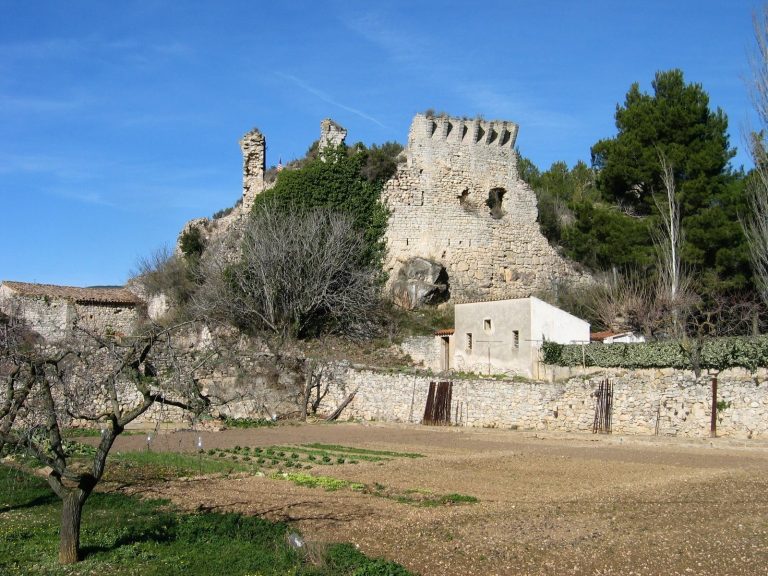
A settlement developed below the castle and later became an abandoned hamlet. It contained only about twenty houses, yet it remained an important meeting place for the large farmsteads in the surrounding valleys. Its decline was linked in part to the construction of the road to Cal Cendral in the nearby Pla de Manlleu. About twenty-five years before a 1934 account, the hamlet still served as the place where these farmsteads converged.
Modern heritage protection
Castell de Selma is protected as a Cultural Asset of National Interest and as a historical monument. It is listed under the Spanish heritage reference RI-51-0006547 and the Catalan Architectural Heritage Inventory number 808. The castle has also appeared on the Red List of Endangered Heritage since 2007, under the identifier encomienda-de-san-cristobal-de-selma; its cultural-property designation dates from 1988.
Remains
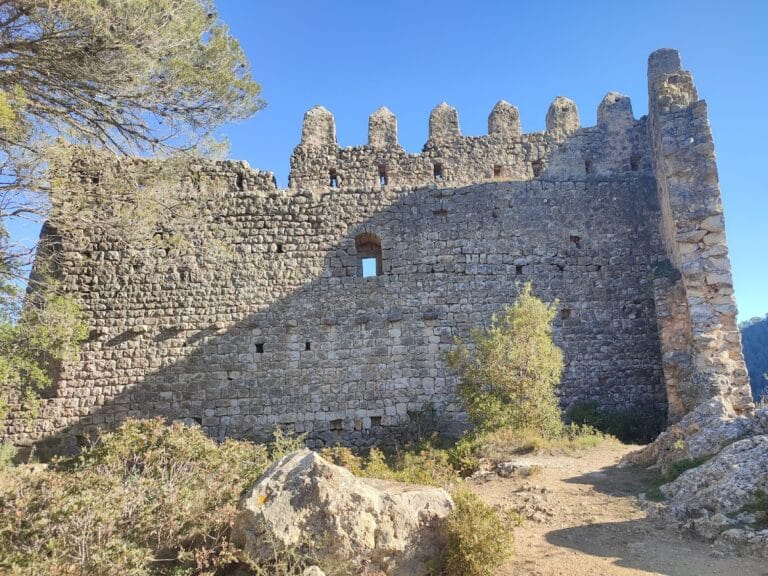
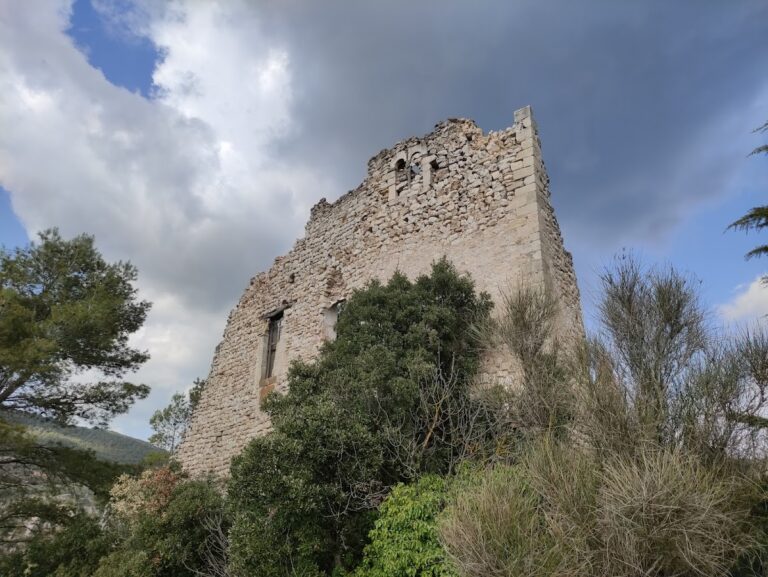
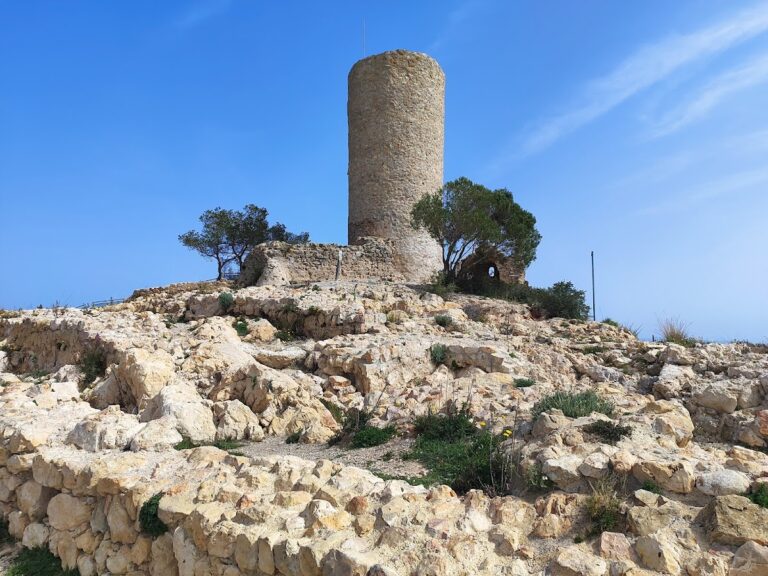
Only scant ruins survive on the hill above the abandoned settlement of Selma, on the southeastern slope of Puig de les Forques. The castle occupies the higher ground, with the hilltop settlement standing at 743 metres above sea level and the castle listed at 755 metres. Its remains belong to a Romanesque structure, a medieval architectural style marked broadly by massive masonry, thick walls, and semicircular forms.