Castell de Moixent: A Medieval Fortress in Valencia


Site at a Glance
- Rating
- 4.6
- Popularity
- Very Low
- Country
- Spain
- Primary era
- Medieval
- Eras represented
- Bronze Age, Medieval
- Civilizations
- Almohad
- Site type
- Military
- Remains
- Castle
On this page9 sections
History
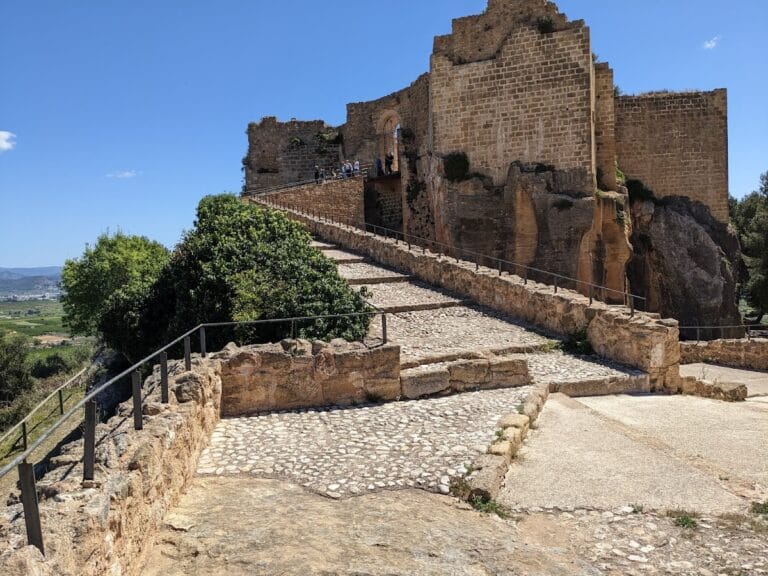
Castell de Moixent is a mountain fortress in Spain overlooking the town of Moixent in Valencia. It appears to have originated during the Almohad period, when the Almohads, a North African Islamic dynasty, ruled parts of the Iberian Peninsula in the twelfth and early thirteenth centuries. Its construction combines several styles and techniques, while excavations have revealed evidence of an earlier Bronze Age settlement on the site.
From Muslim rule to the Crown of Aragon
In 1244, the fortress passed to the Crown of Aragon through the Treaty of Almizra. This agreement established territorial arrangements between the Crown of Aragon and Castile. The change placed Castell de Moixent within the political and military framework of the Crown of Aragon, a medieval composite monarchy whose territories included the Kingdom of Aragon and later extensive lands in eastern Iberia and the western Mediterranean.
Sieges and later work
The castle continued to serve a defensive purpose in later centuries. It was besieged in 1351 during the wars between Aragon and Castile, and again in 1521 during the Revolt of the Germanies, a sixteenth-century uprising in the Kingdom of Valencia and other territories of the Crown of Aragon.
Archaeological work has identified repairs dating from the eighteenth century. From 1998 onward, excavations and consolidation works focused on the Torre de Coloms and parts of the castle, helping preserve and clarify the surviving remains.
Remains
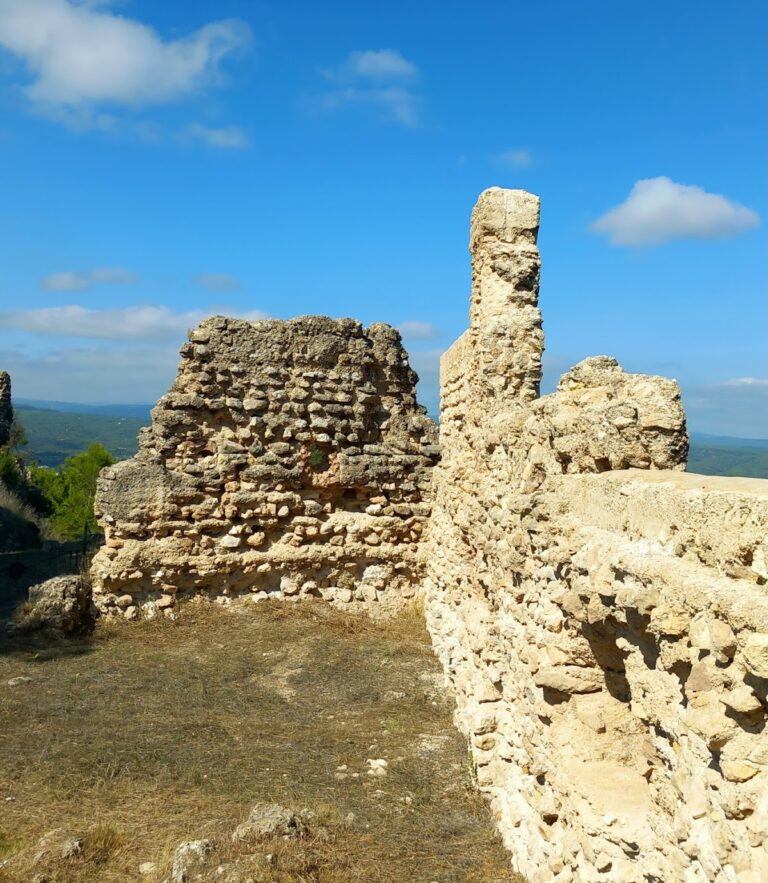
The surviving fortress occupies the mountain above Moixent and extends across the principal summit area and its slope. Its defensive arrangement included an eastern ditch and an enclosed upper area known as an albacar, a space associated with a fortress that could shelter people and livestock. The castle’s varied construction styles and techniques reflect the different phases represented in its fabric.
Castle and town defenses
Upper fortress
The principal castle area lies on the mountain above the town. An eastern defensive ditch marks part of its upper defenses, while the albacar occupied another section of the fortified area. Together, these elements formed part of the castle’s defensive organization.
Town walls
Walls extended from the main castle area down the slope. These surviving stretches connected the fortress with the defended settlement below and form part of the physical relationship between the castle and Moixent.
Torre de Coloms
The Torre de Coloms is an albarrana tower on an adjacent mountain. An albarrana tower is a detached defensive tower connected with a castle or fortified settlement by a defensive arrangement. Archaeological excavations and consolidation works have been carried out on the tower since 1998.
Earlier settlement remains
Excavations at the castle have exposed remains of a Bronze Age settlement. The Bronze Age was a prehistoric period in which bronze became important for tools, weapons, and other objects, although its dates varied by region. These remains place human occupation of the mountain long before the medieval fortress.