Castell de Maldà: A Historic Fortress in Catalonia


Site at a Glance
- Rating
- 4.2
- Popularity
- Very Low
- Country
- Spain
- Primary era
- Medieval
- External website
- Open
- Eras represented
- Medieval, Early Modern
- Civilizations
- Crown of Aragon, Spanish
- Site type
- Military
- Remains
- Castle
On this page5 sections
History
Castell de Maldà is a fortress in Spain’s Catalonia, in the municipality of Maldà, whose history is documented from the tenth century. The earliest document mentioning Maldà dates to 1040. The castle is associated with the Herrerian architectural style, a formal Spanish tradition known for geometric forms, restrained decoration, and a monumental appearance.
Medieval foundations and relocation
Ramon Folch de Cardona bequeathed Maldà to Vicenç de Cardona, members of the prominent Cardona noble lineage, on the condition that Vicenç build a castle and a church there and support him in fighting the Moors. A twelfth-century fortress occupied a different location from the ruins now called Castell de Maldà. The castle at the present site was built in 1212, while the former entrance portal remained associated with the earlier fortress.
Later changes and destruction
The castle was enlarged and altered over subsequent centuries. Rafael d’Amat i de Cortada was among those involved in its restoration. At the beginning of the First Carlist War in 1833, a Spanish civil war between Carlist supporters of a rival dynastic succession and Liberal forces defending the established constitutional order, a Carlist battalion commanded by Badía de Castellserà feared that the castle could become a Liberal stronghold. The battalion entered Maldà at night, set fire to the castle, and demolished it, leaving only limited structural remains.
Alfonso de Vilallonga y Serra, the current Baron of Maldà, later donated the building in exchange for participation in the Maldà Castle Board, which includes the Municipality of Maldà and other collaborating entities and individuals. The castle is classified as a Cultural Asset of National Interest by the Government of Catalonia and as an Asset of Cultural Interest by Spain’s Ministry of Culture. This legal status is dated 8 November 1988.
Remains
Fortification walls and surviving spaces
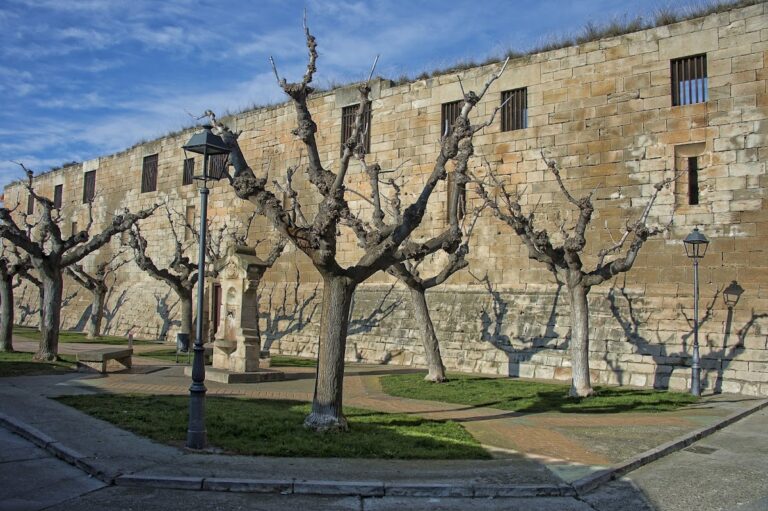
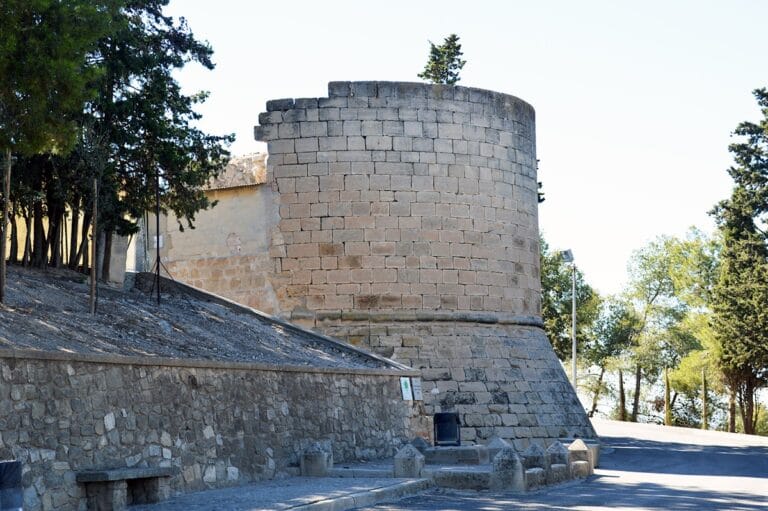
The surviving remains stand at the location of the 1212 fortification rather than at the site of the earlier twelfth-century fortress. Stone blocks form some walls, which measure between 1.85 and 1.95 metres in thickness. Other solid-stone walls rise between 6 and 10 metres. The ruins preserve little more than the walls left after the fire and demolition of 1833, while photographs also show an arms courtyard, an arched hall, and interior spaces.