Casteddu Etzu: A Medieval Castle in Sardinia


Site at a Glance
- Rating
- 4.6
- Popularity
- Low
- Country
- Italy
- Primary era
- Medieval
- Eras represented
- Medieval
- Civilizations
- Unclassified
- Site type
- Military
- Remains
- Castle
On this page6 sections
History
Casteddu Etzu is a medieval castle in Italy, near Cuglieri in Sardinia, built in the twelfth century to defend the borders of the Judicate of Torres, one of the independent medieval kingdoms that governed parts of Sardinia. In 1186, Ittocorre of Gallura, the brother of Barisone II of Torres, ordered its construction against the neighboring Judicate of Arborea.
From Torres to Arborea
During the thirteenth century, the Judicate of Torres disappeared, and Mariano II of Arborea annexed the castle and its surrounding territories to the Judicate of Arborea. The site therefore became part of a changing political landscape in which control of Sardinian territories shifted between medieval kingdoms.
Aragonese rule and abandonment
When Sardinia came under the rule of the Aragonese monarchy in 1410, a political transition that brought the island into Aragonese control, Casteddu Etzu lost its defensive function and passed through several changes of ownership. The castle became associated with the Zatrillas family, Counts of Cuglieri and Marquises of Siete Fuentes.
In 1668, Francesca Zatrillas, wife of Agostino di Castelvì and Marchioness of Laconi, took refuge at the castle while fleeing justice on suspicion of causing her husband’s death and taking part in the conspiracy to assassinate Camarassa, the viceroy of Sardinia. After horsemen led by a pursuing commissioner reached Oristano, she escaped into the mountains at night and sheltered in the rural church of San Lorenzo. She later reached Foghe Cove and sailed to Livorno. The Crown subsequently recovered the fief, a territory held under a feudal relationship with a superior authority, and the castle was abandoned from 1670 onward. Casteddu Etzu is recognized as Italian national heritage.
Remains
Hilltop layout
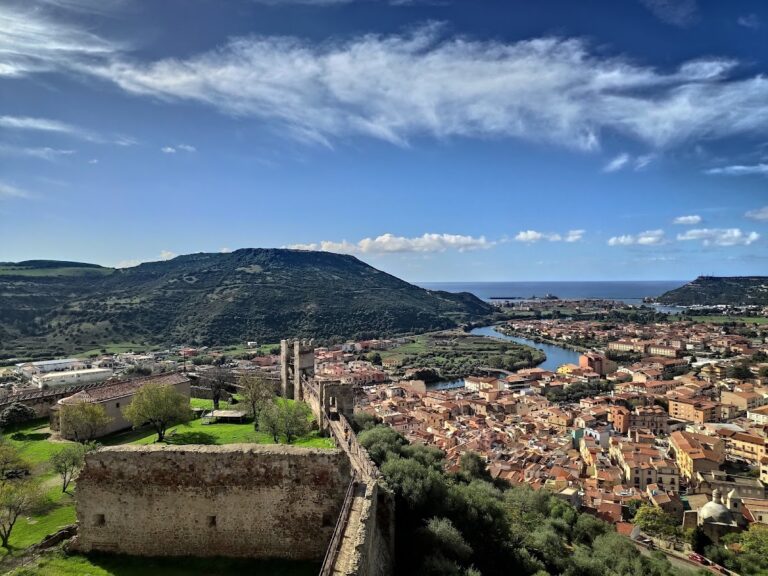
The ruins occupy a phonolitic-trachytoid hill in the Montiferru mountain complex, within the municipality of Cuglieri. Phonolitic-trachytoid rock is volcanic stone associated with phonolite and trachyte. The elevated position provides a 360-degree panorama. An elongated plan was enclosed by defensive walls and contained a series of internal rooms.
Surviving structures
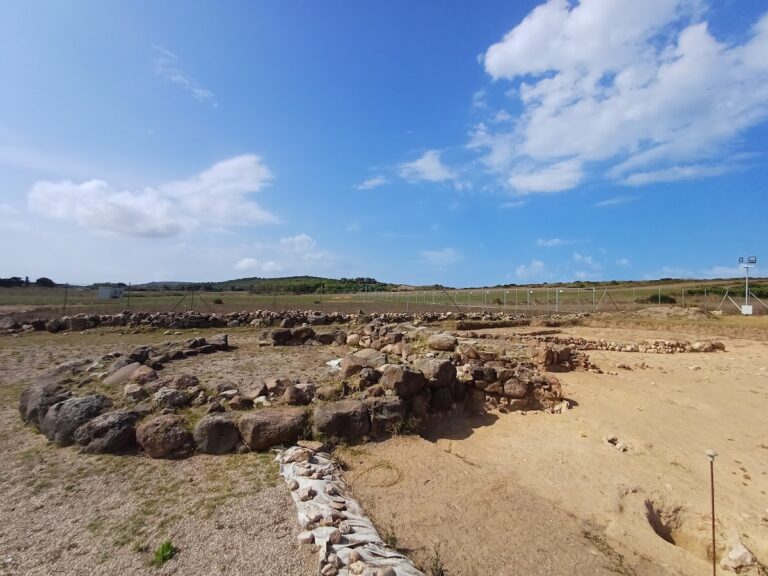
Parts of the castle’s towers and sections of its masonry walls remain above ground. Underground spaces, probably cisterns, survive as enclosed reservoirs for collecting and storing water. Traces of the internal rooms persist mainly at foundation level, preserving the outline of the castle’s interior within the defensive enclosure.