Castle of Serravalle: A Medieval Fortress Above Bosa, Italy


Site at a Glance
- Rating
- 4.2
- Popularity
- Medium
- Country
- Italy
- Primary era
- Medieval
- External website
- Open
- Eras represented
- Medieval, Early Modern
- Civilizations
- Crown of Aragon, Spanish
- Site type
- Military
- Remains
- Castle
On this page10 sections
History
Malaspina origins
Castle of Serravalle is a medieval fortress in Italy, rising above Bosa and built by the Tuscan Malaspina family of the Spino Secco branch during the second half of the thirteenth century. Its construction followed the dissolution of the Giudicato of Torres, a medieval Sardinian state ruled by a giudice, or judge with royal-style authority. The death of Adelasia of Torres, the state’s female ruler, in 1259 formed part of this political breakdown.
For a long time, tradition assigned the castle’s foundation to 1112 or 1121. That dating came from a fifteenth- or sixteenth-century chronicle written to strengthen Doria and Malaspina claims in Sardinia. Documentary evidence and archaeological excavation have instead rejected a twelfth-century foundation, placing the castle’s origins in the later thirteenth century.
The fortress stood on the northern frontier of the Giudicato of Arborea, another medieval Sardinian state governed by judges. It also guarded a position above a major Sardinian port that remained important until the sixteenth century. These political and geographic circumstances gave Serravalle a strategic role during the changing struggles for control of the island.
Arborean and Aragonese rule
Arborean, Aragonese, and Spanish rulers successively enlarged and altered the stronghold. The Sardinian-Catalan War, fought from 1353 to 1420 as Aragonese forces contested Sardinian territories with local powers, reinforced the castle’s military importance. Aragonese observers regarded it as one of the island’s essential strongholds and described it as a key to Sardinia.
Aragonese forces seized the castle and the town in 1410. From then onward, it functioned as a powerful military garrison. The wider political conflict had roots in 1297, when Pope Boniface VIII established the Kingdom of Sardinia and granted it to James II of Aragon, intensifying Aragonese claims against local Ligurian and Tuscan lords, including the Malaspina family.
During the Aragonese period, the fortress was reshaped for artillery, the gunpowder weapons of the period. Some towers were lowered, while earthen platforms were raised so firearms could be positioned more effectively against attackers. Leonardo Alagon, Marquis of Oristano and the last major leader to fight for Sardinian independence, sought refuge there in 1478. He was later captured by a Spanish ship while trying to escape toward Genoa.
Decline and renewed heritage
After successive reductions in its military role, the castle was abandoned to other uses. From the eighteenth century, it provided refuge for Bosa’s poorest inhabitants. Restoration in 1893 began its recovery as a cultural monument, and it came to be regarded as one of Bosa’s most representative landmarks.
Restoration work in 1972 brought the medieval paintings in the palatine chapel to light. A palatine chapel is a place of worship attached to a ruler’s residence or fortress for the use of the household or court. The frescoes were first classified as Spanish paintings but are now attributed to the Tuscan school, a medieval Italian tradition associated with artists and workshops in Tuscany. In 1980, the Italian postal service included the castle on a 450-lire stamp in its “Castles of Italy” series.
Remains
Fortifications and layout
Outer defenses
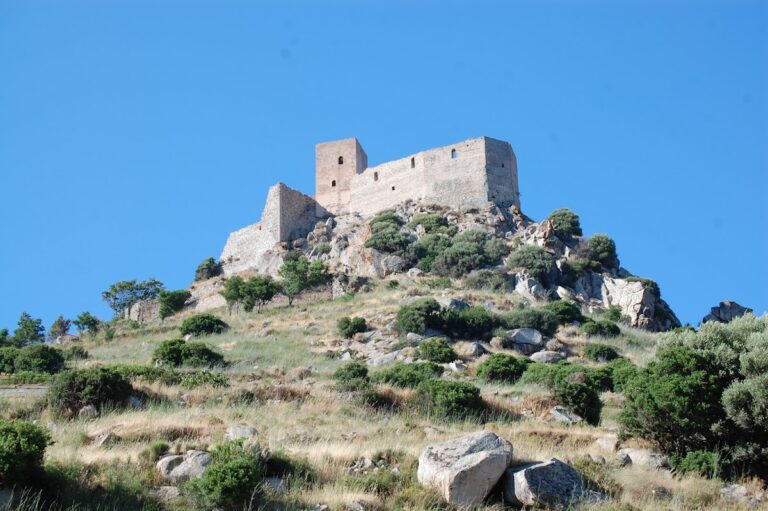
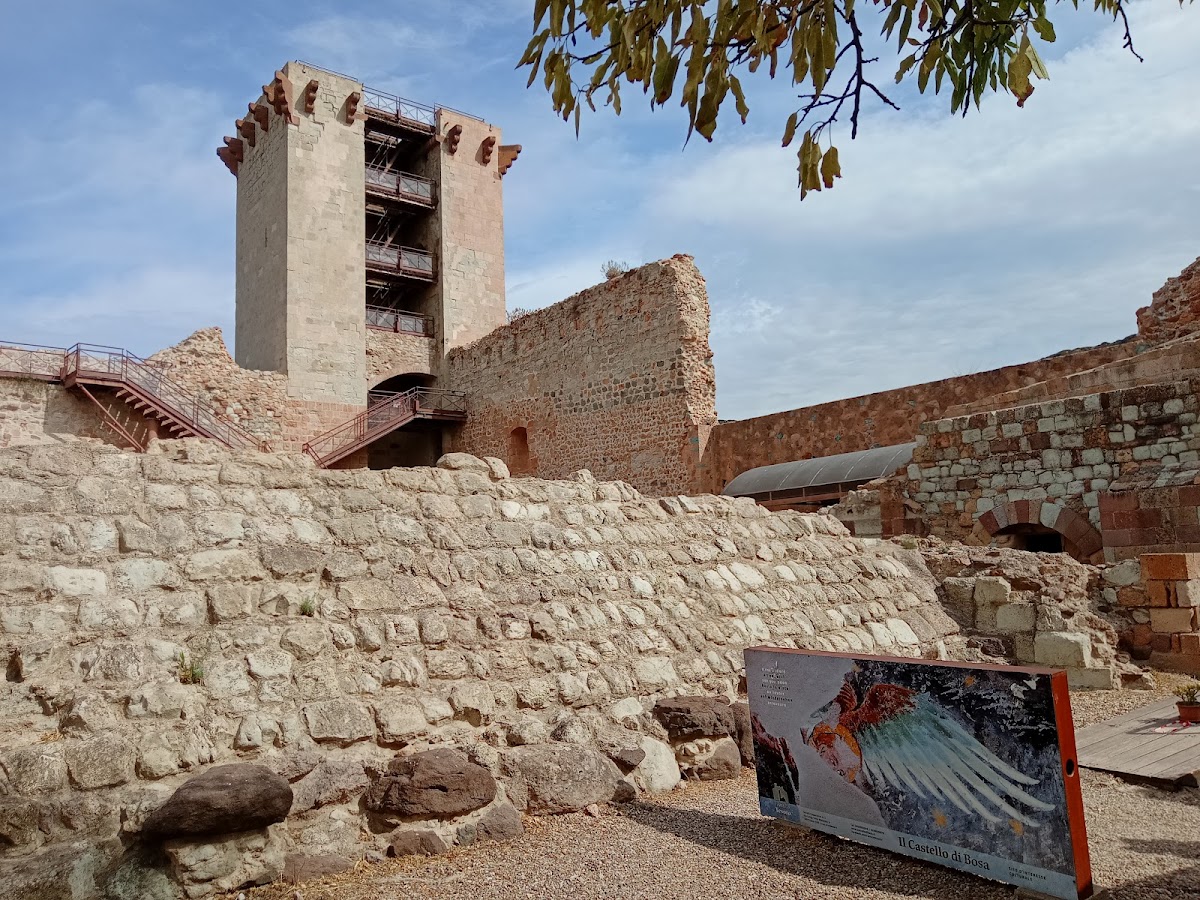
Castle of Serravalle occupies the summit of Serravalle Hill, about 81 metres above sea level, in a commanding position above Bosa. Its outer enceinte, or enclosing defensive wall, follows the entire plateau for approximately 352 metres. The plateau covers about one hectare, while the principal fortified area occupies roughly 2,000 square metres. Seven towers interrupt the circuit of the walls.
The medieval district of Sa Costa spreads across the southern and western slopes of the hill. A security area separated it from the fortification, possibly extending at least as far as a projectile could travel. This zone may originally have been enclosed by palisades or comparable barriers. A moat also remains visible around the castle.
Inner fortress
The fortress developed through several building phases. An earlier arrangement may have included four corner watchtowers, residential buildings, and a central parade ground. Aragonese additions included strengthened walls, further watchtowers, and a pentagonal tower. The northern tower was demolished in the early fourteenth century and later rebuilt by Giovanni Capula, who also designed the Elephant Tower and San Pancrazio Tower in Cagliari.
The main tower was constructed from trachyte. Its lower portion consists of carved trachyte blocks, while the upper section uses a light pink variety of the stone. Around the parade ground, service facilities included storerooms, an oven, stables, and cisterns, reflecting the practical needs of the garrison and its inhabitants.
Palatine chapel
The small Church of Our Lady of Sos Regnos Altos stands within the castle precinct and served as its palatine chapel. Its interior preserves a series of fourteenth-century frescoes. The painted scenes include the Last Supper, Mary Magdalene in the desert, Saint Christopher, Saint George killing the dragon, the archangel Michael, and Franciscan friars. The paintings were revealed during the 1972 restoration and are attributed to the Tuscan school.
Hilltop setting
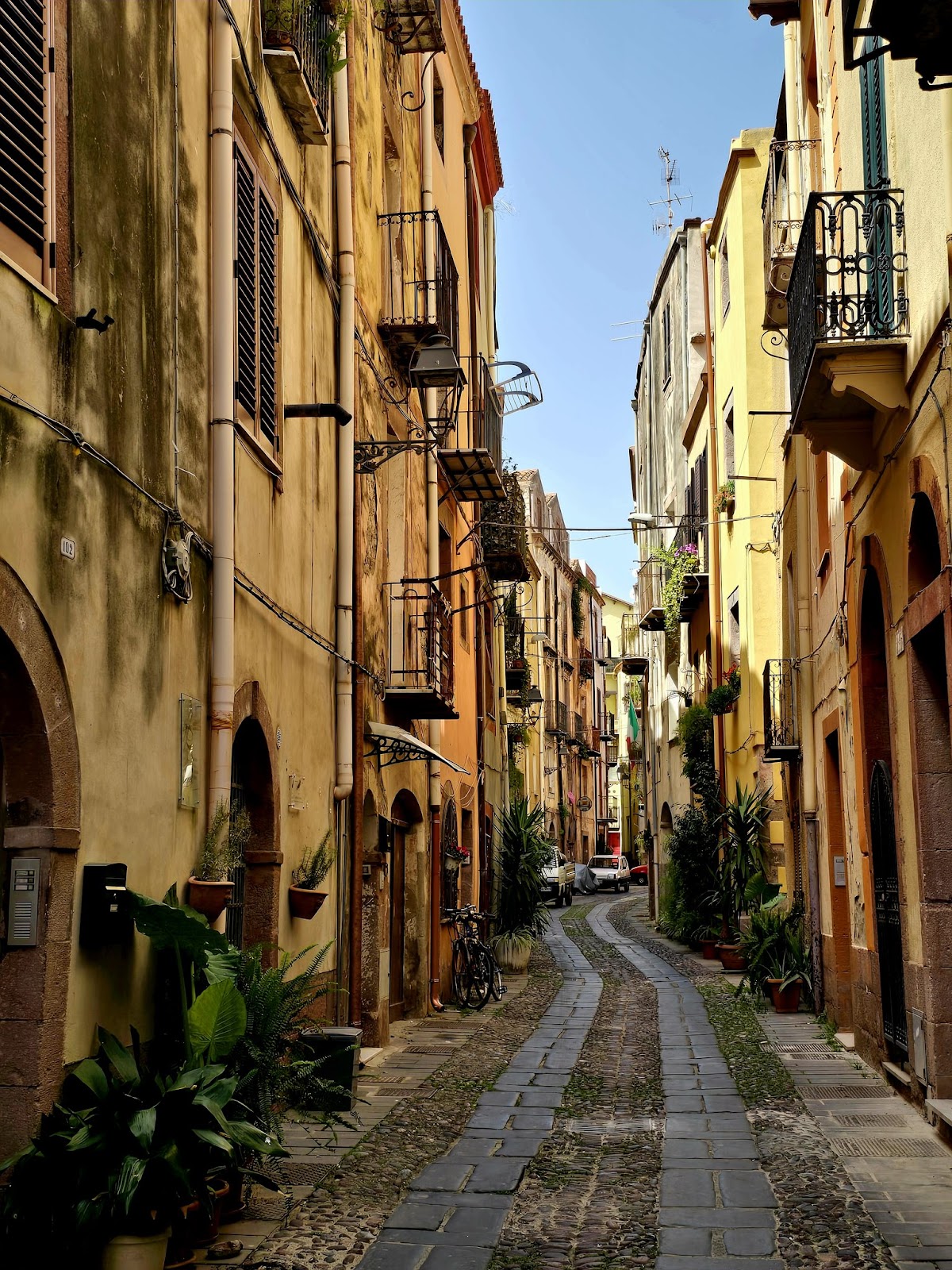
From the castle’s position on Serravalle Hill, the landscape includes Bosa’s medieval quarter, the old tanneries, the coast, and the Temo River. The Temo is identified as Sardinia’s only navigable river, linking the fortress’s physical setting with the riverine and port environment below.