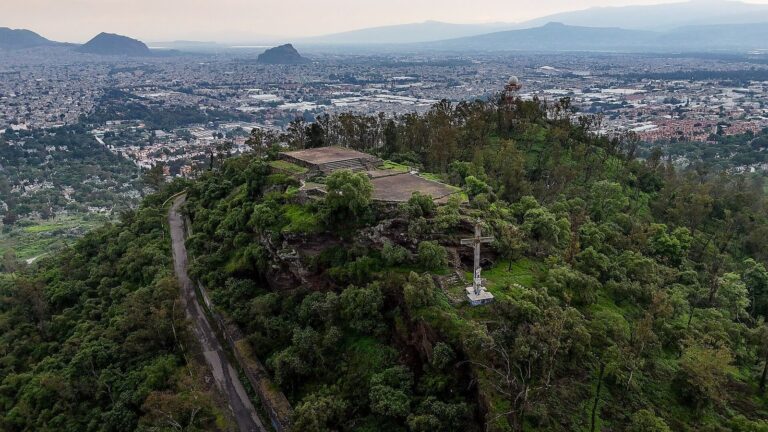
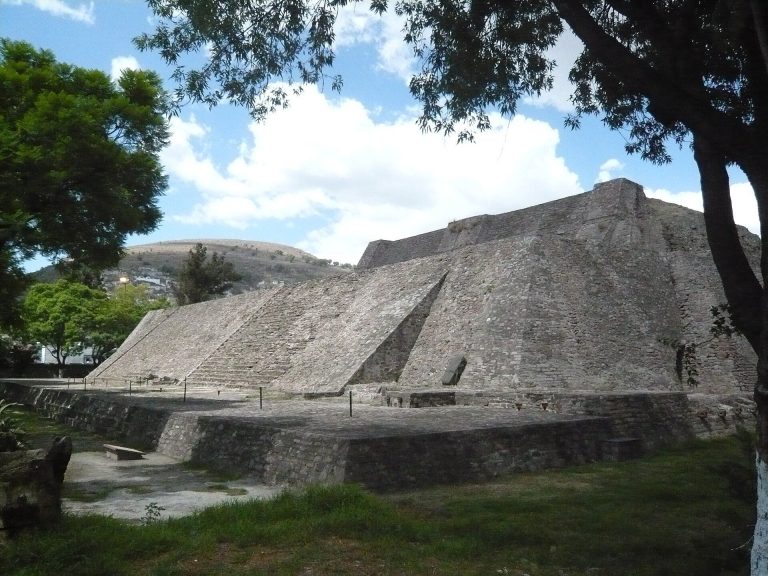
Enclosure of the Eagles (Casa de las águilas): A Mexica Ceremonial Building at the Templo Mayor
Site at a Glance
- Popularity
- Medium
- Country
- Mexico
- Primary era
- Medieval
- Eras represented
- Medieval, Early Modern
- Civilizations
- Aztec
- Site type
- Religious
- Remains
- Sanctuary
On this page9 sections
History
The Enclosure of the Eagles, also called Casa de las águilas, was a ceremonial building of the Mexica, the people who ruled Mexico-Tenochtitlan, within the Templo Mayor, the city’s principal ceremonial complex in Mexico. Construction began around 1430, and its architecture recalled forms associated with Tollan, also known as Tula. The building served religious, social, and political purposes.
Religious and political role
The building hosted private ceremonies that included prayer, meditation, penitence, offerings, fasting, sacrifice, and self-sacrifice. It also had a central place in Mexica government. Each huey tlatoani, or supreme ruler, began and ended their rule there. Before taking power, a ruler fasted and withdrew to the building for reflection.
The building was enlarged on as many as three occasions by about 1500. Its final construction phase probably took place during the reign of either Tízoc or Ahuízotl.
Conquest and archaeological investigation
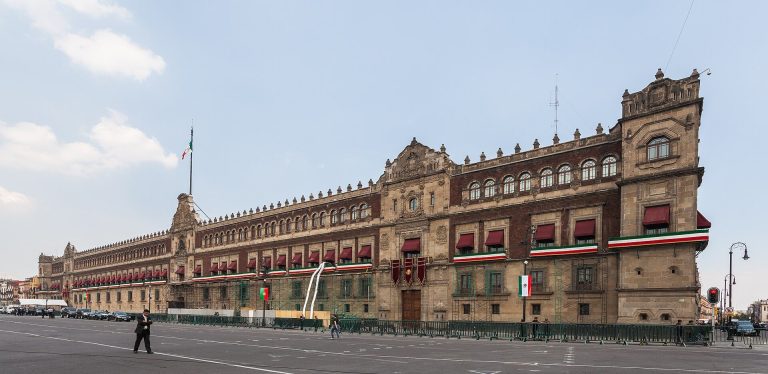
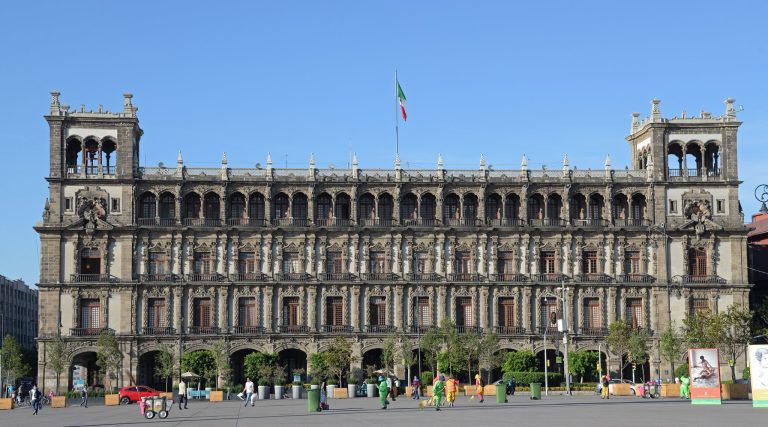
After the conquest of Mexico-Tenochtitlan, the building was demolished and buried. Its abandonment dates to 1521. Later construction over the site included a Catholic church dedicated to Santiago Apóstol and Justo Sierra Street.
The building was found in 1980 during the Templo Mayor Project, beneath a colonial house dating to the sixteenth century. Archaeologists associated with the work included Francisco Hinojosa and Leonardo López Luján. Joint investigations by Mexico’s National Institute of Anthropology and History, the National Autonomous University of Mexico, and Princeton University took place in 1991–1992 and 1994–1997. From 1994, two exploratory tunnels toward the Porrúa bookstore buildings helped establish the building’s extent and access to its north wing.
Analysis of wall and floor materials, considered alongside information in codices and other texts, helped clarify the building’s role as a place for private religious rites.
Remains
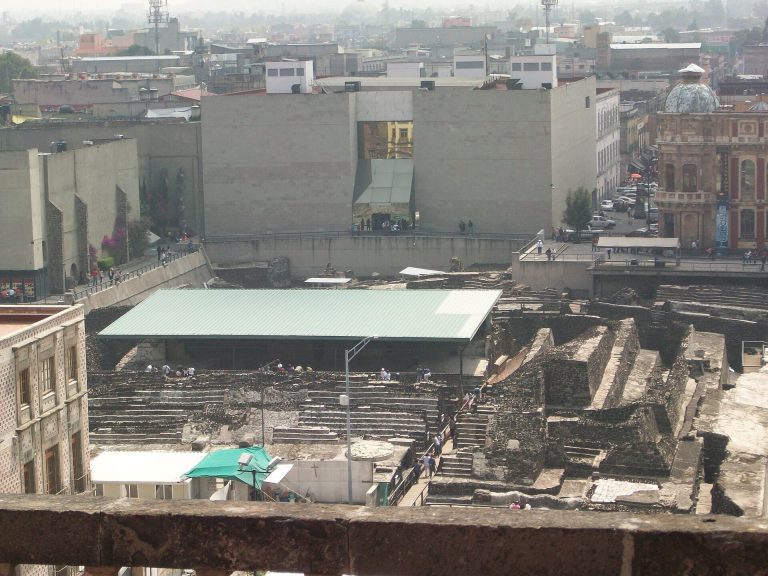
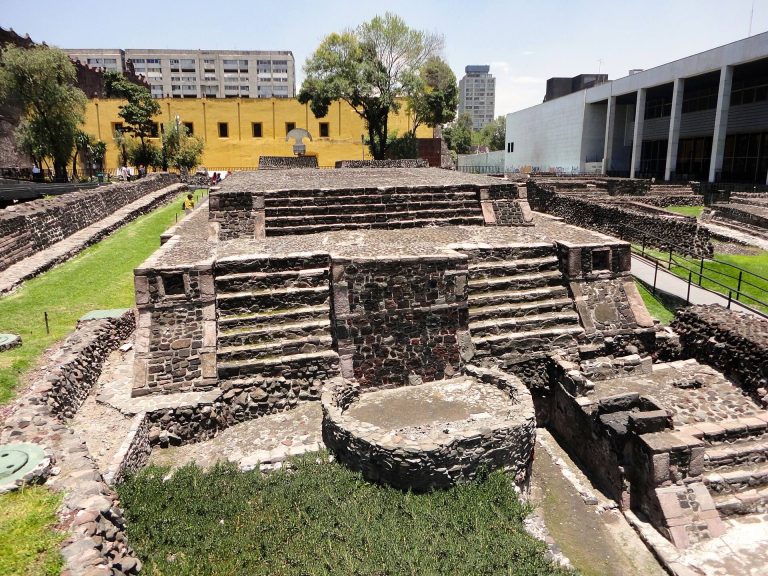
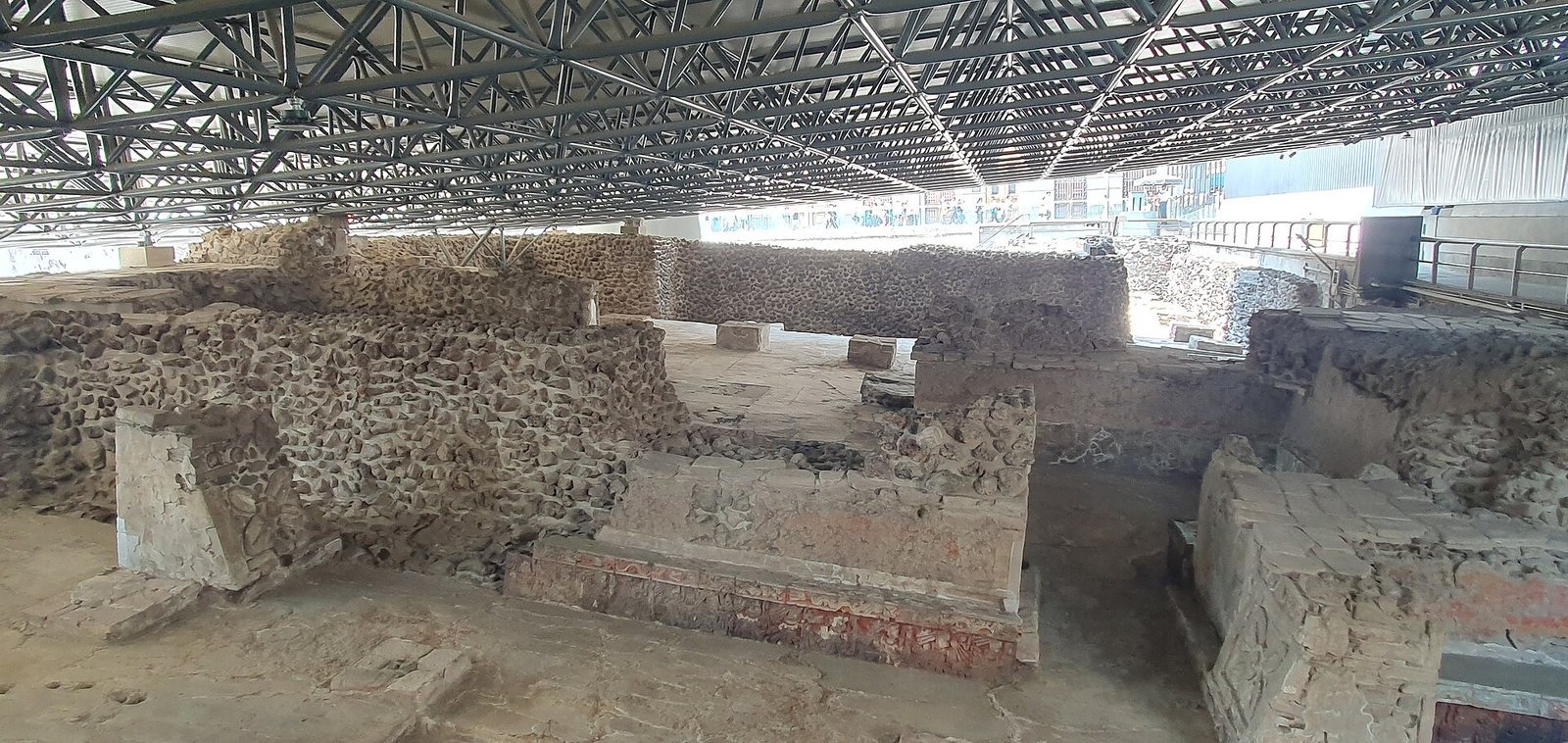
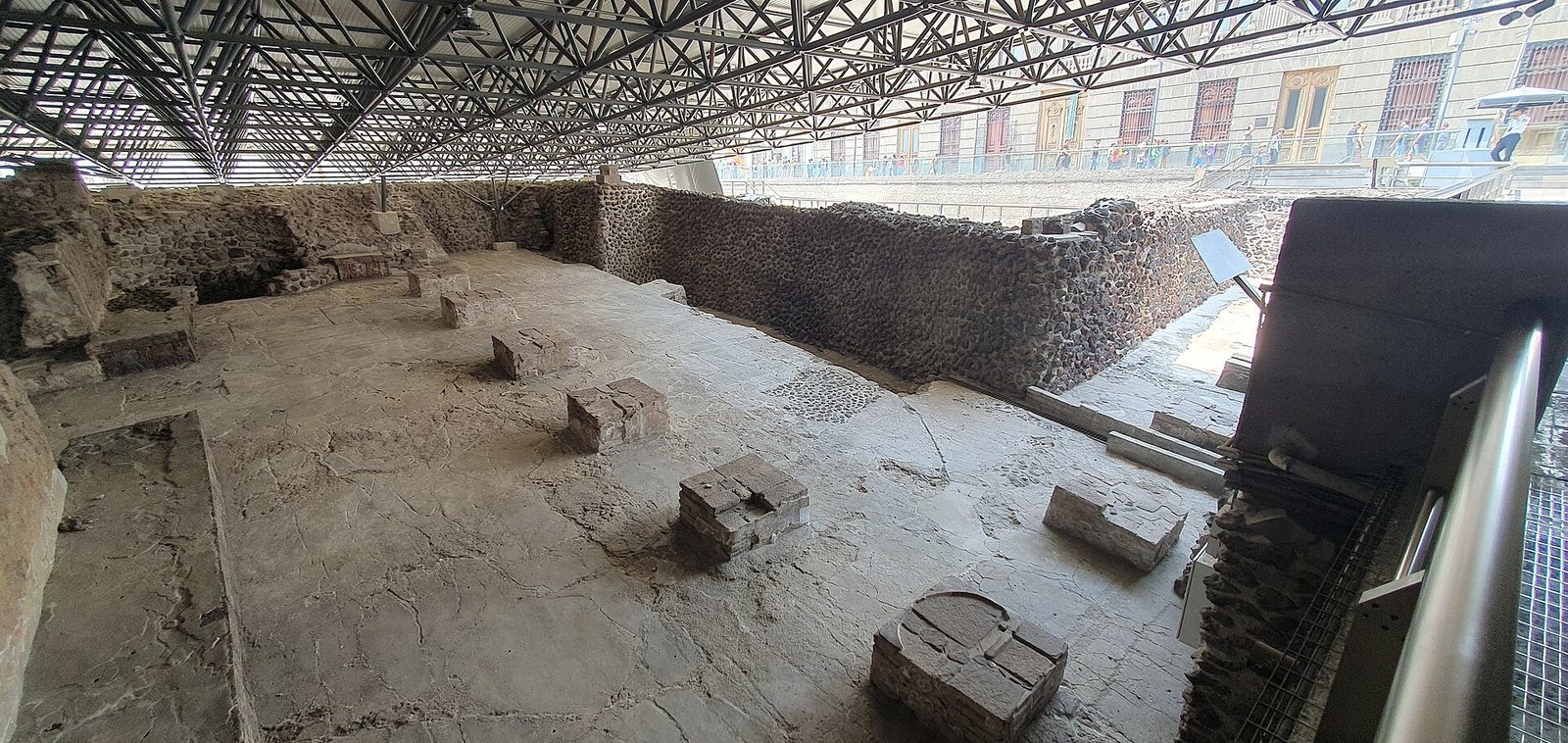
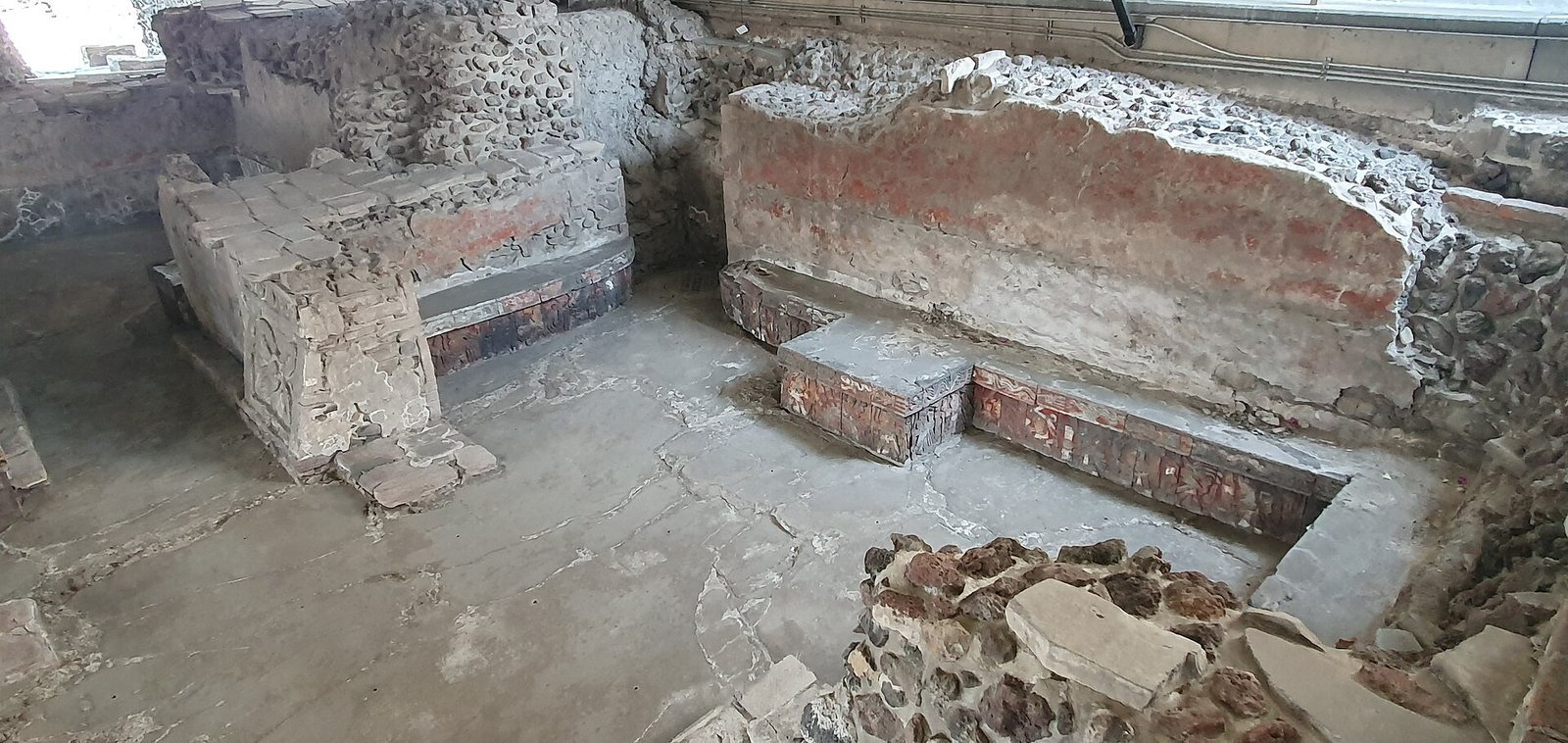
The building followed an L-shaped plan, with entrances on its south and west sides. Surviving features include masonry walls, stucco-surfaced floors, benches, and platform bases. The exposed platform bases represent about half the building; the rest lies beneath Justo Sierra Street and the Porrúa bookstore buildings.
Plan and construction stages
Three construction stages have been identified. The earliest is buried, and geophysical surveying has provided information about its structure. The most visible stage comprises a main room, two smaller rooms, a courtyard, and an entrance portico. The surviving remains of the final stage include a sideways L-shaped platform with connected east and north wings. A stairway stands at the west end of the east wing, and another at the south end of the north wing.
Decoration and ritual evidence
Walls and stone benches
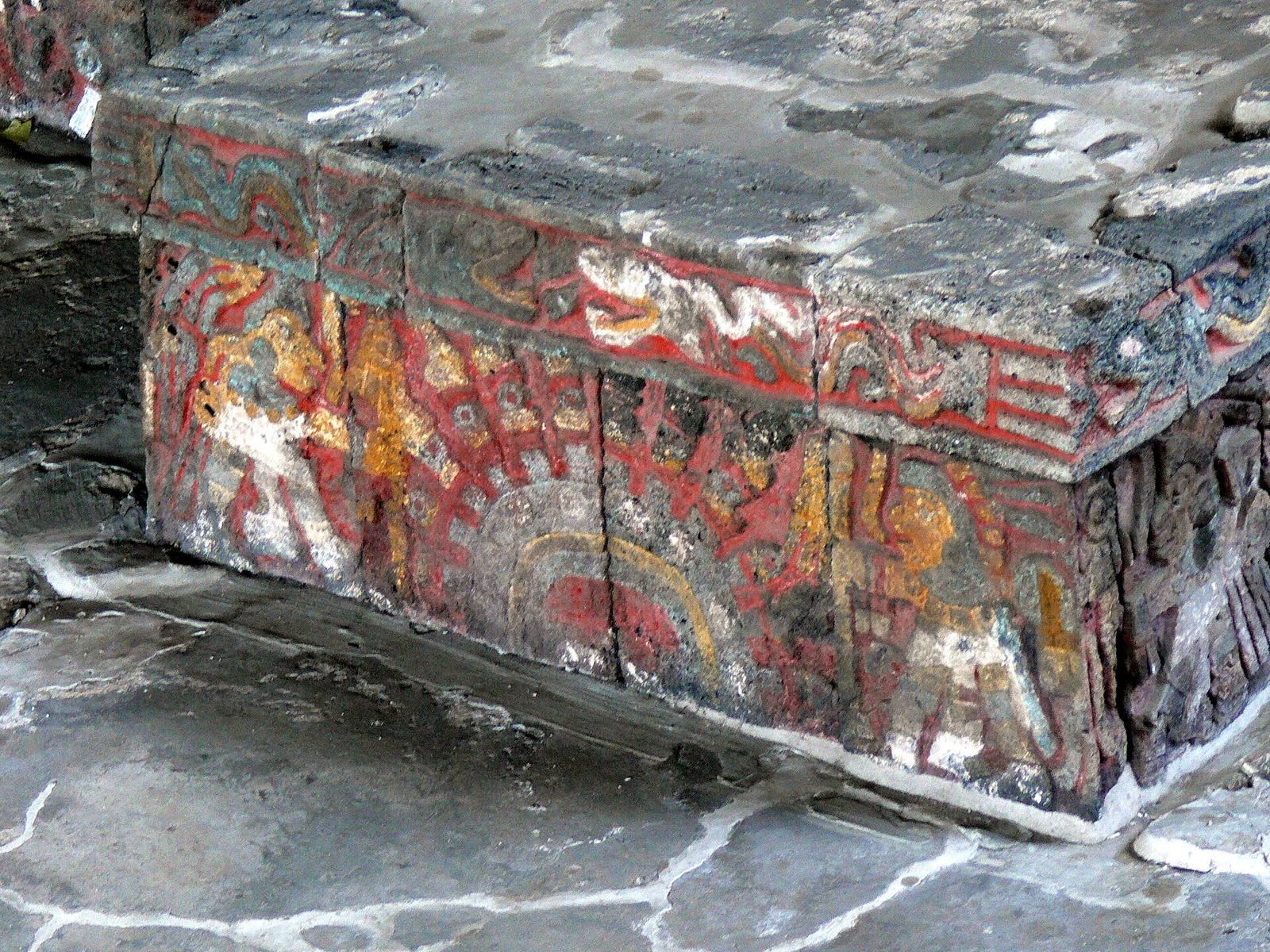
Multicolored murals covered the masonry walls, and scattered traces of them survive. Some original stone benches also remain. Their carved reliefs, with traces of paint, show richly dressed Mexica warriors moving in procession toward a ball of hay into which agave spines or other sharp implements were inserted for ritual bloodletting.
Sculptures and associated objects
Eagle heads decorated the building’s exterior, while eagle-warrior sculptures and ceremonial objects also contributed to its name. Two clay figures of eagle warriors are thought to have stood in the entrance portico; they are now held at the Templo Mayor Museum.
On 7 August 1994, a team led by Leonardo López Luján found two large sculptures of Mictlantecuhtli, a deity associated with the dead and the underworld. The figures stood at the eastern and western doorjambs of the north wing. Later colonial and modern construction had nearly destroyed them; they are now preserved and displayed at the Templo Mayor Museum. Finds from the same area included a vessel associated with Tláloc, a deity of rain, and a sculpture of Huehuetéotl, a deity of fire.
Residues from ritual activity
Near the entrances, residues of oils, resins, fats, food, and human blood point to ritual activity. Human blood was especially concentrated at the feet of the probable locations of the Mictlantecuhtli sculptures and on remains of the sculptures themselves.
Material traces varied between interior spaces. Resins and ash occurred in the courtyard, where braziers were placed. Carbohydrates from pulque, a fermented drink made from agave sap, appeared on benches, at entrances, and near the braziers.