Olderfleet Castle: A Towerhouse in Larne, Northern Ireland
Site at a Glance
- Country
- United Kingdom
- Primary era
- Early Modern
- Eras represented
- Early Modern
- Civilizations
- English
- Site type
- Military
- Remains
- Castle
On this page5 sections
History
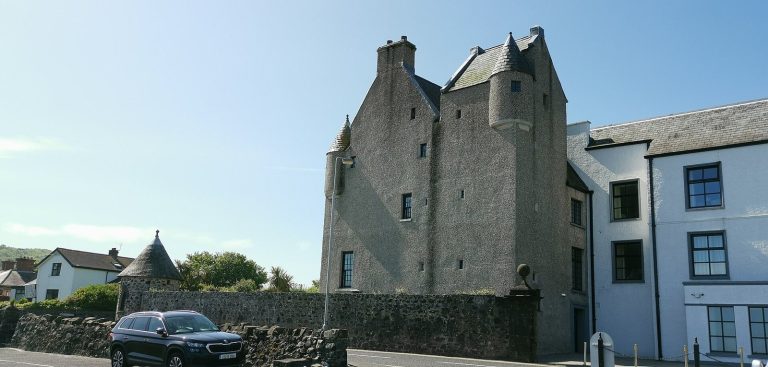
Olderfleet Castle is a ruined towerhouse, a compact fortified multi-storey residence, at Larne in Northern Ireland, United Kingdom. The present castle was probably built around 1612, though earlier structures are associated with the site.
Medieval Origins
The name Olderfleet may have developed from an anglicized form of Ulfrecksfiord, a Viking name for Larne Lough meaning “Ulfried’s Fjord.” A fjord is a long, narrow sea inlet. The Bissett family of Glenarm, part of the Scottish-origin community settled in Ireland, may have built a towerhouse here around 1250.
In 1315, Edward Bruce, a Scottish nobleman and brother of Robert I of Scotland, landed at the site with an army of 6,000 during his campaign to conquer Ireland. The Bissetts welcomed him. The surviving remains are thought to belong to Curran Castle, a sixteenth-century towerhouse. A map made in 1610 names the castle Coraine Castle.
Crown Control and Destruction
Elizabeth I, the Tudor monarch of England and Ireland from 1558 to 1603, considered the castle strategically important and seized it for the Crown. Sir Moyses Hill became its governor in 1569. In 1597, the MacDonnells, a branch of the Scottish Clan Donald established in Ulster, claimed the castle. It was dismantled in 1598.
Rebuilding and Later Ownership
The present castle was probably built around 1612. In 1621 it was granted to Sir Arthur Chichester, and it remained with his family until it was leased to William Agnew in 1823. James Chaine bought the lease in 1865.
After the castle was abandoned, the state took it into care in 1938. It is now a State Care Historic Monument.
Remains
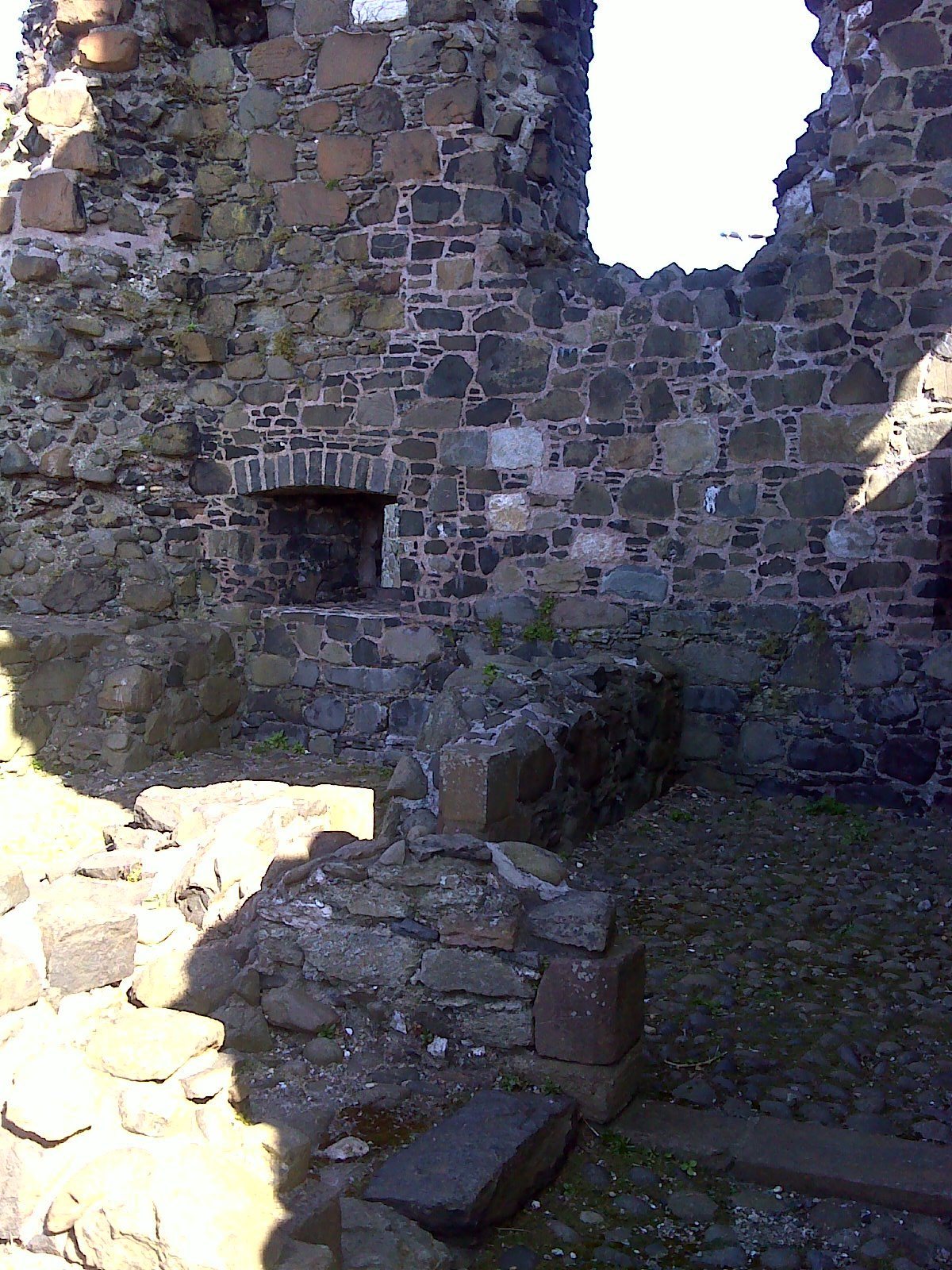
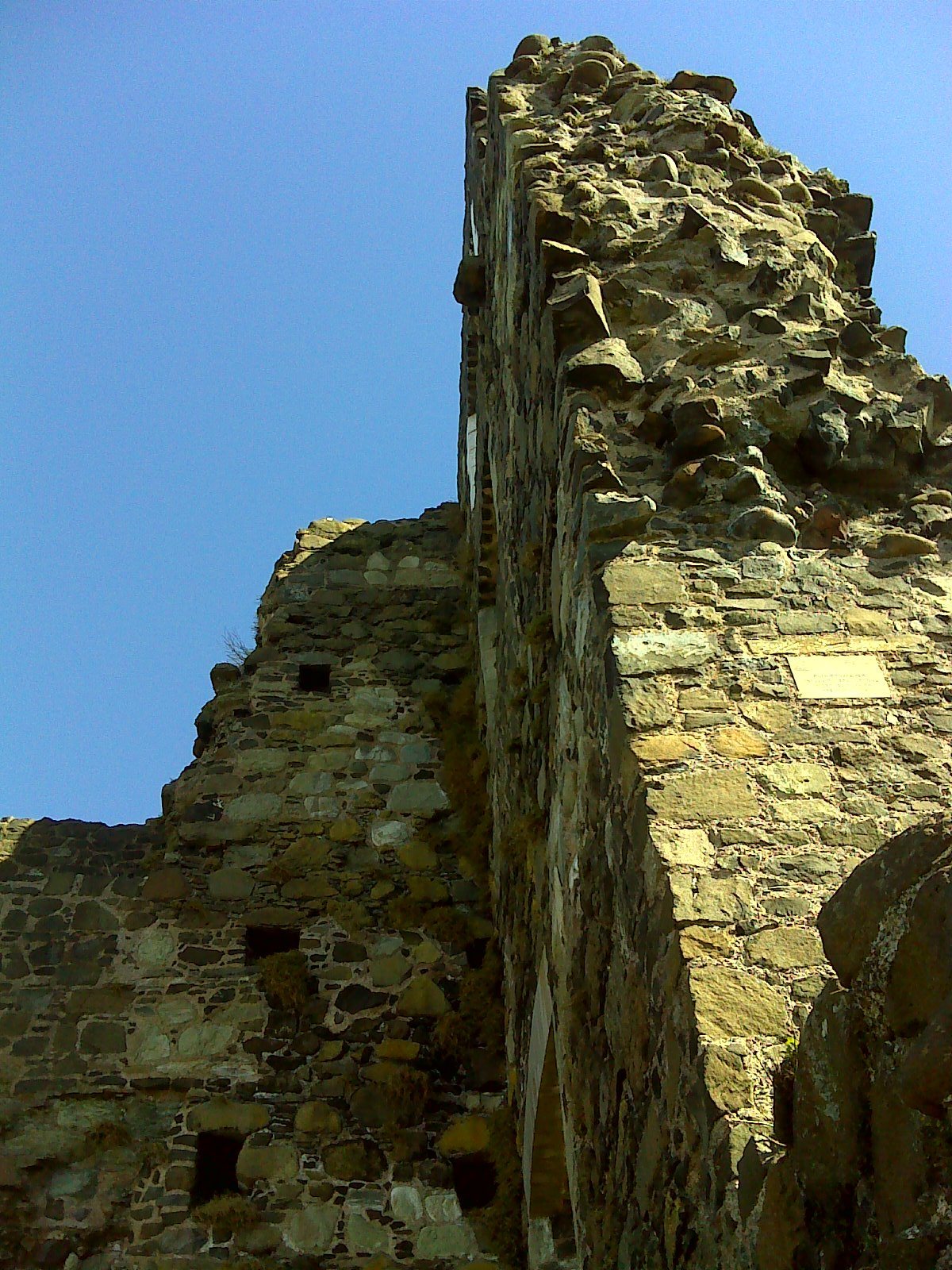
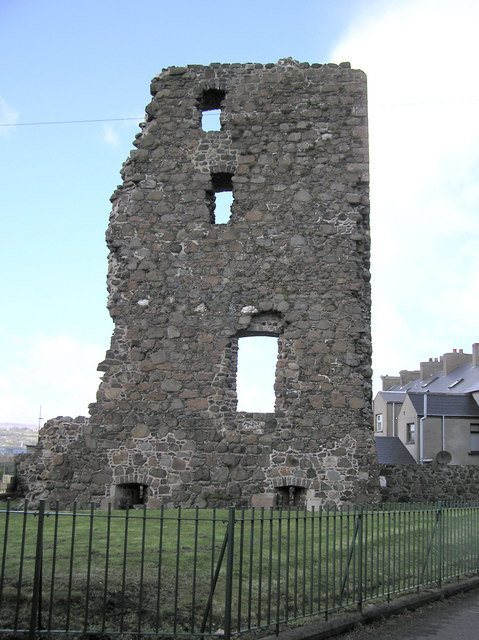
The remains stand on Curran Point, south of Larne Harbour. They form part of a square-plan, four-storey towerhouse with walls about one metre thick. Pairs of gun loops, narrow wall openings through which firearms could be used, survive in the basement.
The tower may have been built as a fortified warehouse and watchtower rather than as a residence.