Carn Liath: A Prehistoric Broch in Scotland
Site at a Glance
- Popularity
- Medium
- Country
- United Kingdom
- Primary era
- Classical
- Eras represented
- Bronze Age, Classical
- Civilizations
- Unclassified
- Site type
- Military
- Remains
- Fort
On this page12 sections
History
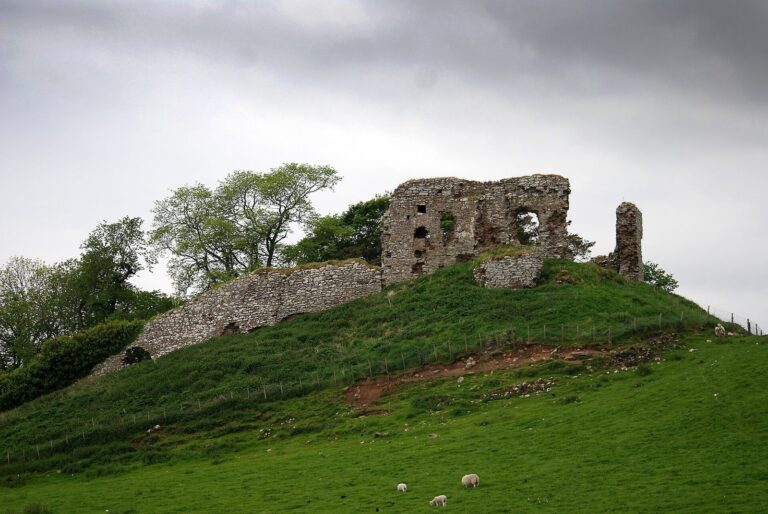
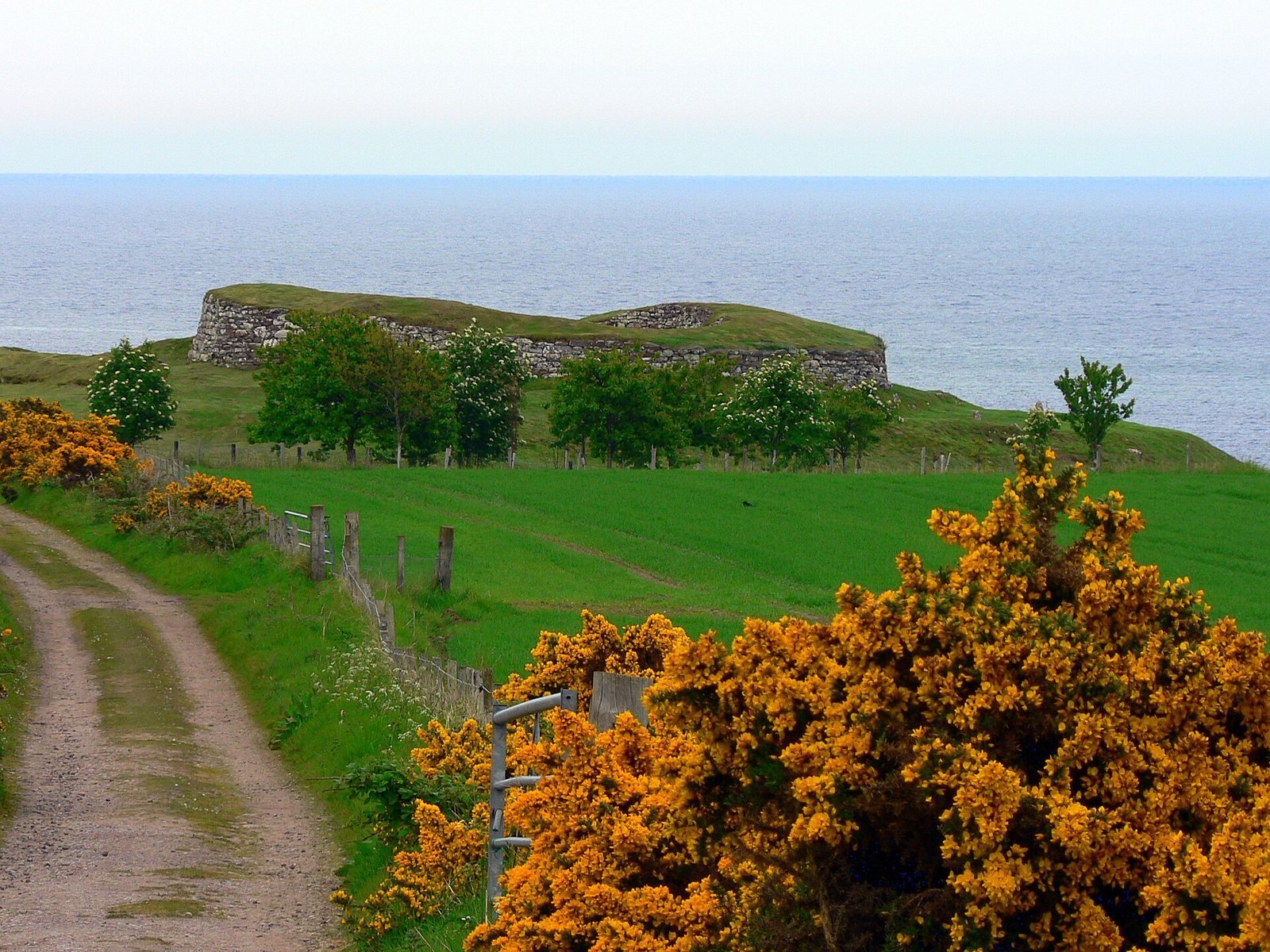
Carn Liath is a prehistoric broch near Brora in Scotland, United Kingdom. A broch is a Scottish roundhouse built with thick dry-stone walls. The tower was probably built between 100 BC and AD 100.
Bronze Age occupation
The site was occupied before the broch was built, during the Bronze Age, a prehistoric period associated with widespread use of bronze. Earlier buildings with wooden posts and a ring wall stood there.
Broch and later occupation
People continued to occupy Carn Liath after the broch was built, possibly until around AD 500. The buildings around the tower were generally later, although some may have been constructed during the same phase.
Excavation and preservation
The Duke of Sutherland began excavating Carn Liath in the nineteenth century. Further work in 1972 and during the 1980s clarified its earlier occupation and uncovered a Bronze Age cist, a stone-lined burial chamber, containing a food vessel.
The name Carn Liath means “Grey Cairn”; liath is the Gaelic word for “grey.” The site was initially understood as a burial cairn rather than a broch or fortified place. Historic Environment Scotland cares for Carn Liath, which is protected as a scheduled monument, a Scottish legal designation for archaeological or historic sites.
Remains
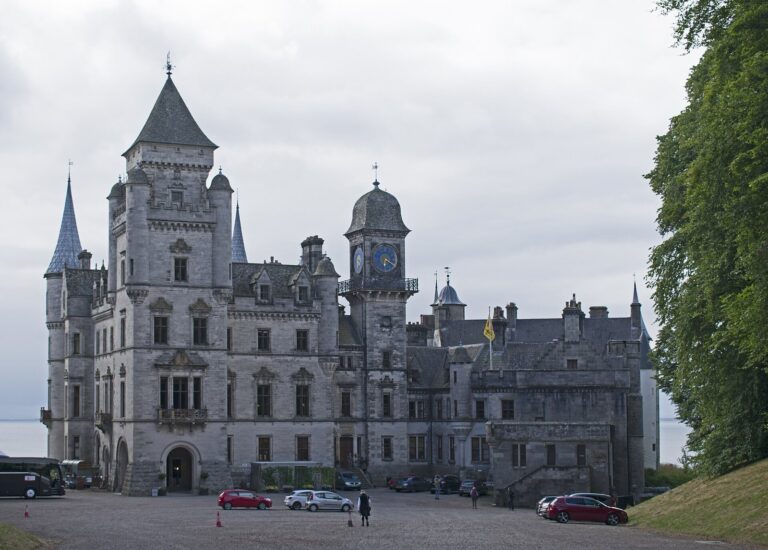
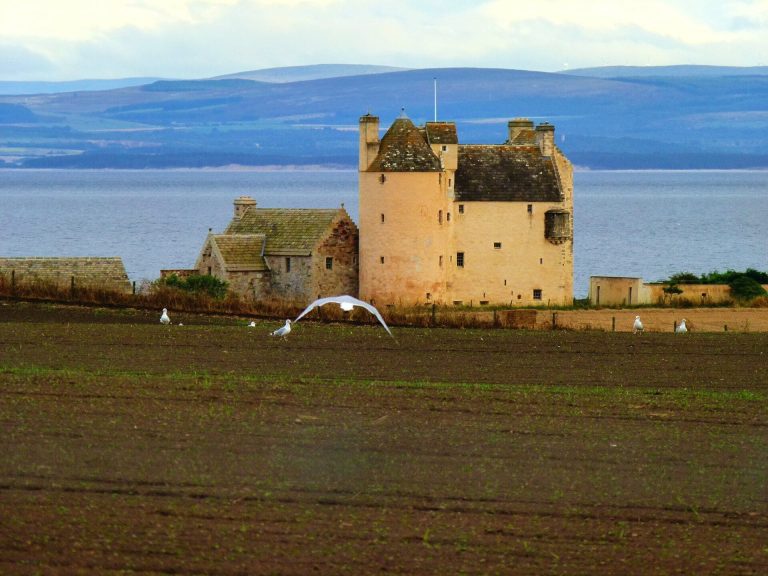
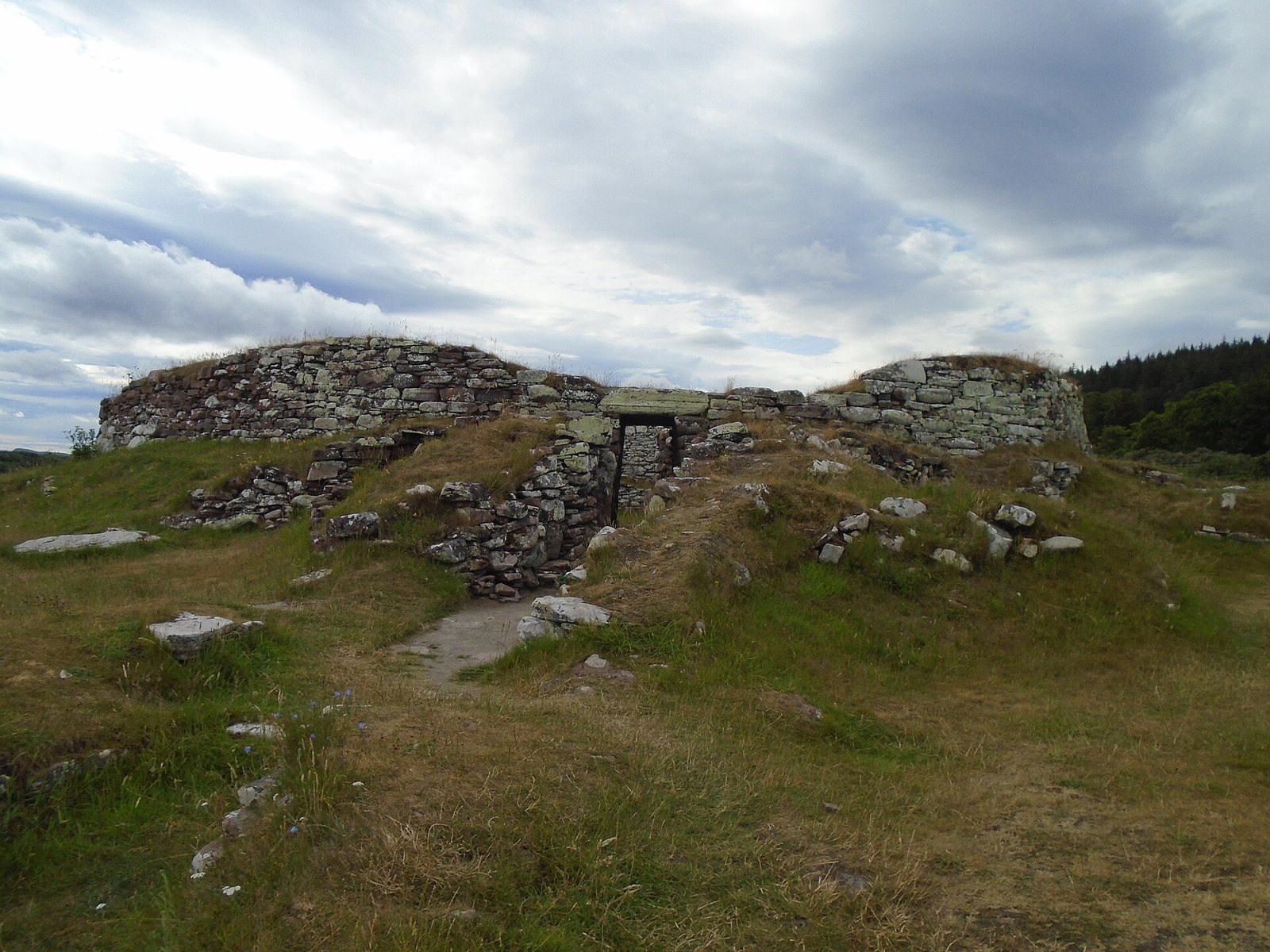
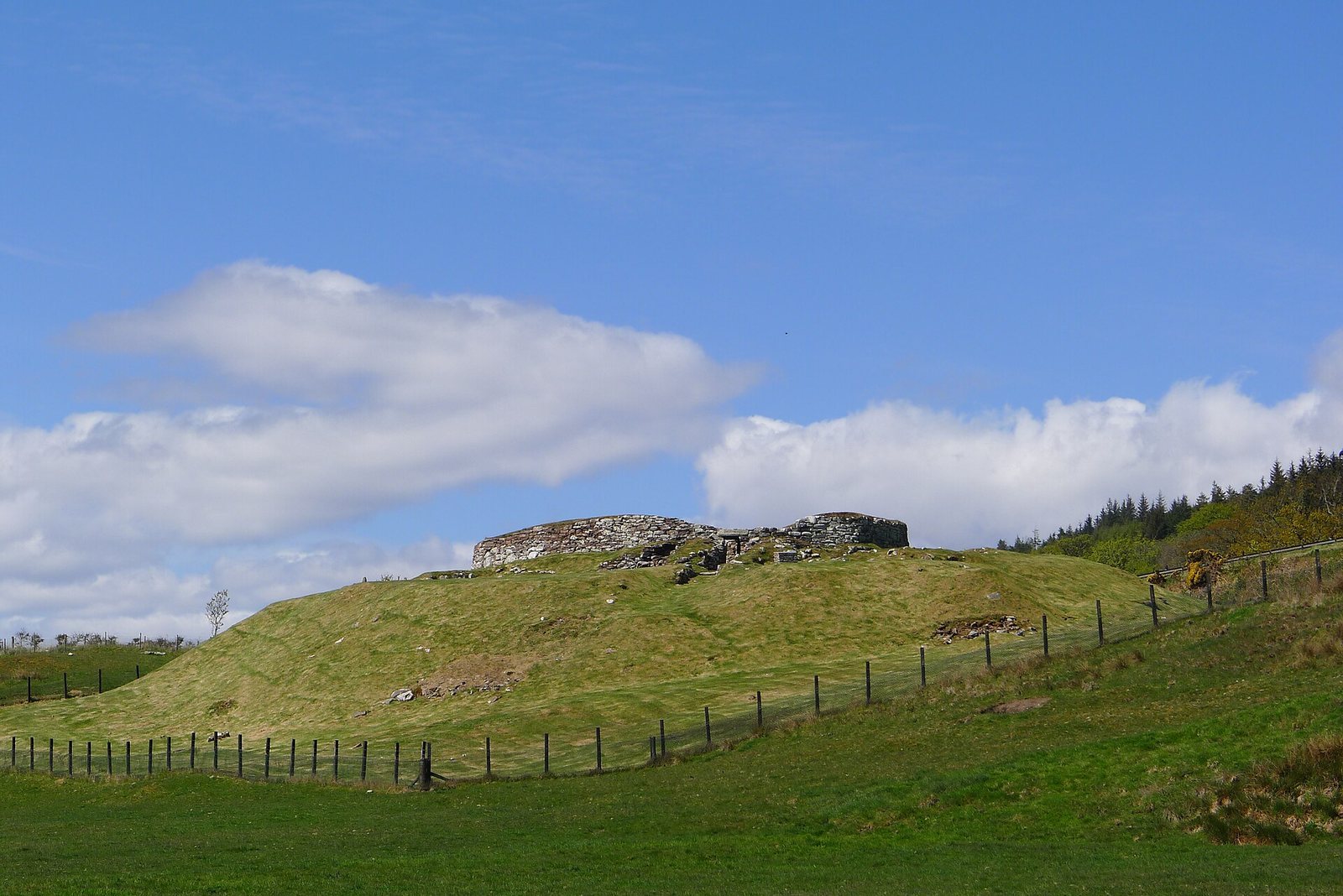
The circular broch stands beside the A9 near Golspie, about 2.5 kilometres east of Dunrobin Castle and roughly 200 metres from the North Sea coast. The castle is visible to the west. The broch has an external diameter of about 19 metres and an inner diameter of around 9 to 10 metres. Its thickest wall section is about 6.7 metres across, and the surviving walls reach approximately 3.6 metres high; the original height is unknown. Stone buildings and passages surround the tower.
The broch interior
Entrance passage
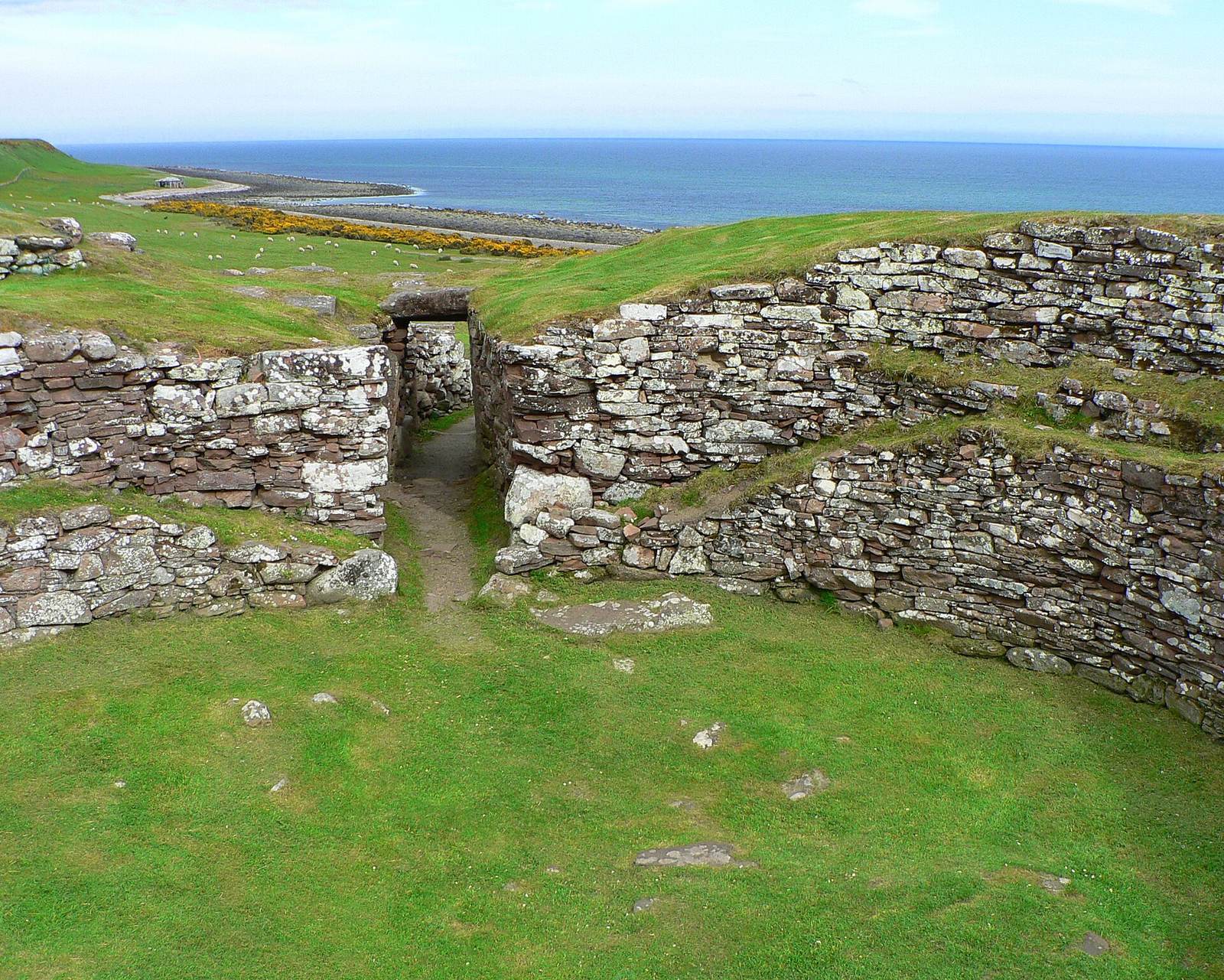
The entrance is on the east side. Its passage runs through the wall for about 5.5 metres and measures approximately 2.1 metres high by 0.9 metres wide. Recesses for a door and an opening for a locking bar controlled access. A small guard cell, a side chamber off the passage, opens on its right-hand side. The passage was still visible in 1909; by 1960, the site’s structural outlines had become indistinct.
Stairway and wall ledge
A doorway on the southwest side of the central court leads to a small room within the wall. A stairway begins there, turns clockwise inside the wall, follows its outer face, and reaches the top. The room appears to have provided access to the stairs. Inside the broch, a scarcement, a wall ledge that can support a floor, is formed by the wall narrowing upward rather than by projecting stones. At this level, the inner diameter expands by slightly more than a metre. The ledge may have supported a wooden floor.
Below-ground chambers
Two chambers lie below ground in the central area. The larger, near the centre, measures 3.9 by 2.1 metres and is 2.4 metres deep. A second, against the north wall, measures 2.4 by 1.8 metres and is 1.8 metres deep. Both are filled with earth, and slight unevenness in the ground surface indicates their positions. A small passage from the larger chamber runs east and may have served as its original entrance.
Surrounding structures and finds
Outbuildings and passages
In front of the broch entrance, stone walls define two passages. One runs south beside the tower, while the other continues east, nearly in line with the entrance. A small niche lies north of the point where they meet. The southern passage remained roofed in the nineteenth century, when markings were noted on one of its lintel stones; their meaning is unknown. A low wall to the northwest runs parallel to the broch’s outer wall. Foundations lie northeast of the tower, and the surrounding enclosure contains further stone buildings.
Burials and objects
Animal skeletons were found in and around the broch. One human skeleton lay inside, on the wall ledge, but its date is uncertain; other human skeletons were found around the tower. Finds from Carn Liath include pottery, flint flakes, stone hammers, mortars and pestles, hand-operated millstones, stone disks and bowls, spindle weights used in spinning, shale rings, long-handled bone combs, a whale-bone club, bronze plates, a silver clothing pin, soapstone cups, and an iron blade. Some of the finds are held at Dunrobin Museum.