Carcassola Palace: A Noble Residence in Marzano, Italy
Site at a Glance
- Popularity
- Very Low
- Country
- Italy
- Primary era
- Early Modern
- Eras represented
- Early Modern
- Civilizations
- Duchy of Milan, Habsburg, Spanish
- Site type
- Domestic
- Remains
- Castle
On this page7 sections
History
Carcassola Palace, at the western edge of Marzano, a hamlet of Merlino in Lombardy, Italy, is generally thought to have been built in the late sixteenth or early seventeenth century as a residence for the Carcassola family. The family held the fief of Marzano from 1527, meaning it held land or rights under a feudal relationship.
Origins and ownership
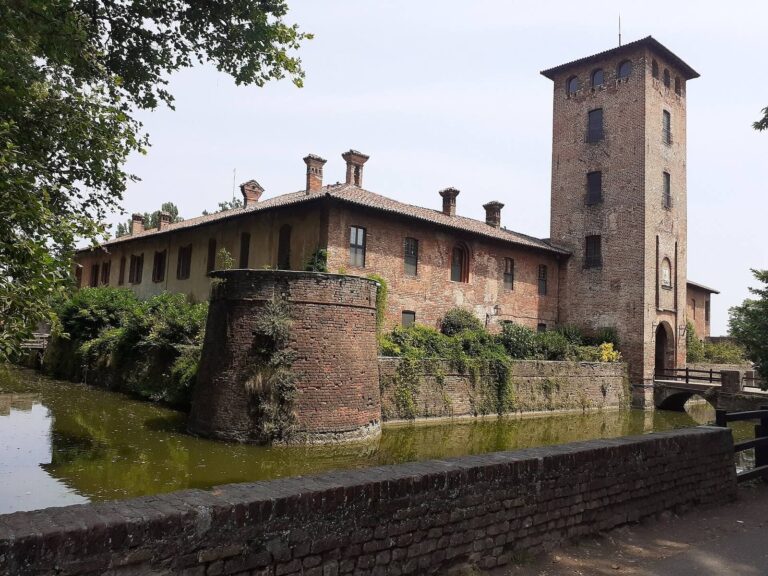
The palace’s beginnings are uncertain. It may stand on the foundations of an earlier castle at Marzano. A document from 1370 refers to a castle there, but that structure may instead have been a separate towered building that still stands in the village. On this interpretation, the palace was built anew to replace the older, cramped residence.
In the seventeenth century, the Carcassola family sold the palace to the Riccardi family, which transferred it to the Barbiano di Belgioioso family in 1647. The Trotti family of Vimercate owned it during the first half of the nineteenth century; their family line ended in 1844.
Decline and restoration
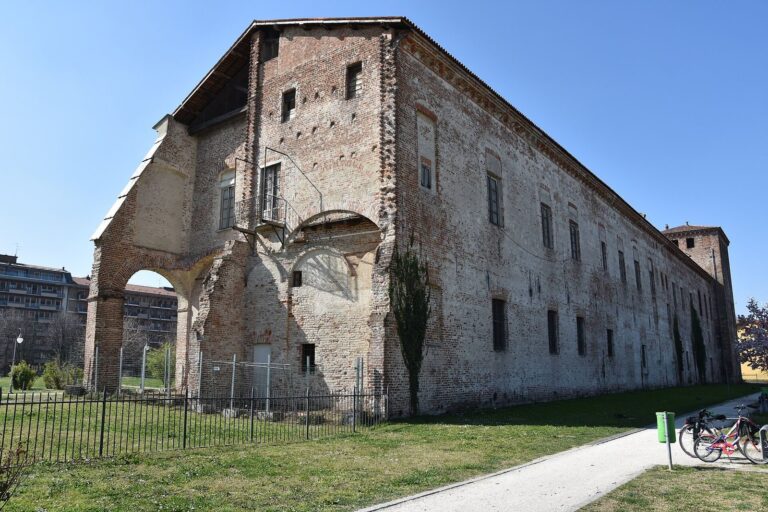
After it ceased to be a noble residence, the palace declined. Its furnishings were sold and its rural outbuildings demolished. It was abandoned or put to other uses, including as a silk mill and as shelter for refugees during both world wars.
At the end of the twentieth century, new owner Vincenzo Grugni began a gradual restoration. The work stopped after his death in 2010.
Remains
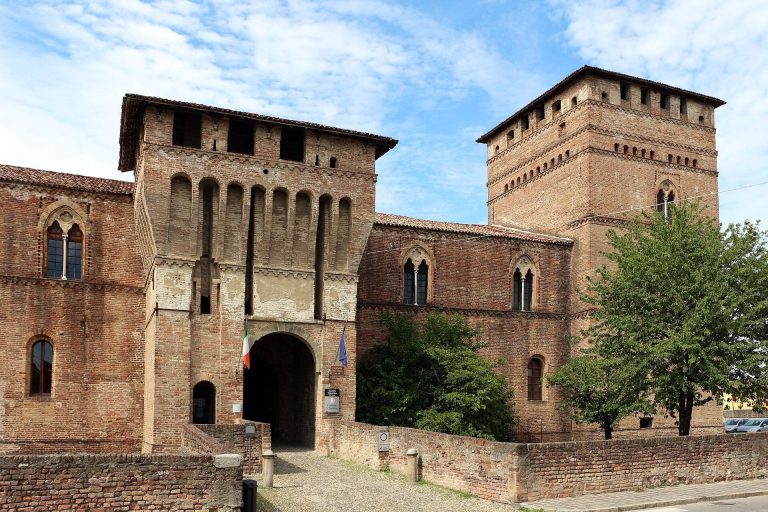
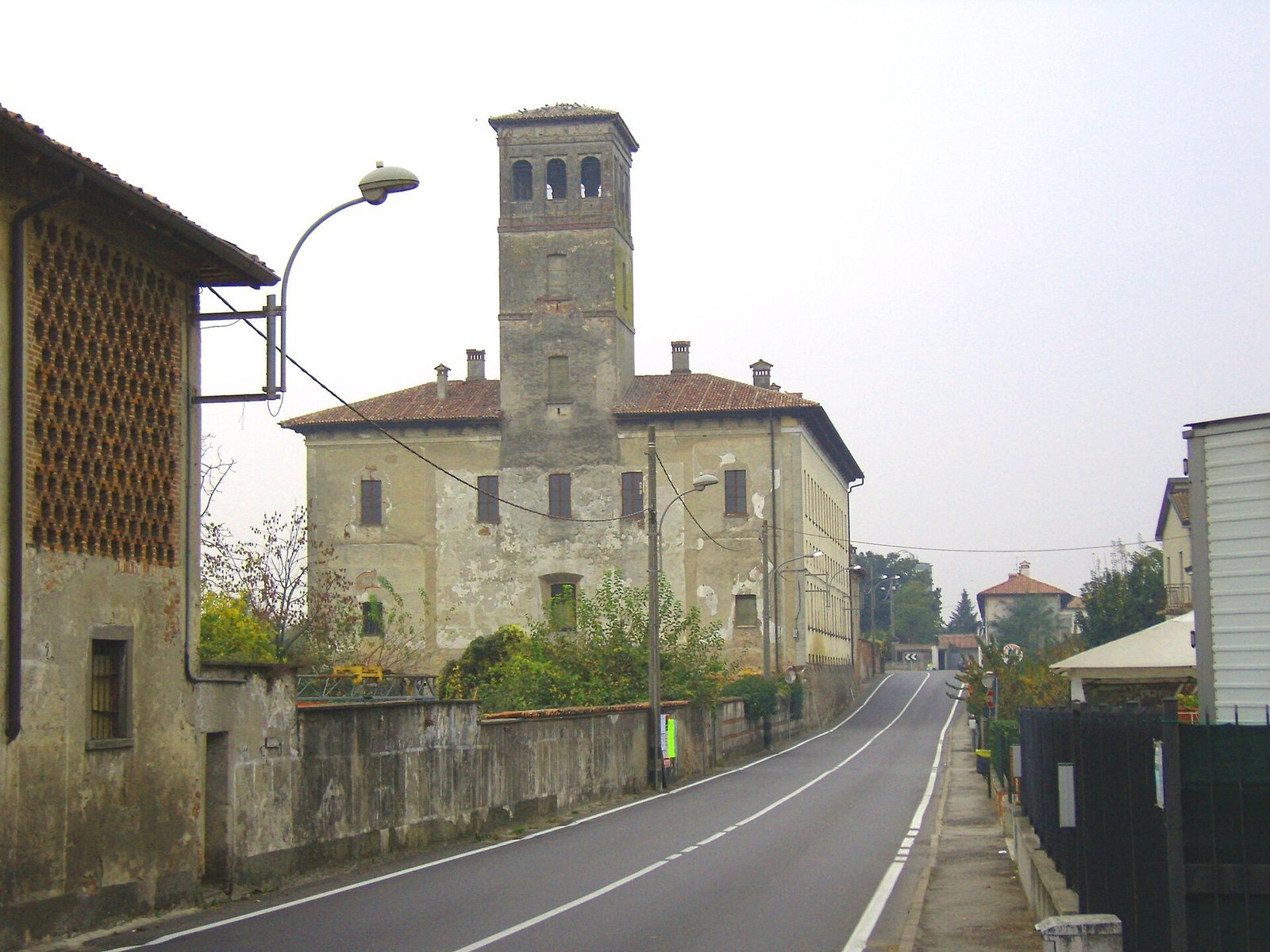
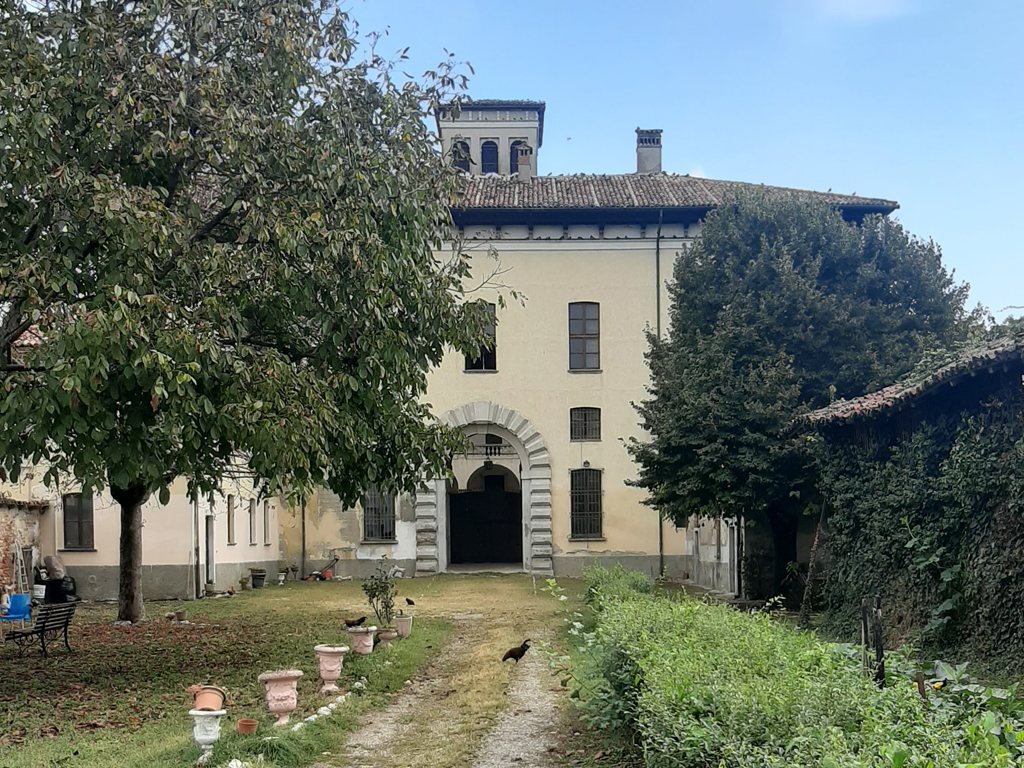
The palace has an elongated plan running west to east and rises across three floors. Its severe, castle-like exterior is complemented by later additions and a central courtyard.
Exterior and courtyard
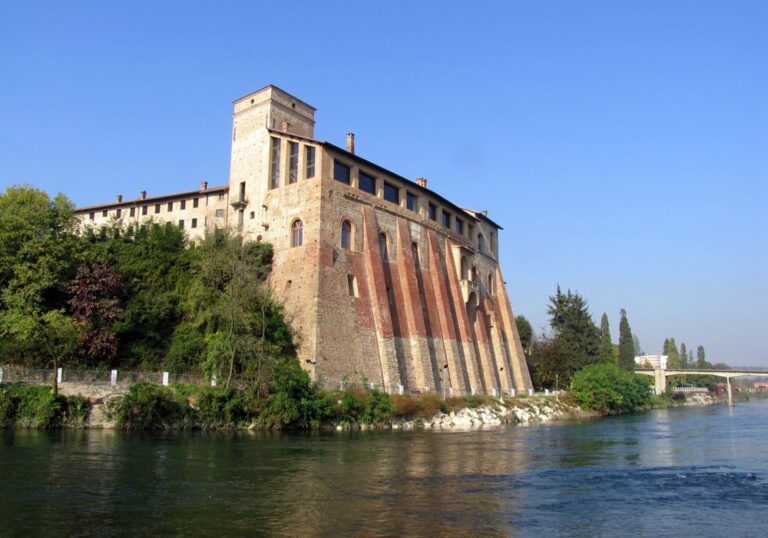
Two projecting sections added on the west side create a small formal court before the main entrance. On the east, village-facing side, a viewing tower rises roughly 40 to 50 metres. The north facade rests on a battered wall, which slopes inward toward the top. The central courtyard is partly bordered by a loggia, a covered gallery open along one or more sides.
Interior
Many rooms retain old fireplaces and frescoes. Several frescoes are attributed to Giovanni Ghisolfi, a seventeenth-century Italian painter, and dated to around 1660. Paintings in other rooms may be by Castellino and are dated to around 1720. The palace also has a Baroque grand staircase, in a style that flourished in Europe from the late sixteenth into the eighteenth century.
Garden
The extensive garden once ran along the east and south sides of the palace, with ornamental pools and other water features. The land is now used for agriculture.