Castle of Sanluri: A Medieval Fortress and Museum Complex in Sardinia


Site at a Glance
- Rating
- 4.7
- Popularity
- Medium
- Country
- Italy
- Primary era
- Medieval
- External website
- Open
- Eras represented
- Medieval
- Civilizations
- Crown of Aragon
- Site type
- Military
- Remains
- Castle
On this page7 sections
History
Castle of Sanluri is a medieval fortified building in Sanluri, Italy, associated with the Sardinian giudicati, the independent or semi-independent kingdoms governed by judges. It occupied a strategic position between the giudicati of Cagliari and Arborea, near the boundary of the Campidano of Cagliari and beneath the Marmilla highlands. Its principal construction phase began in 1355 under Peter IV of Aragon, during the medieval period, although the fortress’s earlier political origins remain disputed.
A contested foundation
Sanluri was chosen for its command of the principal route from Cagliari toward Sassari and Torres. From this position, the fortress could oversee the frontier between Cagliari and Arborea. Peter IV of Aragon ordered the works in 1355, with Berengario Roich directing construction. An alternative interpretation, developed from research begun in 2005 by the then-owner, Count Alberto di Villasanta, attributes the original fortress to Peter I of Arborea, who supposedly began building it against Guglielmo I Salusio IV of Cagliari between 1188 and 1195. Under this interpretation, the Aragonese later assembled a palace within the castle court. Earlier historians had placed the fortress within the giudicato of Cagliari, close to its border with Arborea.
Peace and the end of the military role
The castle hosted the Peace of Sanluri, an agreement signed between 11 and 15 July 1355. Its military importance ended after the Battle of Sanluri on 30 June 1409, when the Aragonese defeated Guglielmo III of Narbonne, the direct heir of Mariano IV of Arborea. Following the Aragonese conquest of the island, the fortress no longer served its earlier strategic purpose and became exclusively residential.
Residential ownership and museums
The castle was sold together with Sanluri, which held the rank of a viscounty. Ownership passed from the De Sena family to the Henriquez, Castelvì, and Aymerich of Laconi families. The Aymerich held the fief when it was redeemed and thereafter retained only the title. In 1924 the property passed to the Villa Santa family, whose members became counts in 1946. The family restored the building, converted some halls into museums, and retained the aristocratic apartment. The castle continues to have a residential function and houses the Duca d’Aosta Museum of the Risorgimento, the museum of the nineteenth-century movement that led to Italy’s political unification, and the Museum of Waxworks. It is an Italian national heritage property.
The name Castle of Eleanor of Arborea has long been associated with the building. Eleanor was a medieval ruler of Arborea remembered for her political authority and connection with the Carta de Logu, a legal code. Her stay at the castle is not established, although a chair said to have belonged to her is displayed there. The nearby Battle of Sanluri remains closely linked with the castle’s historical identity.
Remains
Fortifications and principal keep
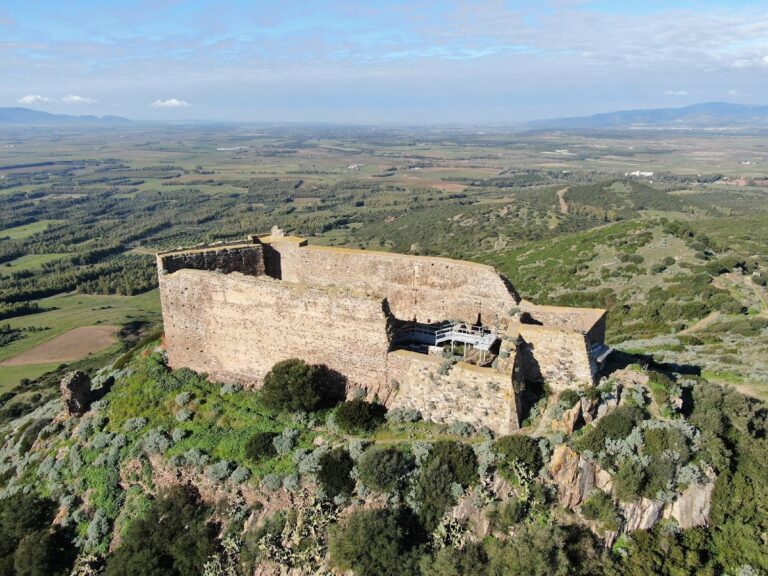
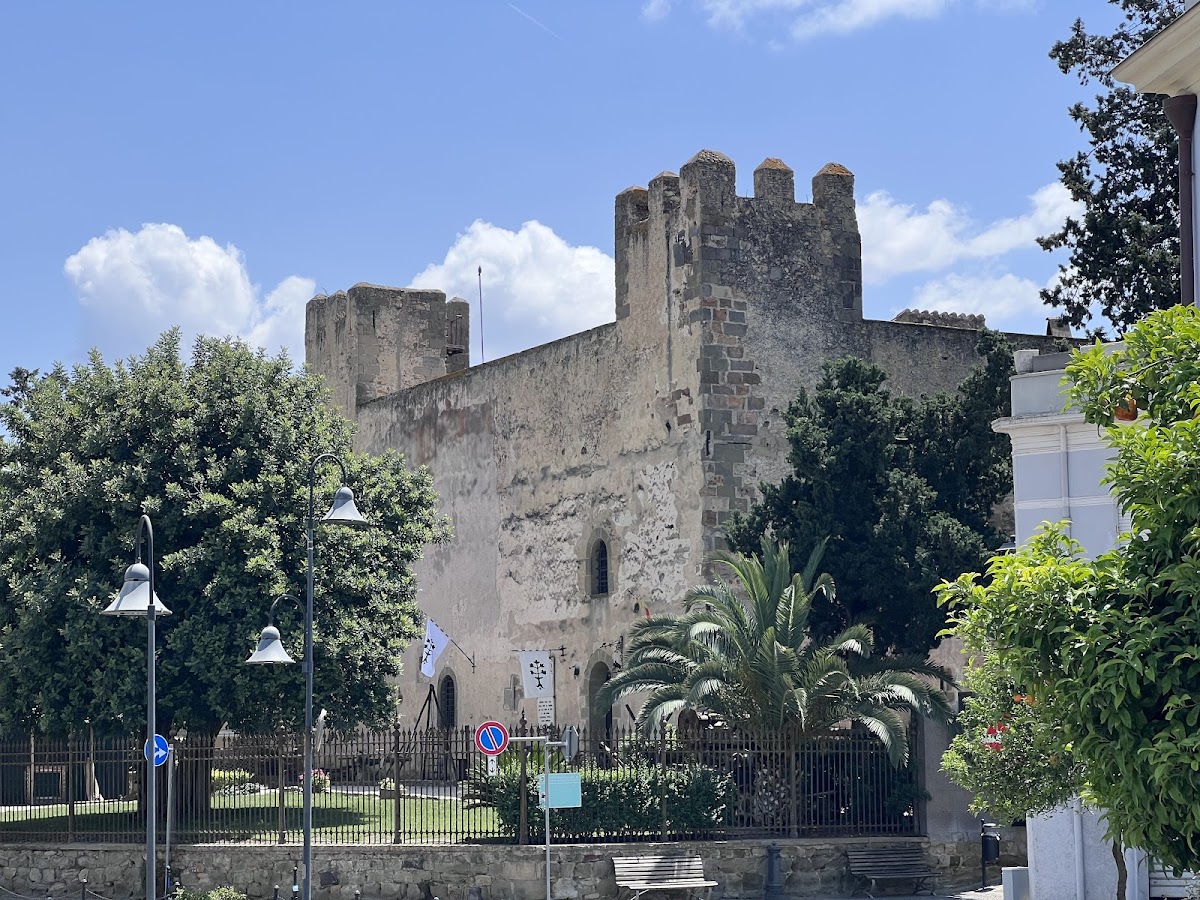
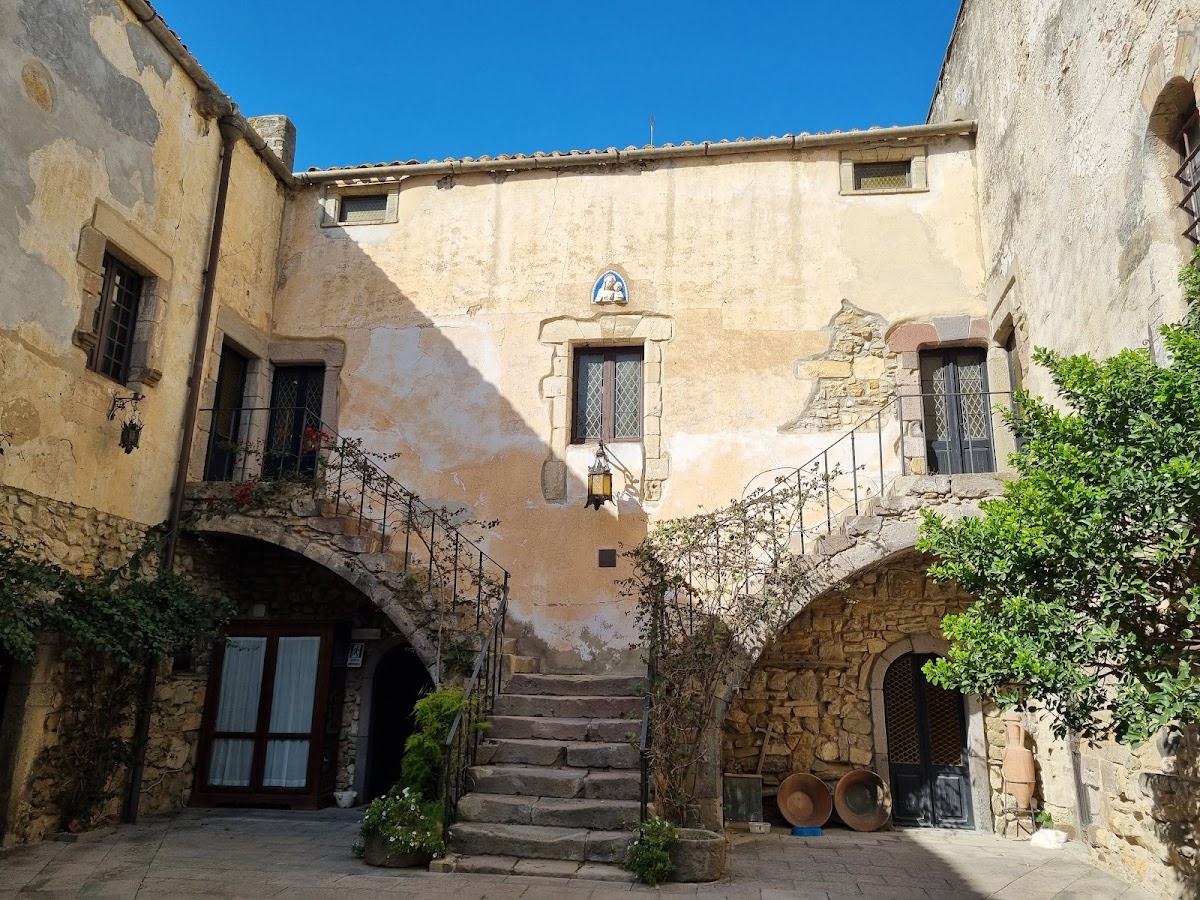
The castle is organized around a medieval fortified structure whose principal keep, or mastio, has a rectangular plan, three storeys, and two square turrets. The enclosing wall averages approximately two metres in thickness and was erected under Berengario Roich during the works ordered by Peter IV of Aragon. Those Aragonese interventions also included the assembly of a palace within the castle court. The building is currently restored and remains in excellent condition, partly because it continuously retained a residential use.
Residential interiors and collections
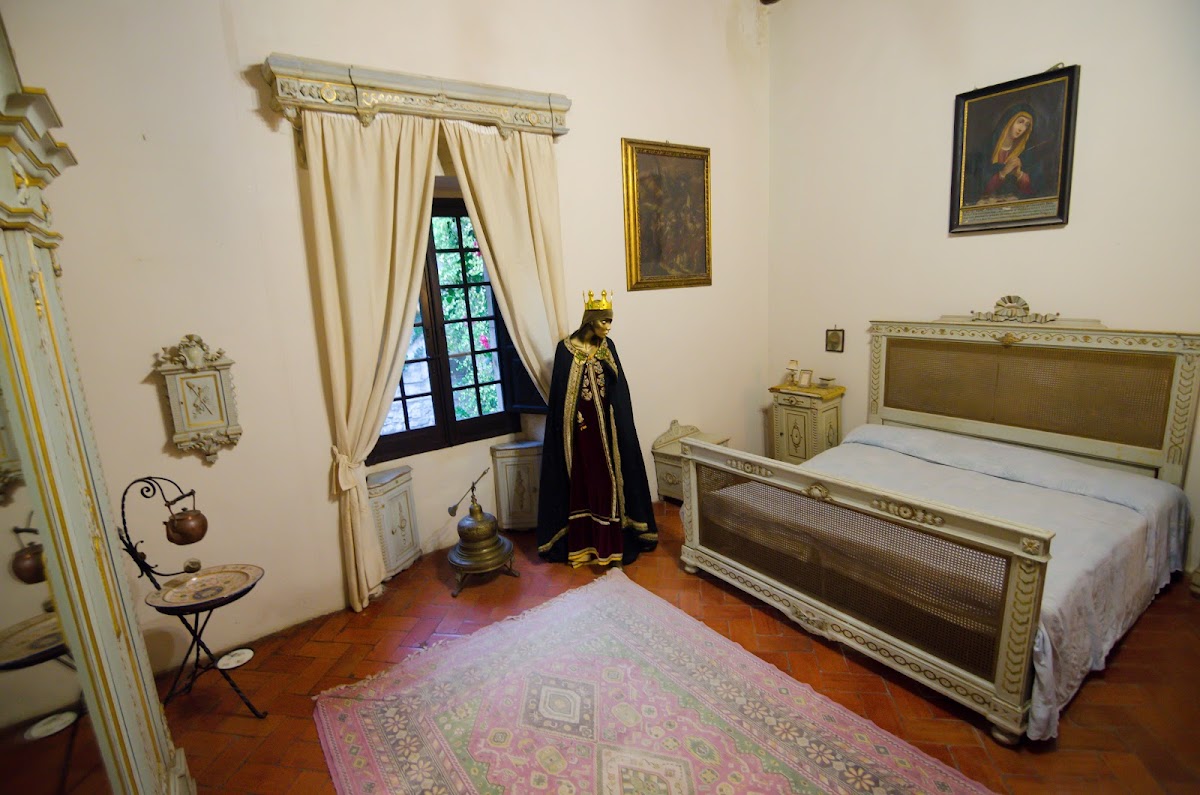
The interior contains an aristocratic apartment, museum rooms, and halls with period furnishings. The Museum of Waxworks occupies one room and contains more than 400 wax sculptures and portraits. Some are exceptionally rare works dating from the sixteenth to the nineteenth century, with signatures by Ammannati, Susini, Zumbo, Giambologna, Piamontini, and Mazzafirri.
The Milizie Hall and Justice Hall contain the Duca d’Aosta Museum of the Risorgimento. Its patriotic relics include the tricolour flag that first flew in Trieste on 3 November 1918, after the city’s reconquest by Italy at the end of the First World War, and the original document of the Victory Bulletin. The study of Count Villa Santa preserves correspondence with Prince of Montenevoso, General Gabriele d’Annunzio.
Other rooms preserve objects associated with notable historical settings. The Napoleonic salon contains sabres, documents, and furnishings linked to the Bonaparte imperial family. The Doria Room has an elaborate eighteenth-century bed. Together with the surviving apartment and period furnishings, these interiors preserve the building’s transformation from fortress to aristocratic residence and museum complex.