Burgstall Stumpfbühl: A 15th-Century Castle Site in Bavaria
Site at a Glance
- Rating
- 2.5
- Popularity
- Very Low
- Country
- Germany
- Primary era
- Medieval
- Eras represented
- Medieval
- Civilizations
- Holy Roman Empire
- Site type
- Military
- Remains
- Castle
On this page5 sections
History
Burgstall Stumpfbühl is a former castle site near Ittelsburg in Bad Grönenbach, Germany, probably built in the 15th century. It was likely constructed while either Diepold or Hans Zwicker held authority as village lord of Ittelsburg. In 1442, Veit von Eisenburg owned the castle, probably having acquired it through marriage ties between the Eisenburg and Rothenstein families.
That year, Veit became embroiled in a feud with Hans von Stadion, a knight belonging to the mounted military and social elite. The dispute probably arose because Veit earned his living by robbing travelers near the Ulm-Kempten post and trade road. Hans advanced on Ittelsburg with 1,000 men, both mounted and on foot, and camped there for four days. Veit escaped at night after the four days; the remaining defenders surrendered, and Hans’s forces captured and burned the castle.
Remains
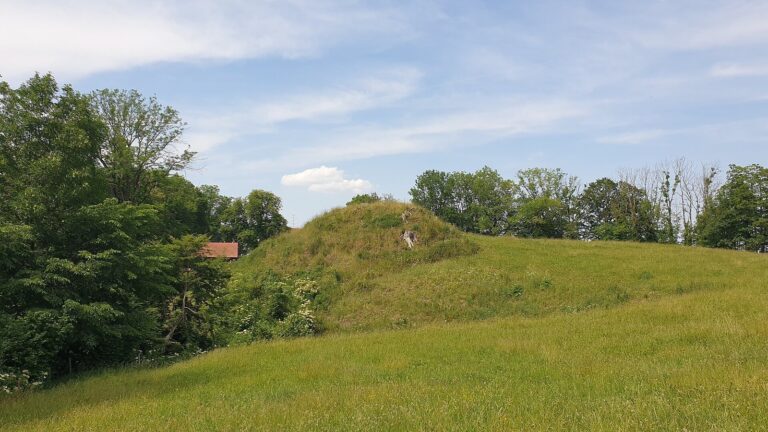
Castle earthworks and memorial stone
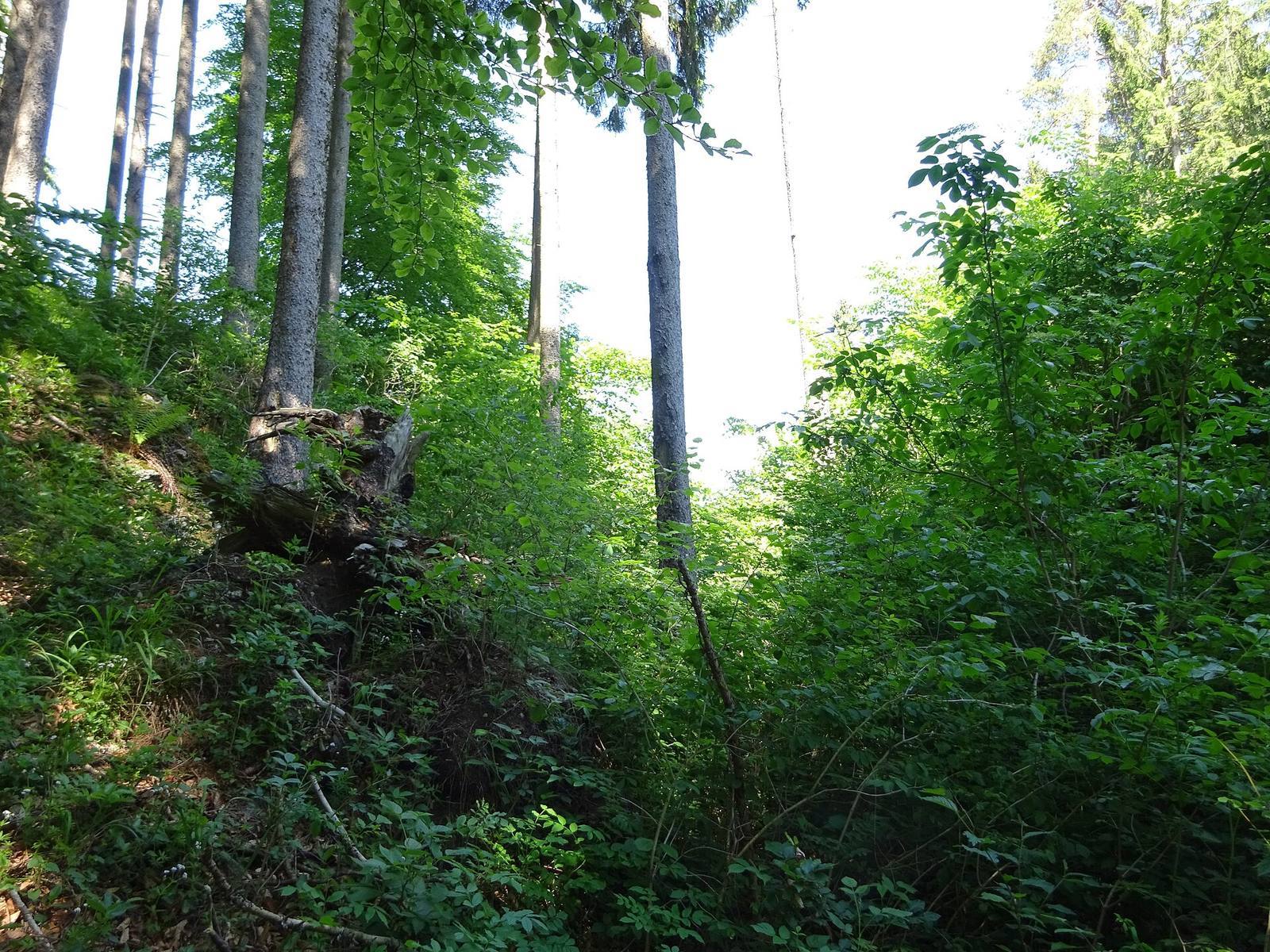
The site lies on the Falken elevation, southeast of Ittelsburg in Bavaria, at 780 metres above sea level. The castle occupied a hilltop spur, a projecting slope, and its surviving form is expressed through a castle mound and defensive ditches.
Mound and ditches
A crescent-shaped ditch, 60 metres long, crossed the narrow approach and enclosed the elevation. A separate ditch protected the tower mound on its southern side.
Memorial stone
A memorial stone at the site bears an inscription commemorating the castle and its history.