Ostravorwerk: A Saxon Court Estate in Dresden
Site at a Glance
- Popularity
- Medium
- Country
- Germany
- Primary era
- Early Modern
- Eras represented
- Early Modern, Modern
- Civilizations
- Electorate of Saxony, Holy Roman Empire, Kingdom of Saxony
- Site type
- Economic
- Remains
- Production Complex
On this page9 sections
History
Ostravorwerk was an agricultural estate in Dresden, Germany, whose 16th-century expansion transformed an older farm near the former mouth of the Weißeritz into a large supplier for the Saxon court.
From ducal farm to court estate
The estate belonged to Duke Georg the Bearded until 1535, then to Dr. Georg von Kommerstädt, master of the Freiberg mint. In 1550, Elector Moritz of Saxony, a prince entitled to participate in choosing the Holy Roman Emperor, acquired the estate and its land. After Moritz’s death, his brother August took control and developed it as a large-scale farm supplying the Dresden court.
In 1559, August acquired the village of Ostra from the bishops of Meissen and moved its inhabitants to Zschertnitz and Neuostra. He also had the existing estate expanded and altered. Farmers from villages around Dresden were required to provide regular ploughing, transport, and manual labor.
Labor and changing priorities
After the Thirty Years’ War, a major European conflict lasting from 1618 to 1648, Bohemian religious refugees joined the estate’s workforce. In the 18th century, supplying the court became less important than its hunting interests. Parts of the fields served as a pheasantry, a place for keeping pheasants, and a menagerie, or collection of captive animals. Alongside cattle, pigs, and sheep, the menagerie held partridges, beavers, buffalo, and sometimes camels.
Decline and later uses
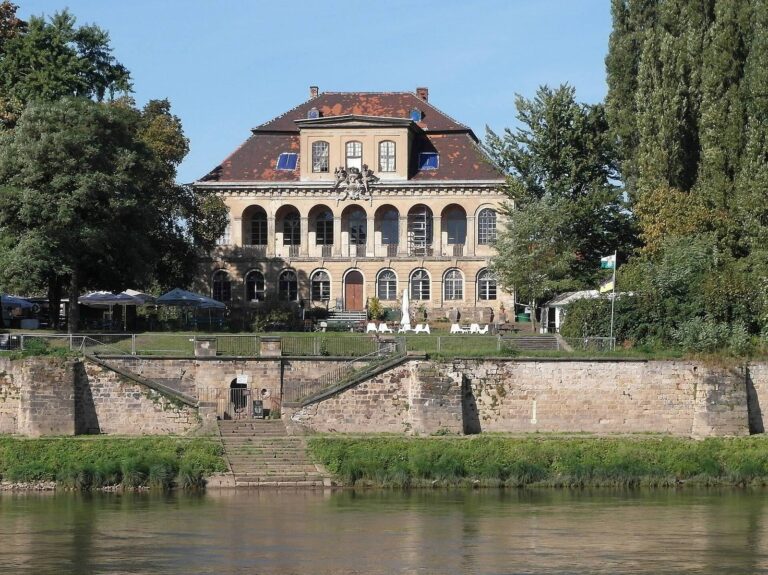
As Friedrichstadt, a district of Dresden, became more built up, farming at the estate declined. Dairy products were made in its remaining buildings, and successive tenants lived in a villa on the property. The estate ceased operating in 1917, after which its former stables and barns were rented to the Dresden Transport and Warehousing Company.
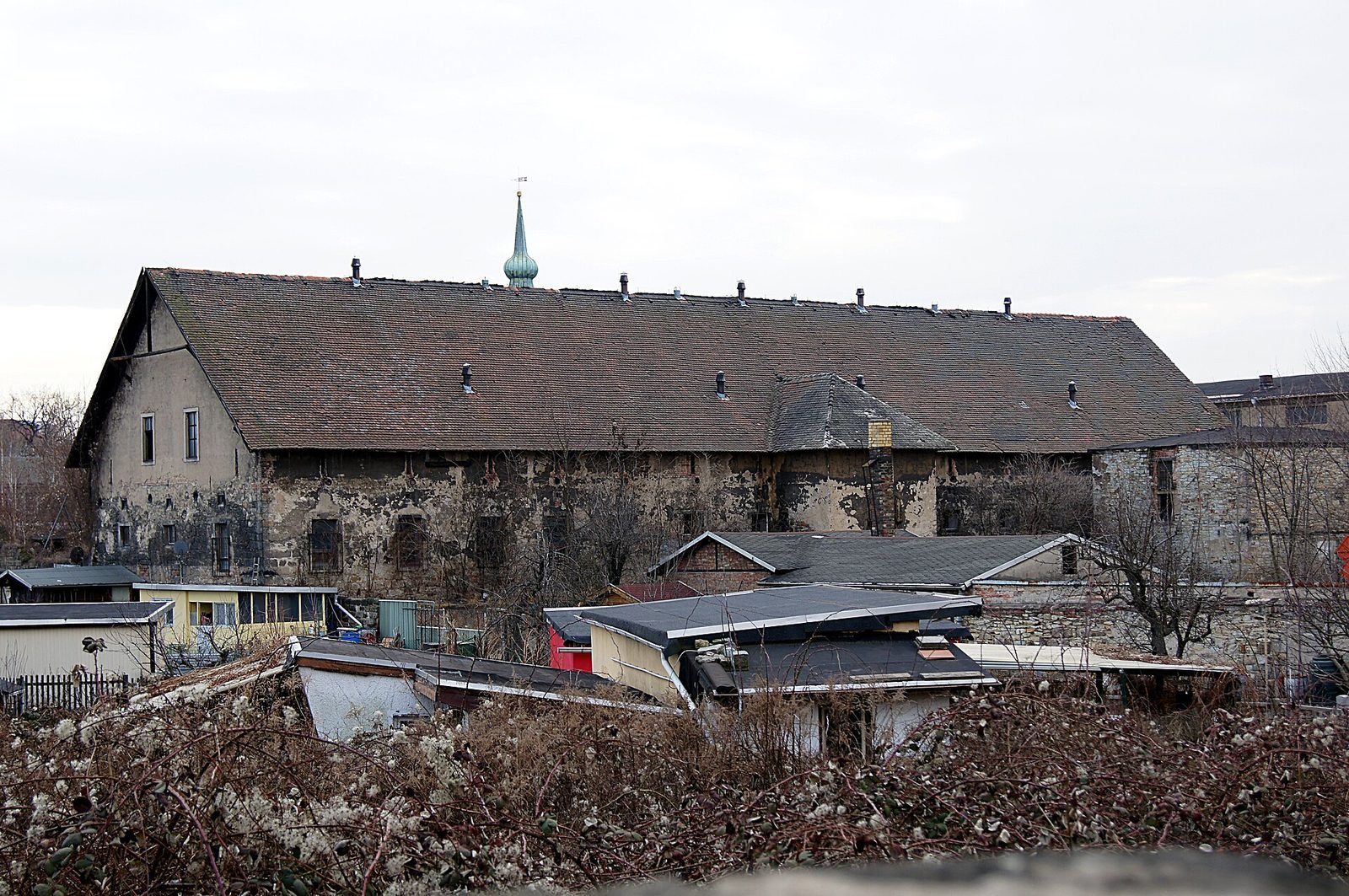
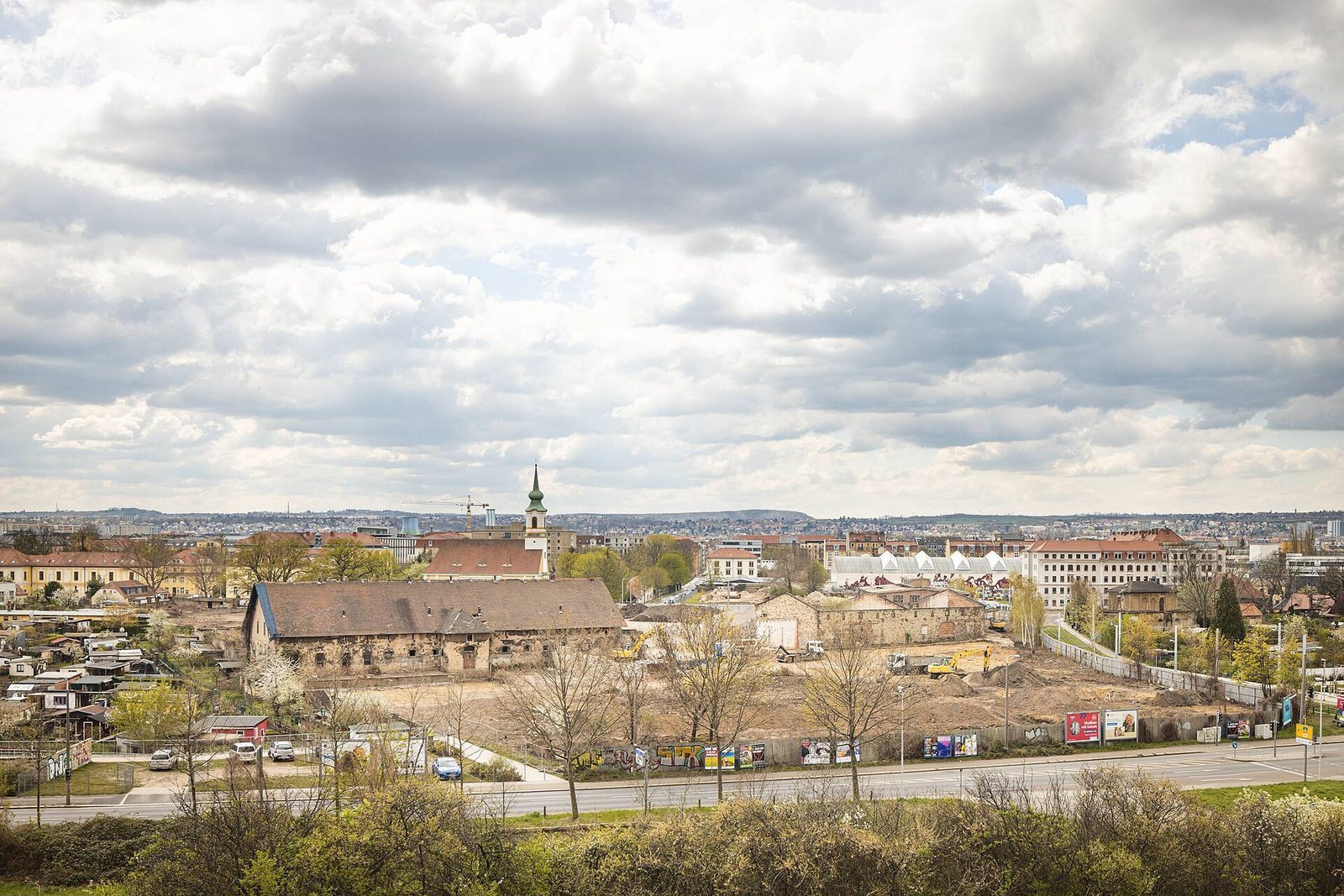
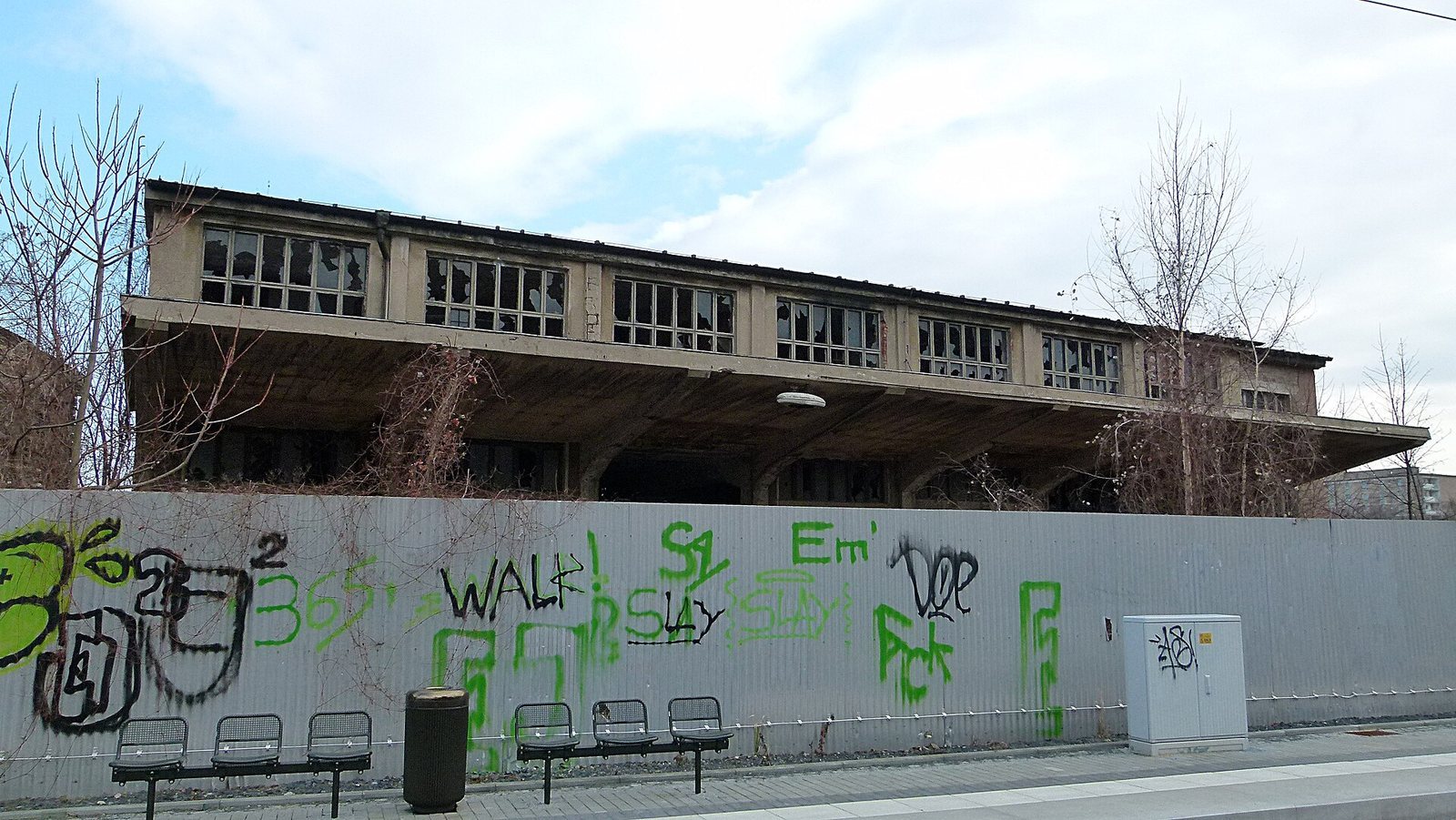
A bombing raid in 1945 destroyed most of the buildings. During the GDR era, the property was used by SERO, a secondary-raw-materials trading operation. After 1990, a recycling company used the site. The surviving barn, former cowshed, and tenants’ villa are protected as historic monuments.
Remains
Farmstead and surviving buildings
The estate’s built core was a group of buildings and courtyards at what is now Friedrichstraße 60, near the former mouth of the Weißeritz. Its cultivated land covered about 600 hectares.
Livestock yard and working buildings
The farmstead included a livestock yard, stables, barns, and administrative buildings. One barn and the former cowshed survive from this original complex.
Threshers’ houses
Houses for threshers provided accommodation for Bohemian religious refugees who worked the estate’s fields after the Thirty Years’ War.
Tenants’ villa
The villa at Friedrichstraße 62 was built in 1835 and survives as part of the former estate.