Sande Church: A Medieval Parish Church in Norway
Site at a Glance
- Popularity
- Low
- Country
- Norway
- Primary era
- Medieval
- Eras represented
- Medieval, Early Modern, Modern
- Civilizations
- Denmark–Norway, Norwegian
- Site type
- Religious
- Remains
- Church
On this page10 sections
History
Medieval origins and early alterations
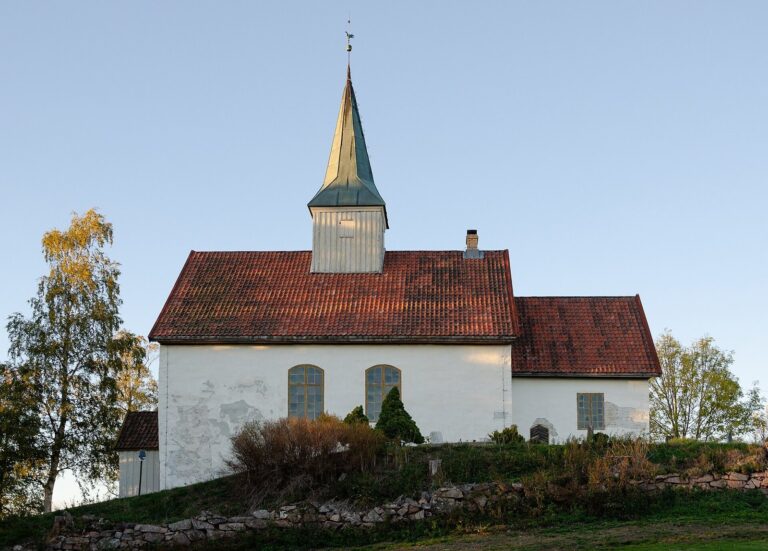
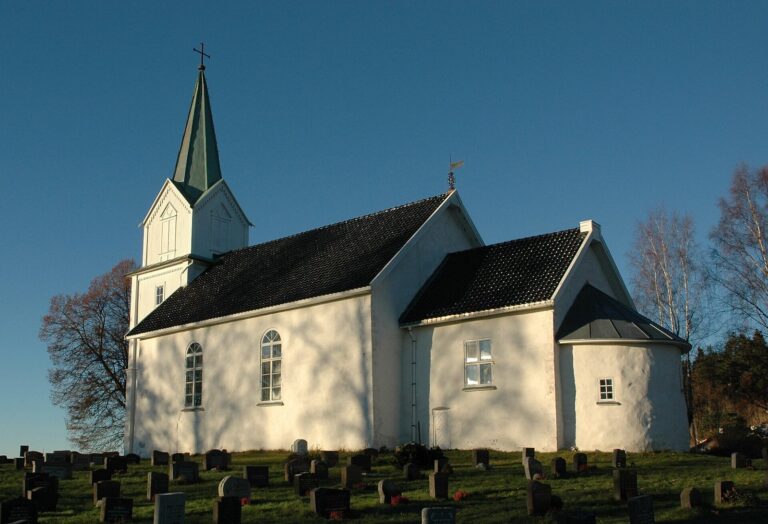
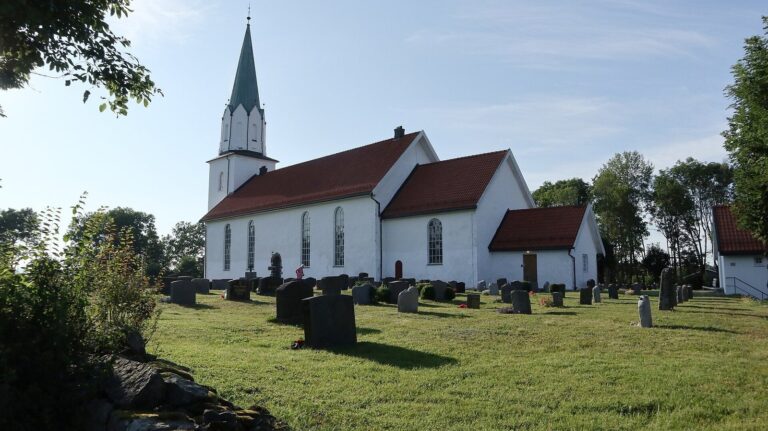
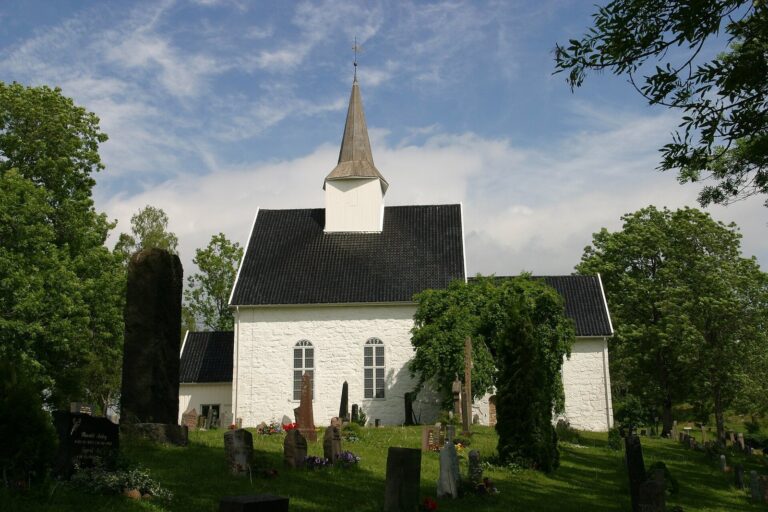
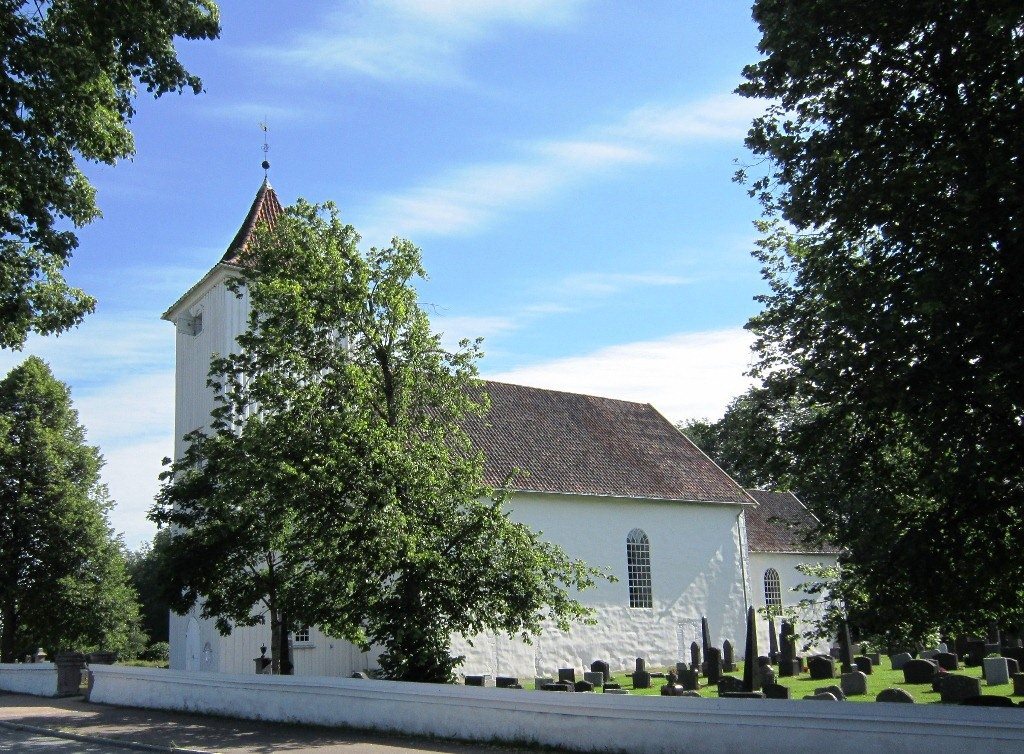
Sande Church is a white stone parish church in Sande i Vestfold, Norway, generally dated to the 11th or 12th century and built in the Romanesque style, a medieval architectural tradition. Consecrated around 1150, it was dedicated to the Virgin Mary. The earliest surviving written reference dates to 1387, several centuries after the church’s construction. It serves Sande parish in the Church of Norway and was formerly Catholic.
A wooden bell tower was placed over the nave roof in 1631, and the church underwent renovation in 1665.
Fire and rebuilding
On 5 April 1783, a fire that started in the neighboring rectory spread to the church and burned it. Reconstruction followed over the next few years, using the old stone walls. Later alterations took place in 1790–91, 1860, the 1890s, 1922, and 1955.
Polling place and continuing use
In 1814, the church was a polling place in Norway’s first national elections. Voters in each parish chose electors, who later met at county level to select representatives for the Constituent Assembly at Eidsvoll Manor, where Norway’s constitution was drafted.
Sande Church remains an active Evangelical Lutheran parish church and has automatic protection as a Norwegian cultural heritage site.
Remains
Plan and structure
Stone church and later additions
The church is arranged along a lengthwise axis, with a rectangular nave, the main space for the congregation, and a smaller rectangular chancel, the area around the altar. Its stone walls enclose both spaces, and the entrance portal has a rounded arch. The exterior stone walls were reused during rebuilding after the 1783 fire. The chancel once had two windows at its eastern end; rebuilding added three windows in the south wall.
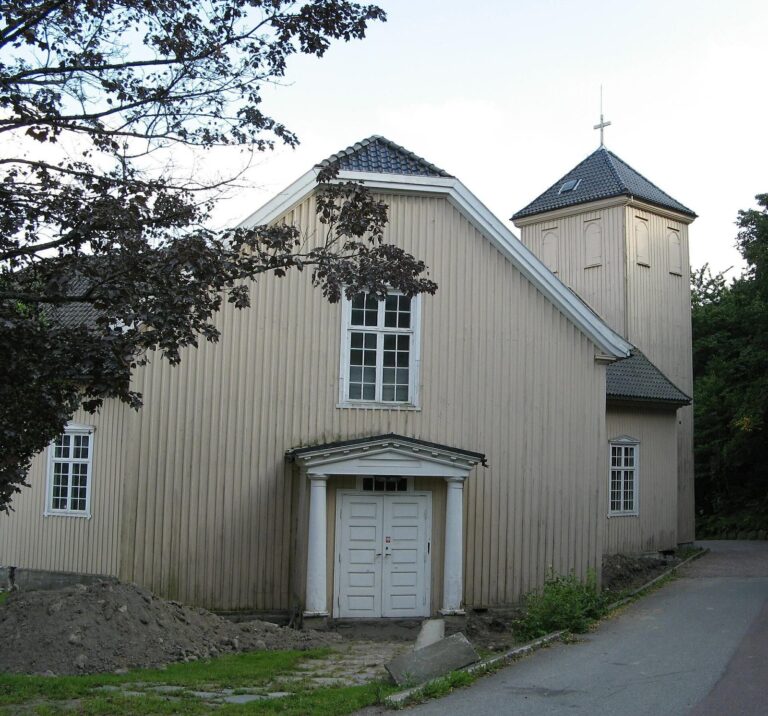
A wooden bell tower and porch stand at the western end, while a wooden sacristy, a room for church furnishings and preparation for services, adjoins the north side of the chancel. A churchyard lies beside the building, which seats about 350 people.
Furnishings and fittings
Font, altar, and pulpit
The 12th-century baptismal font is made of soapstone and is the church’s only surviving medieval furnishing. It survived the 1783 fire. The altarpiece dates to 1783 and incorporates two paintings rescued from the fire. The altar and pulpit also date to that year, and the pulpit is in the Rococo style.
Bells and organ
Two bells associated with Erich Schmidt are dated 1783 and 1794. The organ, made by Ryde and Berg, dates to 2000.