Gernotenstein Castle Site: A Medieval Castle near Michelfeld, Germany
Site at a Glance
- Popularity
- Very Low
- Country
- Germany
- Primary era
- Medieval
- Eras represented
- Medieval
- Civilizations
- Duchy of Bavaria, Holy Roman Empire
- Site type
- Military
- Remains
- Castle
On this page4 sections
History
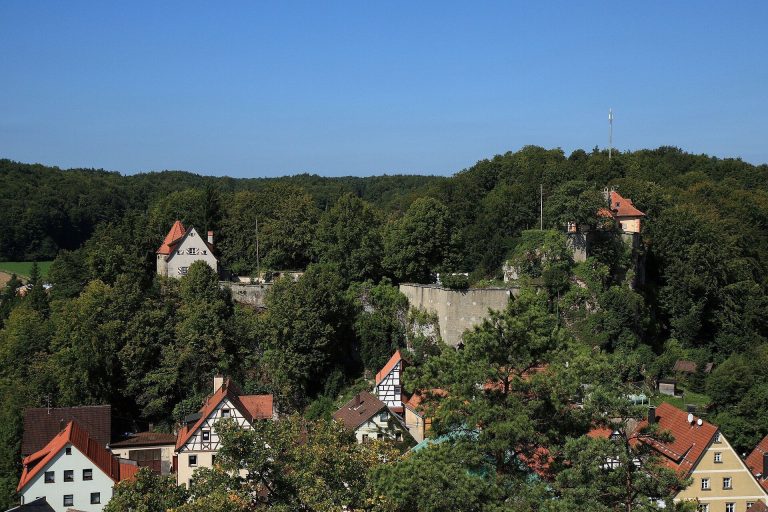
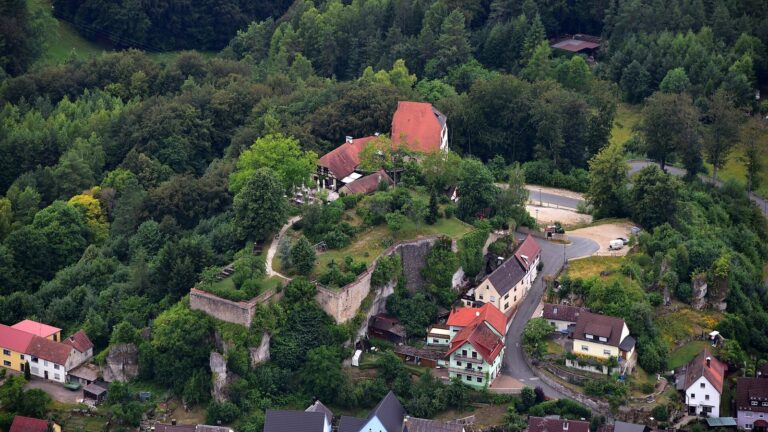
Gernotenstein Castle Site is the remains of a medieval castle on a rocky ridge east of Michelfeld in the municipality of Auerbach, Bavaria, Germany. Its precise construction date is unknown, but it is thought to have been built in the 11th century. Its history is closely connected with Michelfeld Monastery, founded in 1119.
Date, name, and location
Regional castle historian Hellmut Kunstmann considered an 11th-century origin likely. He argued that castles in eastern Franconia whose names joined a personal name with Stein were often built before 1100. His examples included Pottenstein, founded around 1060; Gößweinstein, first recorded in 1076; and Hiltpoltstein, known from 1109. The castle’s builder and exact construction date remain unknown.
The name Gernotenstein combines the personal name Gernot with Stein, giving the sense “Gernot’s castle,” though the builder’s family is unknown. The alternative name Huwenstein comes from an old German word for an owl or eagle owl and may preserve the name of an earlier field. Owls may have nested in small caves in the rock, but whether Huwenstein was used as the castle’s name is uncertain.
The castle’s location was disputed. Erich Freiherr von Guttenberg placed it on Breitenstein, south of Punzenreuth. Kunstmann first suggested Hollenberg and later proposed the site at Moschenreuth. Eighteenth-century transcripts helped narrow the search to the area around Michelfeld Monastery. One alternative, Burgstall Festenberg, is now understood to have been built in the 14th or 15th century, after Gernotenstein’s destruction. The rocky ridge above the monastery is identified as the castle site.
Monastery records and destruction
Michelfeld Monastery’s founding charter, dated 6 May 1119, lists “Huwenstein, also called Gernotestein” among properties granted to the monastery, after Penzenreuth with Reisach. The charter does not call Huwenstein a castle. A later, more direct reference appears in a list of Bishop Otto of Bamberg’s pious works, written between 1139 and 1147 by Thiemo, Michelfeld’s senior monastery official.
Otto, a 12th-century bishop and missionary, probably owned Gernotenstein when he founded the monastery. An 18th-century transcript of a copybook kept by Abbot Heinrich of Truppach between 1406 and 1436 recounts that Otto regarded the fortress as a threat to the monastery, apparently because of its economic effects, and had it burned. Before its destruction, relics, sacred remains or objects associated with saints, were removed from a chapel dedicated to St Nicholas. Otto later had them buried with due reverence in a church of St Nicholas near Michelfeld. The transcript also says that rebuilding the castle was forbidden under threat of eternal damnation.
Remains
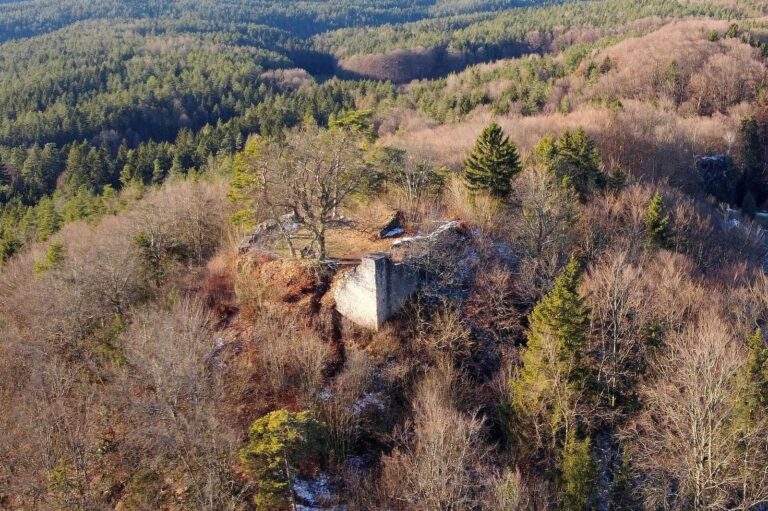
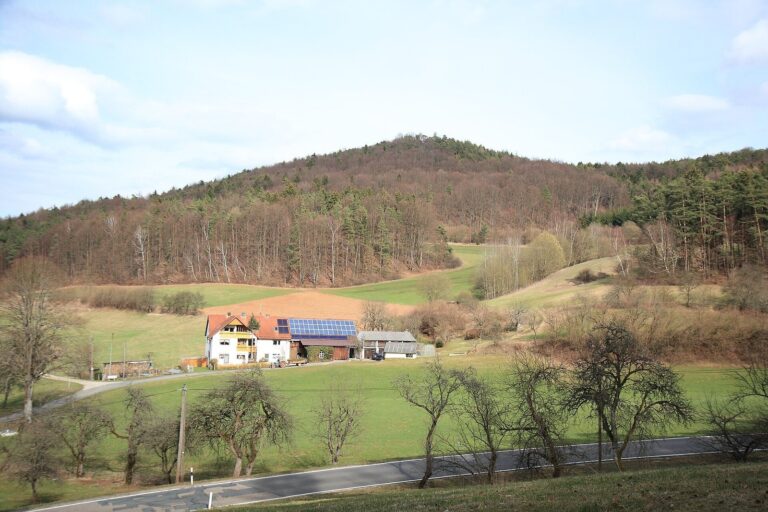
The castle occupied a small rocky spur running southeast to northwest above the Speckbach valley, at about 415 metres above sea level. The stream borders the site to the north, where the ground drops steeply. A sheer cliff protects the narrow western end, while the southern and eastern approaches have moderately steep slopes. The site lies about 825 metres east of Michelfeld’s Catholic cemetery church of St Leonhard.
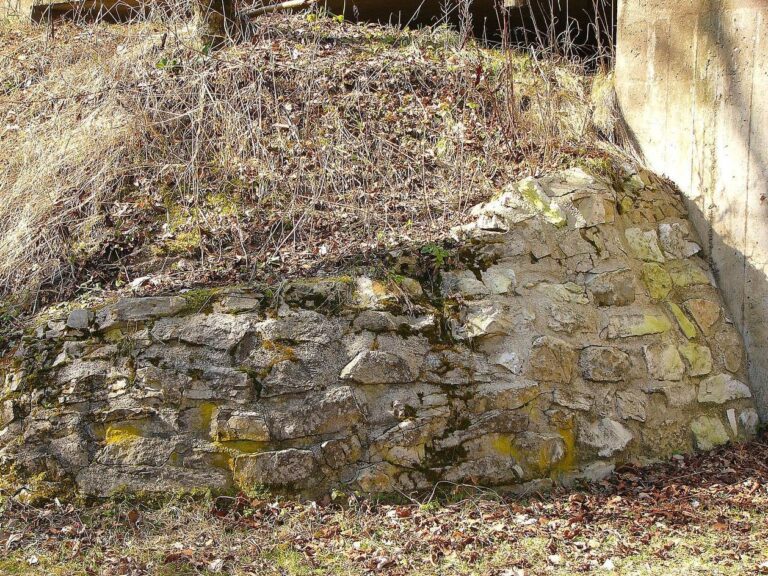
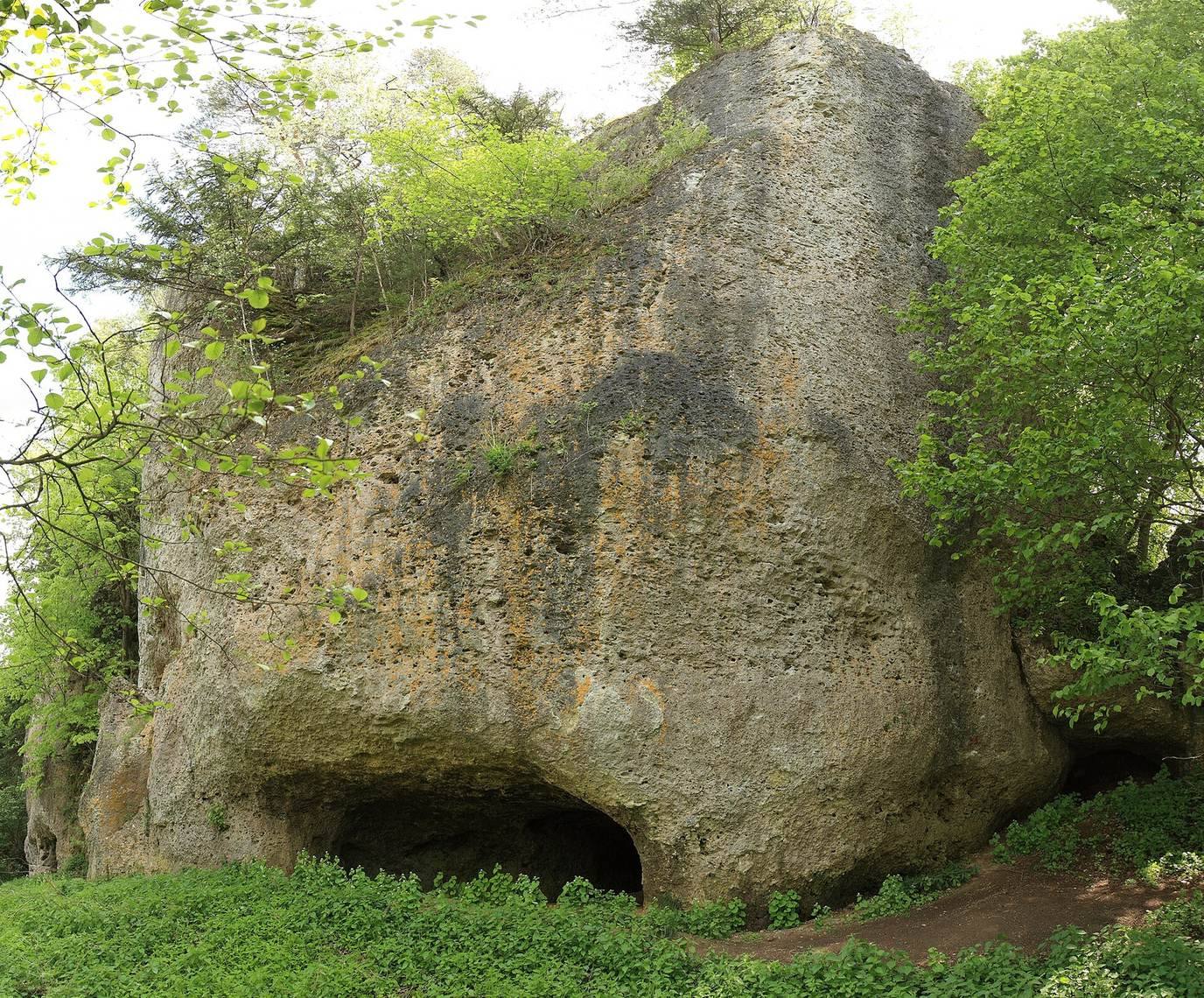
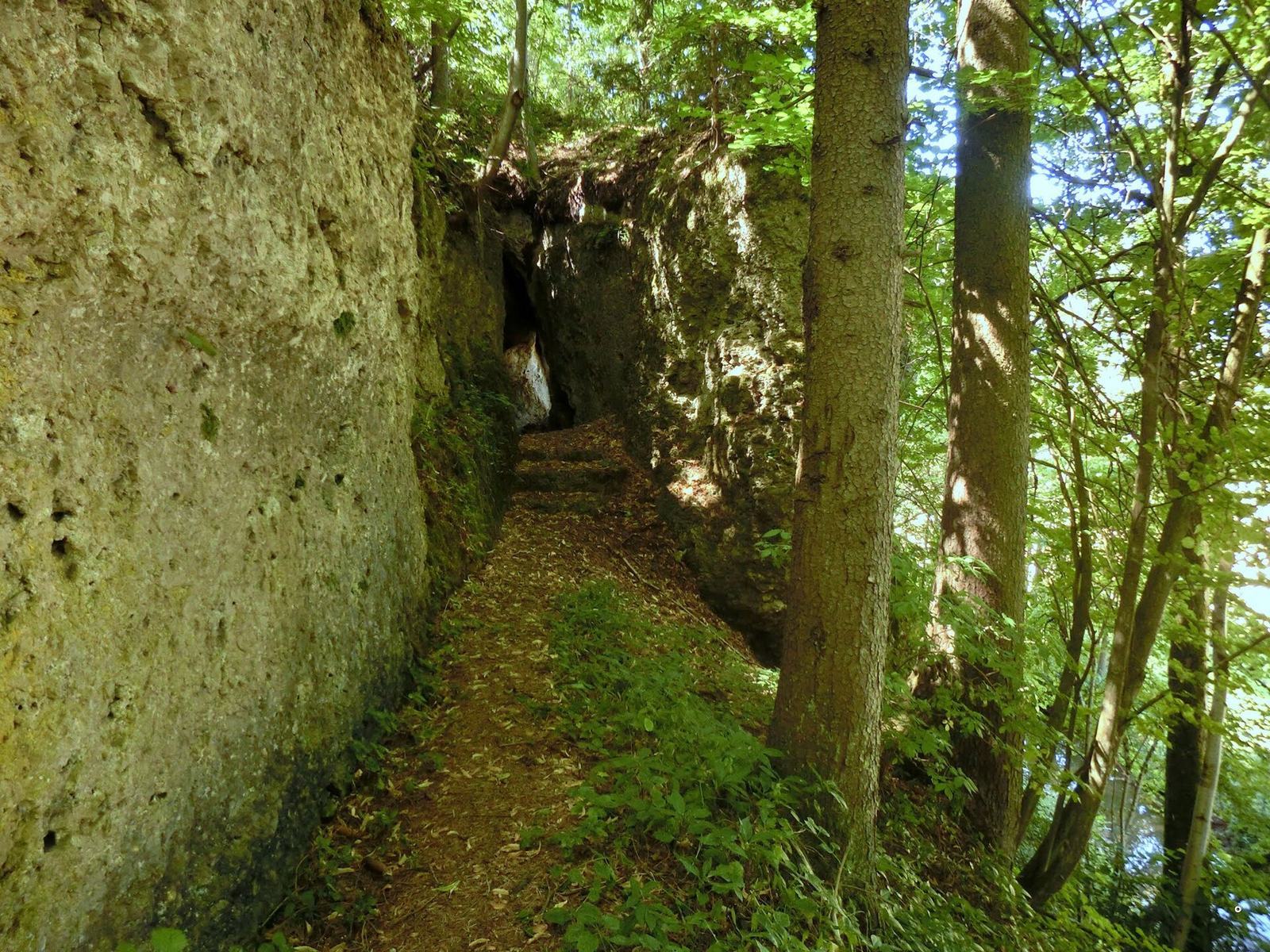
Almost all of the castle has disappeared. A small piece of masonry survives in a deep fissure in the rock, and marks of rock-working remain on the site. Trees and brush cover much of the rocky ground. The cave known as Guckerloch is associated with the castle and may have served as a church within a cave.