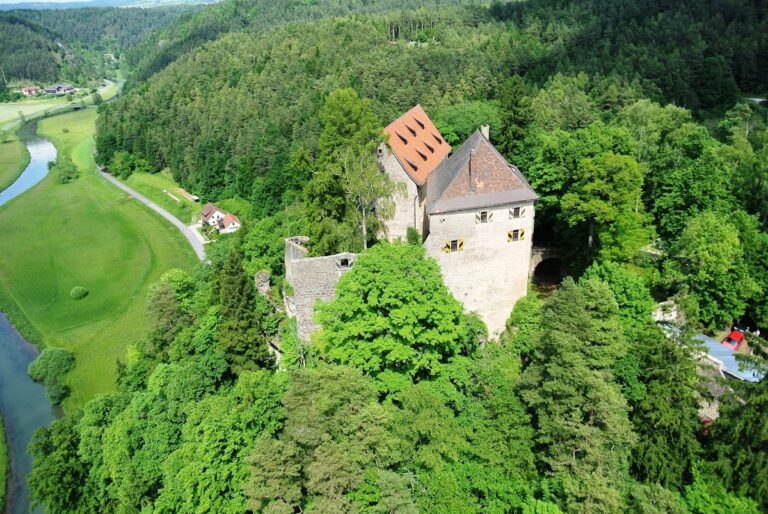
Burgruine Hollenberg: A Late-Medieval Administrative Castle in Germany


Site at a Glance
- Rating
- 4.6
- Popularity
- Very Low
- Country
- Germany
- Primary era
- Medieval
- Eras represented
- Medieval
- Civilizations
- Holy Roman Empire, Kingdom of Bohemia
- Site type
- Military
- Remains
- Castle
On this page6 sections
History
Burgruine Hollenberg is a late-medieval administrative castle in Germany, near Pegnitz, built for the Bohemian Crown probably between 1357 and 1363. Its fortified seat administered territory held by the crown during the expansion of Charles IV, the fourteenth-century Holy Roman Emperor and King of Bohemia. An earlier fortification may have existed, but its presence remains uncertain.
Foundation under the Bohemian Crown
Charles IV purchased the freehold town of Pegnitz and the surrounding Hollenberg area from the Landgraves of Leuchtenberg in 1357. A Bohemian bailiff, an administrator or custodian acting for a territorial lord, was first recorded at Hollenberg in 1363. The castle then appeared in the Bohemian land register of 1366–1368 as “the house” of Hollenberg. Several other Bohemian bailiffs continued to be recorded there until 1387.
Wartime Transfers and Abandonment
During the conflict between Wenceslas, King of Bohemia, and Rupert, the Palatine ruler elected King of the Romans, Hollenberg changed owners several times and appears to have suffered damage. The castle apparently came into Rupert’s possession. After his death in 1410, an inheritance division transferred it to his son, Duke John of Wittelsbach. A treaty between the Bohemian Crown and Duke Otto in 1465 led to the renewed issue of Bohemian letters of enfeoffment for Hollenberg. These formal documents granted or confirmed land or rights held from a superior lord in return for obligations.
Hans von Rabenstein was the last known bailiff to live at the castle. Hollenberg was probably destroyed during the German Peasants’ War in 1525. An administrative account from 1570 already described it as a ruin, and the castle was not rebuilt. The remains were later restored, and the upper castle was adapted as a viewpoint.
Remains
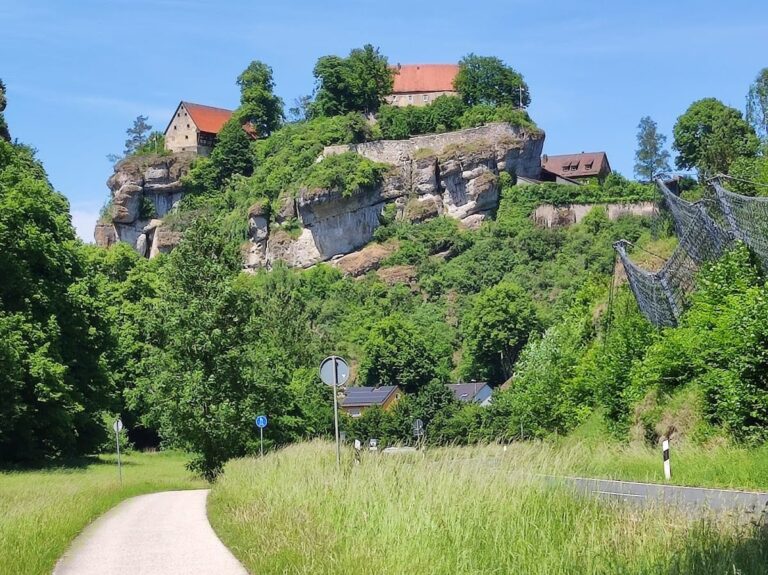
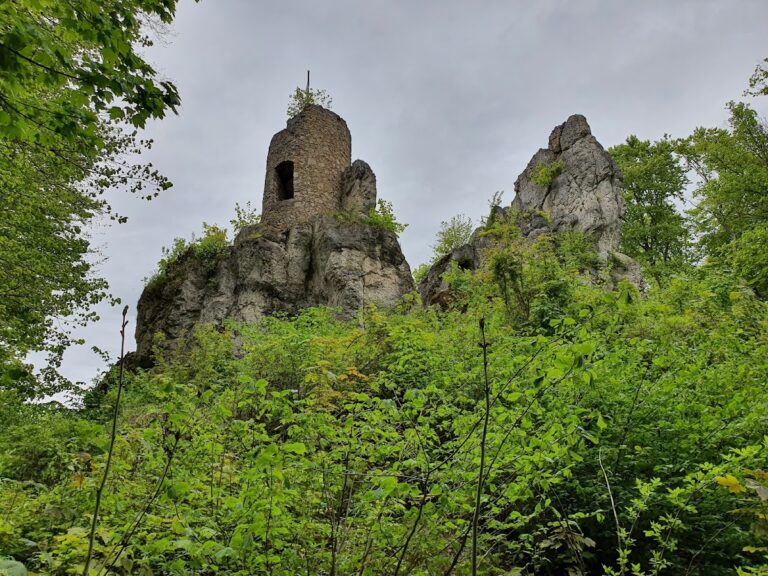
Hollenberg was a hilltop fortress on the summit of Hollenberg Castle Hill in the eastern Franconian Switzerland region of the Franconian Jura. It stood at 540.7 metres above sea level, approximately 100 metres above the valley. The castle was built with rubble-stone masonry, and its surviving layout consists of the identifiable upper castle, remnants of the moat, several building remains, and traces preserved in the ground.
Upper Castle and Defensive Works
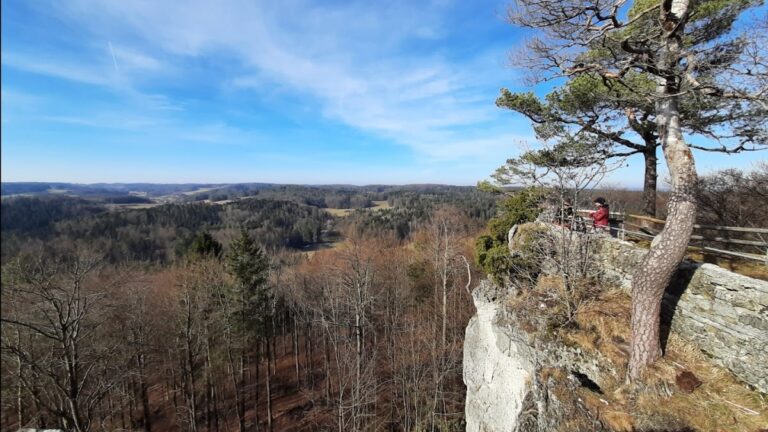
The upper castle forms the clearest surviving part of the fortress. Its restored remains now serve as a viewpoint, with the view extending westward to Gößweinstein and its castle. The remnants of the castle moat can still be identified around the surviving sections of the hilltop complex.
Nearby Archaeological Features
The 97-metre-deep Dwarf Cave lies below the castle. Approximately one kilometre southwest, in Hollenberg Forest, stands the ruin of Pirkenreuth Chapel, a medieval church associated with the abandoned settlement of Pirkenreuth.
Nearby sites