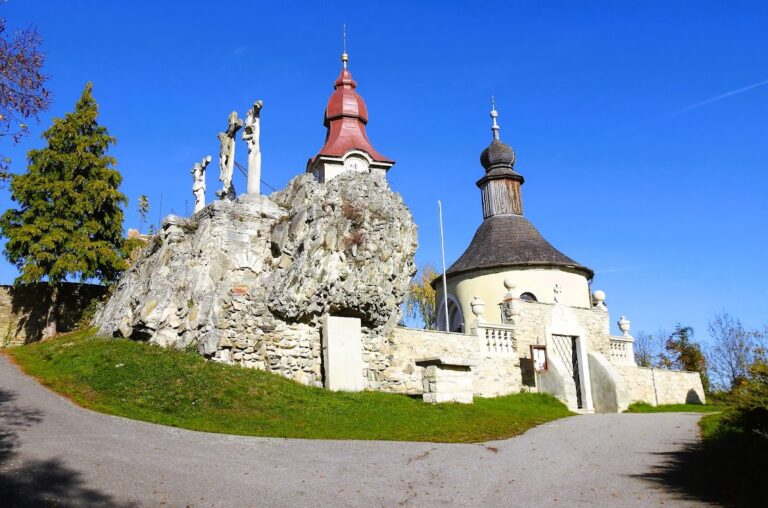
Schimmelsprung Castle Ruins: A Medieval Castle in Austria

Site at a Glance
- Rating
- 4.9
- Popularity
- Very Low
- Country
- Austria
- Primary era
- Medieval
- External website
- Open
- Eras represented
- Medieval
- Civilizations
- Duchy of Austria, Holy Roman Empire
- Site type
- Military
- Remains
- Castle
On this page6 sections
History
Schimmelsprung Castle Ruins, also known as Thunau, are the remains of a medieval castle in Austria, in Thunau am Kamp within the municipality of Gars am Kamp. Established before 1196, the castle is first recorded in that year as the seat of the Thunau ministerial family, whose name also appears as Thumbenove. Ministeriales were members of a service-based noble class who held offices, land, or military responsibilities for more powerful lords and rulers.
The Thunau Castle
The castle began to decline toward the end of the fourteenth century. It was not rebuilt after this period and gradually fell into ruin. Its remains now preserve evidence of the medieval stronghold that served as the seat of the Thunau family.
The Schimmelsprung Legend
The name Schimmelsprung comes from legends connected with the ruins. In some versions, the castle lord is described as a Knight Templar, a member of the medieval religious-military Order of the Temple. Other versions portray him as a robber knight. In each telling, he is a despotic and brutal lord who exploited his subjects. The oppressed peasants eventually besieged the castle, and during the assault the lord tried to escape on a white or gray horse. When he realized that escape was impossible, he spurred the animal and plunged over the cliff.
Remains
Rocky Setting and Defenses
The ruin occupies a rock south of Thunau that rises about 100 metres above the right bank of the Kamp. The rock drops steeply toward the river on three sides, while access from the west was protected by three successive ditches. This position formed the natural and constructed defensive setting of the castle.
Enclosure and Keep
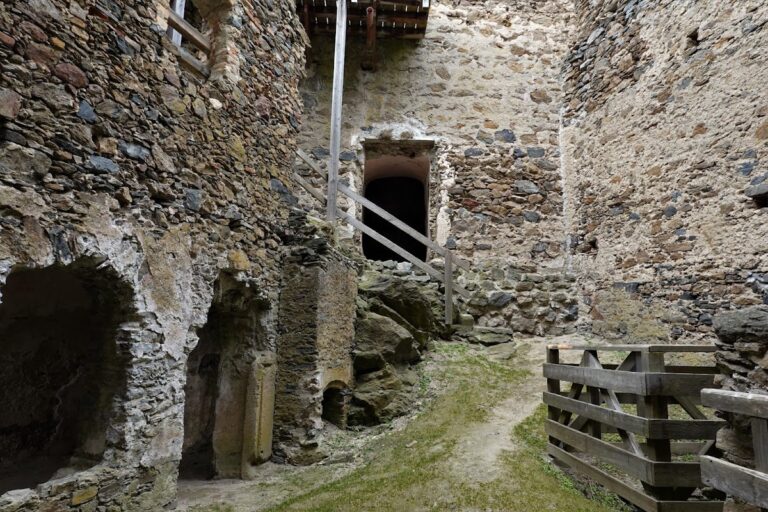
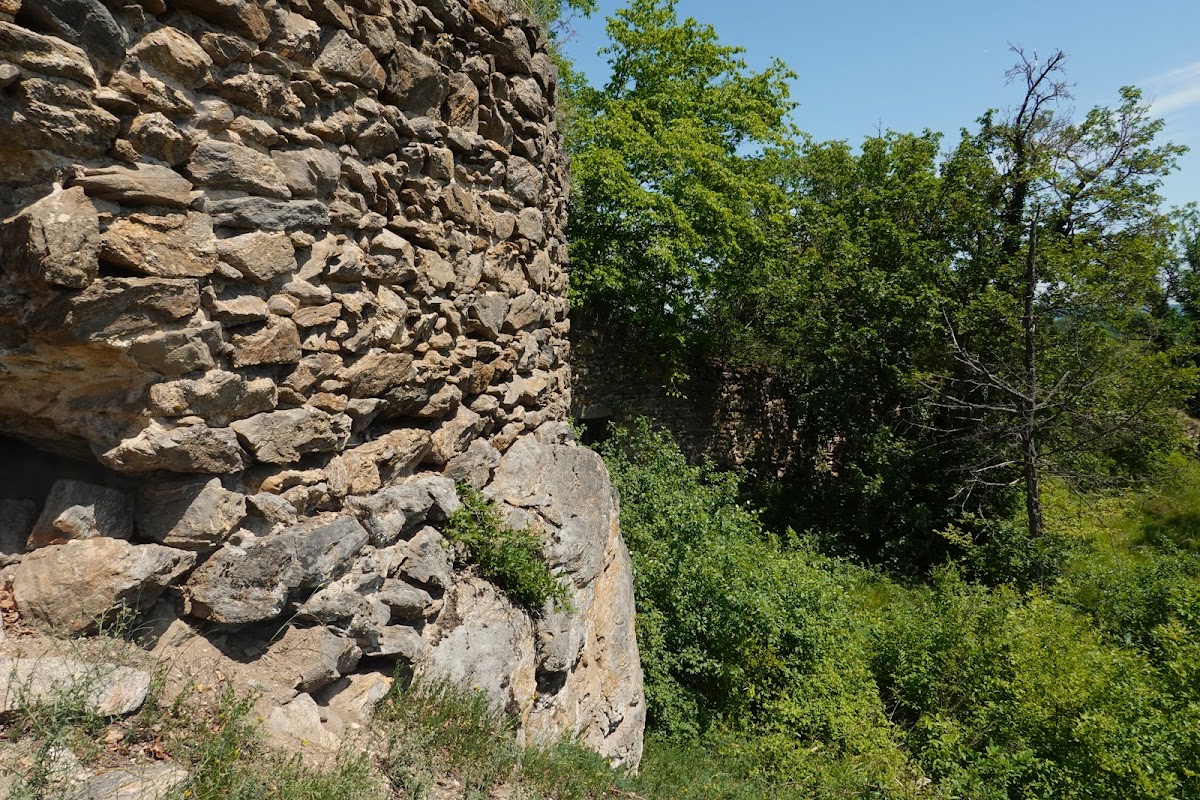
The former castle had a square enclosed perimeter. A keep, the principal fortified tower of a medieval castle, stood in the western corner. Its partly preserved basement has a barrel vault, a curved masonry ceiling. Surviving wall sections indicate the approximate extent of the enclosure. A particularly large stretch remains on the side facing the Kamp and contains loopholes, narrow openings through which defenders could fire while remaining protected. Other sections retain passageways within the walls.