Pottenstein Castle: A Medieval Episcopal Stronghold in Germany

Site at a Glance
- Rating
- 4.3
- Popularity
- Medium
- Country
- Germany
- Primary era
- Early Modern
- External website
- Open
- Eras represented
- Medieval, Early Modern
- Civilizations
- Holy Roman Empire
- Site type
- Military
- Remains
- Castle
On this page18 sections
History
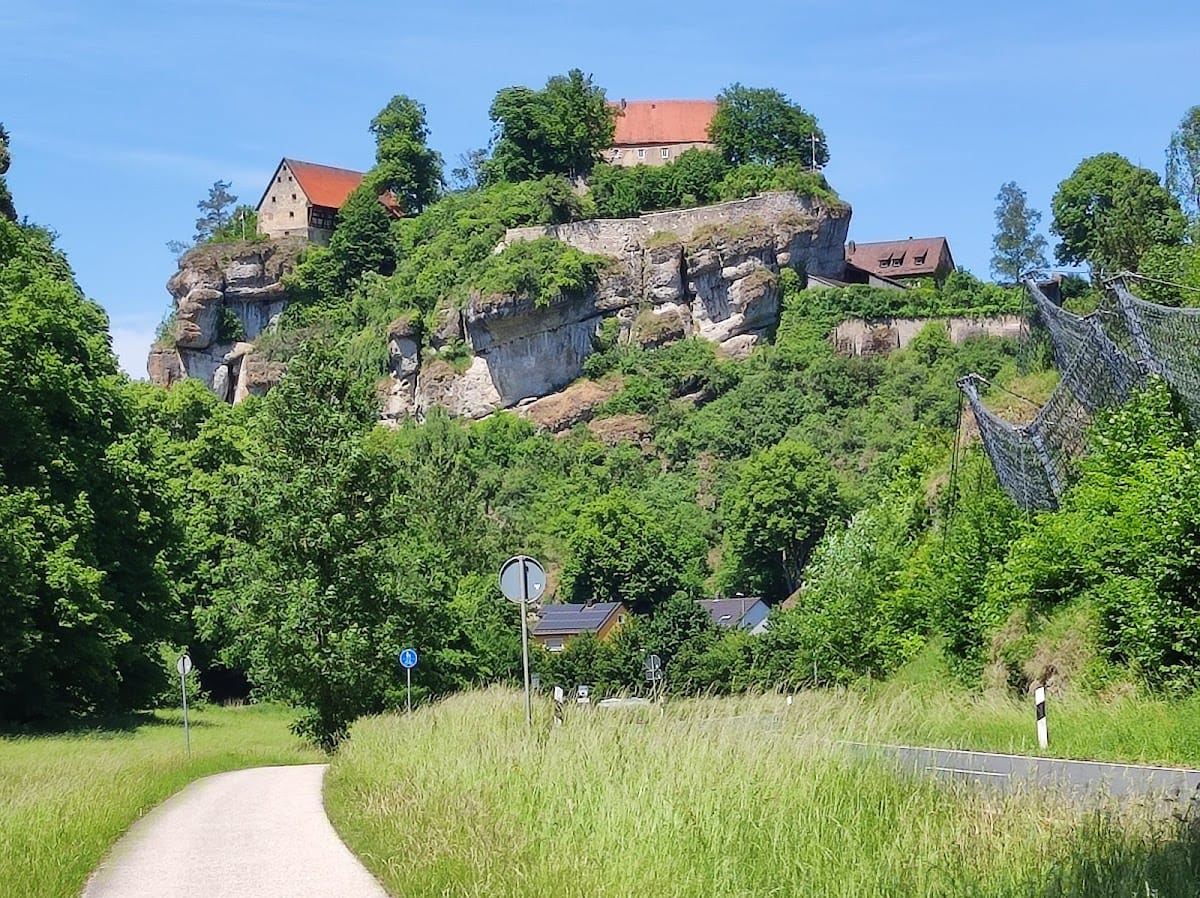
Pottenstein Castle is a medieval hill castle in Germany, above the town of Pottenstein in Bavaria. It was founded between 1057 and 1070, probably by the nobleman Boto, and became a residence and administrative stronghold of the Bishops of Bamberg. The castle occupies a strategically placed rocky spur between the valleys of the Püttlach and Weihersbach, and its history includes episcopal government, military attacks, administrative change, and private preservation.
Foundation and transfer to Bamberg
The area around Pottenstein belonged to Margrave Otto of Schweinfurt around 1050. After Otto’s death in 1057, it passed to his daughter Judith. She later married Boto, following the death of her first husband, Duke Cuno of Bavaria, in 1055. Boto probably established the castle after beginning to style himself comes de Potensteine, or Count of Pottenstein, in 1070. The name Pottenstein is understood as “Boto’s rock.”
A tradition proposing a foundation around 918 by King Conrad I has not been supported by clear documentary evidence. Boto died in 1104, while Judith had died in 1066. During Boto’s lifetime, and by 1102 at the latest, the castle appears to have passed to the Bishopric of Bamberg, an ecclesiastical principality governed by its bishops. It then served as one of their residences and administrative centres. Bishop Otto I stayed at Pottenstein around 1118 and again in 1121.
Ministerial administration and episcopal government
From the twelfth through the fourteenth century, the castle was entrusted to a Bamberg ministerial family. A ministerialis was a dependent noble or administrative retainer serving a prince or bishop. The family adopted Pottenstein as its name and included Wezelo, mentioned around 1121, Rapoto in 1169, Erchenbert or Erchenbrecht from 1185 to 1221, his brother Henry, and Conrad between 1240 and 1248. Erchenbert also served as a Bamberg steward from about 1207, while Conrad became a cathedral canon in 1242.
Saint Elizabeth, Landgravine of Thuringia, stayed at Pottenstein temporarily from 1227 to 1228, including several weeks in spring 1228. She was a thirteenth-century German landgravine known for Christian charitable activities, and her residence later became an important part of the castle’s historical identity.
Between 1323 or 1327 and 1348, Pottenstein became the seat of a Bamberg amt, a territorial administrative office. The castle stood at the centre of an extensive high-court district, meaning an area governed by a high criminal court. Its administrative reach later incorporated the offices of Tüchersfeld in 1492, Leienfels in 1594, and Gößweinstein between 1628 and 1636.
From the beginning of the fourteenth century, a vogt, or administrative governor, managed the castle. From about 1500, these officials were known as pflegers, a later form of territorial officer. Because the climb to the castle was difficult, administrative staff gradually moved into buildings in the town. By 1750, Pottenstein no longer functioned as an administrative residence and was being used as a grain store.
War, damage, and military decline
Pottenstein was involved in several conflicts. In 1125, fighting between King Lothair III and the Hohenstaufen ruler Conrad III, who opposed him as an anti-king, led to the burning of the castle, although it survived the attack.
During the Peasants’ War in 1525, the castle was occupied and plundered but not destroyed. The surrounding peasants feared that burning debris thrown from the rock would damage the town below. They also needed the castle as protection against approaching forces, which helped prevent its destruction.
On 18 May 1553, during the Second Margrave War, troops commanded by Albert Alcibiades, Margrave of Brandenburg-Kulmbach and Bayreuth, bombarded and occupied Pottenstein. The Second Margrave War was a sixteenth-century Franconian conflict marked by Albert Alcibiades’ military campaigns and raids. The assault caused extensive damage, including the destruction of the upper castle chapel, which was no longer recorded after 1553.
In 1634, during the Thirty Years’ War, an attempted Swedish attack led by Colonel Cratz failed. A trumpeter falsely claiming to have been sent by imperial troops was admitted across the drawbridge. When the defenders recognized the danger, they raised the bridge and captured him. He was executed after being forcibly converted to Catholicism.
During the War of the Spanish Succession, a garrison occupied Pottenstein in 1703 and 1704. Soldiers returned in 1708 and 1712, but after 1712 the castle had lost its military importance. In 1703, when the main fortified tower was already dilapidated, a baking oven was installed in it for the garrison.
Secularization and private preservation
Secularization in 1803 ended the rule of the Bamberg bishops, and their former property at Pottenstein passed to the Bavarian state. The castle then deteriorated. In 1878, the Nuremberg pharmacist Heinrich Kleemann acquired it when the ruins were threatened with demolition and began preservation work. After his death in 1890, his widow sold the castle in 1900.
The von Wintzingerode family acquired Pottenstein in 1918. Winzelo, Baron von Wintzingerode, and his wife Helga established the museum and continued renovating the complex. Many parts of the castle were reconstructed or restored during the period of private ownership, and members of the family continue to own the property.
Pottenstein Castle now serves as a privately run museum and residence. Its exhibitions address the castle’s history, the tithe system, Boto, and Saint Elizabeth, alongside collections of prehistoric and early historical objects, weapons, books, and autographs. A permanent exhibition on Elizabeth’s life and work has been installed in the tithe barn since 2007.
A nineteenth-century crime
The castle was also the setting of a crime in the nineteenth century. On 2 April 1866, Max Söhnlein killed the castle guard’s wife with a pick while attempting to steal clothing and money. He was arrested in Pegnitz and tried in Bayreuth on 7 May 1866. The court sentenced him to life imprisonment because, at twenty years of age, he could not receive the death penalty normally applicable to the crime.
Remains
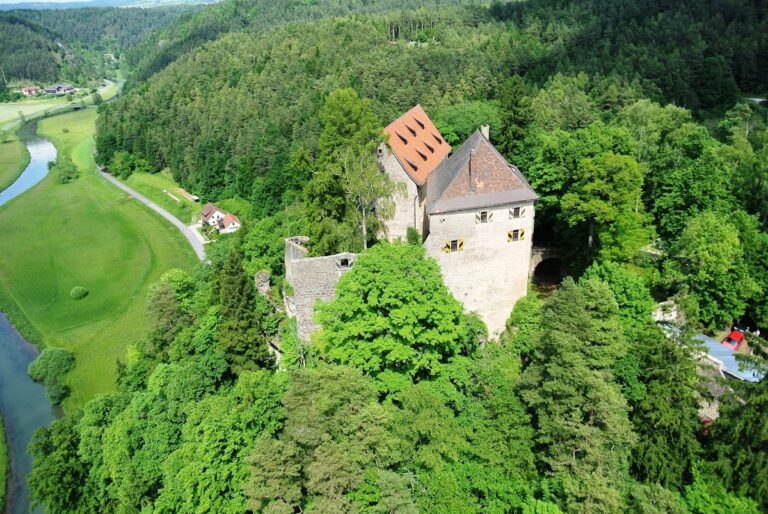
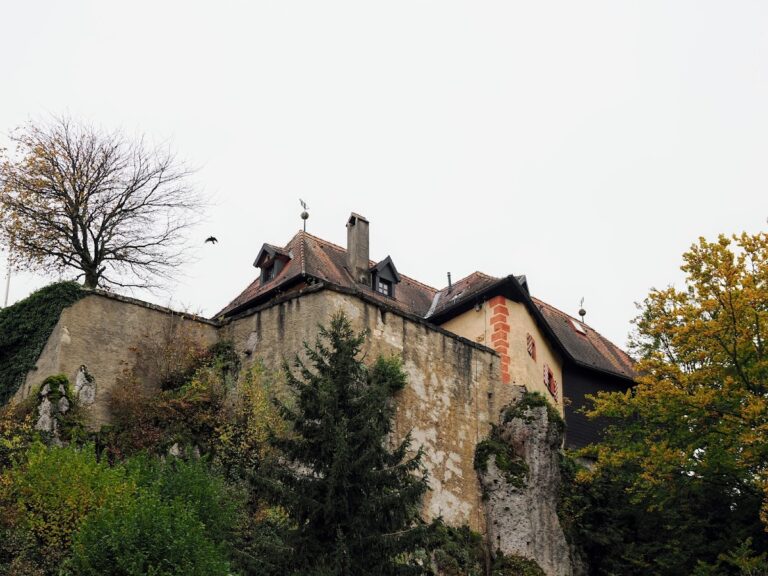
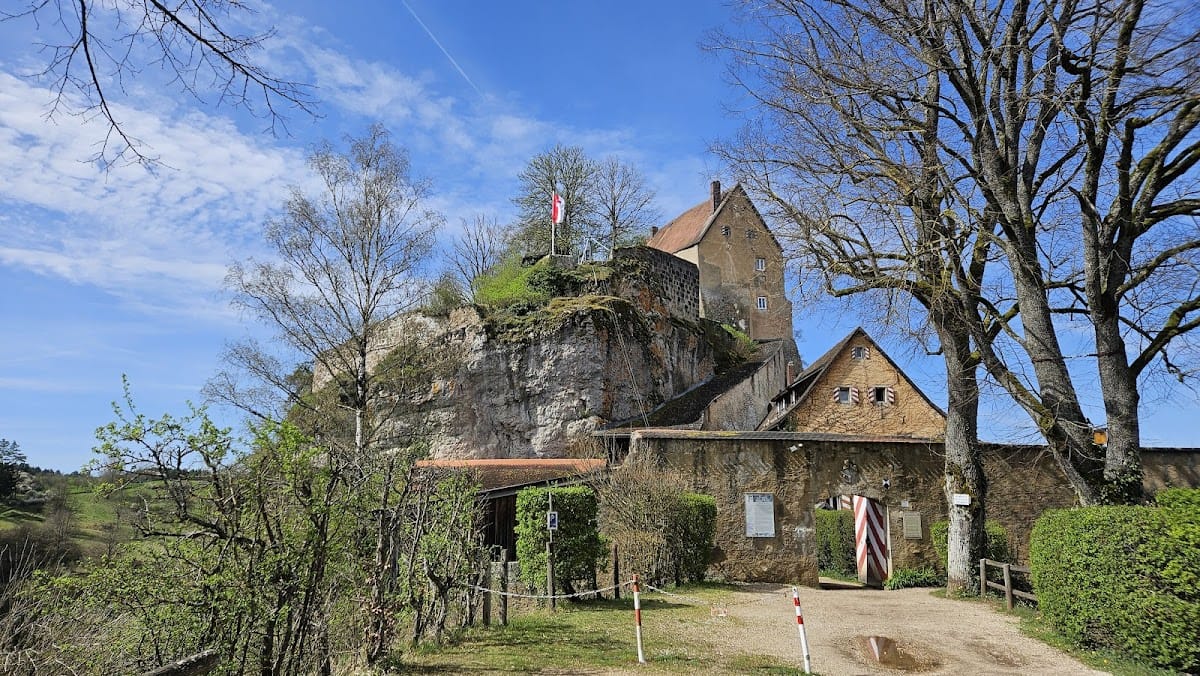
Pottenstein Castle is a hill castle and spur castle built on a west-facing rocky projection at about 410 metres above sea level, immediately southeast and above Pottenstein. It stands between the Püttlach and Weihersbach valleys in the Franconian Switzerland-Veldenstein Forest Nature Park. The complex is divided into an upper ward and a lower ward. Its surviving fabric presents a largely sixteenth-century appearance while incorporating medieval building substance, although the complex is only partly preserved.
Upper ward
Upper main building
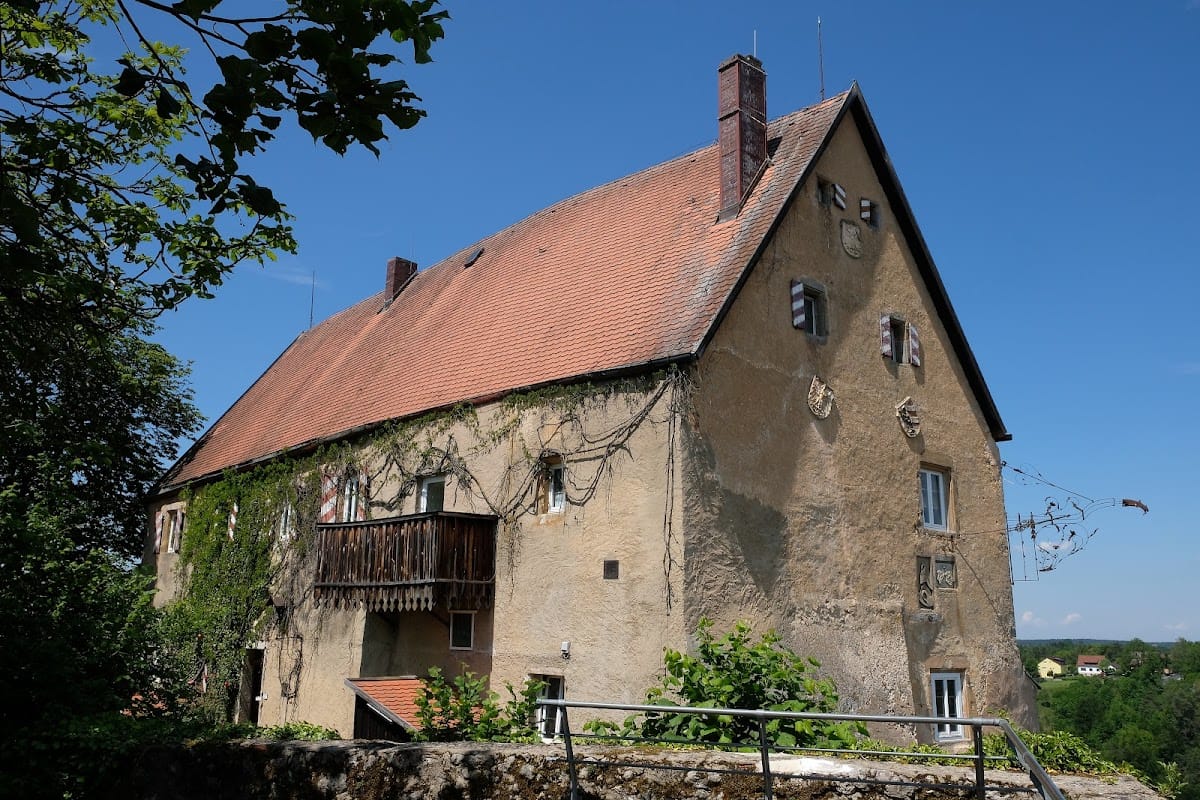
The upper main building, or palas, is the principal residential structure of the castle. It contains the Great Hall, the Red Salon, and the Elizabeth Room. The Elizabeth Room occupies the former residential tower in the western part of the palas. It is arranged as a memorial room recalling Saint Elizabeth’s stay at Pottenstein in the thirteenth century.
Fortified tower and upper chapel
Remains of the former bergfried, a fortified tower used mainly for defence and refuge, survive within the upper ward. The tower was already dilapidated by 1703, when a baking oven was installed inside it for the castle garrison. The upper castle chapel was destroyed during Albert Alcibiades’ bombardment in 1553 and disappeared from later records.
Kemenate
The upper ward also contained the building known as the Kemenate. It served as the base of the pflegers while the castle remained an administrative residence. Its role therefore reflects the period when territorial officials still worked from the upper part of the complex before administration shifted toward the town.
Lower ward and defensive works
Vogteihaus
The lower ward contained the Vogteihaus, the residence and administrative seat of the castle’s vogt. This building belonged to the administrative organization that developed from the early fourteenth century, when the vogt acted as the Bamberg-appointed governor at Pottenstein.
Drawbridge
The drawbridge formed part of the castle’s working defences. During the attempted Swedish attack of 1634, defenders raised it after recognizing that the supposed imperial messenger admitted across the bridge was an impostor. The incident demonstrates the bridge’s continued practical role in controlling entry during the Thirty Years’ War.
Service buildings, gardens, and museum spaces
Well house
The former well house is accessible within the museum complex. It contains displays of porcelain, glass, ceramics, and ethnographic objects, giving the building a later museum function within the surviving castle layout.
Tithe barn
The former tithe barn houses exhibitions on the tithe system and the modern history of the castle, as well as a small presentation on Boto’s life. Since 2007, it has also contained the permanent exhibition devoted to Saint Elizabeth’s life and work.
Gardens and collections
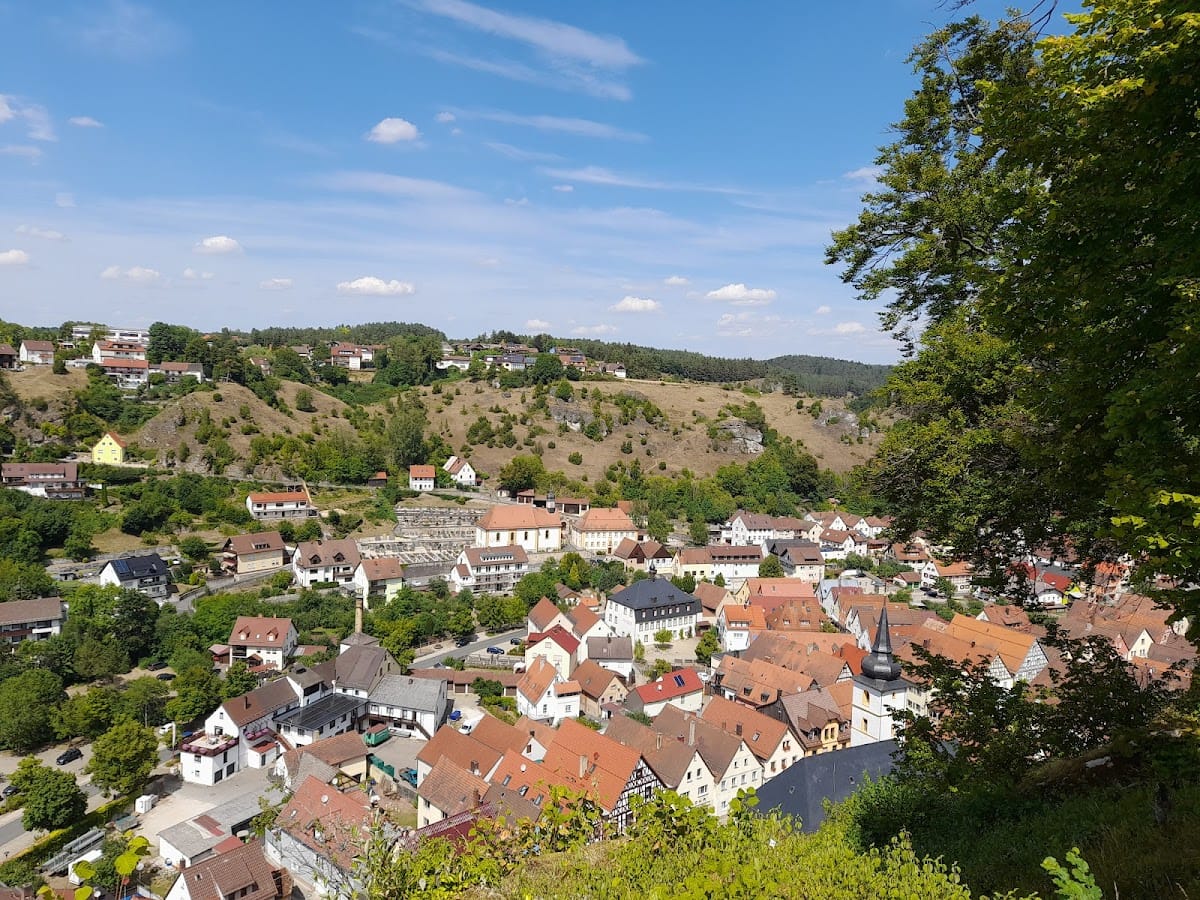
The castle gardens form part of the present complex and provide views over Pottenstein and the surrounding countryside. Museum collections include weapons, books, autographs, and prehistoric and early historical objects. Three show rooms are arranged as an ensemble, while the accessible historic fabric includes the upper main building and the surviving remnants of the former fortified tower.