Burgruine Alter Turm Aach: An Early Eleventh-Century Ring Castle in Germany

Site at a Glance
- Rating
- 4.4
- Popularity
- Very Low
- Country
- Germany
- Primary era
- Medieval
- Eras represented
- Medieval
- Civilizations
- Holy Roman Empire
- Site type
- Military
- Remains
- Castle
On this page6 sections
History
Burgruine Alter Turm Aach is the ruined remains of an early eleventh-century ring castle in Aach, Germany. Built for a free-noble family, the castle is generally dated to approximately AD 1020–1050 and belongs to the early castle building of the eleventh century. A 2004 radiocarbon analysis of charcoal from the infill masonry produced a calibrated construction date of AD 990–1020. Together with pottery finds, this result places the castle among the early medieval fortifications of its period.
The Aach Family and the Early Castle
The free-noble family of Aach is considered the probable builder of the castle. A document dated 28 February 1100 at Riedöschingen names “Ödalricus de Ahe” as its thirteenth witness, providing an early written association between the family and the area. A free-noble family belonged to the high medieval nobility and stood outside the ministerial class, which consisted of dependent service nobles. The scale and construction of the castle suggest that only the high nobility could have undertaken such a project at the time.
Ulrich de Ahe, described as the last member of the Aach family, later served as a canon of the cathedral chapter at Constance. He died on 5 March, shortly after 1176. His ecclesiastical career belongs to the final period associated with the family, although the castle itself had already gone out of use by the middle of the twelfth century.
Episcopal Rule and Abandonment
From 1158, Alter Turm belonged to the Prince-Bishopric of Constance. This was the ecclesiastical principality in which the bishops of Constance exercised both religious and territorial authority during the medieval period. The castle was subsequently abandoned and was not built over again. Its early end of use helped preserve the surviving remains in a form that was not covered by later construction.
The good preservation of the masonry also makes it unlikely that the castle was reused as a stone quarry for road construction around 1770. The castle’s destruction has not been tied to a recorded event, while its abandonment and later preservation have left the early structure available for archaeological interpretation.
Remains
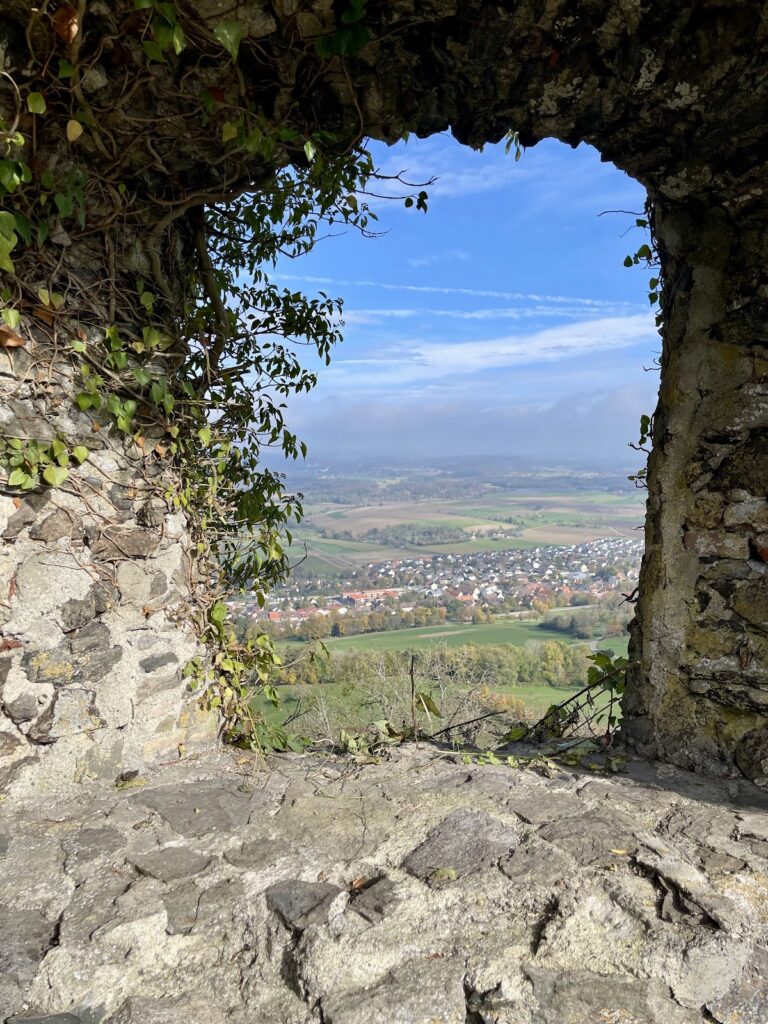
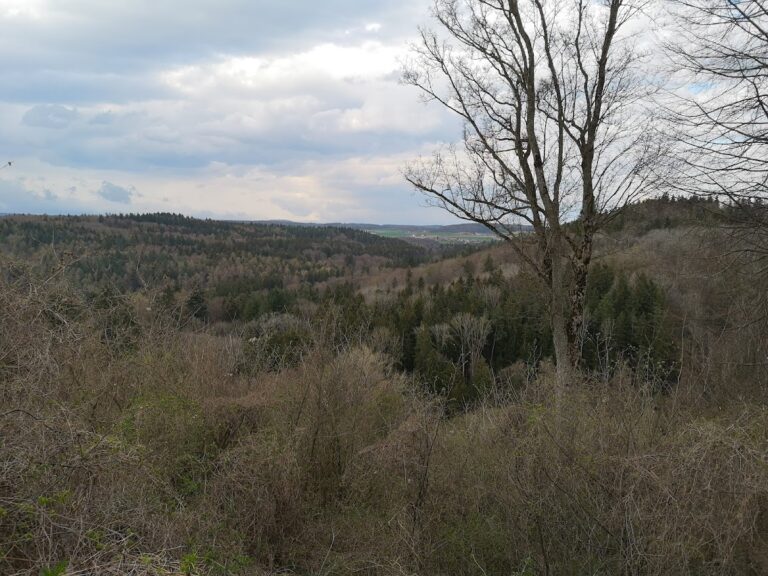
The ruin occupies a plateau about 35 by 30 metres in size at an elevation of 539 metres above sea level. It stands on the northeastern edge of Aach above the Aachtopf, a large karst spring formed by water emerging from underground drainage or a limestone cave system, and at the edge of the Eigeltinger Valley. The southern side of the plateau drops steeply toward the valley. On the other three sides, a ditch cut into the rock reaches approximately three metres in depth.
Enclosure and Defensive Setting
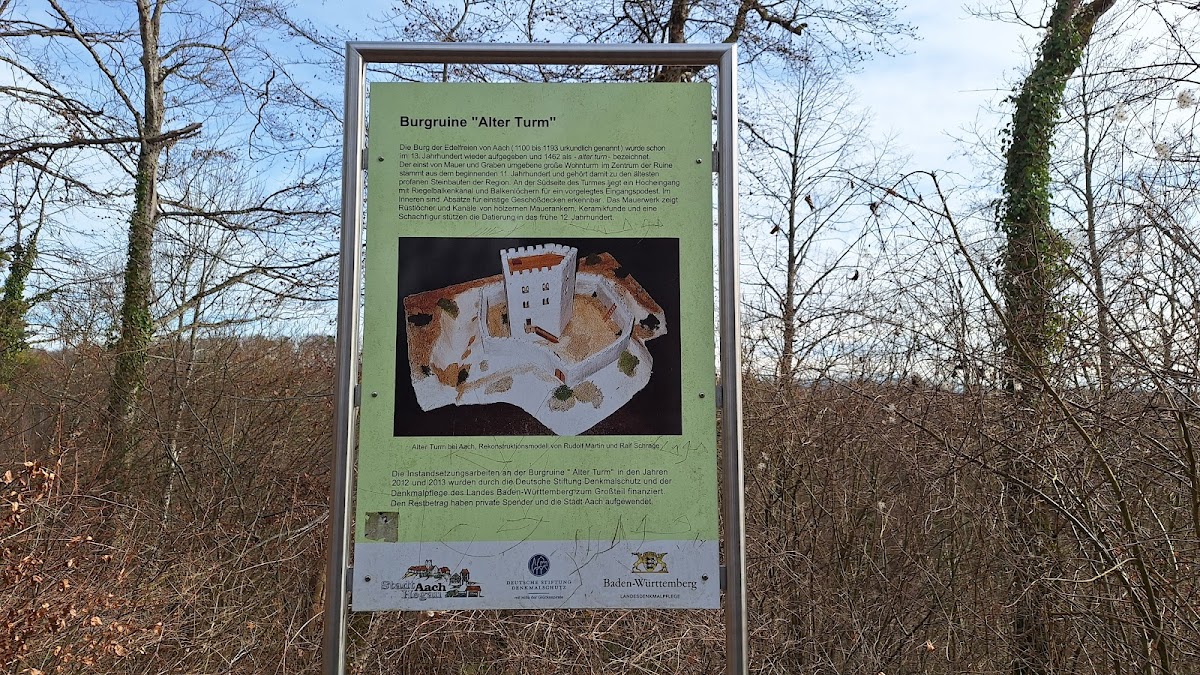
Rubble banks trace the edge of the plateau and mark the line of the former enclosing wall. This circuit formed the ring enclosure, a fortification whose wall surrounds the interior area. The steep southern slope and the rock-cut ditch on the remaining sides created the castle’s principal defensive setting. The enclosure survives as a physical outline around the plateau, while the early abandonment and lack of later building have preserved its relationship to the central tower.
Residential Tower
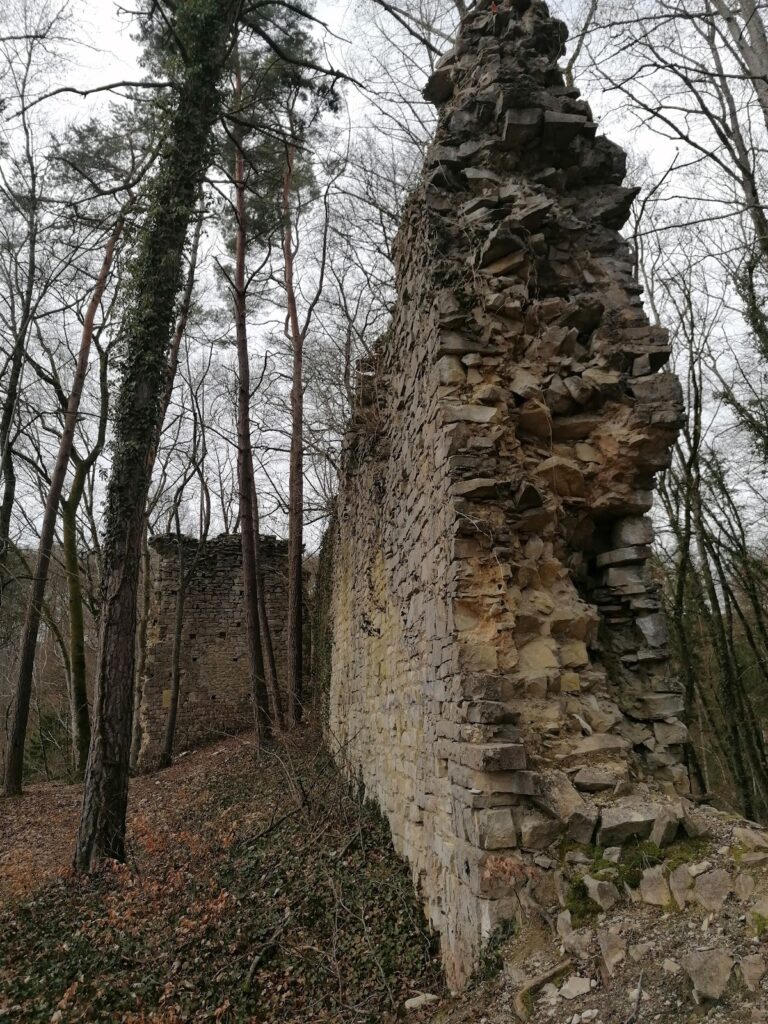
An isolated residential tower stood within the enclosure. Its polygonal ground plan measures approximately 9 by 15 metres. The west wall and parts of the south and north walls remain standing to heights of up to 8.4 metres. An elevated entrance, or high entrance, is set in the south wall above ground level. Such a doorway was placed high in a medieval tower and was commonly reached by a removable ladder or an external stair.
The tower had at least four storeys. Its visible masonry has an unusually homogeneous appearance and consists of small ashlar blocks associated with the Salian period, the era when the Salian dynasty ruled the German kingdom and Holy Roman Empire mainly during the eleventh and early twelfth centuries. The surviving tower, enclosing-wall line, and rock-cut ditch together preserve the form of a free-noble hilltop castle that was not later overbuilt.