Castle Kłaczyna: A Medieval Water Castle in Poland
Site at a Glance
- Rating
- 3.9
- Popularity
- Very Low
- Country
- Poland
- Primary era
- Medieval
- Eras represented
- Medieval, Early Modern
- Civilizations
- Holy Roman Empire
- Site type
- Military
- Remains
- Castle
On this page8 sections
History
Castle Kłaczyna is a medieval fortified residence and water castle in Poland, with origins reaching back to the fourteenth century and construction dated more specifically to the fifteenth century. It stood on an island in the floodplain of the Nysa Szalona River and belonged historically to the Duchy of Świdnica-Jawor, one of the Silesian medieval principalities. The village of Kłaczyna itself was first documented in 1249, when it belonged to the Duchy of Legnica, created in 1248.
Medieval origins and destruction
The castle was probably destroyed during the Hussite Wars, fifteenth-century religious and political conflicts centered in Bohemia that also reached neighboring parts of Central Europe. It was rebuilt and enlarged in the sixteenth century, with the Reibnitz family directing a major rebuilding of the residence.
The Lords of Reibnitz are recorded as owners in 1529 and 1626. The Counts of Schweinitz, a noble Silesian family, acquired the castle in 1654. Further damage or destruction occurred during conflicts of the fifteenth and seventeenth centuries, including the Thirty Years’ War, the European conflict fought from 1618 to 1648, when Swedish military operations affected parts of Lower Silesia. The residence was subsequently rebuilt.
Fire, destruction, and protection
Leonard Dorst von Schatzberg, a nineteenth-century Silesian artist and draughtsman, depicted the residence in a sketchbook in 1839. His drawing preserves a visual record of the castle before its final decline. A fire damaged the complex in 1850, and lightning strikes in 1877 and 1891 caused further severe damage. Local peasants later dismantled the remaining structures and reused their slate and dressed stone.
The surviving ruins were entered in Poland’s register of immovable monuments on 3 November 1961 under registration number A/4235/966.
Remains
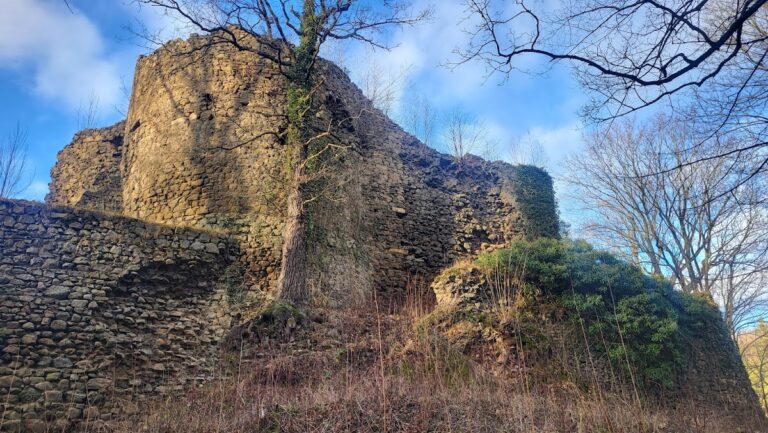
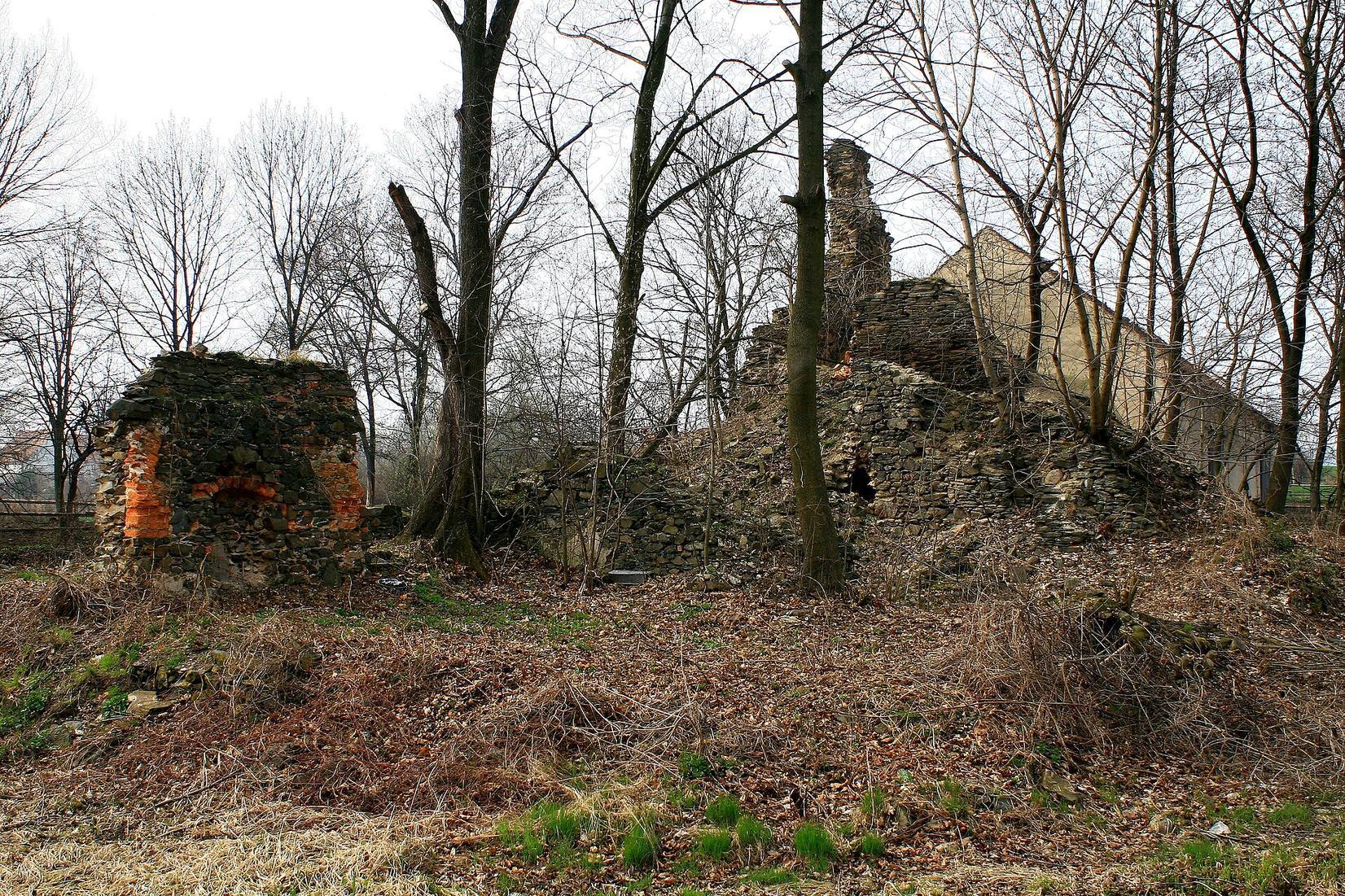
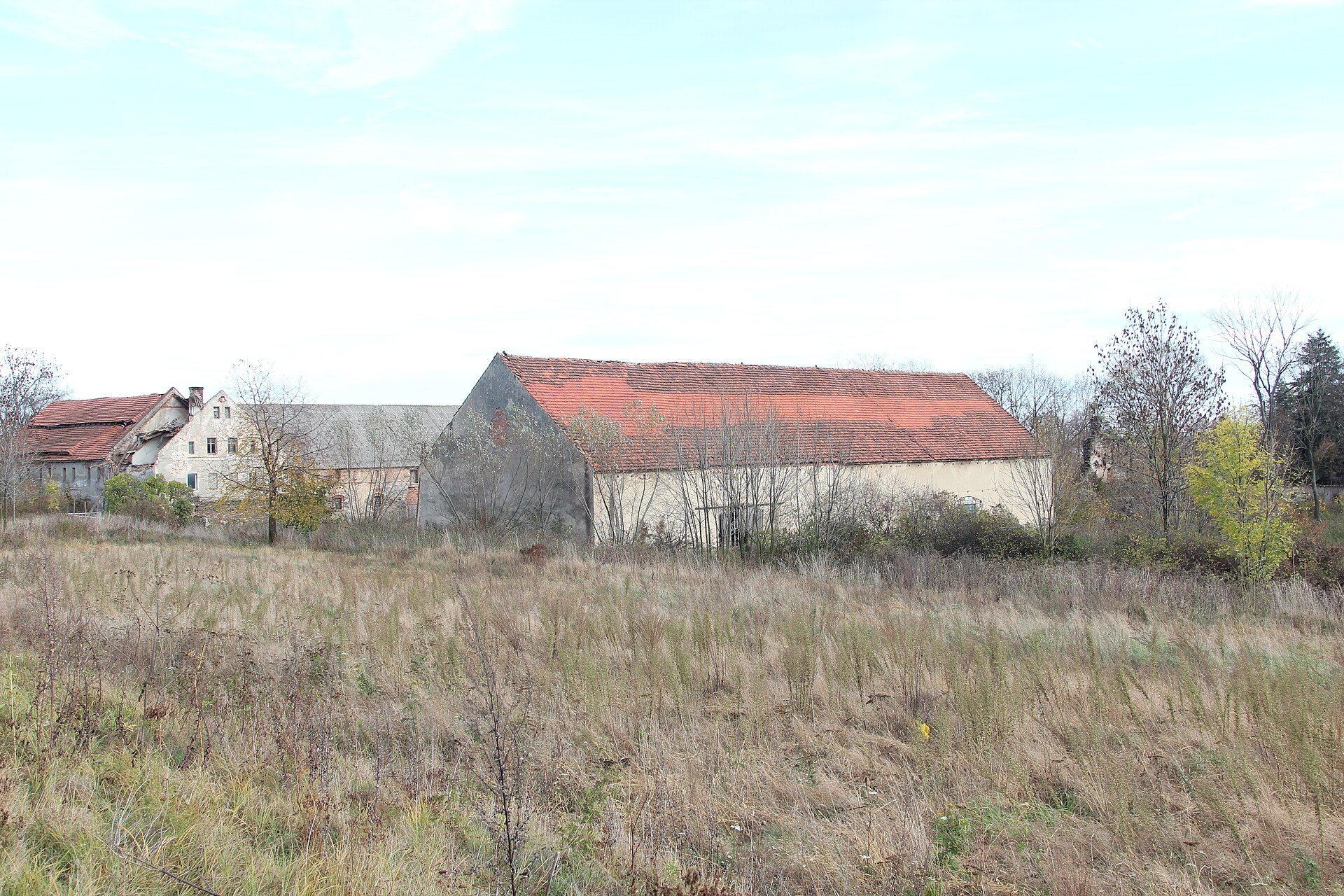
The surviving site occupies the remains of a water castle on an island measuring approximately 15 by 30 metres in the Nysa Szalona floodplain. The ruins lie on the river’s western bank, about 300 metres south of the bridge on the Roztoka–Bolków road. Small wall fragments, moat earthworks, a tower, a kitchen chimney, and stones scattered through the grass now mark the former residence. The ruins are overgrown.
Island defenses
A defensive enclosure surrounded the complex on its northern and southern sides. An arcade passage probably ran along the northern side. The water surrounding the island formed part of the castle’s protection, while the moat earthworks preserve elements of its defensive setting.
Residential structures
Timber-framed residence
The residence combined a masonry ground-level base with a timber-framed upper structure. Timber framing uses a load-bearing wooden framework, with the spaces between its members filled or covered by other materials. At Kłaczyna, the upper storey was set against a defensive wall and strengthened with sloping supports. Its dense wooden lattice included K-shaped braces, and the upper storey projected beyond the lower wall on supporting brackets. Blue-grey slate formed the masonry, while grey sandstone was used for architectural elements.
Tower and kitchen building
A surviving tower retains semicircular crenellations along its crown, resembling those of Bolków Castle. The remains also include the chimney from the kitchen building, helping identify the domestic functions once contained within the fortified complex.