Schöneberg Castle: A Medieval Stronghold in Bavaria
Site at a Glance
- Rating
- 4.3
- Popularity
- Very Low
- Country
- Germany
- Primary era
- Medieval
- Eras represented
- Medieval
- Civilizations
- Holy Roman Empire
- Site type
- Military
- Remains
- Castle
On this page4 sections
History
Schöneberg Castle is a hilltop castle near the hamlet of Schönberg in Betzigau, Germany. Its origins date to between 900 and 1000.
Early occupation
During the 10th and 11th centuries, the tower castle was occupied by abbots of Kempten Abbey and an unidentified knightly family.
Ownership and decline
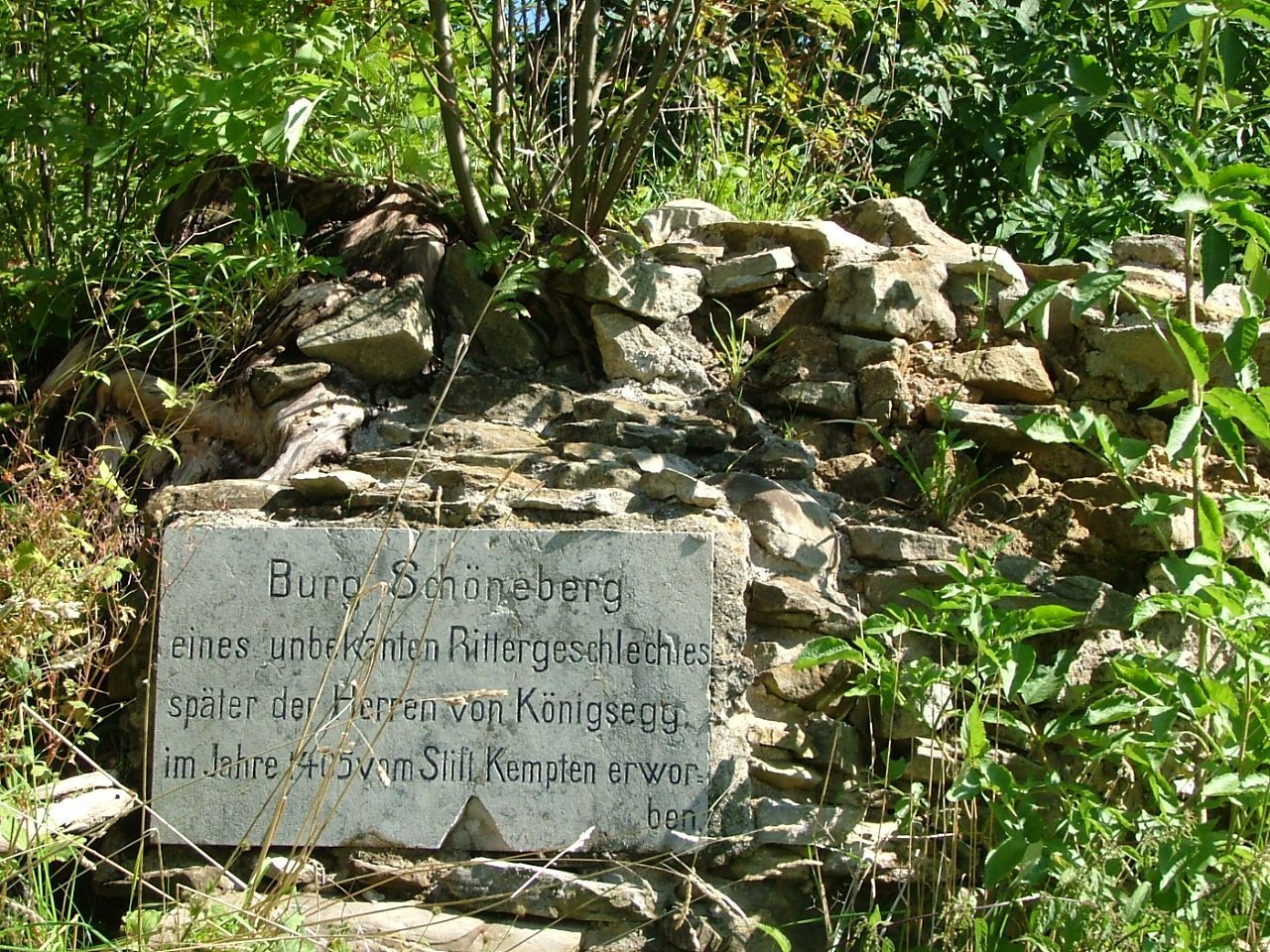
The castle was first recorded in 1400 as the property of Walter von Königsegg zu Wartenstein, who had pledged it to the knight Heinrich von Nauns. The pledge was redeemed in 1405, when the castle was sold to Kempten Abbey. The abbey was then headed by Friedrich von Laubenberg, a prince-abbot, an abbot who also held princely rank and temporal authority. In 1436, Emperor Sigismund, the elected ruler of the Holy Roman Empire, confirmed the sale as the realm’s supreme liege lord.
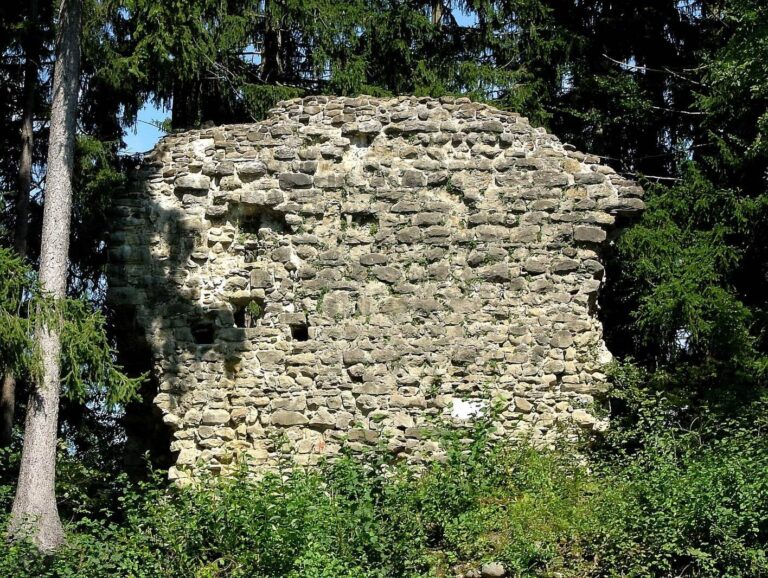
The castle began to decay in the 17th century. Around 1950, the installation of a water reservoir led to the loss of three walls of the tower ruin. The castle ditches were filled in around 1970. In 2007, the municipality of Betzigau repaired the site as part of the Leader+ Allgäu Castle Region project. It is designated in Bavaria as both an architectural heritage monument and an archaeological monument.
Remains
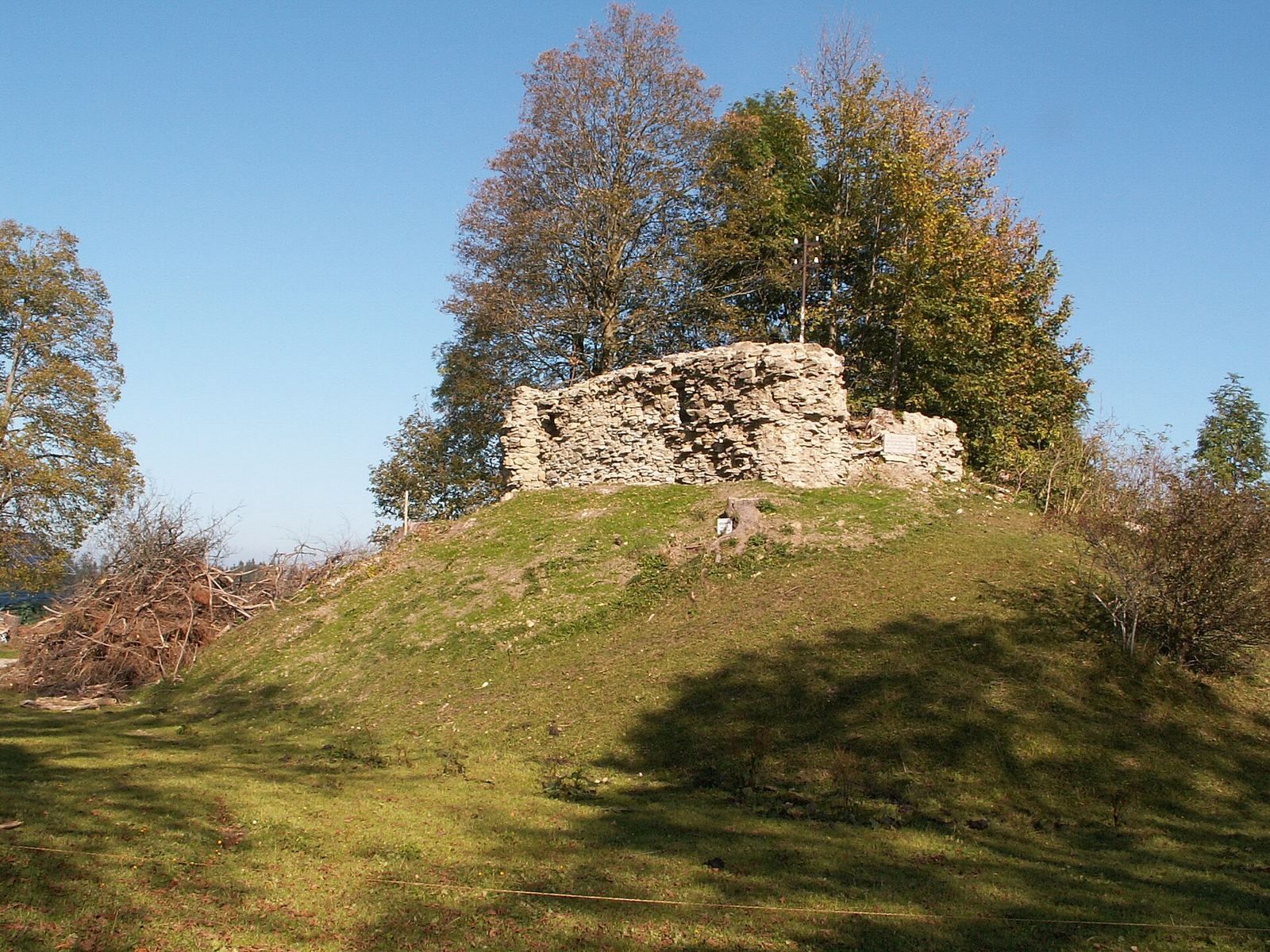
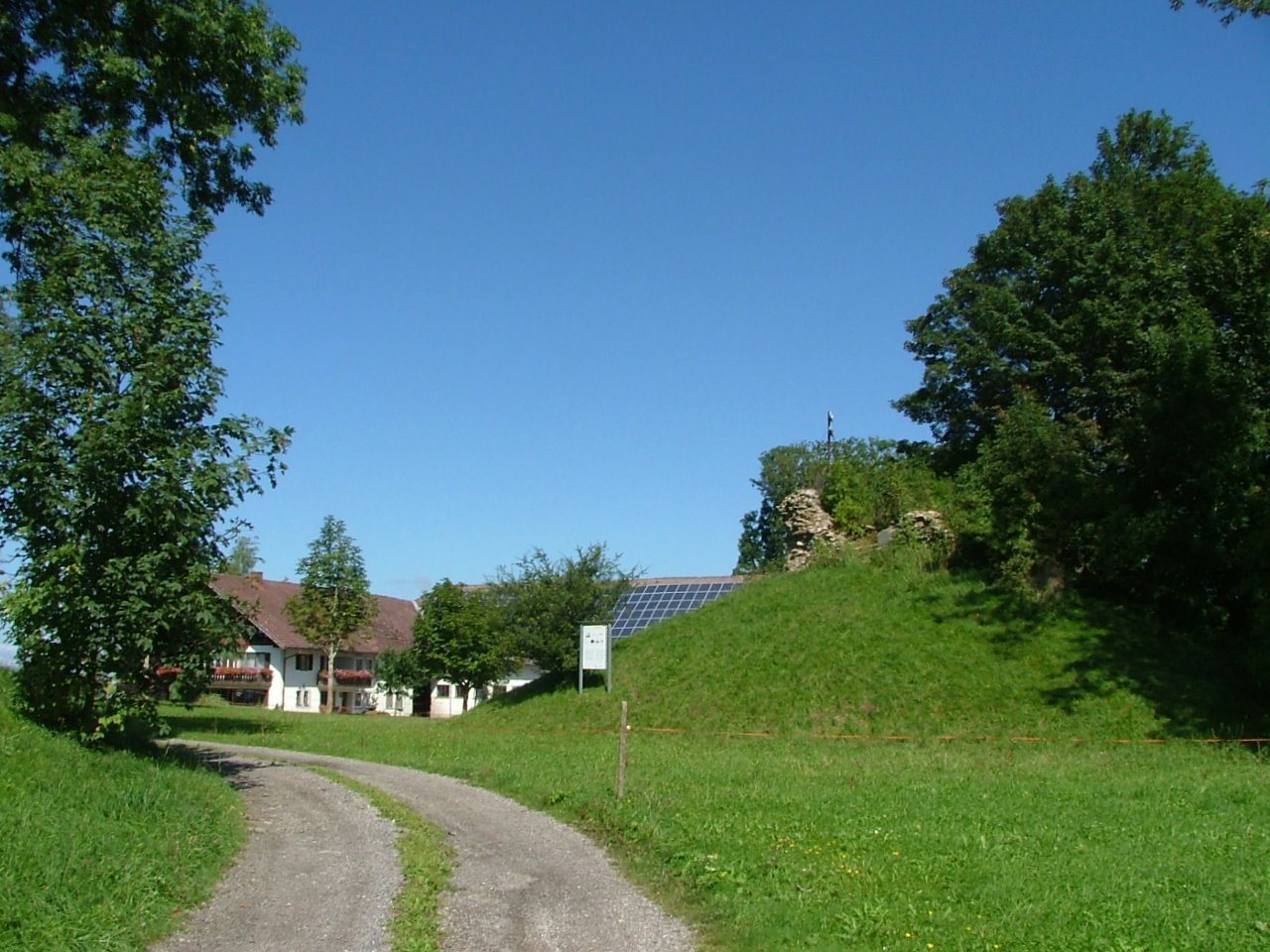
The castle stood on a high plateau 860 metres above sea level. Its complex occupied a mound 28 metres wide at the base and five metres high. Built in rough stonework, it comprised a main castle and a northern outer ward, enclosed by ditches. A neighboring farm now occupies the outer ward’s former service yard.
The surviving masonry consists of fragments, about four metres high, from a square tower that combined defensive use with living space. The form of these walls suggests that the tower dates to around 1300.