Obergrombach Castle: A Medieval Fortress and Later Palace in Germany
Site at a Glance
- Popularity
- Medium
- Country
- Germany
- Primary era
- Early Modern
- Eras represented
- Medieval, Early Modern, Modern
- Civilizations
- Holy Roman Empire
- Site type
- Religious
- Remains
- Palace
On this page12 sections
History
Obergrombach Castle is a fortified complex on a projecting ridge east of Obergrombach’s village centre in Germany. Its first castle was probably built around AD 1000, and the site later helped secure the southeastern boundary of the territory ruled by the Prince-Bishops of Speyer.
Early castle and Speyer rule
The earliest castle was probably associated with the Lords of Grombach. A castle at Grumbach appears in a record from 1256, but it was not the palace building that survives today. A successor to the first castle is recorded by 1317. From 1311 until 1803, the castle belonged to the Prince-Bishops of Speyer. A prince-bishop held both a bishop’s religious office and political authority over the territory governed by the bishopric.
Expansion and episcopal residence
Expansion in the late 14th or early 15th century led to the loss of the village’s former church. A castle chapel took its place and is first mentioned in 1401. Raban von Helmstatt and Ludwig von Helmstatt, both bishops of Speyer, enlarged the fortifications.
Johannes II Nix von Hoheneck, another bishop of Speyer, lived at the castle from 1464 to 1467 after resigning his office for political reasons. He received lifelong use of the castle as part of his resignation.
War and the later palace
During the Thirty Years’ War, the major European conflict fought from 1618 to 1648, the Bishop of Sötern attacked and captured the castle. Colonel Schmidberg besieged it in 1633, and Major General Rossa occupied it in 1644. French soldiers later destroyed part of the complex.
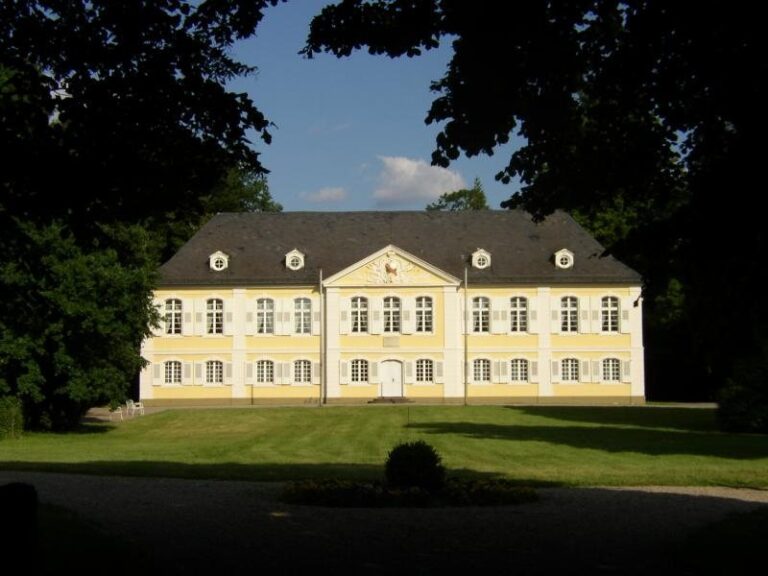
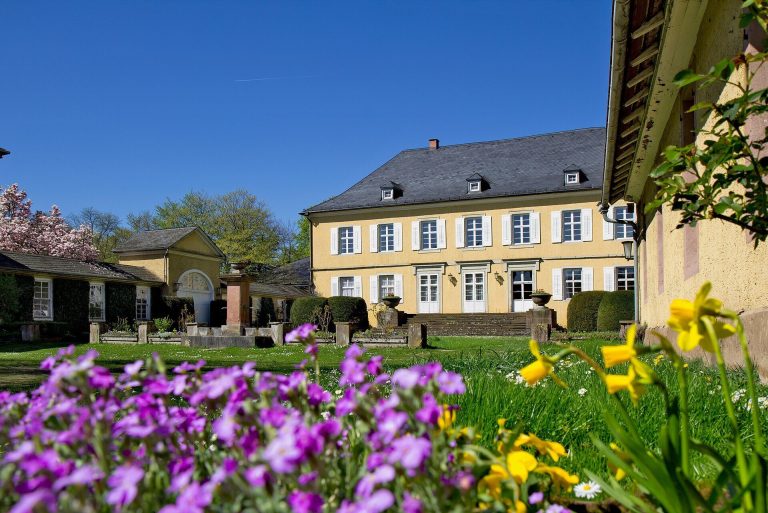
Prince-Bishop Damian Hugo von Schönborn commissioned the surviving palace building in 1720–1723. His successors used it as a summer residence until 1803, when Speyer’s rule over the estate ended.
Private estate and modern use
Before Gustav von Bohlen und Halbach acquired the roughly five-hectare estate in 1885, it had passed through the hands of members of the House of Baden, Lieutenant Leopold von Holzing, Count Ferdinand von Normann-Ehrenfels and three Barons von Weißenstein. Holzing restored the castle in the mid-19th century, while Ferdinand had Schönborn’s palace remodeled in a romanticizing style. The barons held the estate from 1882 to 1885.
In 1888, Gustav also acquired the village synagogue and converted it into a castle chapel. His family used the palace as a summer residence and spent winters in Karlsruhe. The estate remains in the family’s possession. A private cemetery was established on the grounds, where Berthold von Bohlen und Halbach was buried in 1987. An outdoor public swimming pool opened on the estate after the Second World War and was later transferred to the city by owner Eckbert von Bohlen und Halbach. A Protestant congregation uses the chapel during the summer.
Remains
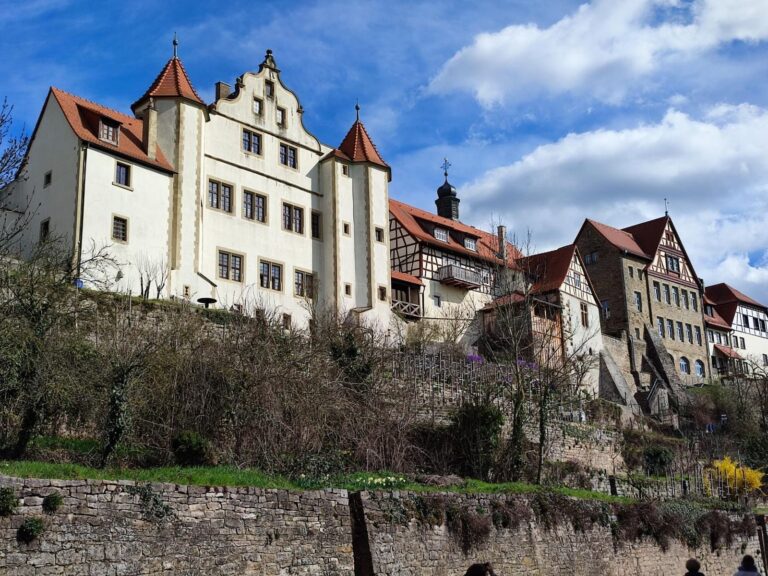
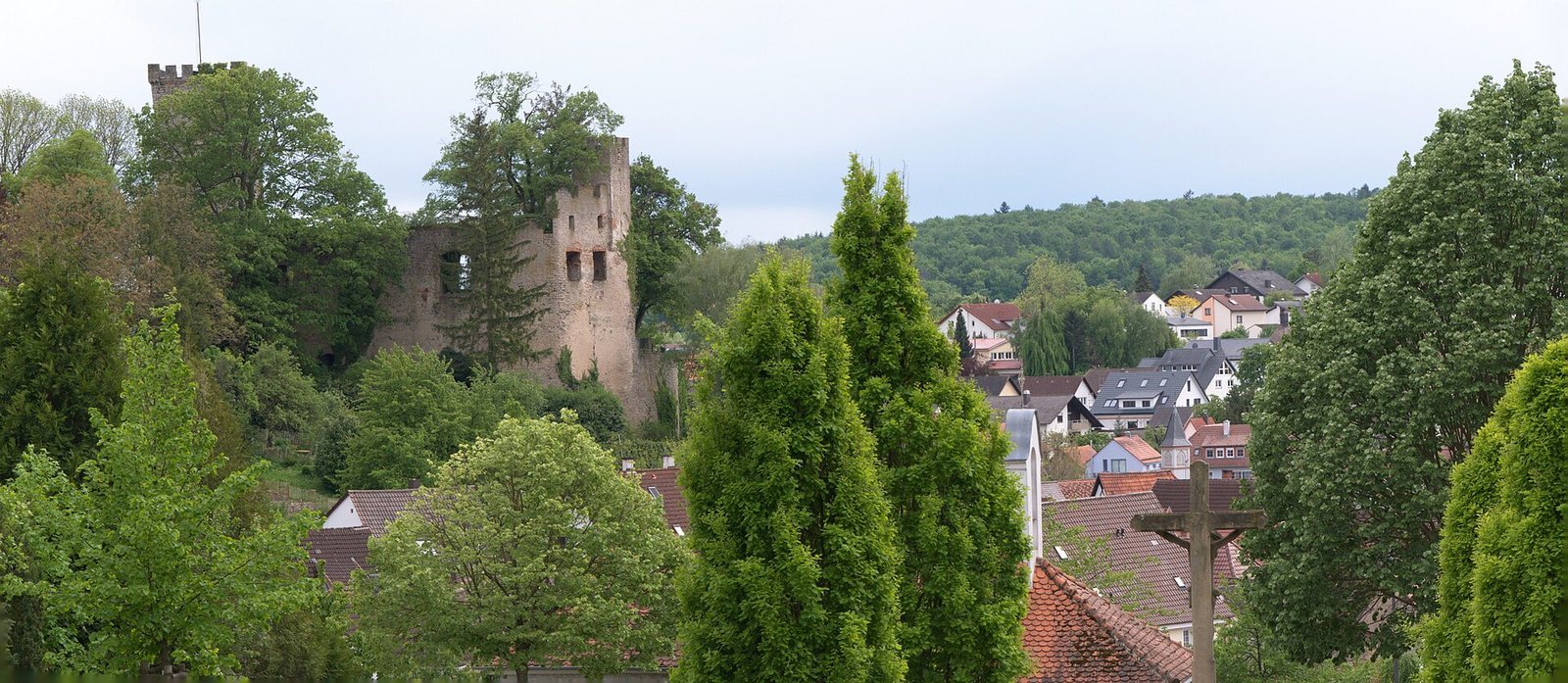
The complex combines the ruined inner castle on the ridge with a later palace that remains in use. Its surviving features include an enclosed medieval stronghold, a separate uphill defensive tower, residential buildings and a chapel.
Medieval inner castle
Enclosure and residential remains
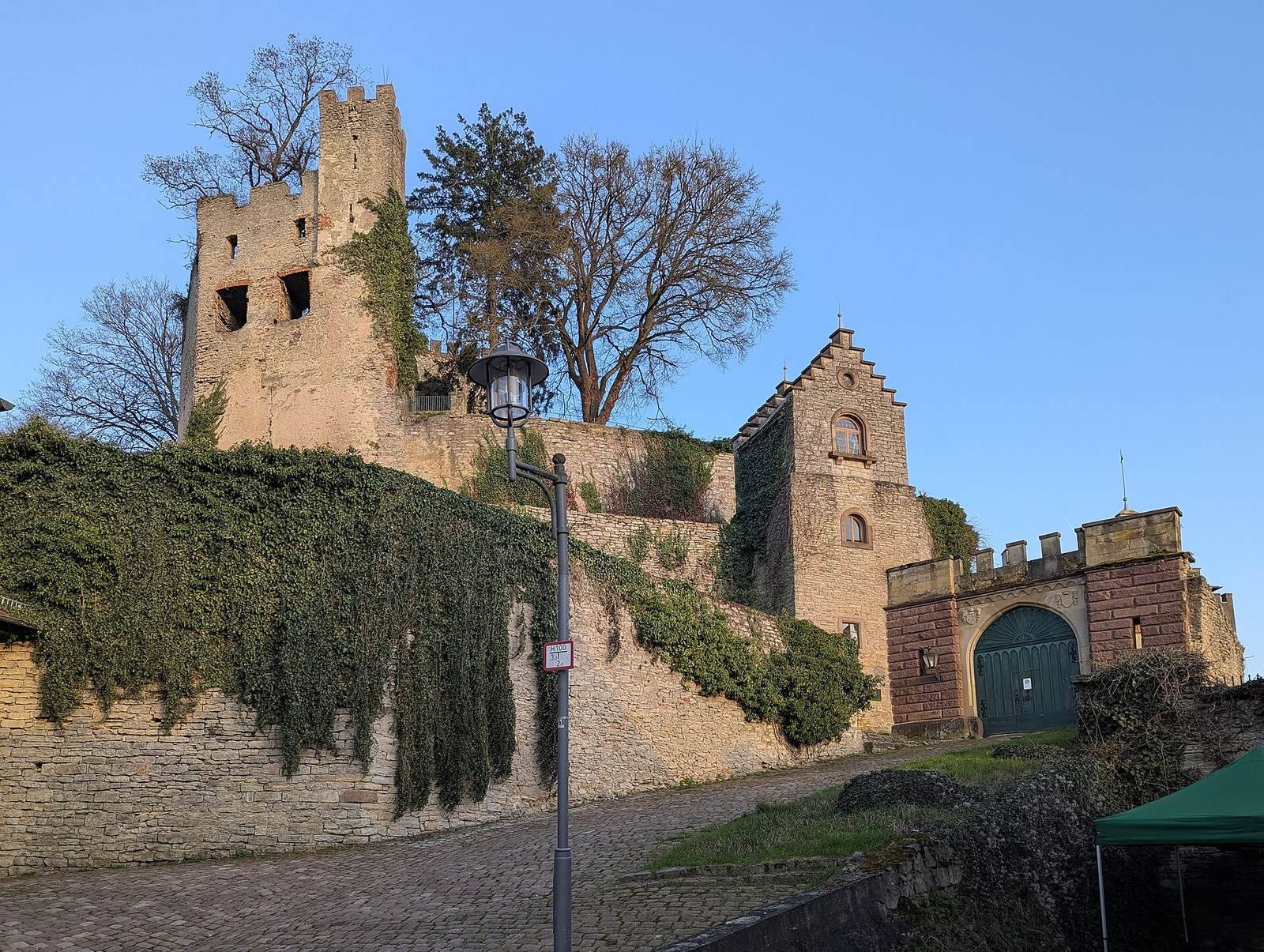
The inner castle dates to the 13th century and has an oval plan. Several open-backed towers formed part of its outer defensive enclosure. Inside it are remains of two residential buildings.
Eastern tower and approach
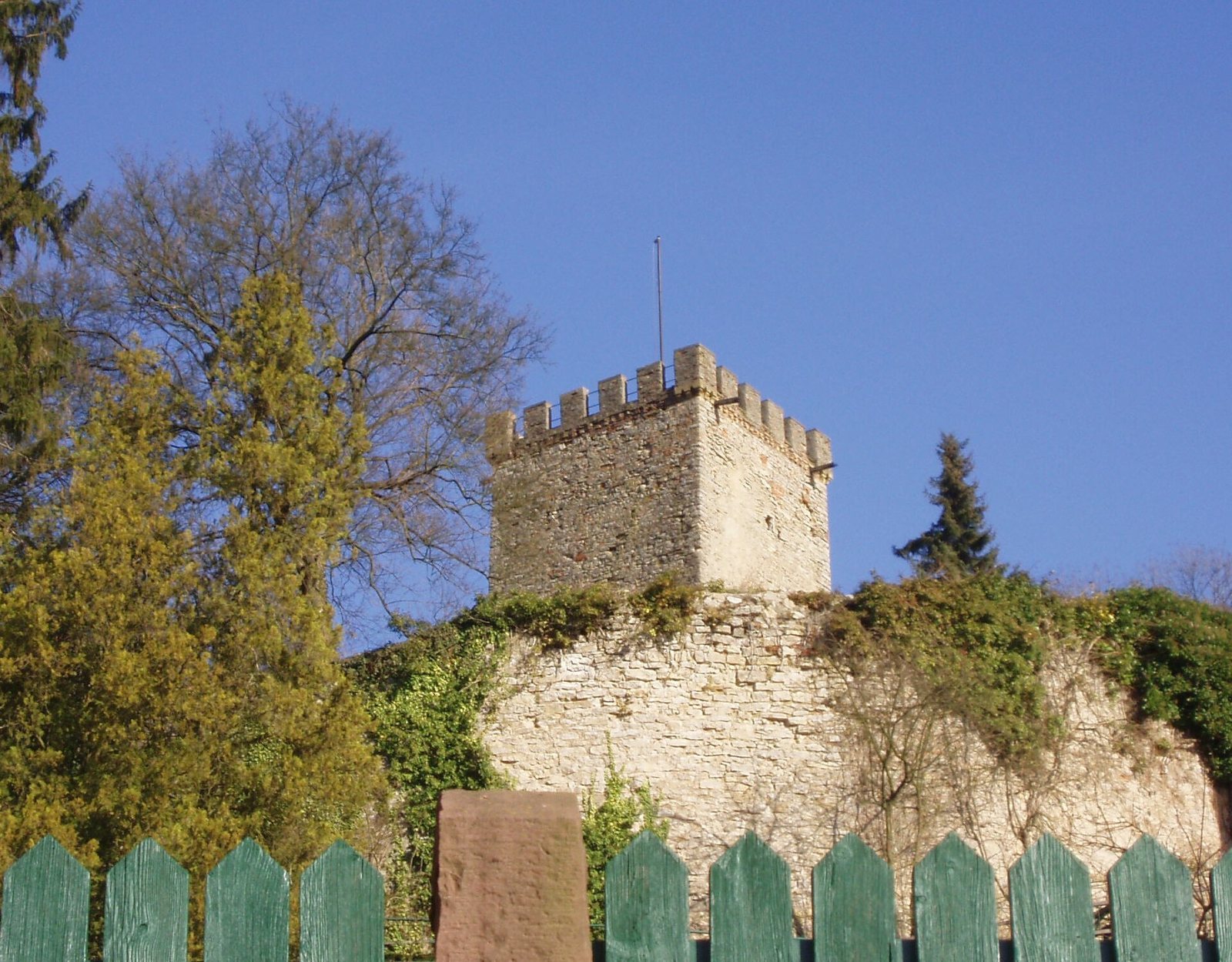
The surviving defensive tower stands outside the main defensive wall on the eastern, uphill side of the complex. It is 25 metres high, with a square plan measuring 8 by 8 metres and walls about 2.40 metres thick. A ditch cuts across the approach on the same side.
Residential and religious buildings
Residential hall and palace
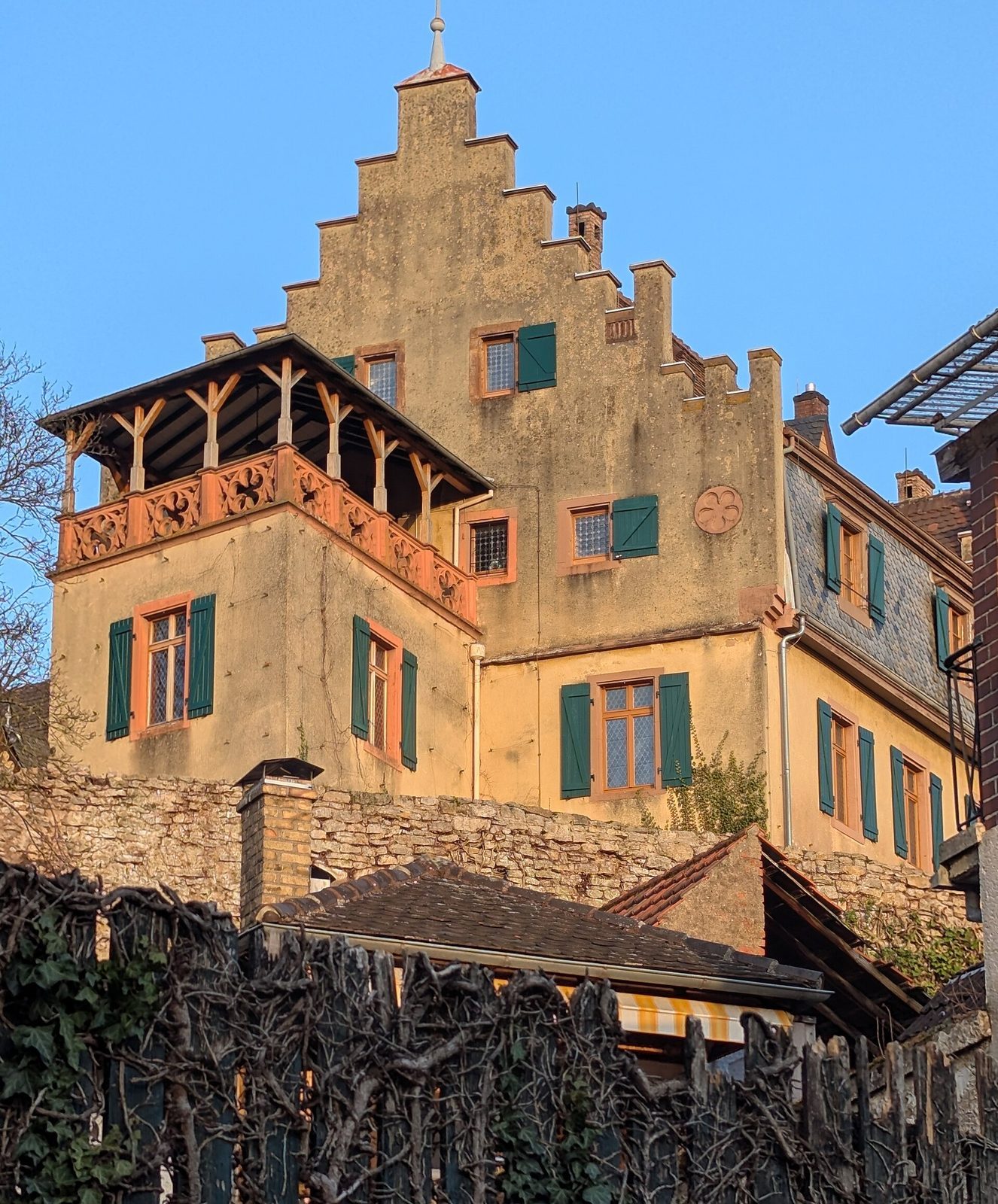
A four-storey residential hall was built in 1461. The later palace building survives and remains in use, while substantial parts of the wider complex are preserved.
Chapel
The chapel contains valuable frescoes, paintings applied to wet plaster, and the surviving coat of arms of Johannes II Nix von Hoheneck. The paintings are thought to have been commissioned by him. The chapel is kept unheated to protect them.