Burg Ober-Falkenstein: A Medieval Hilltop Castle in Germany


Site at a Glance
- Rating
- 4.3
- Popularity
- Very Low
- Country
- Germany
- Primary era
- Medieval
- Eras represented
- Medieval
- Civilizations
- Duchy of Bavaria, Holy Roman Empire
- Site type
- Military
- Remains
- Castle
On this page12 sections
History
Burg Ober-Falkenstein is a medieval hilltop castle in Germany above Flintsbach am Inn, with masonry dated to around 1110 and traditionally attributed to Bishop Albuin of Brixen and the Aribonen, a prominent Bavarian noble family. It became the eponymous seat of the Counts of Falkenstein and is regarded as one of the oldest surviving stone castles in Bavaria.
Prehistoric Occupation
The summit had already been occupied before the medieval castle was built. Archaeological evidence points to a Bronze Age settlement, the prehistoric period characterized by the widespread use of bronze, as at neighbouring Petersberg. The nearby settlement areas also include remains associated with the Urnfield period, a later Bronze Age tradition particularly connected with cremation burials placed in urns.
Medieval Castle and Trade Route
Ober-Falkenstein first appears indirectly in written evidence in 1115. It was described as an urbs, meaning a fortified settlement, in 1166, as a castrum, or fortified castle, in 1188, and as a burg in 1287. Coins found at the site date from around 1120. The 1166 entry in the Codex Falkensteinensis, a medieval manuscript associated with the Falkenstein family, contains a schematic drawing of the castle.
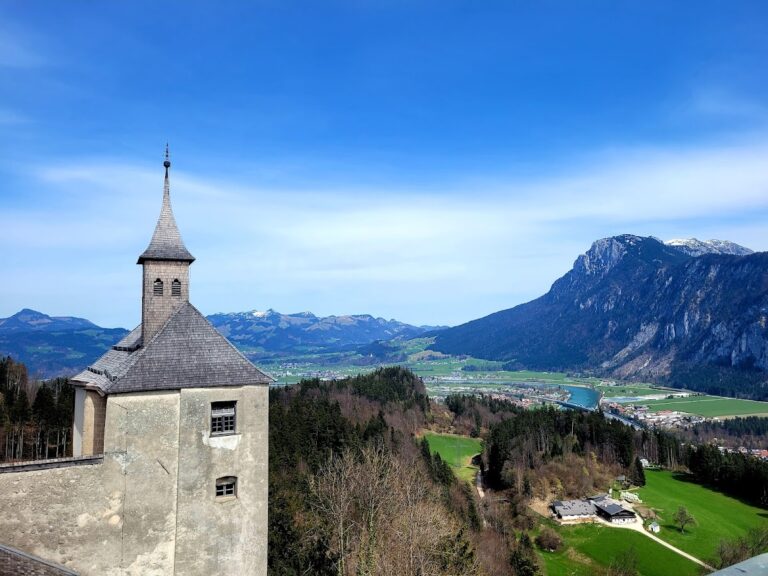
The castle occupied a position above an important route through the Upper Inn Valley. This route led toward the ore deposits of Tyrol and onward to the Mediterranean region. Ober-Falkenstein and nearby fortified sites controlled movement along this corridor, while the tower on its prominent mountain spur made the authority of its lords visible across the surrounding landscape.
Destruction and Archaeological Protection
The power of the Falkensteiners declined during the mid-thirteenth century. In 1296, military conflicts between Duke Rudolf of Bavaria and the descendants of Count Meinhard II of Tyrol brought the destruction of the castle.
The castle site and associated archaeological areas are listed in Bavaria as archaeological monuments. The protected remains include the high-medieval castle, a nearby Bronze Age and Urnfield-period settlement, and a high-medieval settlement in the forecourt. Sounding excavations and geomagnetic investigations in the Burgau area below the castle in 1991 and 1994 produced archaeological and archaeozoological finds, including animal remains studied for evidence of past human activity.
Remains
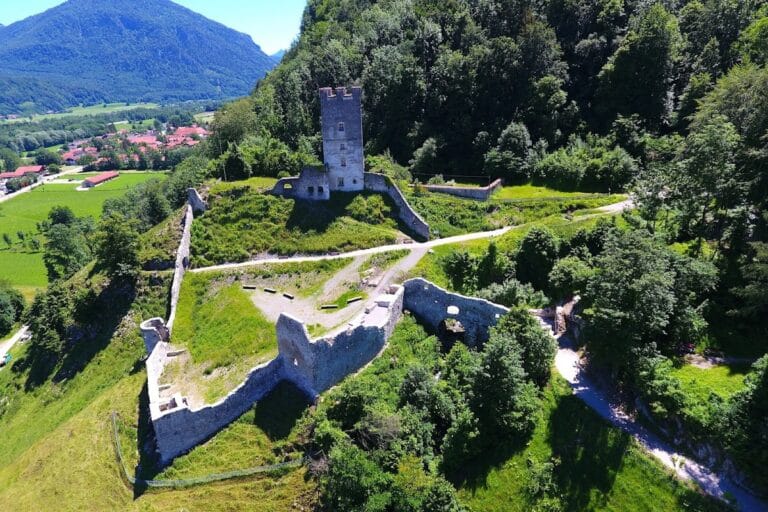
Burg Ober-Falkenstein occupied the summit of the 692-metre Rachelfelsen, about 200 metres above the Inn. Its surviving masonry lies in woodland below Petersberg and above the Rachelwand. The fortress used the rocky spur as a natural defensive position, combining built walls with steep slopes.
Fortifications and Residential Structures
Encircling Wall
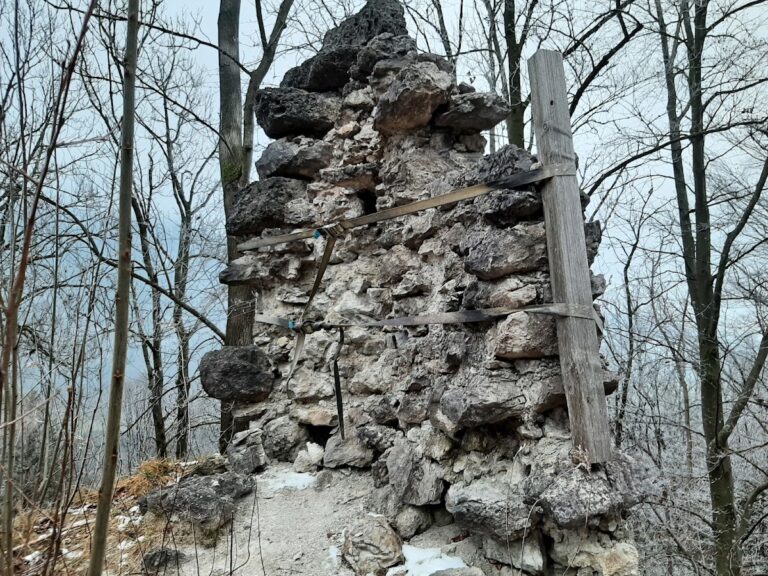
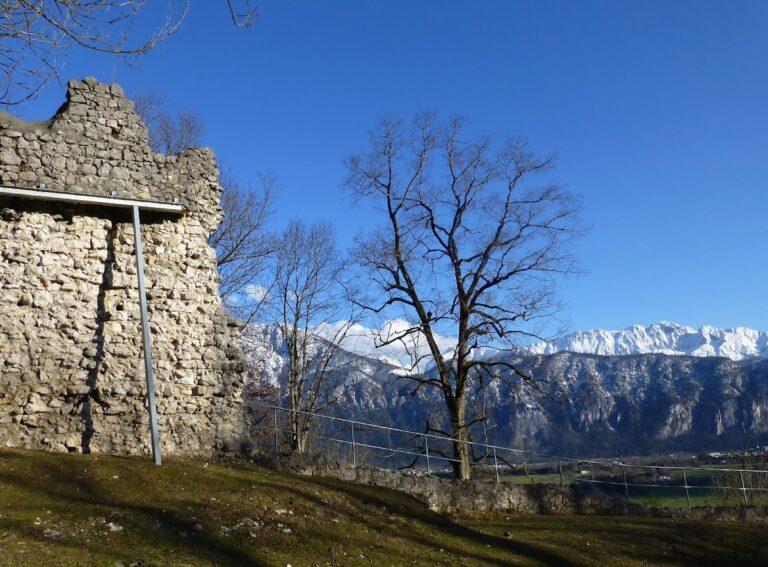
Foundations of a curtain wall, the defensive wall enclosing a castle, survive around the summit. Additional fortification walls blocked access from the west, where a constructed defence was needed. The other three sides were protected by the steep drop from the rocky spur.
Tower House
A further group of foundations may represent a tower house, a building combining residential and defensive functions. The wider surrounding walls and the historical use of the term urbs suggest that the castle extended beyond a single structure and formed a larger, multi-part complex.
Illustrated Tower
The drawing in the Codex Falkensteinensis shows an angular tower house with a finely ashlar-faced base, meaning masonry finished with carefully cut stone blocks. Its entrance was raised above ground level, while the upper part used half-timbering and ended in a parapet with battlements. The image provides evidence for the castle’s historical appearance and arrangement.
Prehistoric and Lower Settlement Areas
Bronze Age Settlement
The prehistoric occupation around the castle included a middle Bronze Age settlement. A necklace found in the 1990s dates to the sixteenth century BC and is considered to have belonged to a high-status woman associated with the settlement. The object points to an elite presence at the site long before the medieval fortress was established.
Burgau Archaeological Area
The Burgau area below the castle contains a high-medieval forecourt settlement. Investigations there in 1991 and 1994 used sounding excavations and geomagnetic survey to examine the buried remains. The resulting archaeological and animal remains add evidence for activity beyond the summit fortress itself.