Burg Neuhewen: A Medieval Hilltop Castle Ruin in Germany


Site at a Glance
- Rating
- 3.6
- Popularity
- Very Low
- Country
- Germany
- Primary era
- Medieval
- Eras represented
- Medieval
- Civilizations
- Holy Roman Empire
- Site type
- Military
- Remains
- Castle
On this page7 sections
History
Burg Neuhewen is a medieval hilltop castle ruin in Germany near Stetten, now part of Engen in Baden-Württemberg. Built by the Lords of Engen, also known as the Lords of Hewen, in the mid-thirteenth century, it occupied the Neuhewen and became part of the Habsburgs’ possessions by the end of that century.
Medieval Ownership
During the fourteenth century, the castle was held as a pledged fief by the Counts of Hohenberg. From 1375 until the beginning of the sixteenth century, it belonged to the Lords of Reischach. These successive transfers placed Burg Neuhewen within the changing network of noble control in the region.
Destruction and Later Ownership
Bavarian troops destroyed the castle in 1639 during the Thirty Years’ War, the European conflict fought from 1618 to 1648 amid religious and dynastic struggles. The Lords of Fürstenberg acquired the ruin in 1661. The Ebinger von der Burg family followed as owners in 1671, while Fürstenberg ownership was restored in 1751 and has continued to the present.
Remains
Main Castle
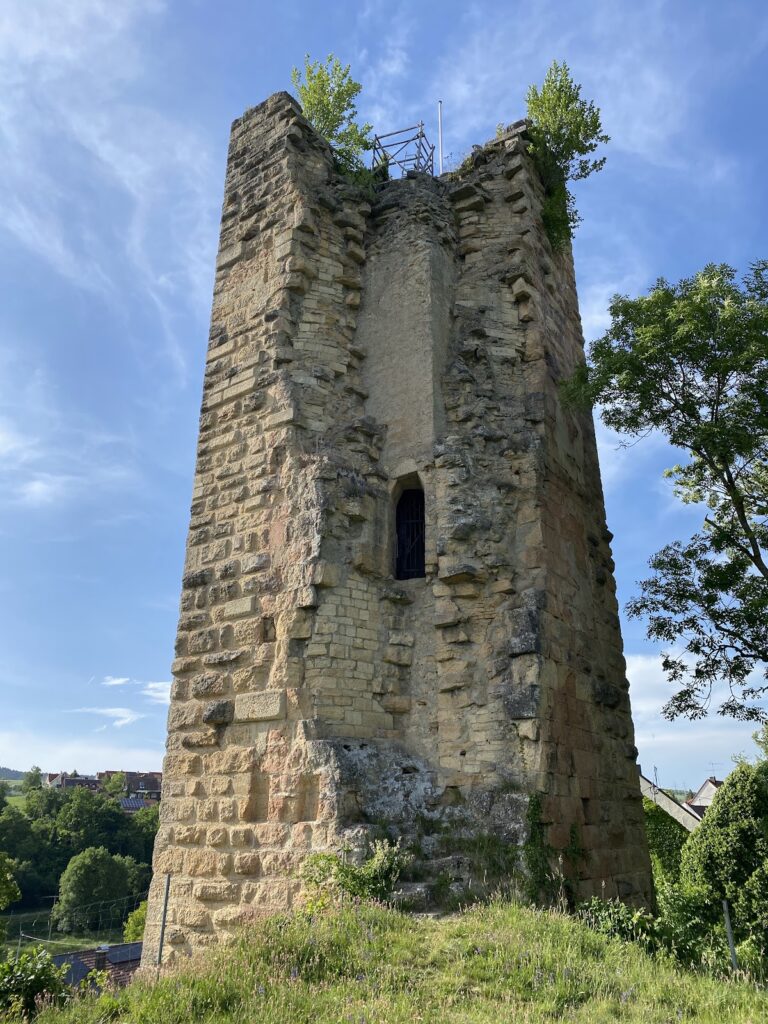
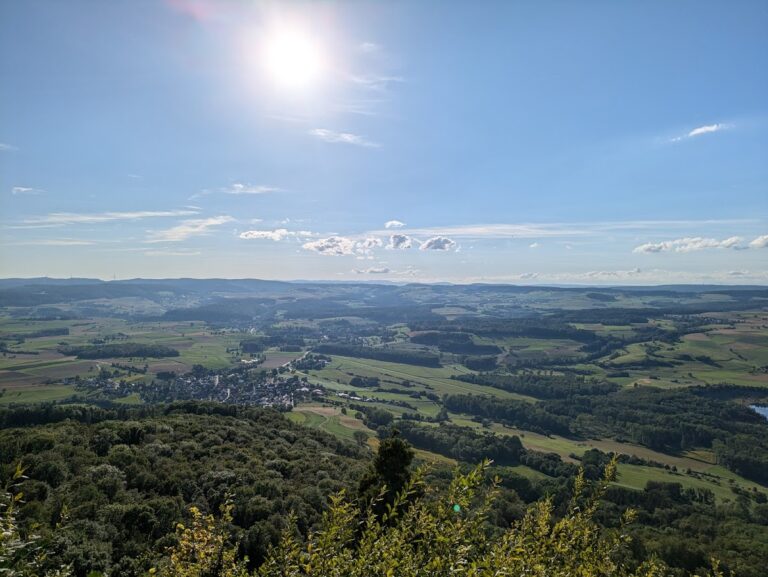
Burg Neuhewen is a hilltop castle on the Neuhewen at 863.9 metres above sea level, north of Stetten. It is described as the highest castle complex in the Hegau, the historical region around the western end of Lake Constance. The main castle had a trapezoidal plan, with surviving sections of its enclosing walls. Its keep, the principal fortified tower, remains 11 metres high and has walls 3 metres thick.
Outer Bailey
An approximately 8-metre-wide ditch separated the main castle from the outer bailey, the area outside the principal fortified enclosure. The bailey had a shield-shaped plan measuring about 75 metres in length and 30 metres in width. North of the main castle, it continued as a terrace approximately 10 metres wide.
Western Buildings
On the western side of the main castle, the remains of buildings adjoin the enclosing wall. They rose to as many as three storeys and were at least partly equipped with cellars. Surviving window surrounds belong to both the Romanesque and Gothic periods, preserving evidence of successive medieval building phases.
Nearby sites