Lilienstein Castle: A Medieval Hilltop Fortress in Germany
Site at a Glance
- Popularity
- Medium
- Country
- Germany
- Primary era
- Medieval
- Eras represented
- Medieval
- Civilizations
- Holy Roman Empire, Kingdom of Bohemia
- Site type
- Military
- Remains
- Castle
On this page8 sections
History
Origins and Meissen rule
Lilienstein Castle was a medieval hilltop fortress on the 415-metre Lilienstein near Waltersdorf in Bad Schandau, Saxony, Germany. It was probably established around 1200 and may then have been in Bohemian possession.
The castle’s first recorded mention came in a 1379 pledge deed issued by Wenceslaus IV, king of Bohemia and, until 1400, also King of the Romans. The deed calls it “Ylgenstein,” while a 1397 document refers to the “fortress of Lilgenstein.” Its name probably derives from Saint Giles, also known as Aegidius, an early medieval Christian hermit and abbot.
During the Dohna Feud, a conflict between the Margraves of Meissen and the Burgraves of Dohna, the castle passed to the Meissen rulers around 1405. A margrave was a territorial ruler, a title originally linked to governing a frontier region. In 1406, a mercenary company from Dresden served at the castle on the margraves’ orders.
Decline and excavation
The castle fell into disrepair over the following decades. The nearby village of Ebenheit probably began as a settlement of people required to perform labor service at the castle. In 1894, a mountain innkeeper excavated the site and exposed masonry from the stone castle.
Remains
Castle enclosure and finds
Enclosure
The castle occupied the northwestern part of Lilienstein’s summit plateau. Its stone enclosure measured 38.5 metres long and up to 26 metres wide, with walls up to 1.6 metres thick.
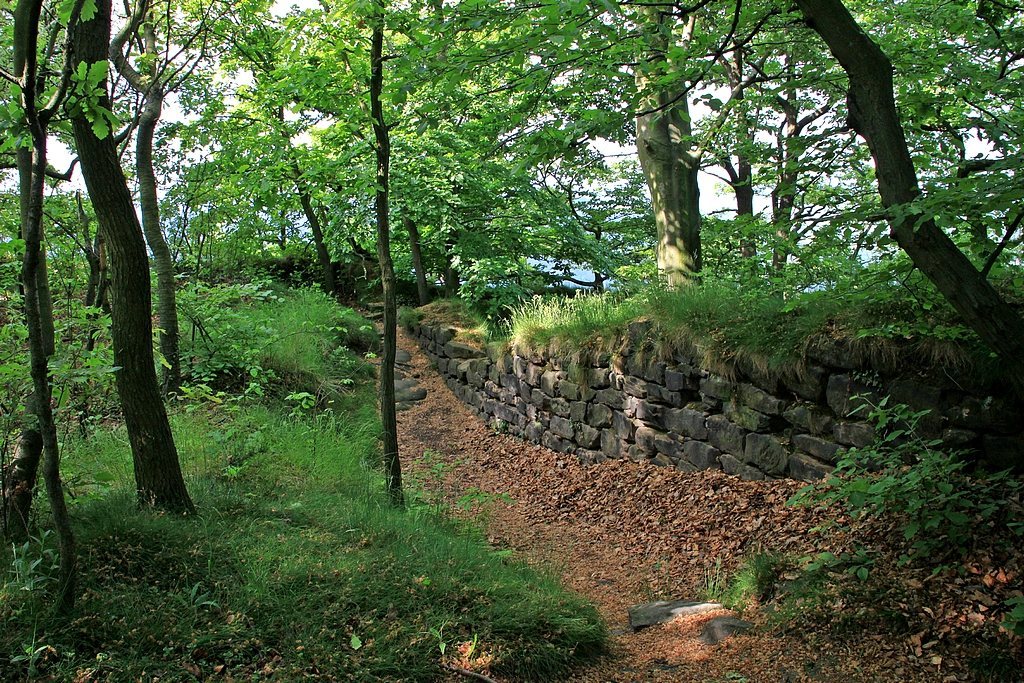
Surviving wall remains
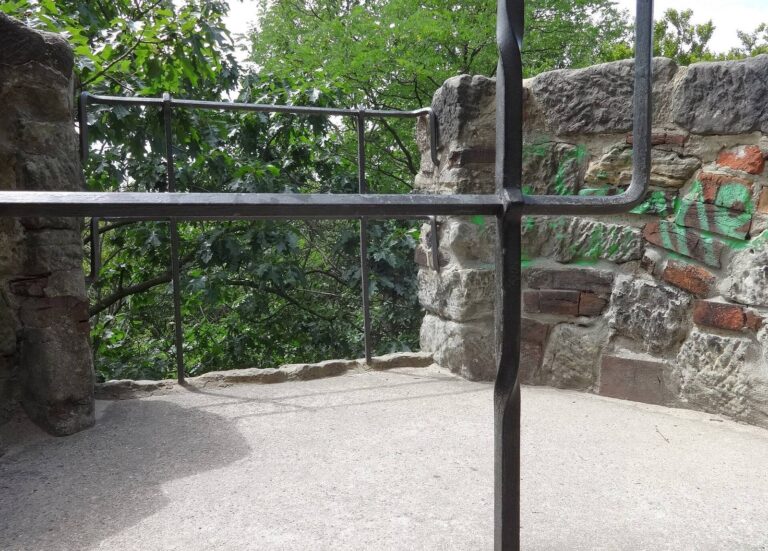
A few sections of wall remain. Near the southern ascent are traces of former chambers; at the northern ascent, recesses mark places where beams were fitted.
Excavated finds
Finds from the 1894 excavation included iron objects, spearheads, arrowheads, pottery fragments and bone remains. These objects were kept for a time in the mountain restaurant.