Tongerlo Abbey: A Premonstratensian Monastery in Belgium
Site at a Glance
- Rating
- 4.5
- Popularity
- Medium
- Country
- Belgium
- Primary era
- Modern
- Eras represented
- Medieval, Early Modern, Modern
- Civilizations
- Belgian, Duchy of Brabant, Habsburg, Habsburg Austria, Holy Roman Empire
- Site type
- Religious
- Remains
- Monastery
On this page18 sections
History
Foundation and pastoral growth
Tongerlo Abbey is a Catholic Premonstratensian monastery in Tongerlo, Belgium, traditionally dated to 1128, though establishment around 1133 is also considered likely. It is dedicated to the Virgin Mary. Premonstratensians, also called Norbertines, are canons regular: members of a religious order who live communally while undertaking clerical and pastoral work.
The abbey’s foundation is linked to Giselbert, lord of Kasterlee, who supplied land, and Abbot Waltman of St Michael’s Abbey in Antwerp, who sent the founding canons. The disputed foundation charter is attributed to Bishop Burchard of Cambrai, who had died by 1130. It mentions Bernard of Clairvaux but leaves out Giselbert despite noting his land donation; the abbey’s obituary and an 1186 papal bull identify Giselbert as its founder. He later joined the community as a lay member. The foundation also included Premonstratensian canonesses, whose community ended in the thirteenth century, after which Tongerlo was an all-male abbey.
Tongerlo became a major religious centre in the Campine and the largest Premonstratensian abbey in the Duchy of Brabant. Bishops, church chapters and landowners entrusted its canons with pastoral care in surrounding parishes. They served 21 parishes by 1263 and eventually about 40 to 42, often in groups of two or three. Canons remained at their posts through epidemics and wars.
Prosperity and changing authority
In the fifteenth and sixteenth centuries, the abbey held extensive estates across Brabant, including about a hundred farms, mills, woods and houses that produced rental income. It aided people during famines and distributed bread three times a week. The community also supported the construction and repair of parish churches and rectories, and encouraged scholars and artists. From the fifteenth century, its work in northern Brabant included draining marshes and peatlands, clearing land and expanding agriculture.
Tongerlo opened a Norbertine college connected with the University of Louvain in 1571. Louvain professors taught theology and Sacred Scripture at the abbey, and scholars also received training at the college. Church reorganization in 1559 placed Tongerlo under the Diocese of ’s-Hertogenbosch. Its bishop became a commendatory abbot, holding the abbey’s title and revenues while its administration could be assigned to another person. The arrangement brought heavy financial burdens. In 1590 the abbey regained its independence by surrendering much of its property in northern Brabant. Its archdiocesan affiliation was Cambrai and, after 1559, Mechelen-Brussels; it is now within the Diocese of Antwerp.
Religious conflict accompanied Calvinism’s strong regional presence. Three canons were killed as Catholic martyrs: Arnold Vessem and Hendrik Bosch in 1557, and Peter Janssens in 1572. After ’s-Hertogenbosch fell in 1629, the canons took temporary refuge in Mechelen. Guilds were established to protect the abbey and its monks.
Revolution and suppression
In 1789, following the suppression of the Society of Jesus, a Catholic religious order also known as the Jesuits, Tongerlo acquired the Bollandists’ books, manuscripts and printing press. The Bollandists were Jesuit scholars who compiled the Acta Sanctorum, a major collection of writings about Christian saints. Their work continued at Tongerlo, where the collection’s fifty-third volume appeared in 1794.
During the Brabant Revolution of 1789–90, an uprising against Habsburg rule in the Austrian Netherlands, the abbey gave financial support to the movement and helped recruit and arm troops. Abbot Godfried Hermans also served as a colonel and chief chaplain. After the uprising failed and Austrian forces returned to Brussels, the abbey lost a substantial part of its property to confiscation.
On 6 December 1796, French authorities expelled Tongerlo’s 125 canons and seized the abbey’s property as part of secularization measures. The library, religious objects and artworks were sold, and the estate was divided. The church, other buildings and farm were sold separately, and some structures, including the church, were demolished.
Re-establishment and later work
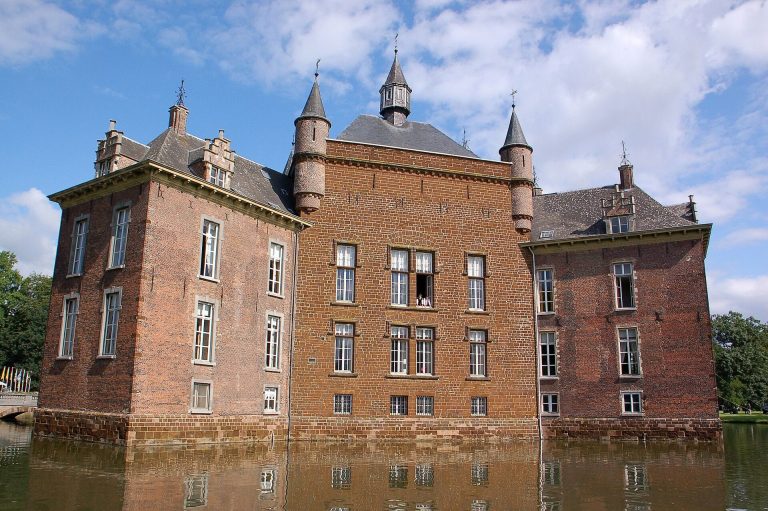
Premonstratensians reacquired parts of the estate in the early nineteenth century. A community formed in 1837 and first settled at Bossenstein Castle in Broechem; the order was re-established in 1838. After Belgian independence, 14 canons returned to Tongerlo in 1840. They had recovered about half of the buildings, and work began on a new church and cloister.
The abbey’s missionary work expanded in the later nineteenth and twentieth centuries. It established a priory in Manchester in 1889 and took responsibility for the Uele mission in the Belgian Congo in 1896. Roughly six decades later, about 75 Premonstratensian canons were working there. In 1929, Thomas Louis Heylen, then bishop of Namur and formerly abbot of Tongerlo, called on his former confrères to take over Leffe Abbey after its French Premonstratensians departed. Tongerlo also established foundations in Canada in 1949 and Chile in 1965.
A major fire struck the abbey on 28 April 1929. The community continued its pastoral and hospitality work; 54 canons belonged to it in 2010, and a community still occupied the abbey in 2017.
Remains
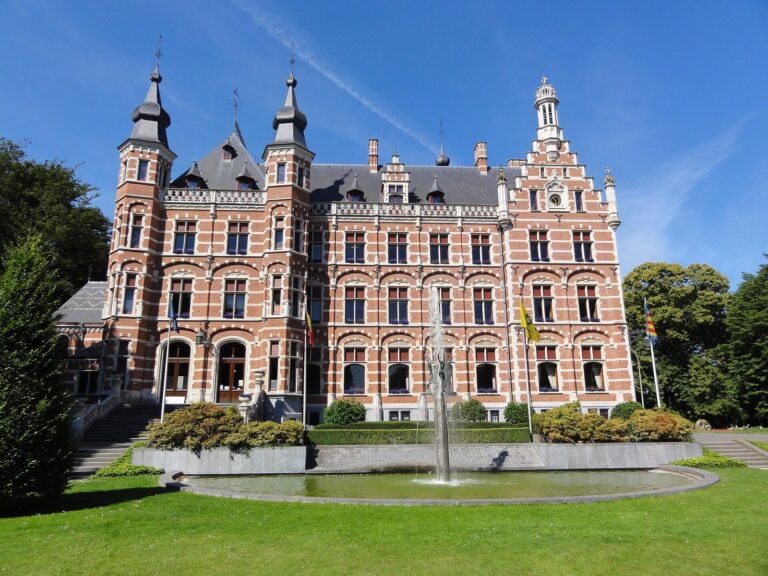
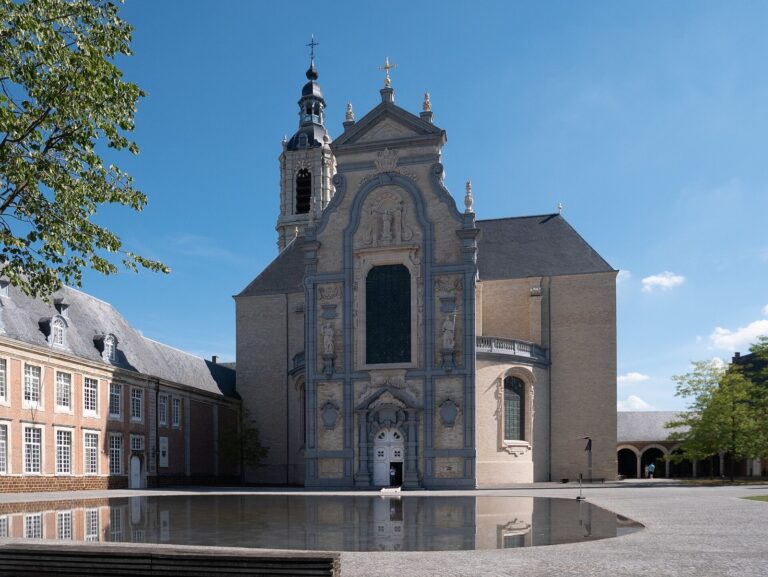
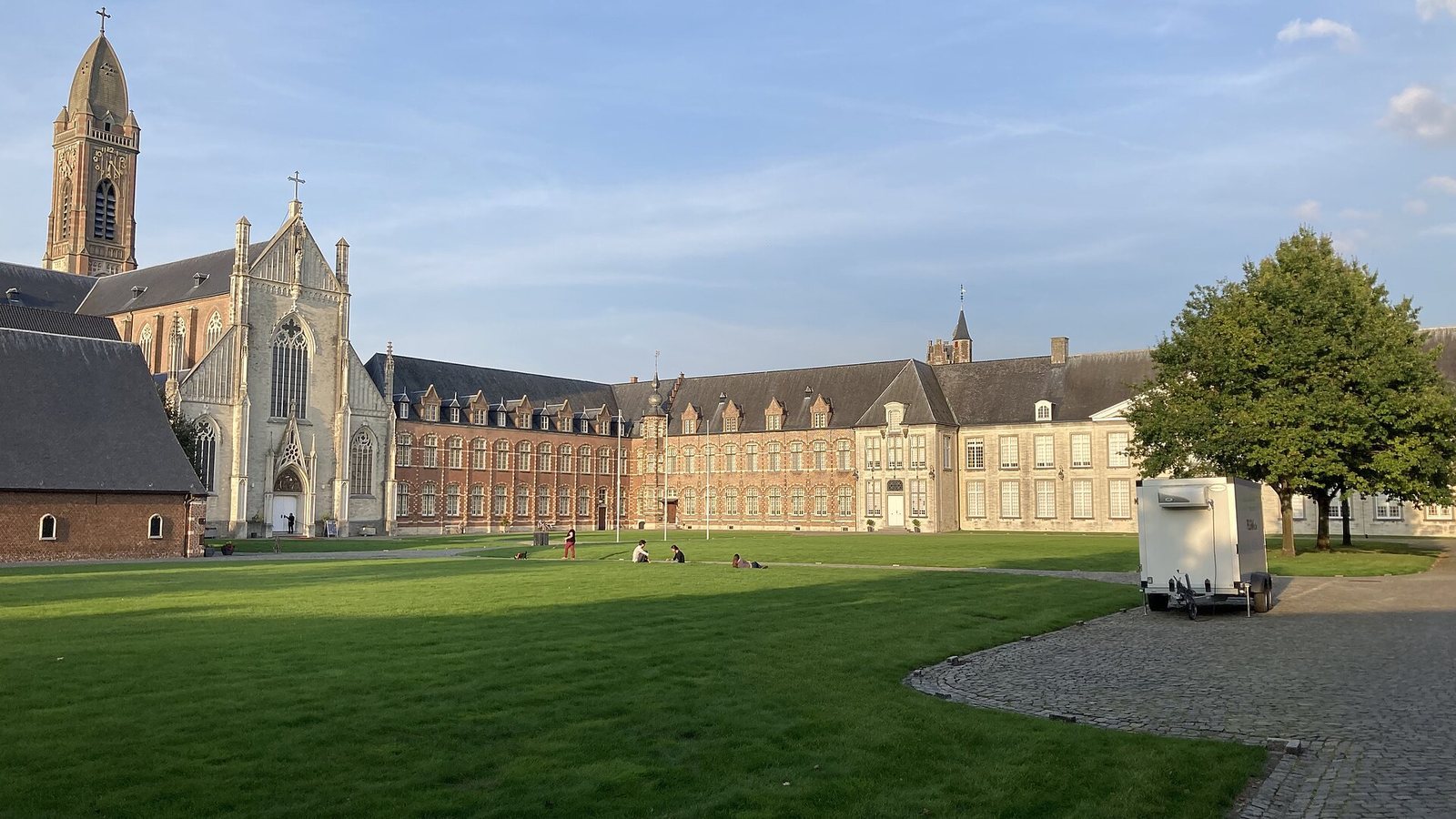
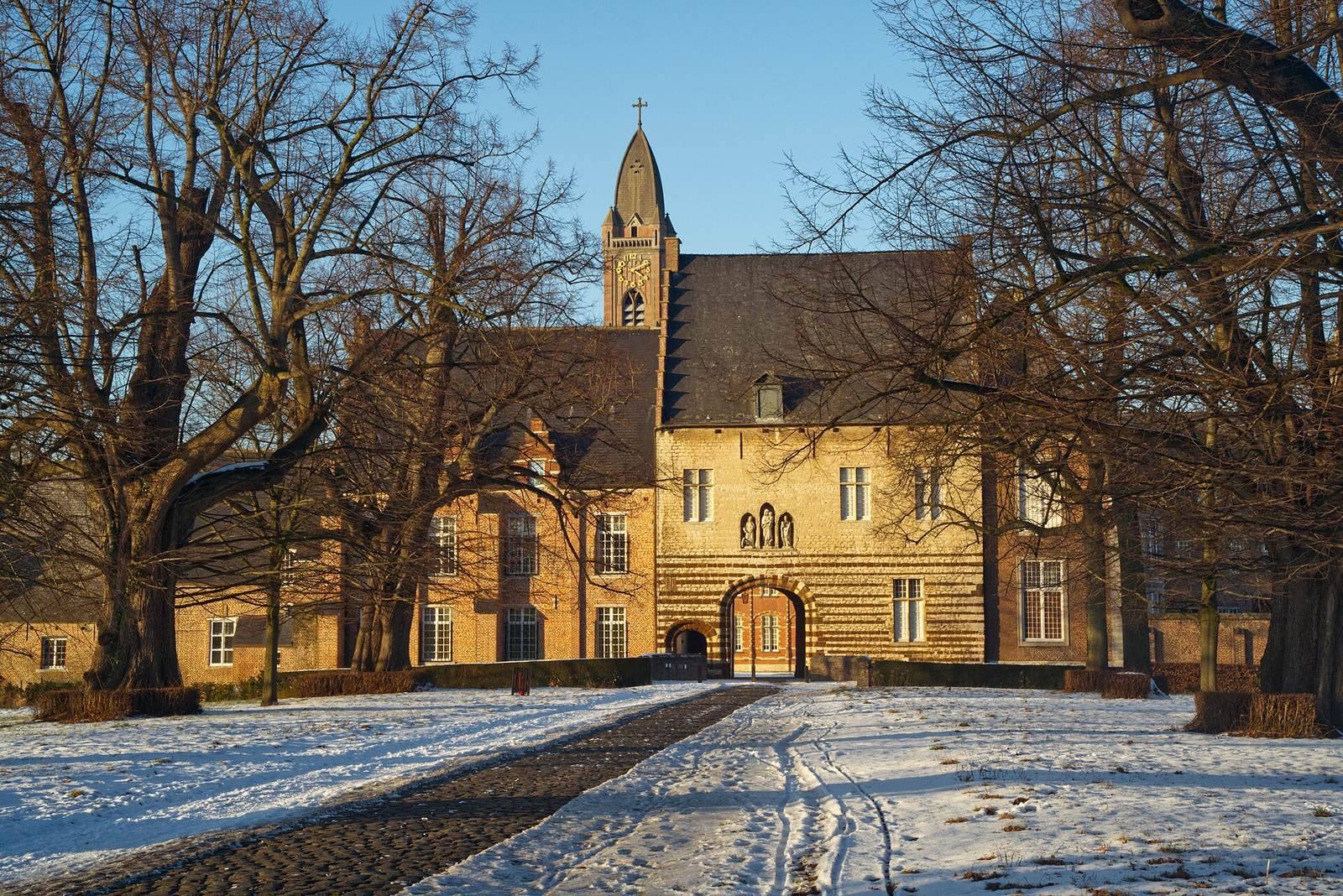
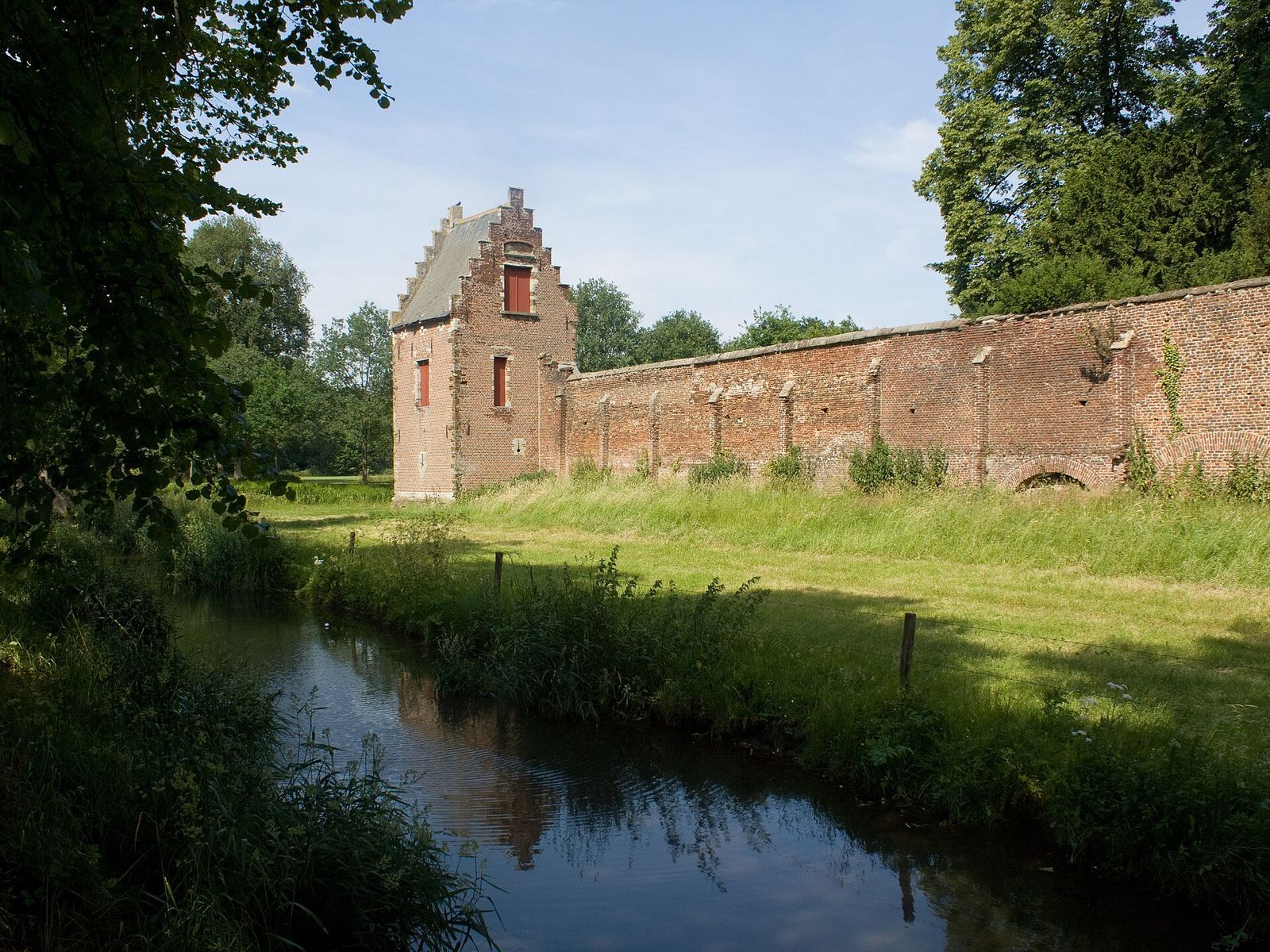
The abbey complex includes an inner courtyard reached through a monumental gate, along with residences, communal and service buildings, and a Neo-Gothic church. Its architecture brings together medieval Romanesque and Gothic work with later styles. A lime-tree avenue leads to the entrance.
Entrance and courtyard
Gate and avenue
The monumental gate opens into the inner courtyard and is identified as the oldest part of the abbey. The entrance is also described as fifteenth-century, while its lower section dates to the fourteenth century and is Romanesque, a medieval architectural tradition. The upper section is sixteenth-century Gothic, another medieval tradition. A feature known as the window of the poor was used to distribute bread, beans and peas. The lime trees along the approach are about 300 years old.
Spanish Tower
The Spanish Tower dates to 1477 and forms another named feature of the abbey complex.
Residences and service buildings
Bishop’s House
The Bishop’s House combines Gothic and Renaissance styles. Its design is attributed to Rombout II Keldermans.
Abbot’s Palace
The Abbot’s Palace, the abbot’s residence, dates to 1728 and is in the Classical style. Willem Ignatius Kerricx designed it and worked on the abbey’s decorations between 1725 and 1732. The central façade bears the divided arms of Abbot Joseph Peter Van der Achter, the motto Festina lente, meaning “Make haste slowly,” and two crossed croziers, or curved pastoral staffs, representing a double dignity. A staircase in the Louis XV style stands in the entrance hall.
Tithe barn and communal buildings
The tithe barn houses historical objects associated with the abbey and a clock. A tithe barn stored agricultural dues paid as tithes. Other components of the complex include convent buildings, covered monastic walkways and a refectory.
Church and artistic holdings
Abbey church
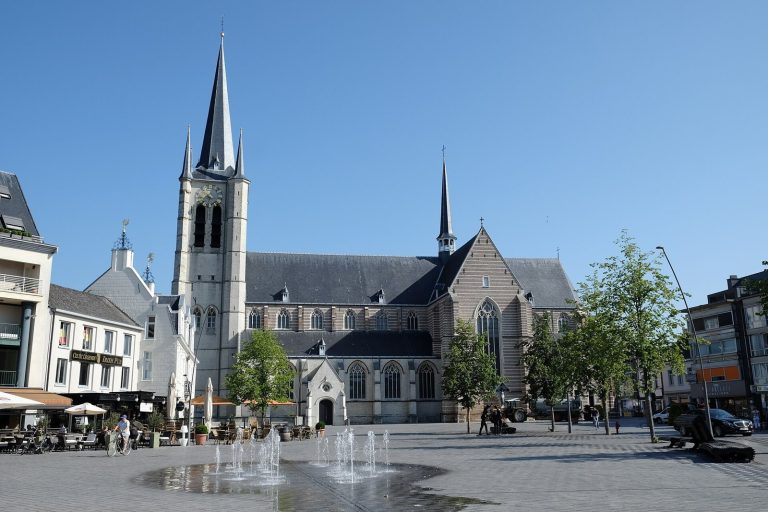
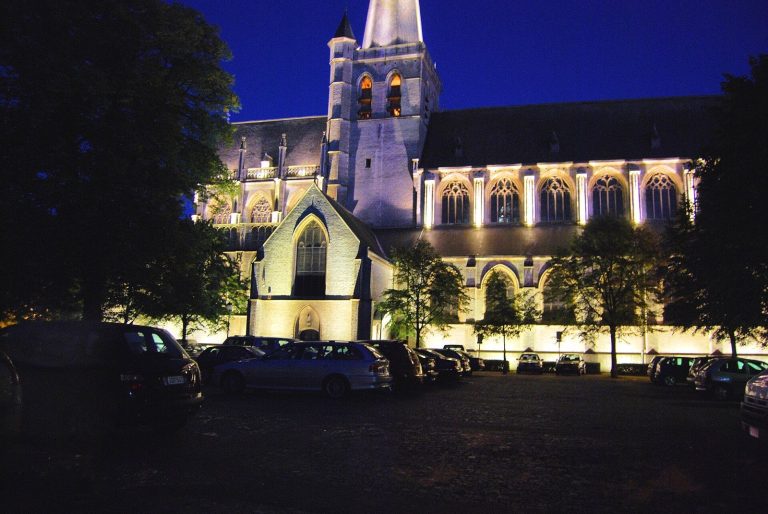
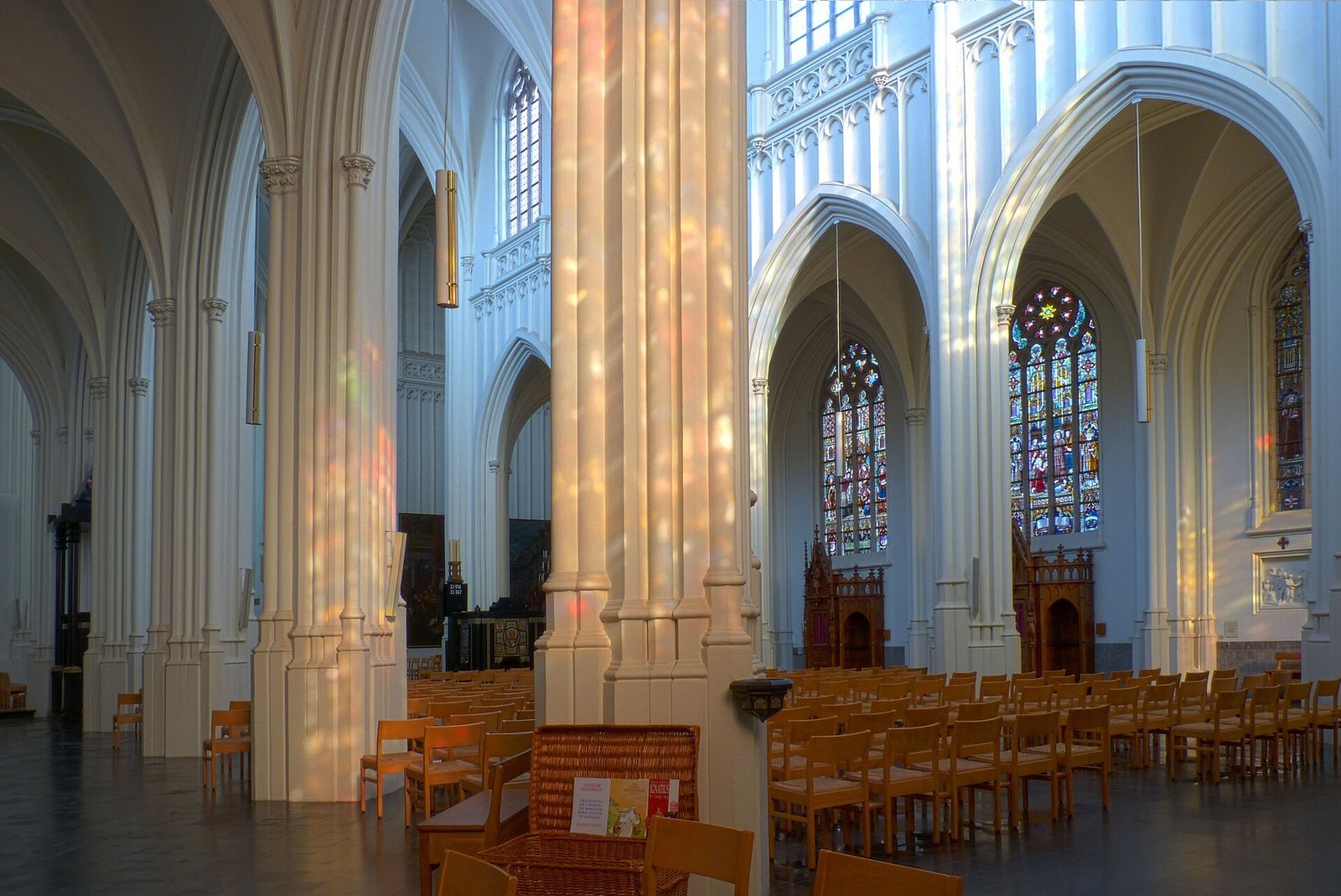
The Neo-Gothic church, a later revival of Gothic forms, began construction in 1840 and dates to 1852. It is attributed to architect Paul Stoop and was built with a covered monastic walkway alongside it. Major restoration work between 1994 and 1999 renewed the building and brought out its Neo-Gothic lines.
The Last Supper
A large canvas copy of Leonardo da Vinci’s The Last Supper measures about 4.24 by 8.02 metres, or nearly 34 square metres. It was probably made around 1506–07 by pupils working under Leonardo’s supervision. Andrea Solari has been proposed as its painter, although the attribution is disputed; the heads of Jesus and the apostle John may have been painted by Leonardo himself. The copy preserves details that can no longer be seen in the deteriorated original.
Cardinal Georges d’Amboise commissioned the painting for his castle at Gaillon. In 1545, Abbot Arnoud Streyters acquired it for 450 florins from the estate of Antwerp merchant Jean le Grand, with the purchase made by his secretary Scheelen. The painting hung in the church choir until 1960. During French rule it was concealed in a granary, rolled up to prevent seizure. It survived the 1929 fire, but was cut and rolled the wrong way during the emergency and later needed extensive restoration. A museum attached to the abbot’s residence was established for the painting in 1966. After restoration, it returned to the abbey church in 2023.
Other paintings
The church contains Jan Erasmus Quellinus’s Jesus as a Guest at Simon the Pharisee’s and The Wedding at Cana. The chapter house, a room for the community’s meetings, contains several large canvases by Erasmus Quellin.
Sacristy
The sacristy holds a Gospel book dated 1543, a Gothic silver reliquary, a container for religious relics, and a processional cross dated 1613. A sculpted altar shrine made by Rombaut de Dryver dates to the sixteenth century.