Kollnburg Castle: A Medieval Hilltop Fortress in Germany


Site at a Glance
- Rating
- 4.4
- Popularity
- Low
- Country
- Germany
- Primary era
- Medieval
- Eras represented
- Medieval
- Civilizations
- Duchy of Bavaria, Holy Roman Empire
- Site type
- Military
- Remains
- Castle
On this page10 sections
History
Kollnburg Castle is a medieval hilltop fortress in Germany, first recorded in 1153 under the name “Chalnberch.” Its possible construction by the Lords of Kalmberg as early as the eleventh century remains uncertain. The castle stood in the Bavarian Forest and later formed the centre of the Kollnburg lordship.
Medieval Lords and the First Chapel
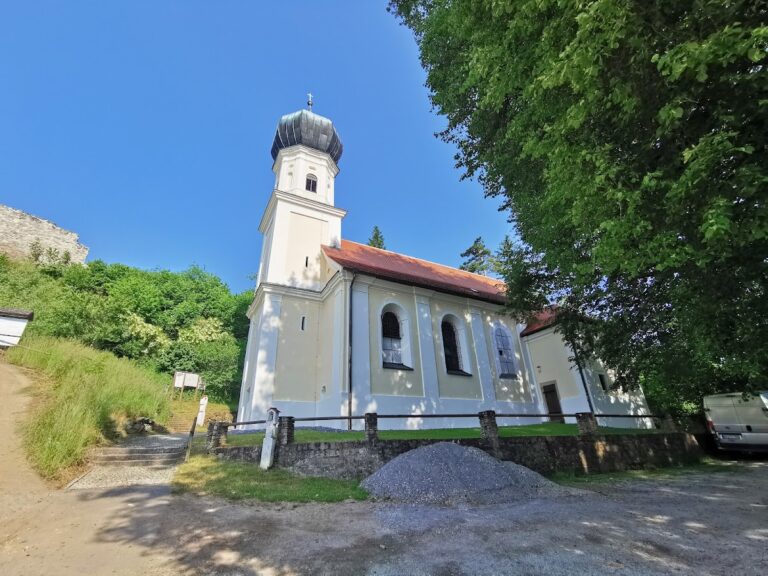
From 1363 to 1472, the castle was held by the Lords of Nußberg, ministeriales who served noble rulers as administrators, military retainers, and castle holders. In 1362, Bertold of Kollnburg sold the fortress to Peter of Chamerau of Haidstein. Peter resold it in 1363 to Albrecht of Nußberg, who built the first castle chapel in 1365.
The castle was drawn into the Böckler War of 1468–1469, an uprising by knights of the Bavarian Forest against the centralizing policies of Duke Albrecht IV of Bavaria. The duke burned Kollnburg Castle during the conflict. Hans of Nußberg sold it in 1474, and it changed hands again in 1493.
Wartime Damage and Later Lordship
The Thirty Years’ War, the major European conflict of 1618–1648 that brought military destruction and economic disruption to the German lands, caused damage to the castle. The complex was subsequently rebuilt. In 1671, Imperial Councillor Johann Abraham Ortner of Orth took possession of the lordship and reconstructed the castle chapel at twice its former size. A thunderstorm destroyed the chapel in 1678.
By 1685, the castle and settlement were known as Kalmperg. Hussars, light cavalry, and Pandurs, irregular or frontier troops serving the Habsburg side, caused further destruction during the War of the Austrian Succession in 1742. This European conflict, fought mainly from 1740 to 1748, centred on the succession to the Habsburg monarchy. Ownership then changed rapidly. Until 1806, the Kollnburg Hofmark, a landed jurisdiction with specified judicial and administrative rights, remained a knightly fief held from the territorial ruler.
Demolition, Preservation, and Modern Protection
The entire estate was auctioned in 1817. Josef Rockinger, a brewer, bought the castle in 1835. The surviving lower sections were later demolished, and their masonry was used to build a parish house. Masonry from the castle was also probably incorporated into surrounding houses.
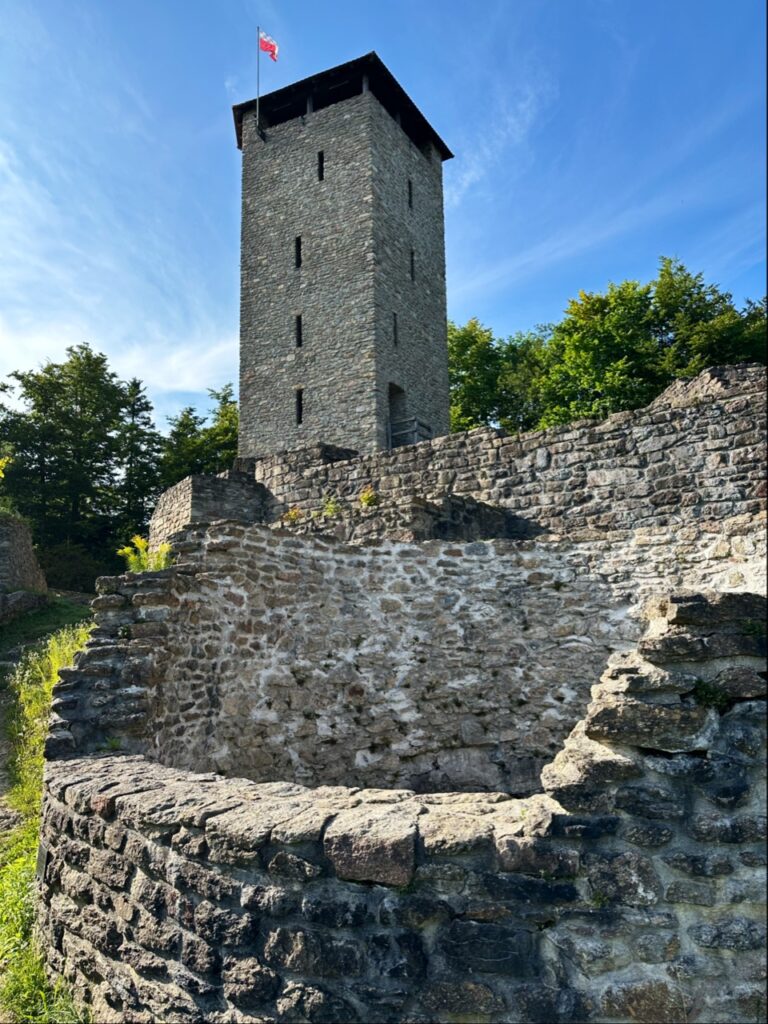
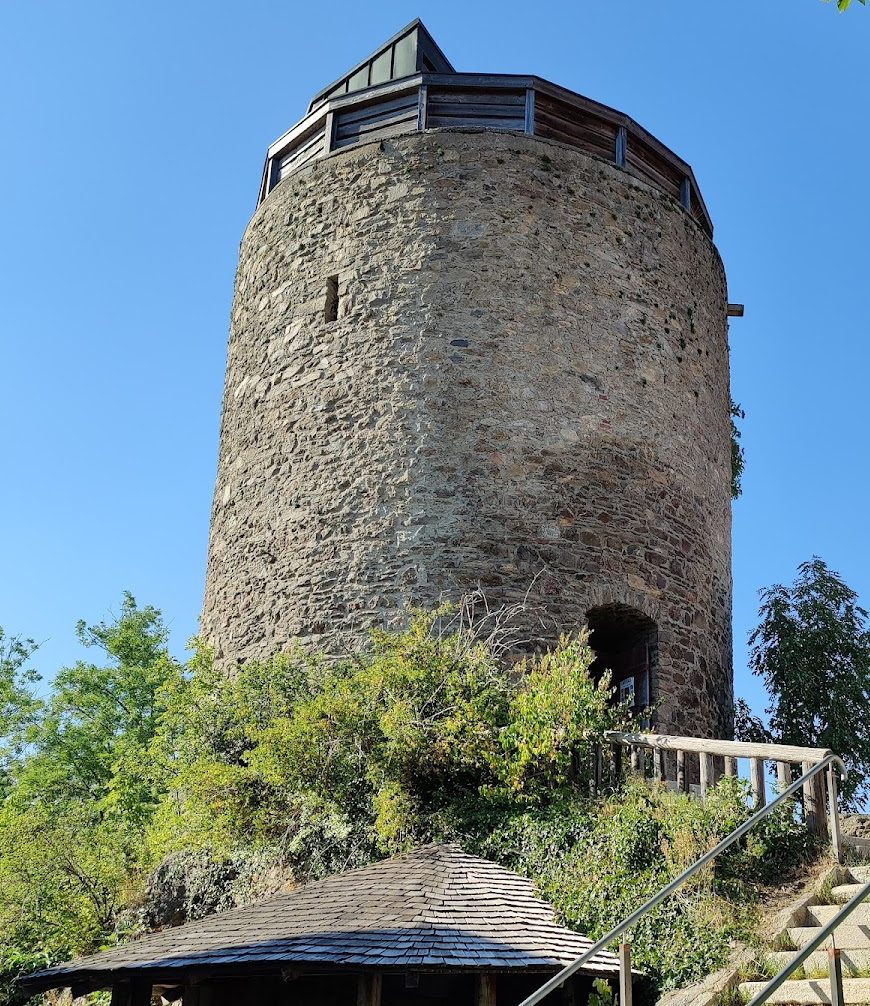
On 11 November 1895, the Wald-Verein Viechtach acquired the castle tower. It was renovated in 1912 and converted into an observation tower. The ruin remains owned by the Viechtach section of the Bavarian Forest Association. Burg Kollnburg is protected both as an architectural monument and as an archaeological ground monument.
Remains
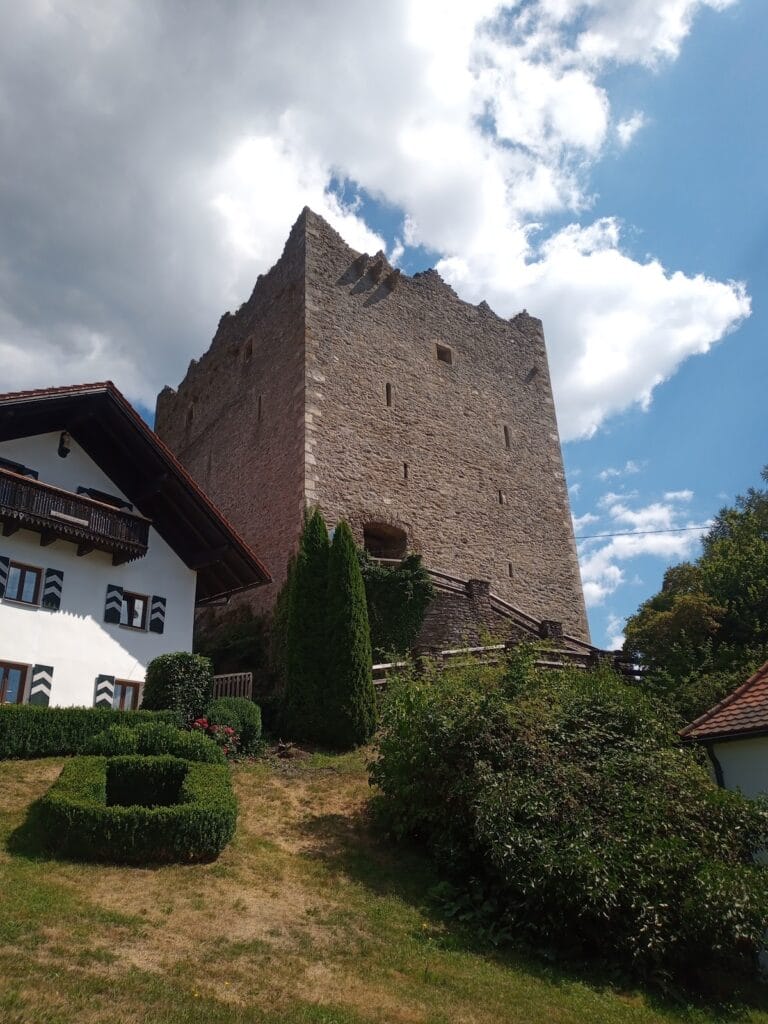
Burg Kollnburg was a small castle on a hilltop approximately 660 metres above sea level, west of the parish church in the municipality of Kollnburg, in Bavaria’s Regen district. The surviving remains comprise the round fortified tower, the foundations of the principal residential hall, and the castle well.
Fortified Tower
Round Keep
The surviving round bergfried, the principal fortified tower used for defence and refuge, stands approximately 11 metres high. It measures 8.2 metres across and has walls around 2 metres thick. The tower was renovated in 1912 and adapted as an observation tower, giving the surviving structure its present form and continuing use within the preserved ruin.
Residential and Water Structures
Palas Foundations
Foundations of the palas, the main residential and representative hall of a medieval castle, survive within the former complex. They preserve the position of the castle’s principal domestic building alongside the remaining fortified tower.
Castle Well
The castle well reaches 17 metres below the site. Together with the palas foundations and round tower, it forms part of the surviving physical evidence of the former castle complex.