Burg Ingenhoven: A Noble Family’s Knightly Seat in Germany
Site at a Glance
- Popularity
- Medium
- Country
- Germany
- Primary era
- Early Modern
- Eras represented
- Early Modern
- Civilizations
- Habsburg, Holy Roman Empire
- Site type
- Domestic
- Remains
- Castle
On this page8 sections
History
Early records and 16th-century development
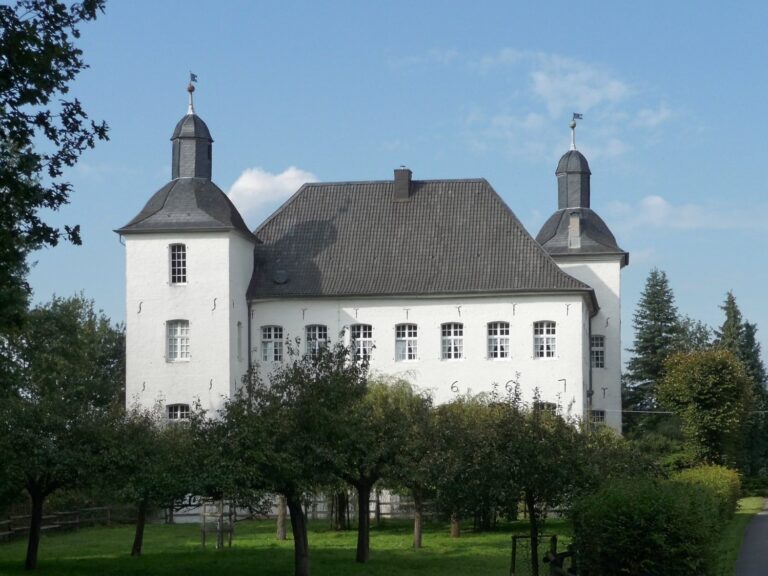
Burg Ingenhoven is a castle in Lobberich, a district of Nettetal in North Rhine-Westphalia, Germany. First recorded in 1403 in a fief register, a record of land held under feudal tenure, it served as the residence of the Bocholter noble family, also known as Bucholtz. The family’s ancestral home was nearby Burg Bocholt, a moated castle, and its members were influential across Europe.
The castle acquired its present appearance during the 16th century. The year 1544, recorded in its courtyard, marks this phase. Reiner, the family’s most prominent representative, was prince-abbot of Corvey from 1555 to 1585. A prince-abbot was an abbot who also held temporal authority; Corvey was a historic Benedictine abbey in Westphalia.
Changes in ownership
An inheritance division transferred the castle to the von Bentinck family and other noble families in 1748. In 1820 it passed through Count von Mirbach into non-noble ownership. It later belonged to the industrialist Niedieck family. Commercial councillor Julius Niedieck commissioned the villa Haus Erlenbruch in the southwest of the park.
Remains
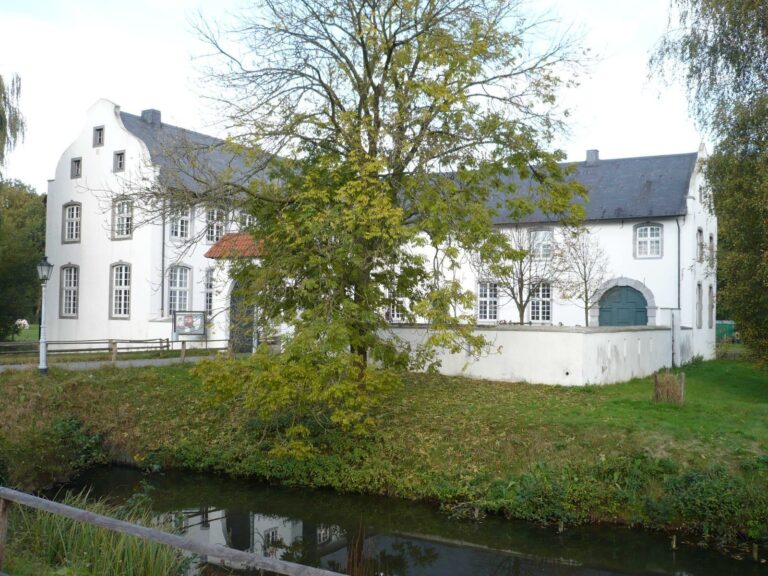
The castle stands in a park within Lobberich’s settled area, and substantial portions survive. The Ingenhoven pond indicates that the castle was once set on an island.
Buildings and landscape
Manor house
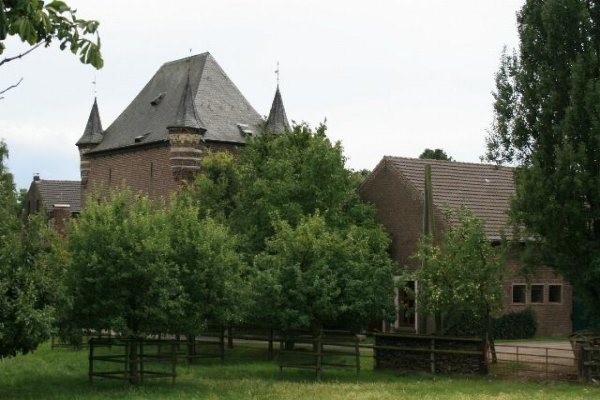
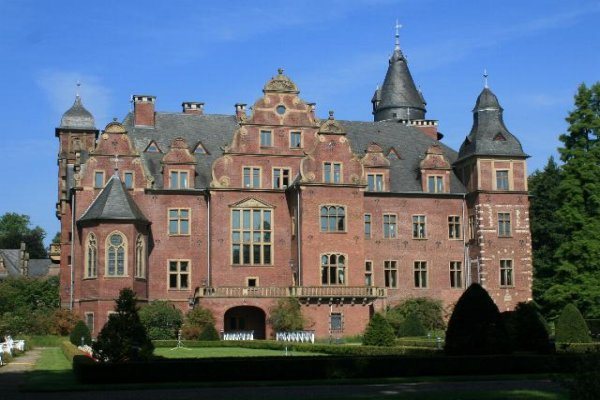
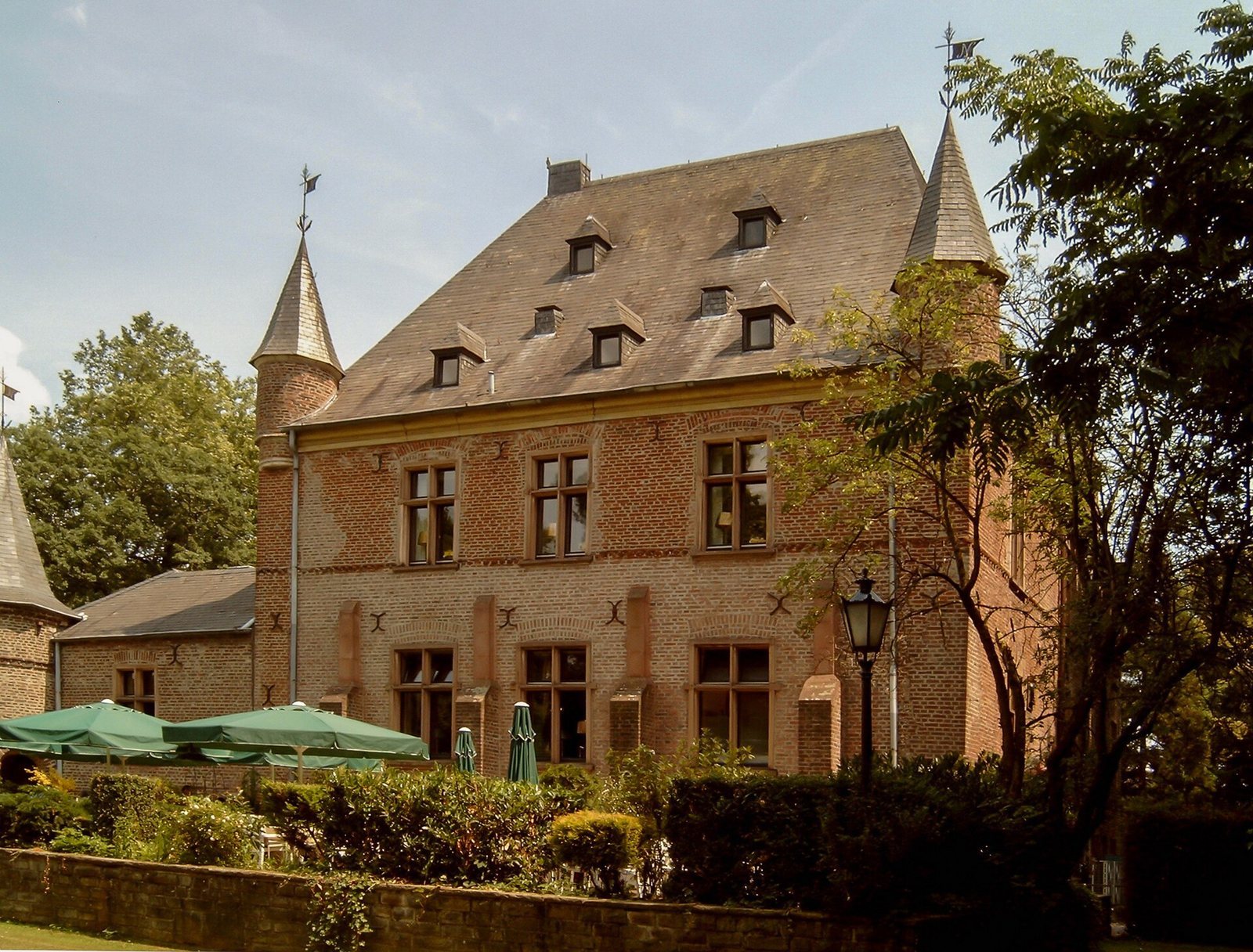
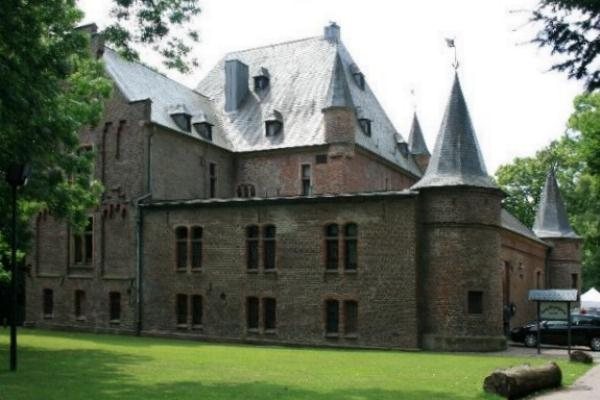
The three-storey manor house is built of brick and sandstone. It has a roof sloping down on all four sides and four round towers at its corners.
Ingenhoven pond
The pond is a surviving feature of the park and indicates the castle’s earlier island setting.
Haus Erlenbruch
Haus Erlenbruch is a villa in the southwestern part of the park.