Cysoing Abbey: A Carolingian Religious Foundation in France
Site at a Glance
- Popularity
- Medium
- Country
- France
- Primary era
- Modern
- Eras represented
- Modern
- Civilizations
- French
- Site type
- Domestic
- Remains
- Elite Residence
On this page10 sections
History
Cysoing Abbey was a religious foundation in France, established in the ninth century by Eberhard of Friuli, a Carolingian margrave, or frontier governor, and his wife Gisela. A daughter of Louis the Pious and granddaughter of Charlemagne, Gisela brought a dowry of lands amounting to the equivalent of about 8,000 hectares. The abbey’s holdings supported its community, and its long presence contributed to Cysoing’s prosperity and reputation.
Foundation and endowment
In 854, Pope Leo IV entrusted Eberhard with relics of Pope Calixtus I, an early pope venerated as a saint, for the monastery in Flanders. Eberhard died in 866. Gisela continued to expand the abbey’s possessions, including with property at Somain, and died after 874. Their son Rudolf became abbot after 874.
Gisela gave land at Wasquehal in 835, and the abbey also held fiscal lands, meaning estates belonging to a ruler’s domain, at Cysoing and Vitry-en-Artois. Rudolf placed the community, although it lay within the diocese of Tournai, directly under the archbishop of Reims. A ceremonial transfer of Calixtus’s relics in 891 confirmed its standing as the archbishop’s proprietary monastery, held under a lord’s direct authority. Saint-Denis of Reims served as its parent abbey.
The community’s property included the Beaurepaire priory at Somain and the Sainte-Gertrude priory at Hertsberge. The counts of Flanders, Thierry of Alsace and his son Philip, granted the Hertsberge estate. Together with Somain and Beaurepaire, these holdings provided an economic base. The abbey also received the altars at Chéreng in 1145 and Baisieux in 1164. In 1160, Abbot Anselm transferred fields around the priory of the Virgin Mary at Bois de Beaurepaire; in 1170, the abbot granted the tithes, customary church payments, and land dues at Auberchicourt to Saint-Sauveur d’Anchin.
A local legend tells of Mathilde, a widow whose only son drowned in the Scheldt at Tournai. Seeking comfort at the abbey, she lost her gold wedding ring in a nearby fountain and vowed to build a large church if it returned. The ring supposedly rose to the surface at once, and Mathilde fulfilled her promise.
Reform and changing leadership
After monastic life at Cysoing had become excessively secular, leadership shifted from abbots to provosts, ecclesiastical officers responsible for administration, in the early twelfth century. In 1129, Archbishop Rainaud II of Reims initiated a reform and appointed Anselm, a canon from a Reims abbey, as abbot. The community’s regular canons, clergy who lived together under a religious rule, adopted the Rule of Saint Augustine, a set of communal religious principles attributed to Augustine of Hippo. They probably joined the Arrouaise order around 1132, and roughly a century later affiliated with the Congregation of Saint Victor. In the early sixteenth century, Abbot Jean Salembien linked Cysoing with the regular canons of Windesheim, another reform community.
Royal connections and medieval conflict
In 1193, King Philip II of France married Ingeborg of Denmark. She was later received at Cysoing and remained there until 1212. On 18 August 1304, Flemish troops camped at Cysoing during the Battle of Mons-en-Pévèle, which ended in victory for the forces of Philip the Fair.
The abbey was burned in 1393. From 1408 to 1419, John the Fearless placed it under secular management, and its abbot appealed to King Charles VI of France.
Early modern life and upheaval
In 1535, Abbot Mathias de Barda organized and presided over the general chapter of the Congregation of Saint Victor at Cysoing. During the Beggars’ revolt in 1566, marauders active around Tournai and Menin plundered the abbey. Residents of Seclin, Gondecourt, and Houplin, led by Guislain de Haynin, joined forces to block the raiders and drive them into nearby marshes.
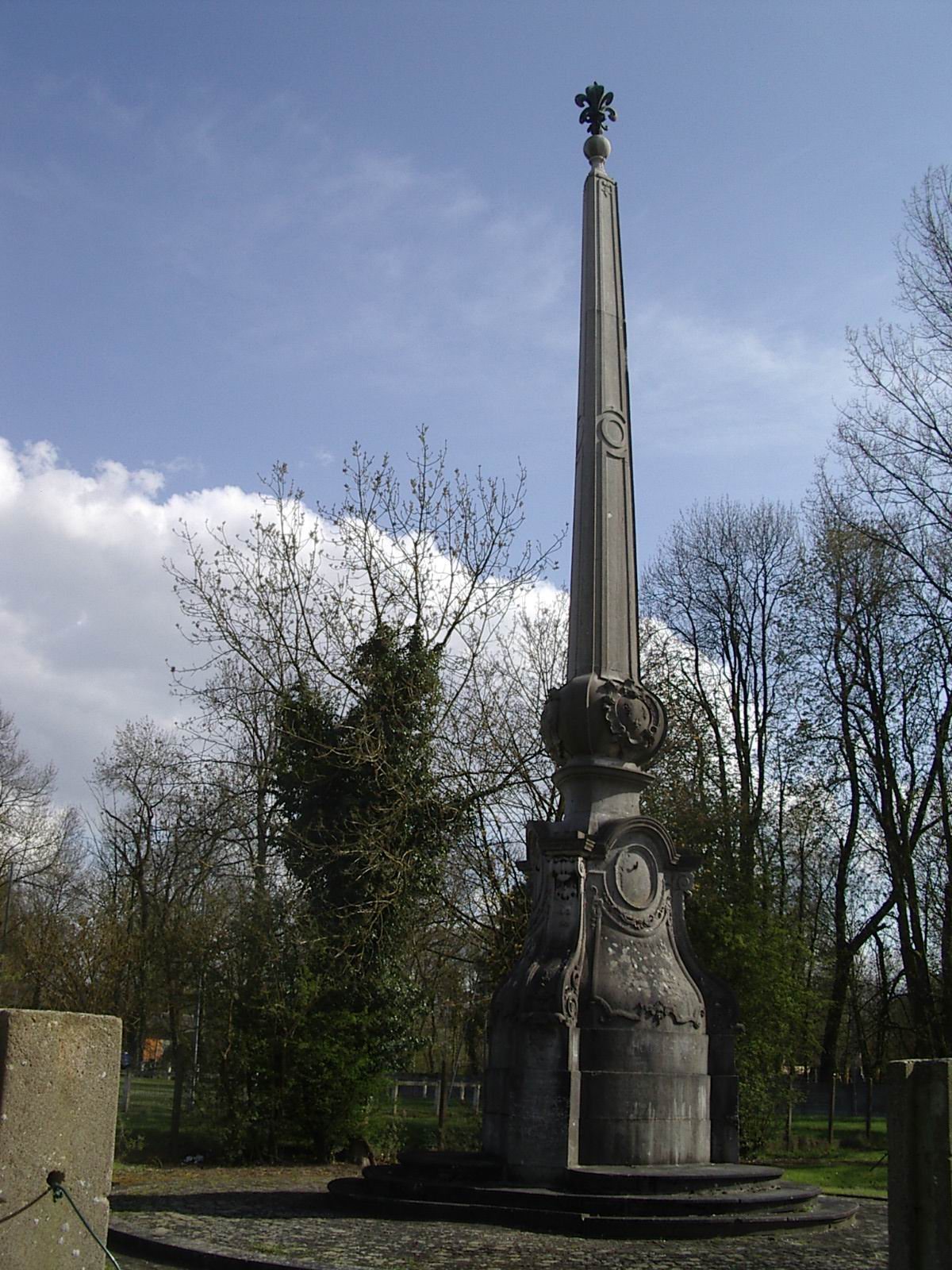
The abbey maintained urban refuges in Lille, Bruges, and Tournai, houses used by its members when away from the main community. The Lille refuge is known from 1641 and passed into the royal domain in 1669. Louis XV stayed at the abbey during his Flanders campaign in 1745, before his victory at Fontenoy. Abbot Laurent de Roque began a monument commemorating the king’s visit and victory in 1750; it was completed in 1751.
On 26 February 1762, lightning struck the abbey church’s spire. An aurora borealis appeared at its summit, alarming local residents and prompting the alarm bell to be rung. An inspection found no damage to the tower.
Destruction and later use
The abbey was closed and plundered on 17 August 1792. Its books, furniture, and paintings were removed, and confiscated goods were gathered at the former Recollects convent in Lille. The abbey was burned on 26 October 1793, after which its ruins were dispersed.
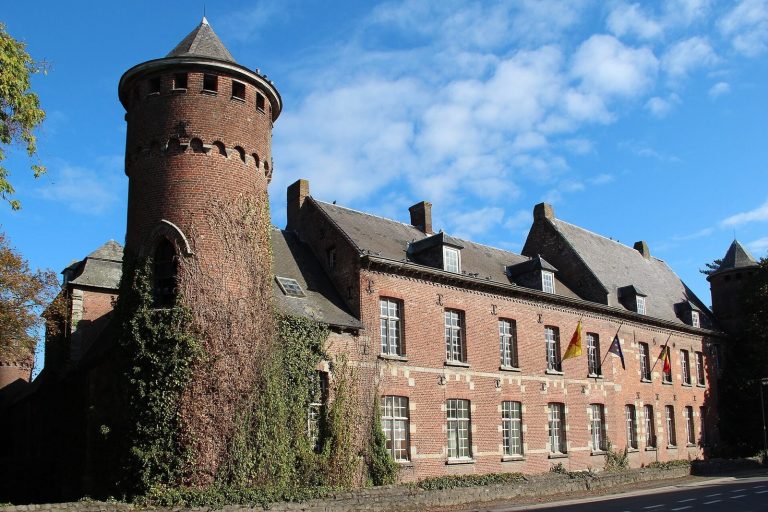
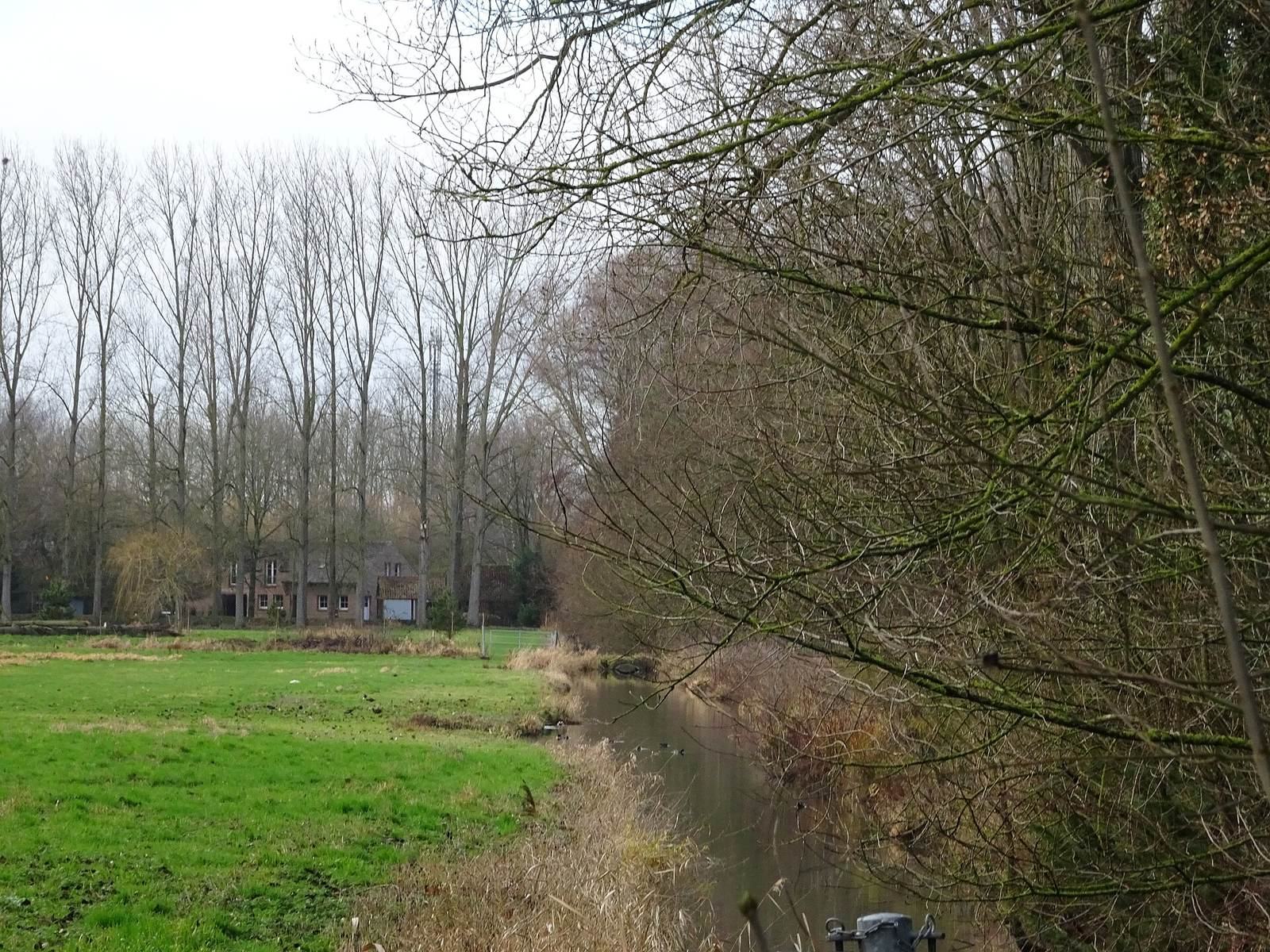
A château was built on the former abbey grounds around 1800, partly using stone from the ruins. In 1842, a municipal boys’ school was constructed on the former library site. Archaeological excavations have taken place in several campaigns, most recently in 2008 and 2009. The abbey enclosure wall is listed as a historic monument; the Pyramid of Fontenoy has held that status since 1840, and Château de Cysoing since 2008. The château park is included in the General Inventory of Cultural Heritage.
Remains
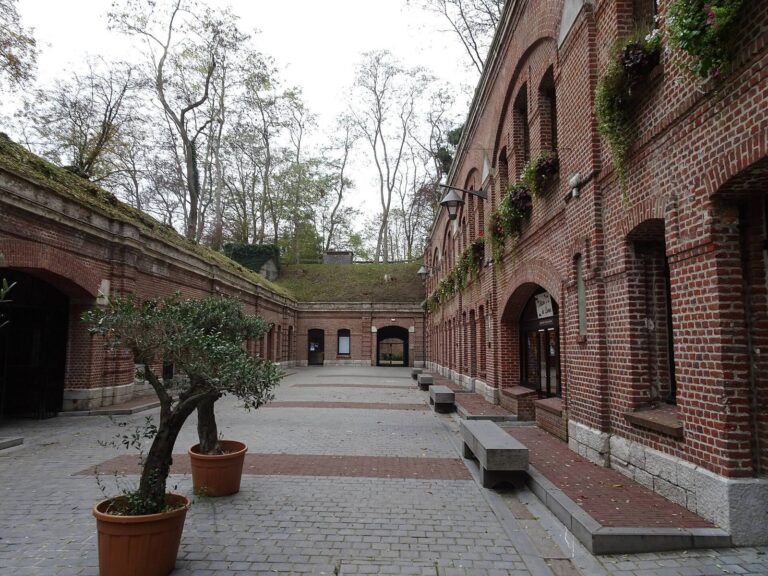
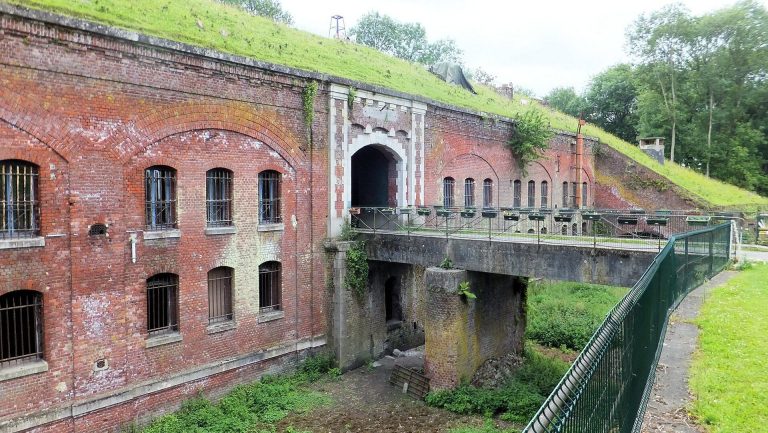
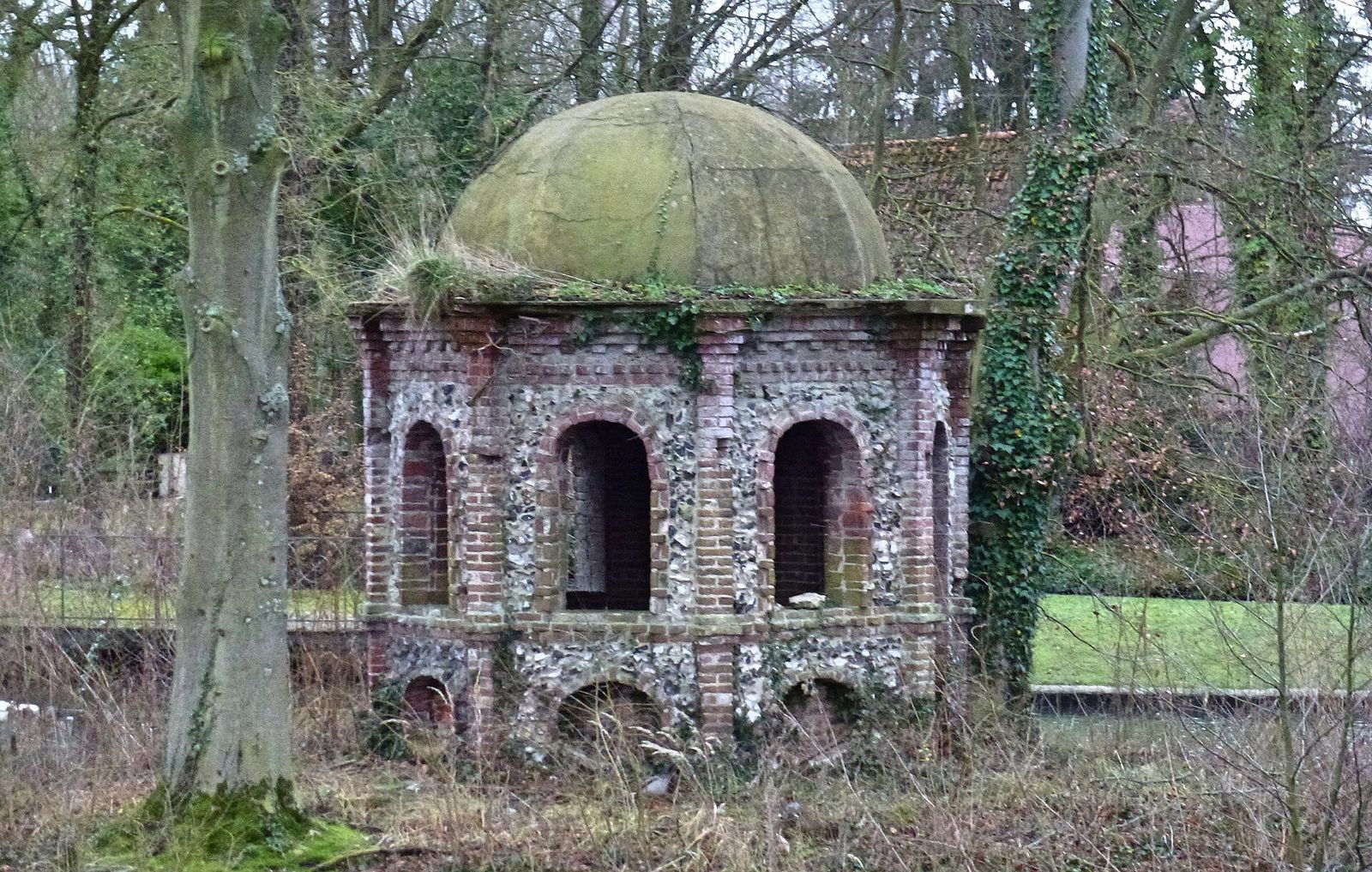
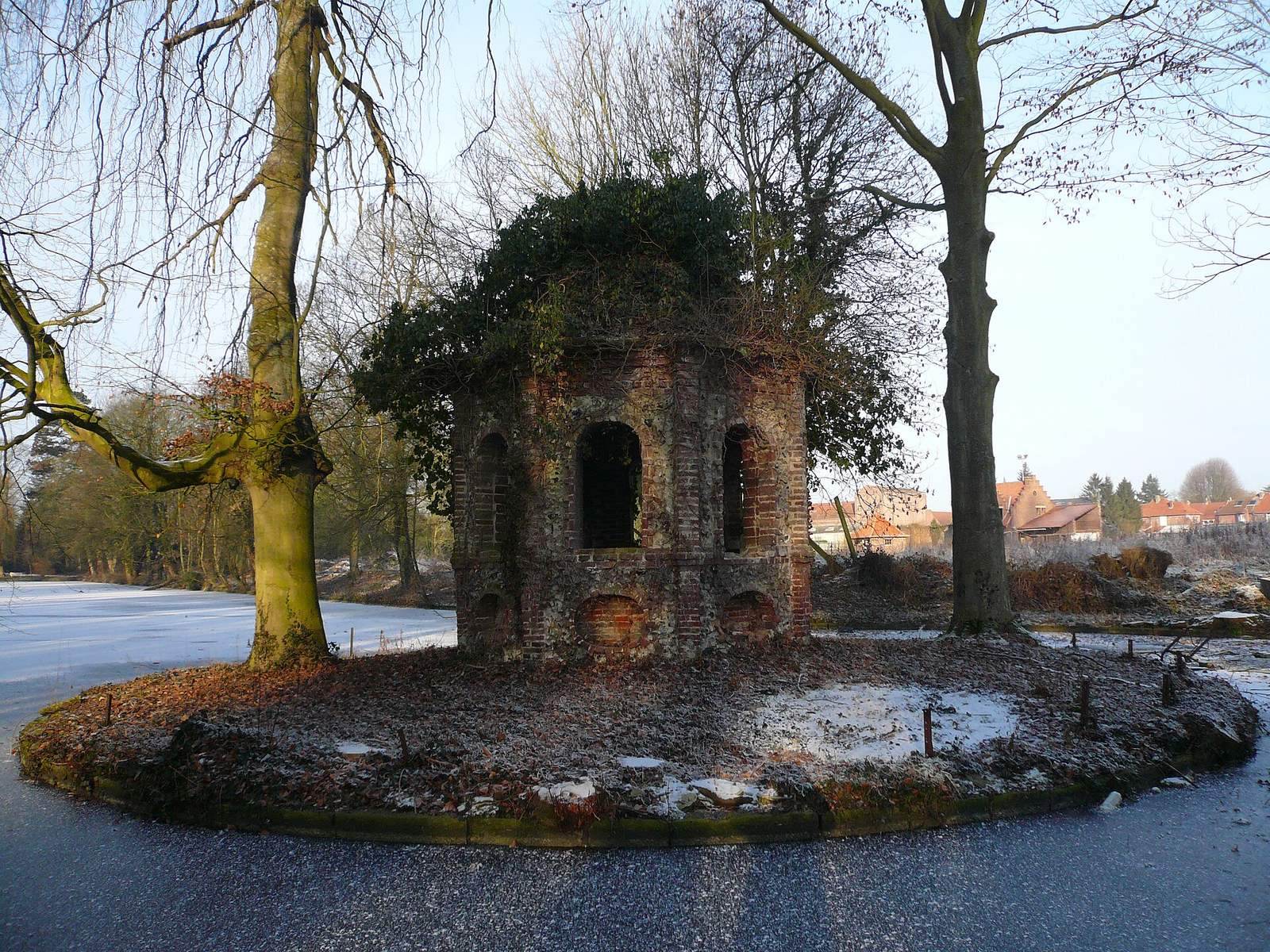
The surviving features include part of the abbey enclosure, a chapel remnant associated with an island in the estate, and the church crypt. Later structures and a memorial also occupy the former abbey grounds.
Precinct remains
The enclosure wall survives as part of the site. A remnant of a chapel is associated with an island within the abbey estate.
Church crypt and relics
The church’s crypt, an underground burial chamber, was renovated and blessed in 1535. Eberhard and Gisela were buried there. In 1283, Archbishop Pierre Barbet of Reims opened the reliquary, a container for religious relics, holding the remains of Saint Évrard, the French form of Eberhard’s name, in the presence of witnesses. The relics were placed in a new container in 1441 and transferred again in 1515 and 1637. François Van der Burch presided over the 1637 ceremony.
In 1616, Abbot Jean des Rumeaux received a relic of Calixtus I from Reims, a femur bone. The community also believed that the pope’s entire body rested at the abbey.
Memorial and later building
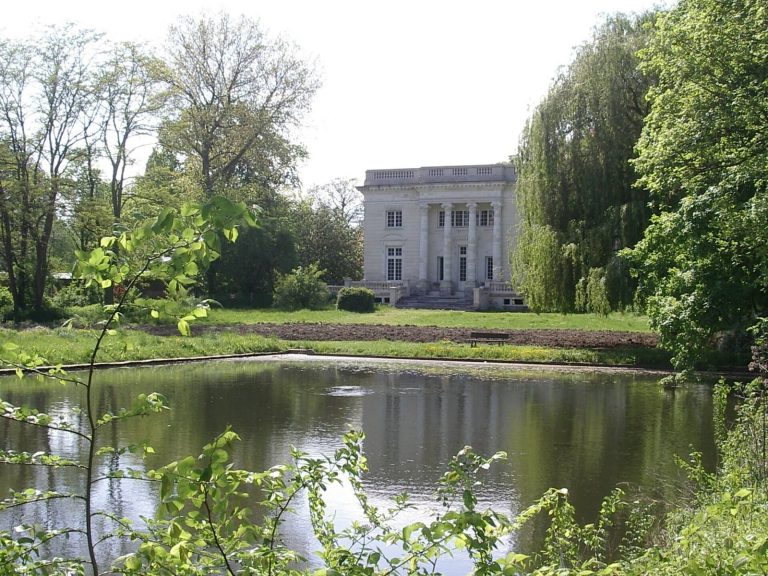
The Pyramid of Fontenoy in the abbey park is an obelisk, a tall, tapering stone monument, made of blue stone and nearly 17 metres high. Château de Cysoing stands on the former abbey site and imitates the Petit Trianon at Versailles.