Burg Hüls: A Medieval Moated Castle in Krefeld, Germany
Site at a Glance
- Rating
- 4.6
- Popularity
- Low
- Country
- Germany
- Primary era
- Medieval
- Eras represented
- Medieval, Modern
- Civilizations
- German, Holy Roman Empire
- Site type
- Military
- Remains
- Castle
On this page13 sections
History
Burg Hüls is a medieval moated castle in Krefeld, Germany, built in the fifteenth century by the Lords of Hüls as a fortified residence in low-lying marshland. Construction began in 1455 after Archbishop Dietrich II of Moers, who held both religious and secular authority in the region, authorized the knight Friedrich von Hüls to build it east of Hüls. The castle is a brick-built example of a lowland fortress, designed for relatively flat and often wet terrain.
Origins and the Lords of Hüls
Hüls was first mentioned in 1112, and the Lords of Hüls governed the locality from Burg Hüls until the sixteenth century. The new castle replaced an earlier “old castle” that had disappeared before 1455 near the site of the present outdoor swimming pool. Archaeological work in 2011 suggested that this predecessor may have been a refuge or field fortification.
The original residence of the Lords of Hüls may instead have stood on an estate between the Beguine convent known as the Klausur and the present parish church. A Beguine convent was a devotional community for women who lived together without necessarily taking permanent monastic vows. A 1419 donation by Friedrich von Hüls of a garden formerly occupied by a stable supports this possible location, although the reconstruction remains uncertain. The family’s rule ended with Katharina, the last female lord of Hüls, who died without biological heirs in 1565.
Conflict, destruction, and ruin
The castle suffered repeated destruction during conflicts in the sixteenth and seventeenth centuries. These episodes included the Truchsessian War, a late-sixteenth-century struggle in the northwestern Holy Roman Empire, and fighting connected with the Battle of Hüls in 1583. Further damage occurred during the Thirty Years’ War, the major European conflict of 1618 to 1648, including the Battle of the Hülser Heide in 1642.
Eyewitness testimony states that the manor house finally collapsed during the night of Pentecost in 1686. Burg Hüls remained a ruin and was not rebuilt. After the Hüls noble families lost their sovereign rights in the early nineteenth century and sold their land, they gave the castle to the children of Anno Laurenz Rosen, the last bailiff of Hüls. A bailiff was an administrative official who governed or managed an area for a higher authority. Franziska Rosen, the last of his daughters, left the property to the Catholic parish of St. Cyriacus after her death in 1843.
Clearance and restoration
The then-independent municipality of Hüls acquired the ruin and adjoining plots shortly after 1950. From 1954 to 1958, extensive clearance and exposure work took place under the direction of the local historian and archaeologist Professor Albert Steeger. Pupils from Hüls carried out much of the labor in connection with the construction of the present primary school on An der Burg.
By the end of the twentieth century, neglected maintenance, severe weathering, uncontrolled vegetation, and deliberate damage had left the ruin in very poor condition. After Hüls became part of Krefeld, the city owned the castle but lacked the funds for restoration. The Hüls Heritage Association and Hüls Sports Association therefore organized a volunteer-led rehabilitation project. Planning began in 1998, followed by the first construction phase in 2000. A second phase in 2001 and 2002 repaired the castle tower, while a third phase rebuilt the battlement walkway and courtyard masonry. Through the end of 2006, members of the two associations contributed more than 16,000 hours of volunteer labor. In 2005, the associations received the City of Krefeld Monument Prize for their initiative.
Remains
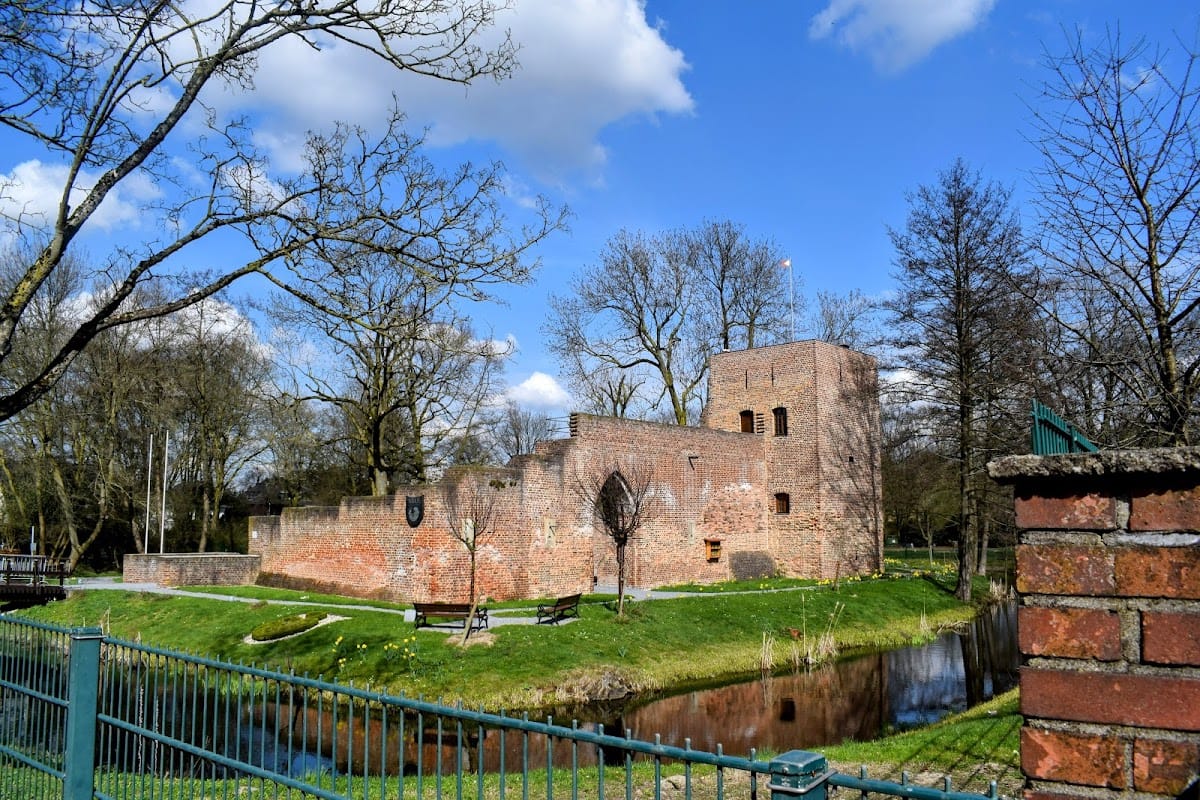
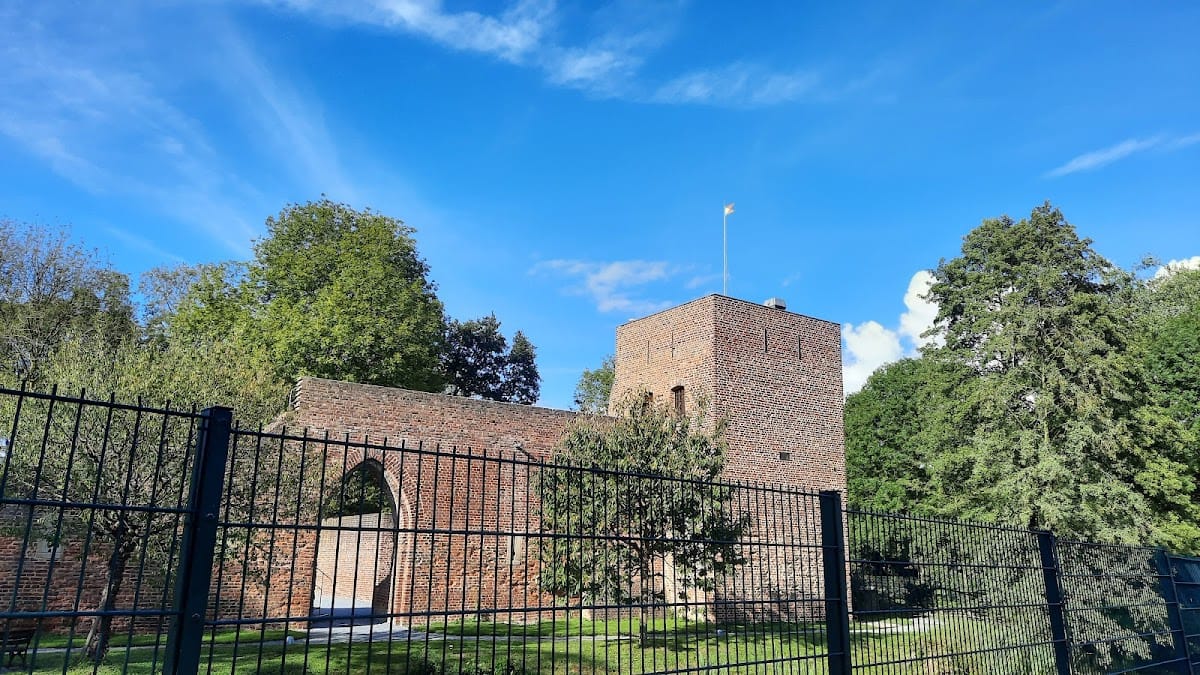
Burg Hüls survives as a lowland moated castle ruin built primarily of brick. The remaining complex includes parts of the manor house, a castle tower, courtyard masonry, the moat, and a reconstructed battlement walkway. The municipality created the surrounding park in the late 1950s after ending the land’s former use as gardens and allotments. The park formed part of an intended green connection between the town center and the adjacent Hülser Bruch.
Castle buildings and courtyard
Manor house and courtyard
Parts of the manor-house walls were rebuilt during the first modern restoration phase. The courtyard masonry was reconstructed in a later phase, preserving the central open area of the ruined complex. The restored courtyard is used as a setting for events, while the surviving walls show the scale and arrangement of the former residential castle.
Castle tower
The castle tower had largely collapsed and was filled with rubble before restoration. Workers cleared the interior, drained it, rebuilt its masonry, and installed heavy wooden floors. The restored tower now contains a wedding room, giving the surviving structure a new use while retaining its historic fabric.
Battlement walkway
The battlement walkway was reconstructed during the third restoration phase. It forms part of the repaired defensive masonry and provides an overview of the castle grounds.
Moat and archaeological evidence
Moat
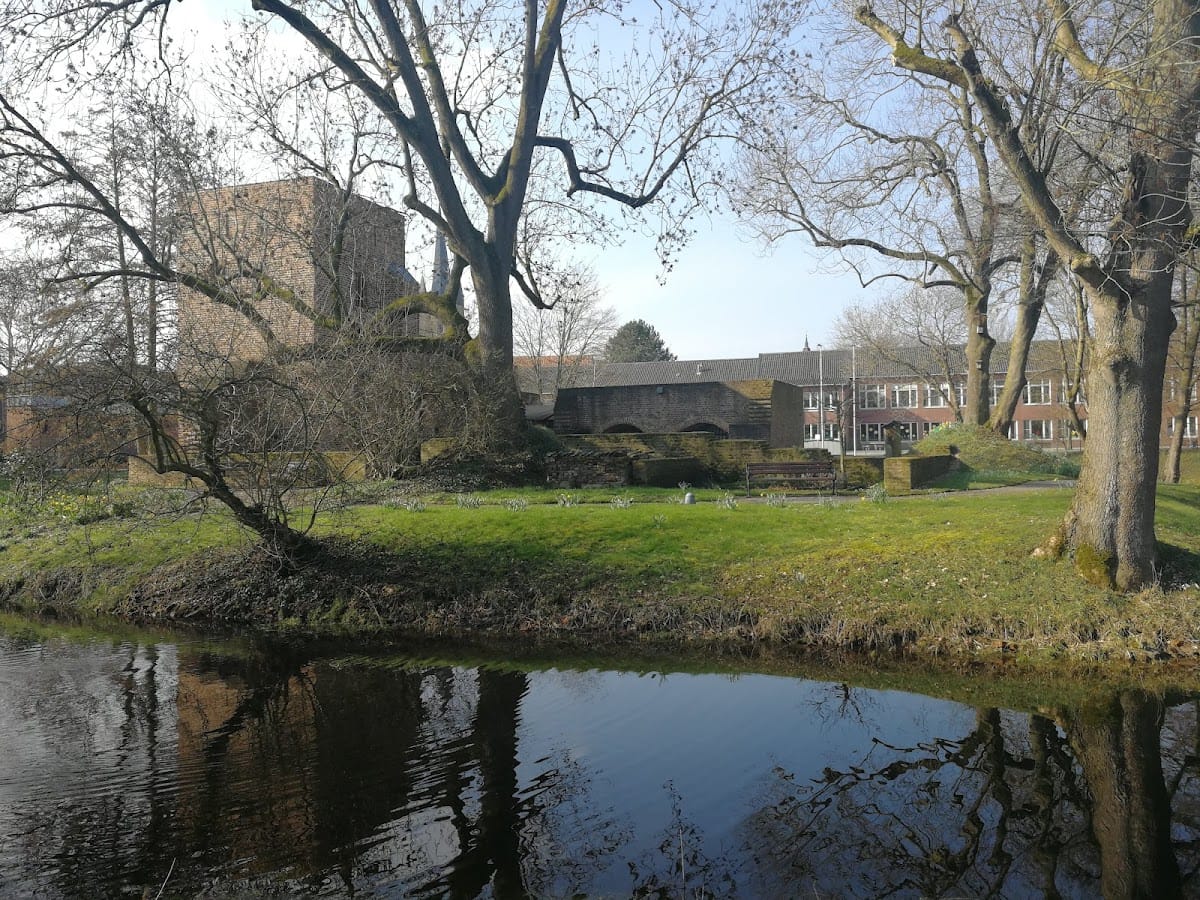
Archaeological excavation during the restoration established that the moat formerly carried water directly up to the castle walls. Renewal of the moat to allow it to hold water continuously was planned as a later restoration measure.
Well and pottery
Archaeologists from the Burg Linn Museum rediscovered an old well during the restoration work. Excavations also recovered medieval pottery sherds, which provide material evidence for activity at the castle during its medieval phase.
Park and educational use
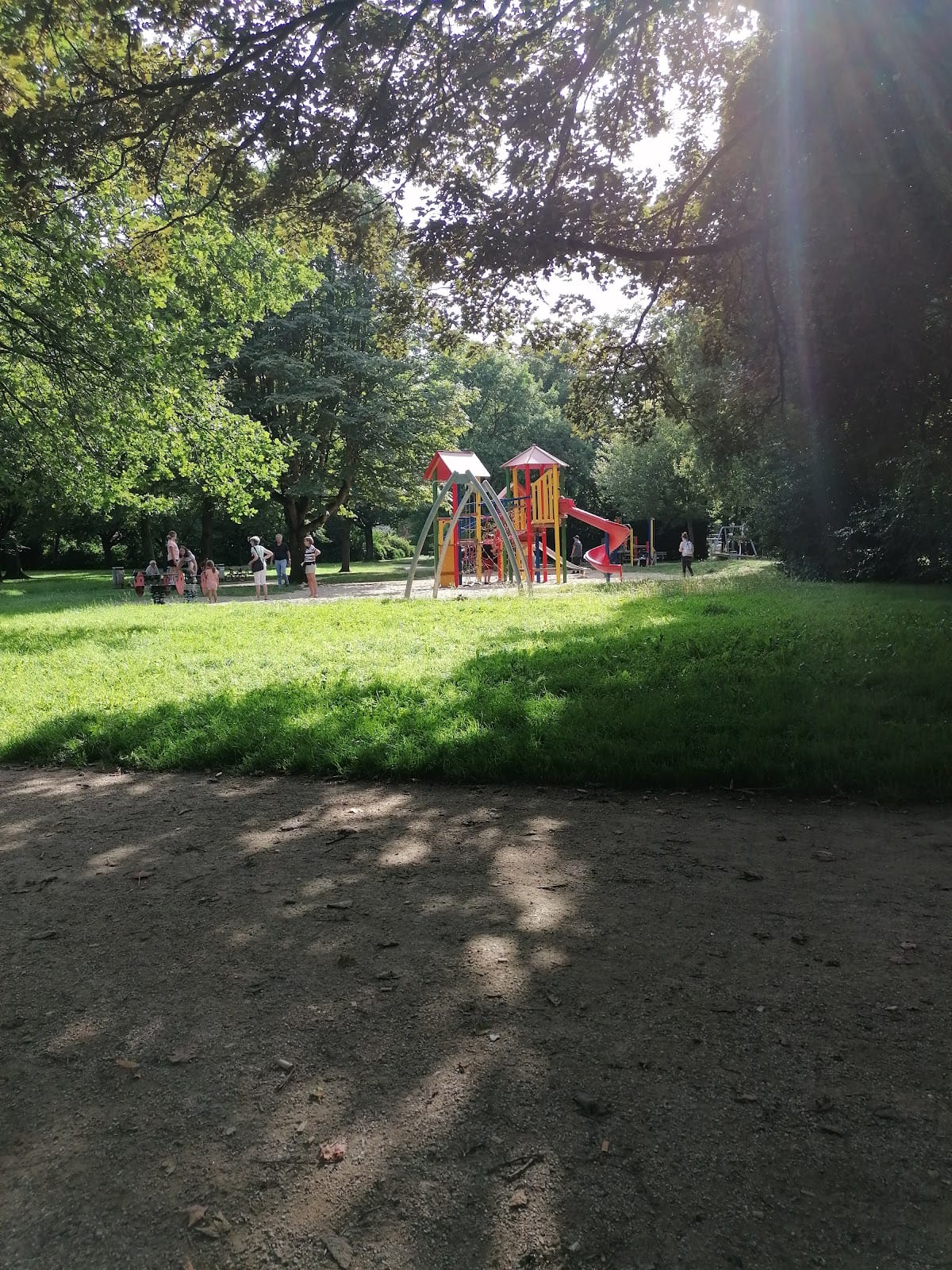
The castle is encircled by a path with benches, and ground lights illuminate the ruin in the evening. The adjacent primary school uses Burg Hüls as an outdoor “green classroom,” connecting the surviving historic structure with local education and the surrounding park.
Nearby sites