Burg Hohenstein: A Medieval Rock Castle in Germany


Site at a Glance
- Rating
- 4.5
- Popularity
- Low
- Country
- Germany
- Primary era
- Medieval
- External website
- Open
- Eras represented
- Medieval
- Civilizations
- Holy Roman Empire
- Site type
- Military
- Remains
- Castle
On this page9 sections
History
Burg Hohenstein is a ruined medieval rock castle in Germany, probably built between 1190 and 1230 by the Counts of Katzenelnbogen. From 1260, it served as the residence of the younger line of this medieval comital dynasty, whose possessions included the county associated with the castle.
The Katzenelnbogen residence
Count Johann III of Katzenelnbogen ordered a major expansion around 1422. The complex is thought to have been destroyed or heavily damaged during conflicts with the Counts of Nassau in the early fifteenth century. These events formed part of a period in which control of fortified residences was contested among the region’s ruling families.
When Philipp of Katzenelnbogen died in 1479, the male line of the counts became extinct. The inheritance passed through his heiress Anna, who was married to Landgrave Heinrich III of Hesse-Marburg. As a result, the entire County of Katzenelnbogen, including Burg Hohenstein, became part of the Landgraviate of Hesse, a major territorial principality ruled by a landgrave, a rank comparable to that of a prince.
Restoration and destruction
Around 1604, Landgrave Moritz of Hesse-Kassel arranged for the neglected castle to be restored. He stayed there frequently around 1616, giving the complex a renewed role within the landgrave’s possessions.
In 1647, the castle was caught up in the Hessian War, a conflict between the Hesse-Kassel and Hesse-Darmstadt branches during the Thirty Years’ War, the wider European conflict fought from 1618 to 1648. Hesse-Kassel troops fired on Burg Hohenstein, setting it alight and severely damaging the complex. Parts of the castle continued to receive structural maintenance until 1778, after which they too fell into ruin.
Modern stewardship
Since 1949, Burg Hohenstein has been owned by the State of Hesse and administered by the State Palaces and Gardens of Hesse. The castle is protected as a cultural heritage monument in Hesse. Hotel and restaurant operations were established there in 1968, but this gastronomic use ended in 2015 when the lease was terminated.
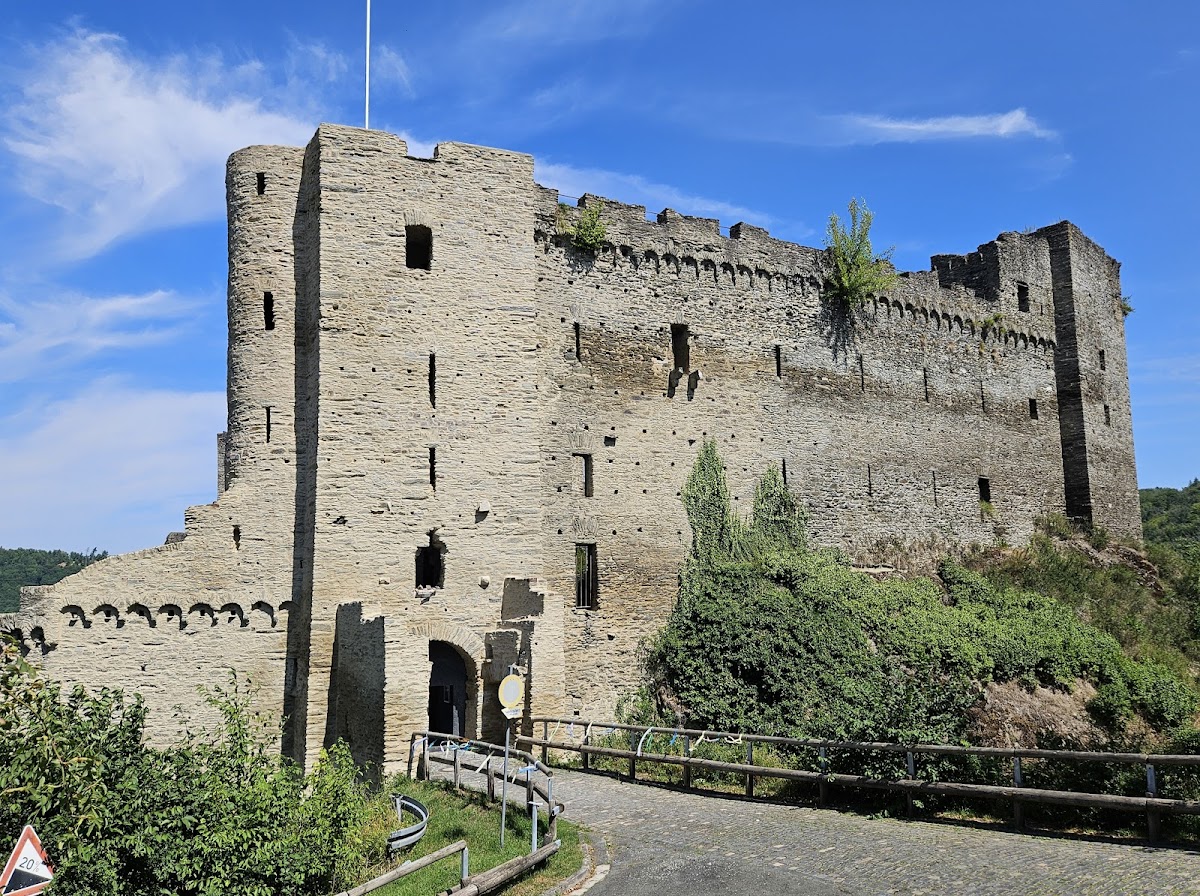
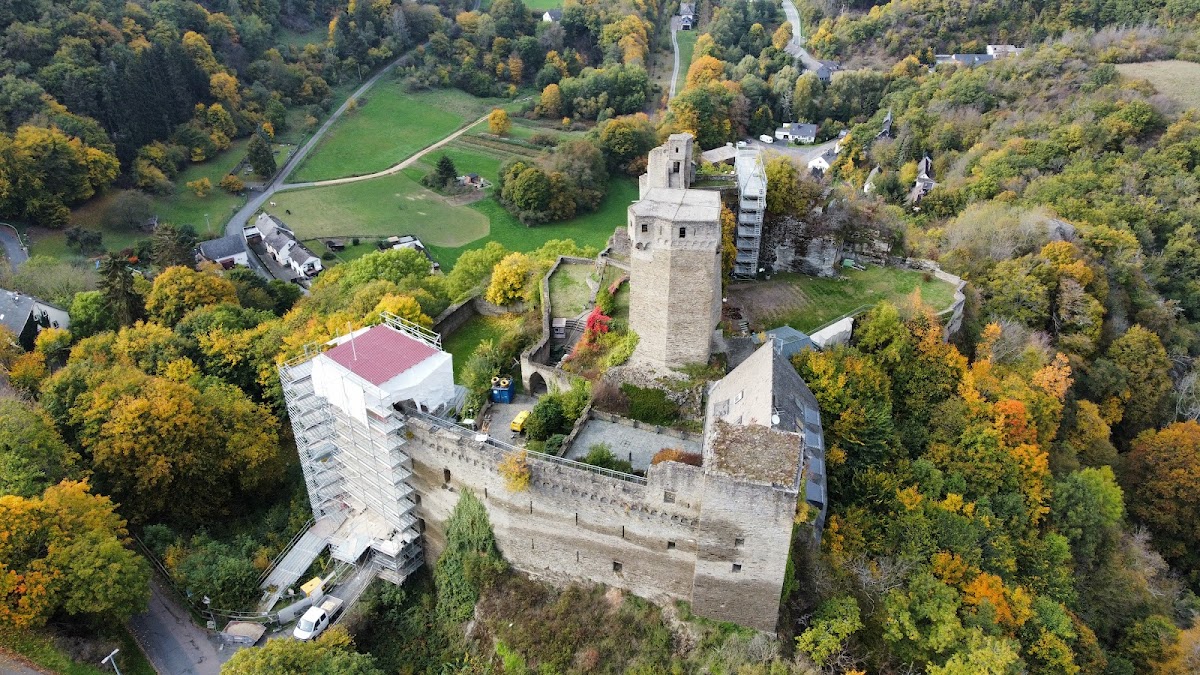
Conservation work from 2020 concentrated on the medieval gate tower and the adjoining curtain wall, a wall that encloses or connects parts of a fortified complex. Unsuitable cement mortar from an earlier intervention was removed and replaced. In 2023, trees and shrubs were cleared from the masonry and from a five-metre-wide strip around the castle. This reduced vegetation-related damage and allowed a drone-based laser survey, providing a new basis for future conservation because the latest existing building plans had dated from 1608.
Remains
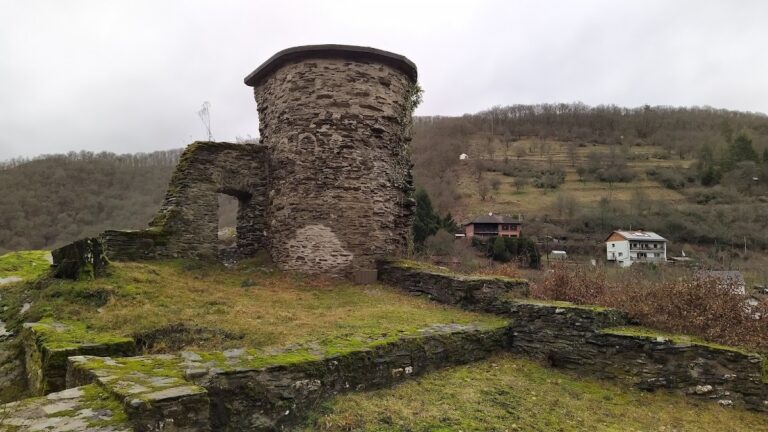
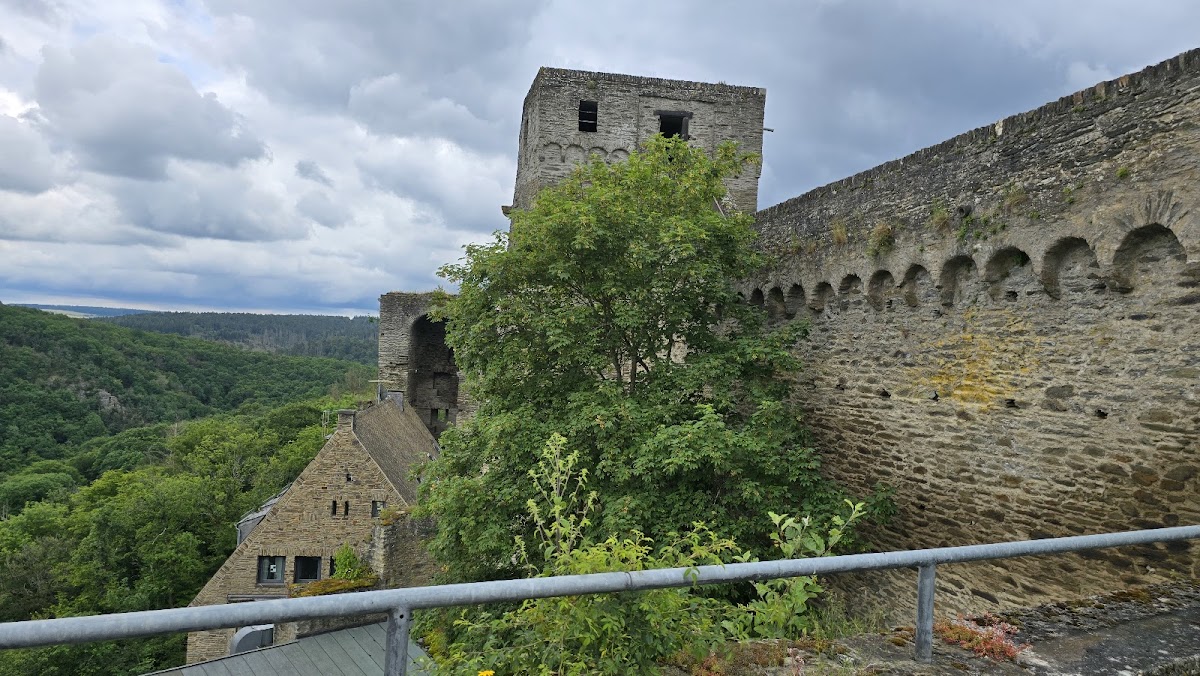
Burg Hohenstein is a ruined rock castle at approximately 330 metres above sea level. Its surviving defenses are arranged around an outer late Gothic shield wall and an inner shield wall from the thirteenth century. A shield wall is a heavily fortified barrier protecting a castle’s most vulnerable side. Each of the two walls is flanked by two towers, while the inner wall contains the keep and a wall walk, a protected walkway along the top of a defensive wall.
Fortifications
Outer shield wall and gate tower
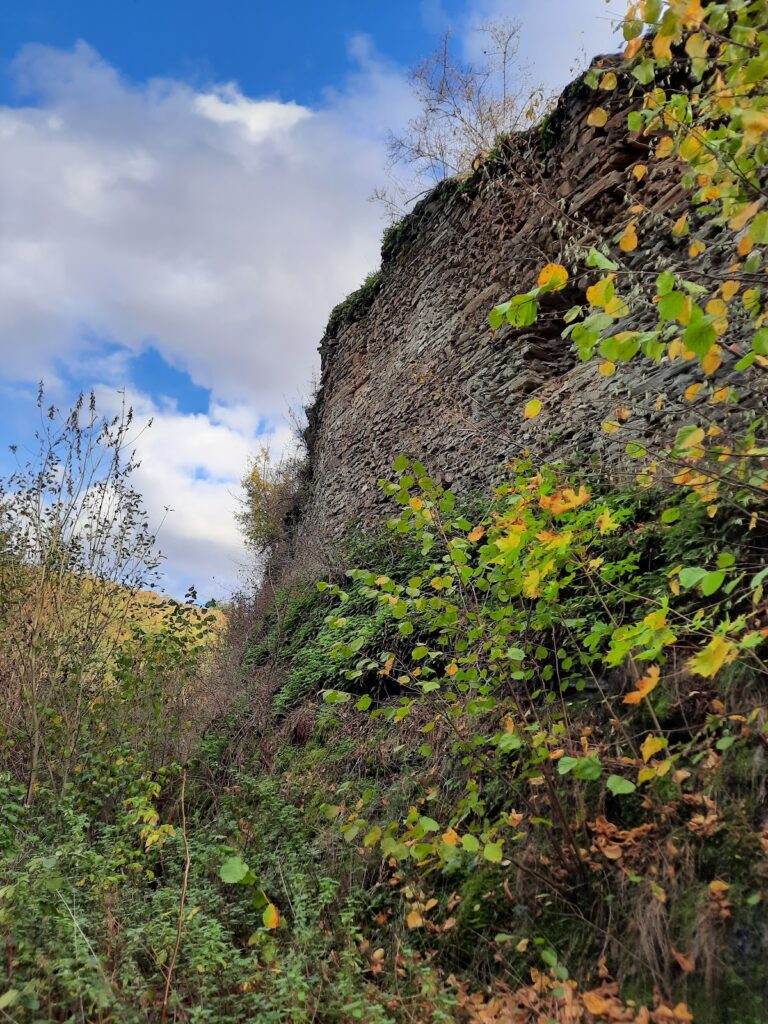
The outer shield wall belongs to the late Gothic phase of the castle and incorporates a medieval gate tower. The tower and the adjoining curtain wall retain masonry that was repointed during conservation work beginning in 2020. Their surviving fabric forms part of the principal defensive enclosure.
Inner shield wall and keep
The inner shield wall dates from the thirteenth century and includes the keep, the castle’s principal fortified tower. Narrow spiral staircases provide access to the keep and to the defensive walks on both shield walls, preserving connections between the main tower and the fortified walls.
Residential remains and associated defenses
The former residential buildings have disappeared, and the remains of the palas, the principal residential and representative building of a medieval castle, collapsed in 1864. A nearby ruin identified as Burg Greifenstein may have had defensive works integrated with those of Burg Hohenstein, although that relationship remains probable rather than certain.