Brnky Castle: A Renaissance Castle in Czechia
Site at a Glance
- Popularity
- Medium
- Country
- Czechia
- Primary era
- Early Modern
- Eras represented
- Medieval, Early Modern
- Civilizations
- Habsburg, Habsburg Austria, Holy Roman Empire, Kingdom of Bohemia
- Site type
- Domestic
- Remains
- Castle
On this page9 sections
History
Brnky Castle is a seventeenth-century castle in the village of Brnky, part of Zdiby in Czechia. Its Renaissance form developed from a fortified manor with Gothic origins and acquired Baroque elements; the Jesuits completed it in 1662.
Early records and lordship
Brnky first appears in a forged charter associated with the Benedictine convent of St. George at Prague Castle. Dated 1233, the charter claimed that Pope Gregory IX had placed the village under his protection in 1227. In 1406, its inhabitants paid dues to the Benedictine monastery at Břevnov. The Benedictines are a Catholic monastic order.
During the Hussite conflicts, fifteenth-century struggles in Bohemia linked to the religious movement inspired by reformer Jan Hus, Brnky came under the municipal government of Prague’s Old Town. Emperor Sigismund and his successors confirmed that arrangement. Martin of Nová Ves in Moravia acquired the estate in 1538. His sons, Martin and Havel Moravec, later refused to give up their inherited farmstead to a new owner. The owner seized the fortified residence with a large armed group and, threatening to behead them, compelled the brothers to accept his authority.
Following an unsuccessful revolt against Habsburg rule in 1547, the estate was confiscated from the Old Town. It was sold in 1550 to Jan the Elder Kalenický of Kalenice, who made Brnky his residence.
The castle and changing owners
In 1591, Jan’s son Jáchym sold the estate to Kunrát Majer of Poksdorf. The transaction marks the first explicit mention of the local fortress in the Bohemian land registers, formal records of property ownership and related legal dealings. From 1591 to 1602, Jáchym was involved in a legal dispute with Martin Moravec and, after Martin’s death, his wife Anna. In 1602, Emperor Rudolf II awarded Anna compensation of about one-tenth of the original price.
Brnky was plundered during the Thirty Years’ War, a major European conflict fought from 1618 to 1648. In 1641, the estate, including the fortress and its adjoining stretch of the Vltava bank, was sold to Prague New Town physician Jan Křtitel Birka of Birkenštejn and his wife, Apolena Víznerová of Nevítkov. They probably began turning the fortress into a castle. In 1661, the couple sold the property to Jan of Vrbno, rector of the Jesuit College in Prague’s New Town, and his successors. Jesuits are members of a Catholic religious order with a tradition of education and missionary work. Their purchase followed disputes with the Liechtenstein administration of the Roztoky estate over use of the riverbank. The Jesuits completed the castle in 1662.
The estate passed through several aristocratic hands, apparently in part because of the continuing dispute with Roztoky. The Putz family of Adlersthurn sold it in 1721 to Field Marshal Damián Sickingen, who apparently settled the dispute around 1723. The Caretto-Millesimo family held the village from 1764 to 1808. Zdiby innkeeper František Vobořil, who also owned nearby Klecany, then bought it and sold it about twenty years later to Prague burgher Jan Gallus.
Martin Brabec of Prague was listed as owner in 1861, when the estate included the castle, a distillery, a brewery, and a farm operated as part of the estate. The castle chapel was decommissioned in 1892.
Recent ownership
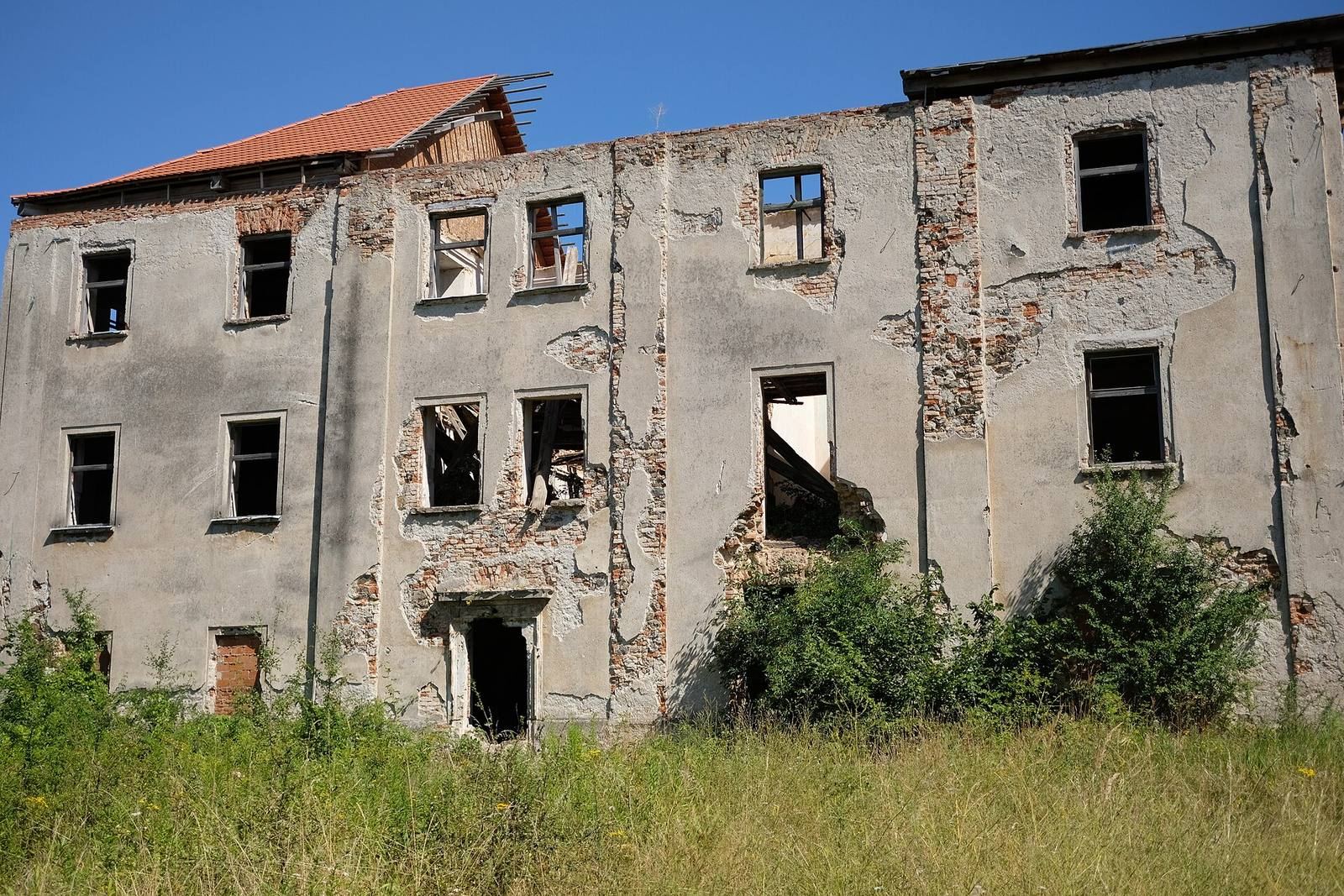
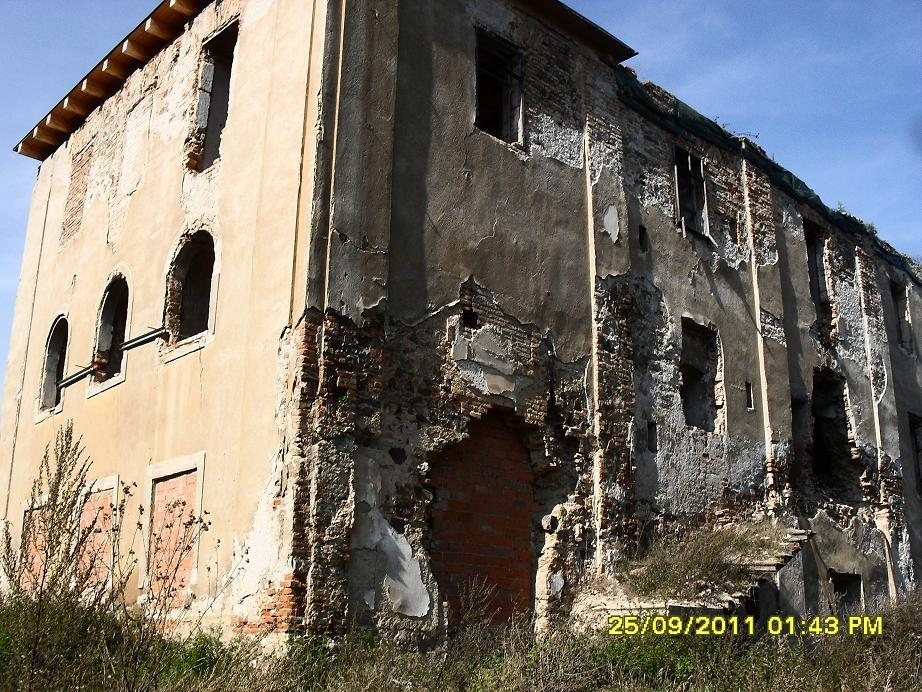
After 1989, Jan Caha acquired the castle and surrounding land through restitution, the return of property confiscated under Communist rule to former owners or their heirs. Unable to fund repairs to the badly damaged building, he transferred it in 2007 for one Czech crown to the Association for the Restoration and Operation of Brnky Castle. After a change in the association’s leadership, its new representatives offered the property to the Czech Orthodox Church, an Eastern Orthodox church. In December 2019, the church’s Prague Archbishop Michal Dandár bought the ruin for 10 million Czech crowns.
The property was subject to a lien securing a claim of 109 million Czech crowns held by UK-based Silverdime Limited. The lien was connected to a loan provided by Moravia Bank in the 1990s. The Czech Orthodox Church was identified as the owner in 2020.
Remains
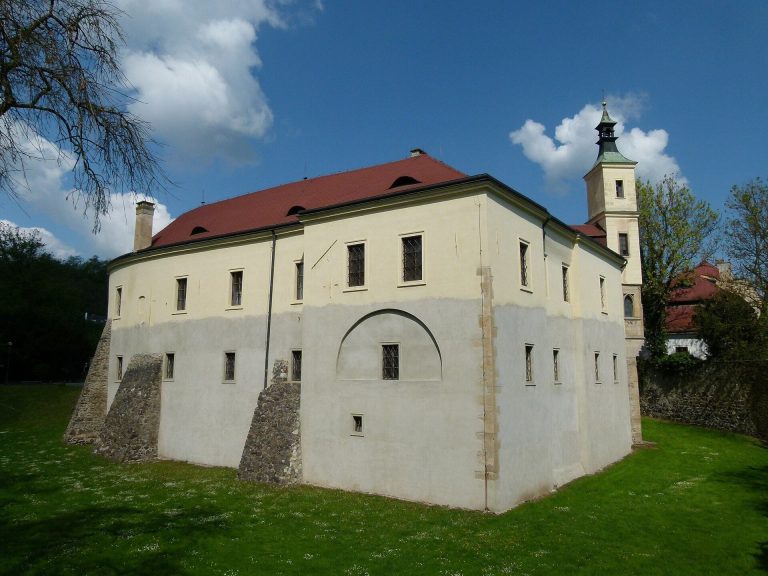
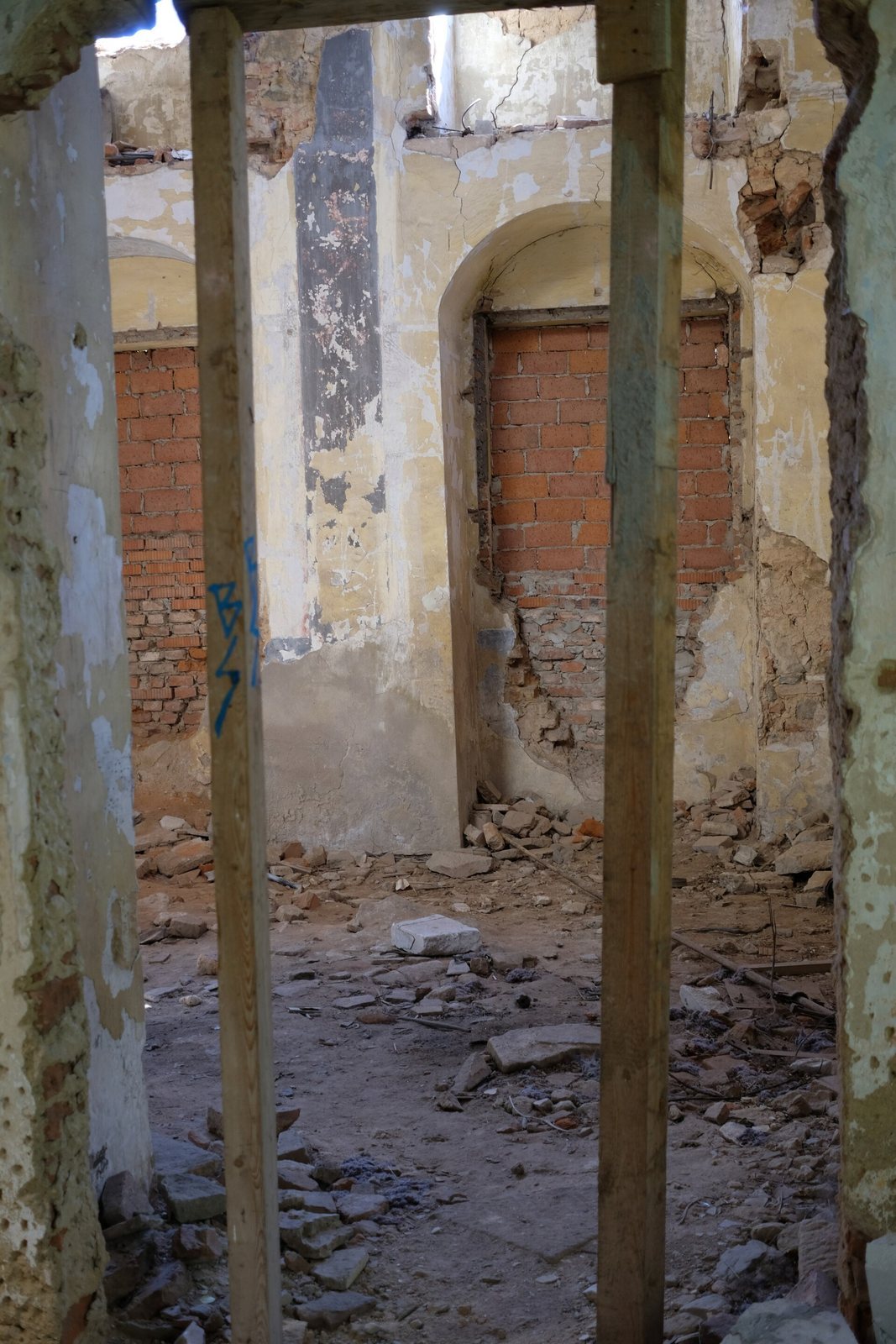
The surviving castle is a rectangular, two-storey building arranged around an inner courtyard. Its masonry incorporates parts of the earlier fortified manor.
Surviving architecture
Main building
The main façade is divided by flat vertical bands and has rectangular windows. Its entrance has ear-shaped decoration and a moulded triangular top supported by two scroll-shaped brackets. On the east-facing rear façade, which looks toward an orchard, a column-supported covered gallery has a balcony above it.
Chapel
A richly moulded separate doorway at the southern corner of the west façade leads to the chapel. An oratory, a space set aside for prayer, occupies part of the chapel’s north wall at upper-floor level. The vaulted ceiling has elaborate stucco decoration that extends onto large column tops imitating the ornate Corinthian style.
Park
In 2020, the surrounding park was neglected and overgrown with self-seeded trees.