Brig o’ Balgownie: A Medieval Bridge over the River Don
Site at a Glance
- Popularity
- High
- Country
- United Kingdom
- Primary era
- Medieval
- Eras represented
- Medieval
- Civilizations
- Kingdom of Scotland
- Site type
- Infrastructure
- Remains
- Bridge
On this page5 sections
History
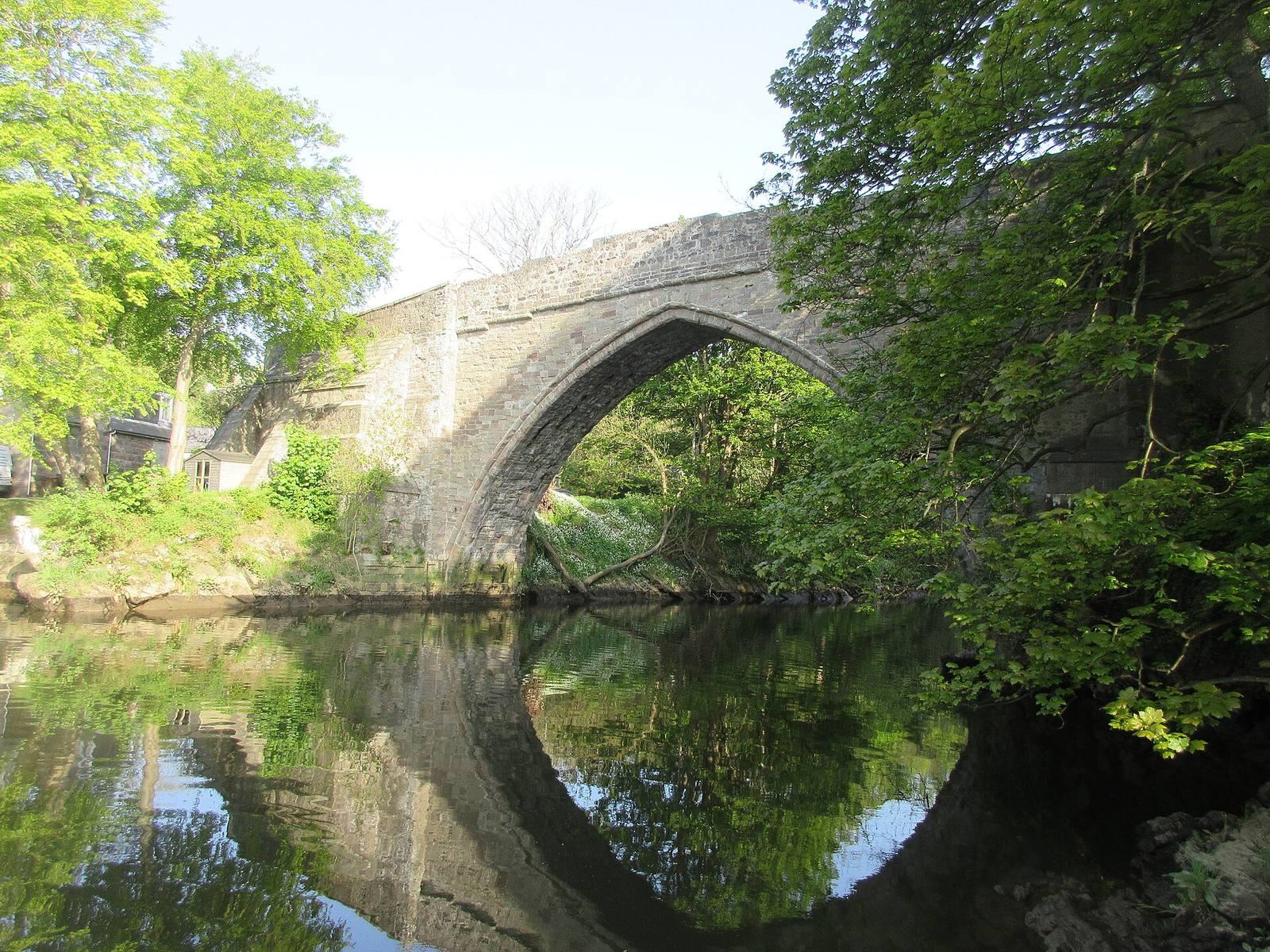
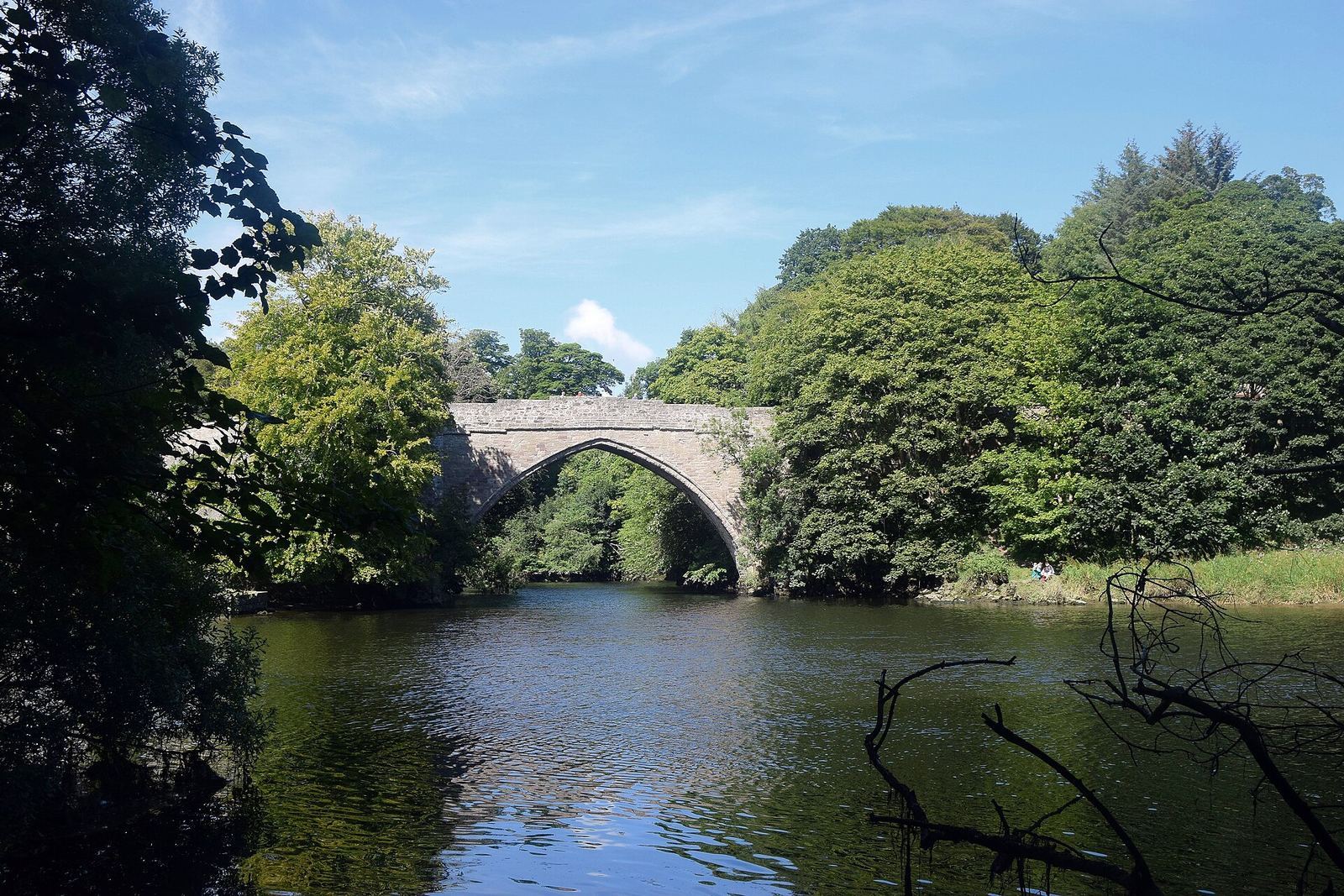
The Brig o’ Balgownie is a medieval bridge over the River Don at Old Aberdeen in Scotland, United Kingdom. Built with a Gothic arch, a form associated with medieval Gothic design, it is said to have been started in the late 13th century and completed in 1320, during the Scottish Wars of Independence, conflicts over Scotland’s independence. Its precise construction date is uncertain. The bridge is described as Scotland’s oldest standing bridge and served for five centuries as a route into Aberdeen.
Construction and competing traditions
The earliest written account of the bridge’s origins appears in a 1605 charter by Sir Alexander Hay, which says that Robert the Bruce, king of Scotland, ordered and paid for its construction. About six decades later, Parson Gordon described a tradition that Bruce financed the work with revenues taken from Bishop Henry Cheyne after expelling him. Neither account identifies Cheyne as the builder. Later tellings variously credit Cheyne with starting or completing the bridge, but do not establish who built it.
Richard Cementarius is also commonly linked to the bridge, although this attribution is regarded as a modern tradition. He was a mason and burgess, a citizen with civic rights, recorded in 1264 in connection with work at Aberdeen Castle. Records do not identify him as Aberdeen’s provost, the burgh’s chief civic officer, despite that title sometimes being applied to him. He was probably alive in 1277 and had died by 1294, so he could have worked on the bridge only if construction began before then. The proposed connection partly rests on a resemblance to an arch at Drum Castle, whose attribution to Cementarius is also unproven; the similarity could reflect a building style shared by both structures.
Maintenance and changing routes
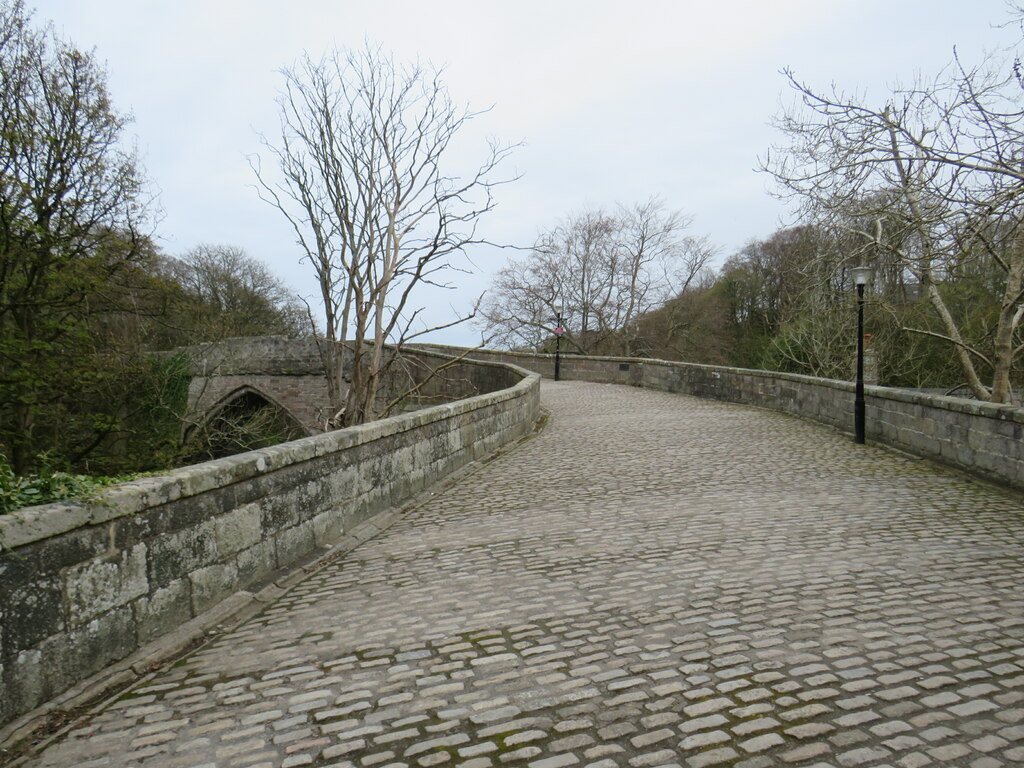
Before 1605 the bridge had no regular maintenance fund, and limited resources meant some repairs were temporary. By that year it had deteriorated badly. Hay established a fund for its upkeep, and other contributors helped pay for extensive renovation between 1607 and 1611. The fund first paid for new cobblestones in 1616 and has since been maintained by Aberdeen City Council.
For five centuries the bridge provided the only route from the north into Aberdeen. It also carried trade and enabled troops to move rapidly along Aberdeenshire’s east coast. In 1830 a separate Bridge of Don was built about 460 metres downstream, after which the older bridge no longer carried the main road.
Name and later recognition
The name combines the Scots words brig, meaning “bridge,” and o’, meaning “of.” Balgownie comes from the surrounding district, an early territorial estate. The district name is recorded by 1256 and may be older, but its Gaelic origins are disputed. Proposed interpretations connect its first element with either a pool or a town, and its second with either a cattle-fold or a smith.
Lord Byron referred to the bridge in the tenth canto of his narrative poem Don Juan, writing, “The Dee, the Don, Balgounie’s brig’s black wall.” In 1967 the bridge was designated a Category A listed building, Scotland’s highest listed-building category for structures of special architectural or historic interest.
Remains
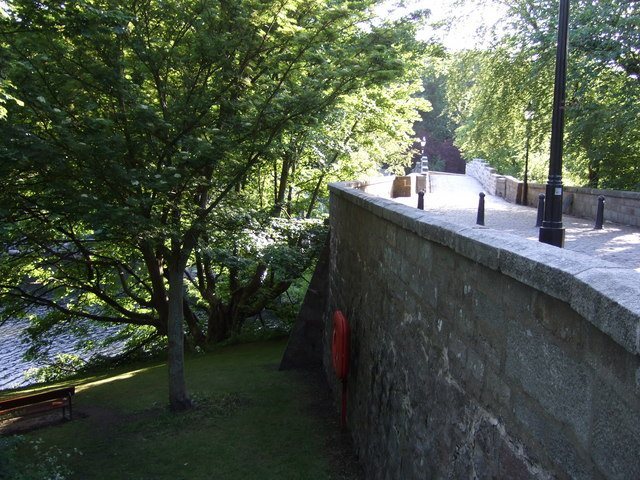
The bridge is a single-span Gothic arch crossing the River Don. Built of granite and sandstone, it is about 3.2 metres wide; its span exceeds 21 metres, and the arch apex rises about 12 metres above the waterline. The bridge continues to carry pedestrians and cyclists.