King’s College in Aberdeen: A Historic Scottish University
Site at a Glance
- Popularity
- High
- Country
- United Kingdom
- Primary era
- Medieval
- Eras represented
- Medieval, Early Modern, Modern
- Civilizations
- British, Kingdom of Scotland
- Site type
- Civic
- Remains
- University
On this page13 sections
History
King’s College in Aberdeen is a historic university in Aberdeen, Scotland, United Kingdom, founded in 1495 as an independent institution. It was Aberdeen’s first university, Scotland’s third and the fifth in the British Isles; it is now part of the University of Aberdeen.
Foundation and early development
In 1495, William Elphinstone, Bishop of Aberdeen, petitioned Pope Alexander VI on behalf of King James IV to establish a university. Elphinstone sought to address what he considered widespread ignorance in his parish and across the north. A papal bull, a formal document issued by the pope, founded the university on 19 February. A royal charter followed later that year, recognizing Aberdeen as equal in status to the universities at Glasgow and St Andrews.
Elphinstone based the institution on continental European university traditions. Hector Boece, a Scottish scholar and historian who had taught at the University of Paris, became its first principal. University life began in earnest in 1509, when Elphinstone issued a charter. By 1514, the university had about 42 staff members and students.
Reform and rivalry
After the Reformation, the sixteenth-century movement that reshaped Western Christianity and established Protestant churches, King’s lost its Roman Catholic staff but largely retained its existing methods. George Keith, fifth Earl Marischal, supported educational reforms associated with the French philosopher Peter Ramus. In April 1593, Keith founded Marischal College as a second university in Aberdeen. King’s authorities refused an initial proposal that Marischal’s principal help choose its academics, a dispute that began the institutions’ rivalry.
Political upheaval
King’s supported the Jacobite cause, which sought to restore the Stuart dynasty to the British throne. After the defeat of the 1715 Jacobite rising, the college, like Marischal, underwent a major purge of its academics and officials.
Campus growth and later use
King’s historic buildings were renovated or rebuilt during the eighteenth and nineteenth centuries. Expansion in the early twentieth century added buildings around the old core. The university later acquired surrounding land, and further construction greatly enlarged the campus during the later twentieth century, extending it from the High Street.
From 28 to 30 May 2002, the Scottish Parliament met at King’s while the Church of Scotland’s General Assembly, its principal governing body, convened at New College in Edinburgh. The assembly hall there had been lent to Parliament during construction of the new parliament building at Holyrood. During its stay, the Queen addressed Parliament as part of her Golden Jubilee tour of the United Kingdom.
Remains
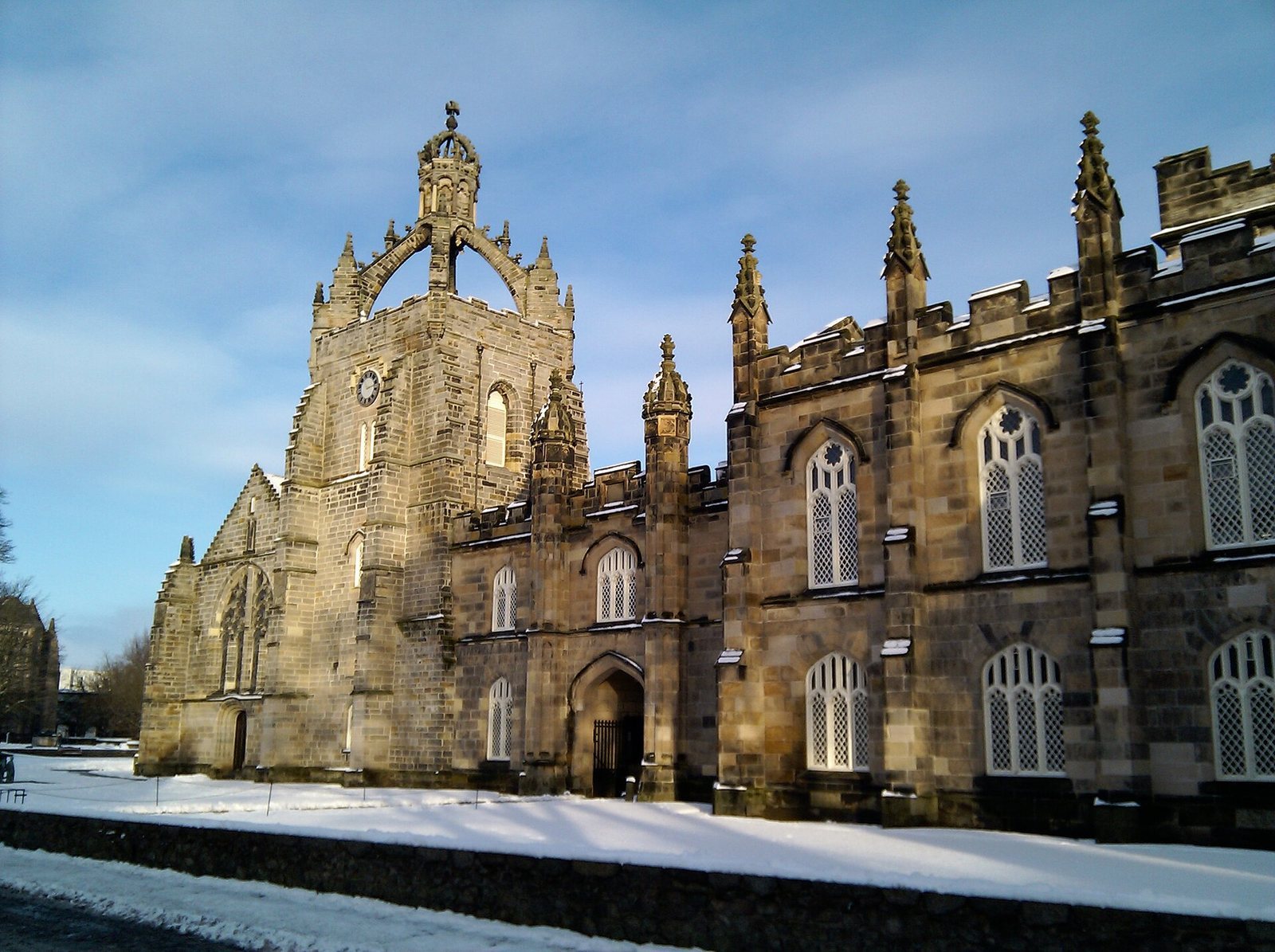
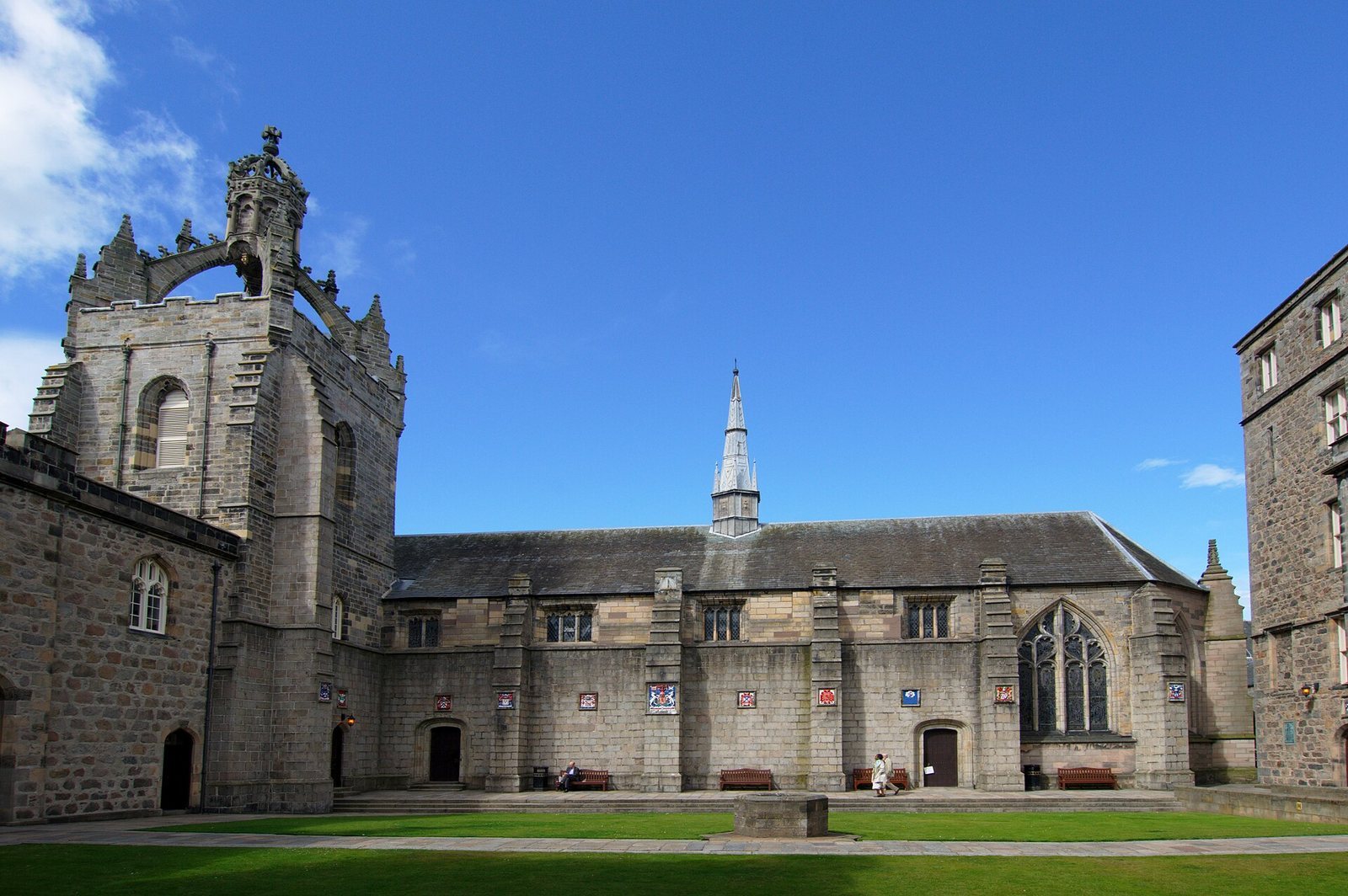
The historic college is organized around an original quadrangle, with later university buildings extending beyond the early core. The main college buildings were raised on large oak beams that supported construction over marshy ground.
The original college buildings
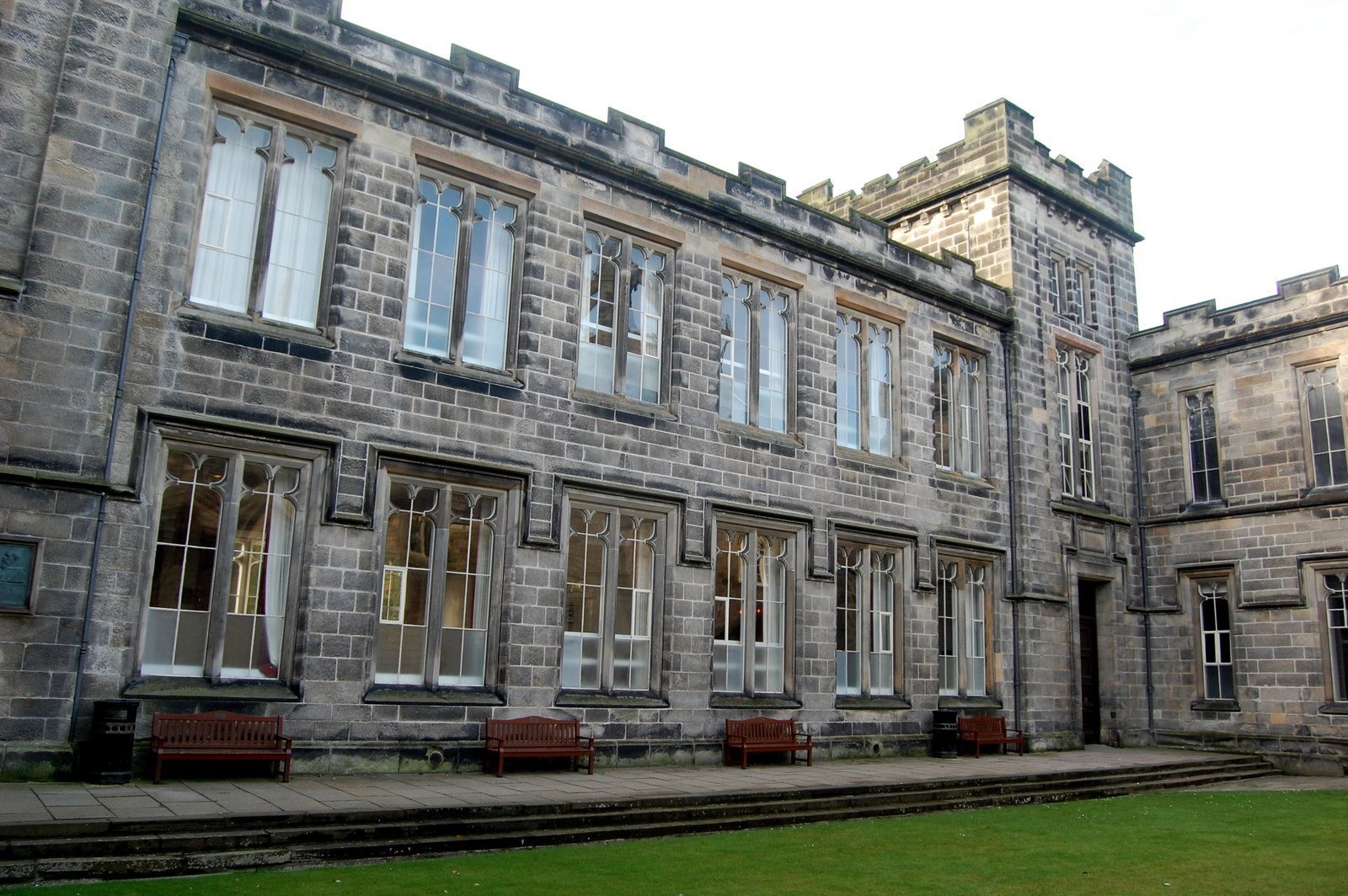
The original quadrangle survives and includes the university chapel and a large conference centre. The rear of the college serves as a sports pavilion, while its historic buildings also accommodate teaching, academic departments and other university activities.
King’s College Chapel
The chapel, the oldest building in the college, forms the north side of the original quadrangle and remains the University of Aberdeen’s main chapel. Construction began in 1498, and it was consecrated in 1509. Dedicated to the Trinity, the Christian doctrine of one God in three persons, and the Nativity of the Virgin Mary, it was designed to evoke Solomon’s Temple, the temple in Jerusalem traditionally associated with the biblical King Solomon.
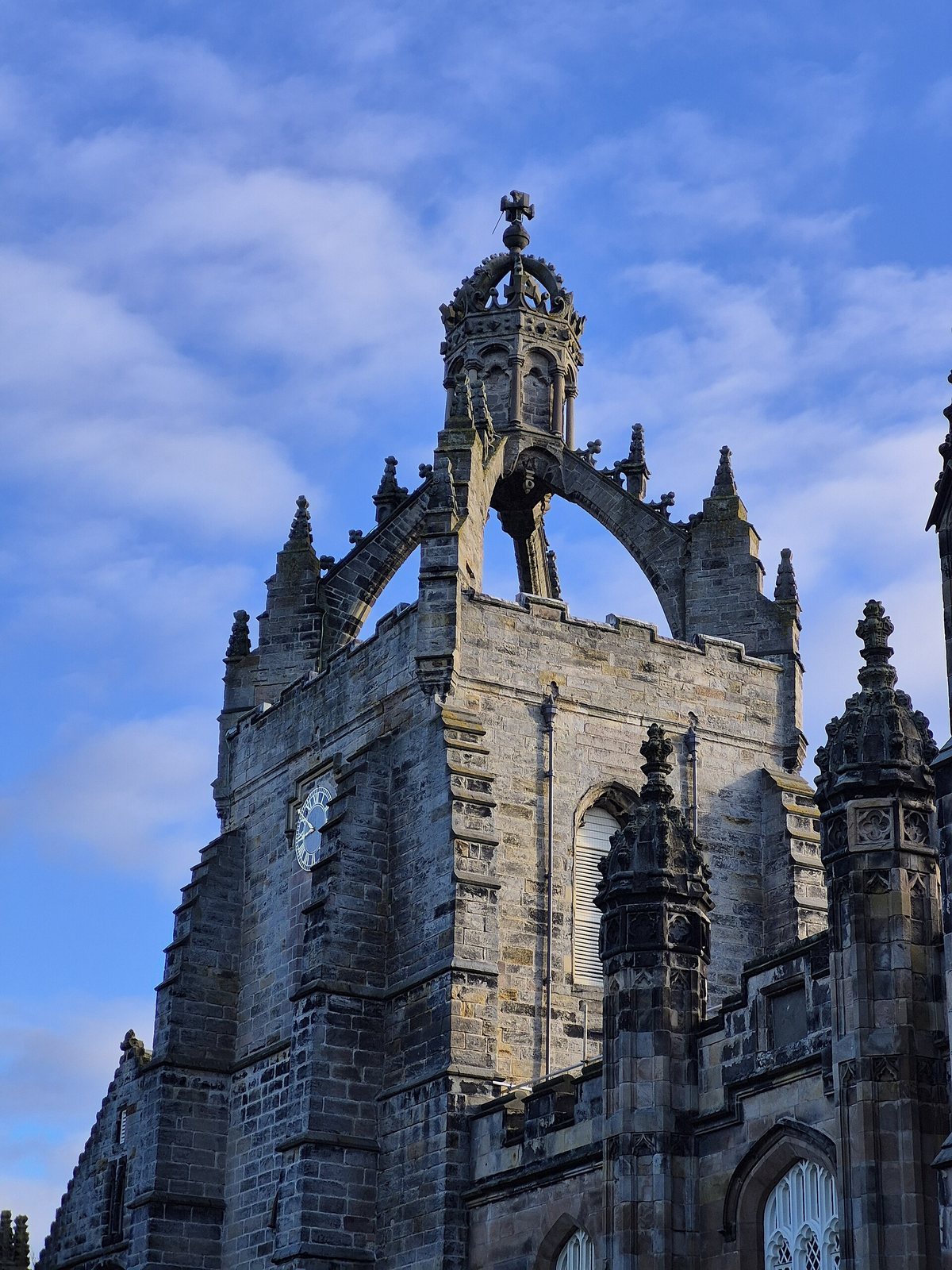
The chapel’s Crown Tower carries an enclosed imperial crown. A storm destroyed the original crown in 1633; the one now in place is a recreation. Its form has been understood as a claim to imperial status for the Scottish monarchy. Inside, the choir stalls and carved rood screen, a partition between the chancel and nave, date to about 1509. Together, they form Scotland’s most complete medieval church interior, and the chapel retains more medieval woodwork than any other Scottish church.
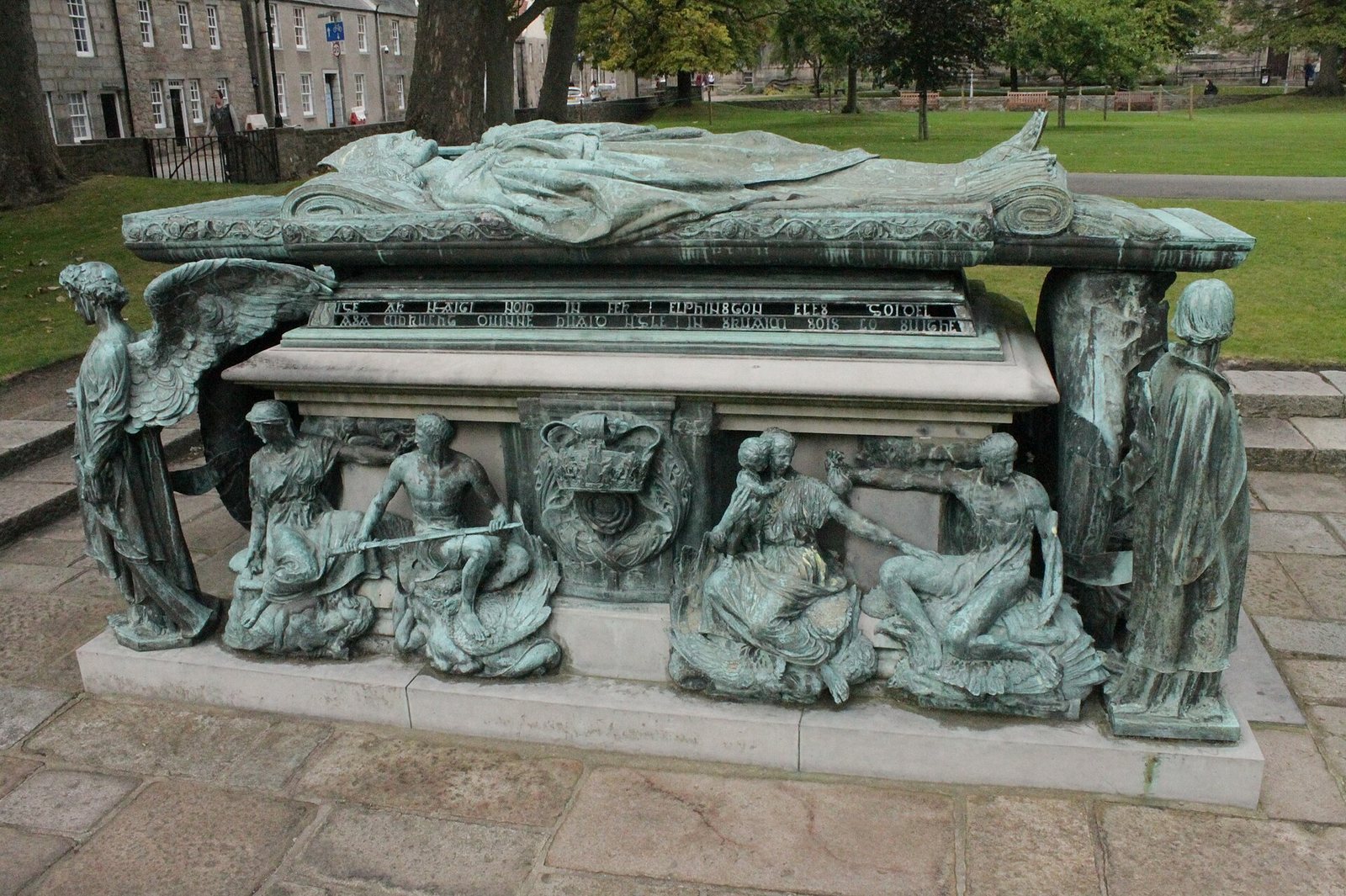
The chapel commemorates Scottish and British monarchs as well as the university’s patrons and founders, with its name recalling King James IV in particular. Bishop Elphinstone and Hector Boece were buried at the foot of the chancel; Elphinstone also has a larger tomb outside the college. Since 1928, the antechapel has served as the university’s war memorial. Its walls commemorate 524 students who died in the First and Second World Wars.
Cromwell Tower
Built during the 1650s and 1660s under the Commonwealth, the republican government established after Charles I’s execution, Cromwell Tower was completed after Charles II returned to the throne in 1660. It provided accommodation and contained an observatory in an ornate turret at its top.
Later campus buildings
The wider Old Aberdeen campus includes lawns, trees and flower displays. The university owns much of its land and buildings, while some properties are privately owned houses, shops and businesses serving the university community. Modern university buildings generally reflect the architectural periods in which they were built.
New King’s and Elphinstone Hall
The New Building, also called New King’s, dates to 1913. Elphinstone Hall was built in 1930 and connected to the original college buildings, creating an arrangement of two quadrangles. Its front faces outward. The hall’s lawn forms a central open space, with the High Street and New King’s bordering its other sides. The hall is used for functions, dining and examinations.
Former university library
The King’s College Conference Centre occupies the former university library and retains many of the building’s original features. It was established in 1991.
Science Teaching Hub
Completed in 2021 and first used for teaching in 2022, the Science Teaching Hub contains laboratories for biological sciences, chemistry, geosciences and medical sciences.