Bridge of Dee: Aberdeen’s Historic River Crossing
Site at a Glance
- Popularity
- Medium
- Country
- United Kingdom
- Primary era
- Early Modern
- Eras represented
- Early Modern, Modern
- Civilizations
- British, Kingdom of Scotland
- Site type
- Infrastructure
- Remains
- Bridge
On this page5 sections
History
Construction and early use
The Bridge of Dee is a road bridge over the River Dee in Aberdeen, United Kingdom, carrying the main road into the city from the south. Construction began around 1527, funded by a £20,000 bequest from Bishop William Elphinstone, a senior Christian cleric responsible for a diocese. Elphinstone died in 1514, and Bishop Gavin Dunbar completed the bridge.
The medieval Causey Mounth, a road used to move livestock, ran between Stonehaven and Aberdeen and passed near the bridge’s northern end. Its southern route connected the bridge to Stonehaven through Bourtreebush and Muchalls Castle. A chapel beside the bridge offered a resting place for pilgrims travelling to and from Aberdeen. In 1530, Gordon of Abergeldie petitioned Aberdeen Town Council, claiming the chapel obstructed his access to fishing rights in the river. After losing his case, he removed a bridge buttress to make a footpath for his men. The council, which owned the bridge, pursued legal action against him at Edinburgh High Court. Chaplain Sir William Ray made an inventory of the chapel.
Political conflicts
On 17 April 1589, George Gordon, 6th Earl of Huntly, and his Catholic supporters confronted King James VI of Scotland at the bridge during a rebellion against the king. No battle followed, and Huntly surrendered a few days later.
In 1639, Royalists, who supported the monarchy, under Viscount Aboyne fought Covenanters, a Scottish movement defending Presbyterian church government, led by the Earl of Montrose and the Earl Marischal. The clash took place after a peace treaty had been signed. It was the only substantial action of the First Bishops’ War, a conflict over episcopal authority in Scotland, and has also been described as the first battle of the Civil War. A Covenanter force of 9,000 men, led by Montrose and the Earl Marischal, travelled along the route to the engagement.
Rebuilding and civic role
The bridge was almost entirely rebuilt between 1718 and 1723, then widened in 1841. It stood at what had once been Aberdeen’s southern boundary and remained the city’s only southern access until 1832. The surrounding area also took its name from the crossing. The bridge received Category A listed status in 1967, Scotland’s highest listed-building category; its separate scheduled-monument status was removed on 16 February 2009.
Remains
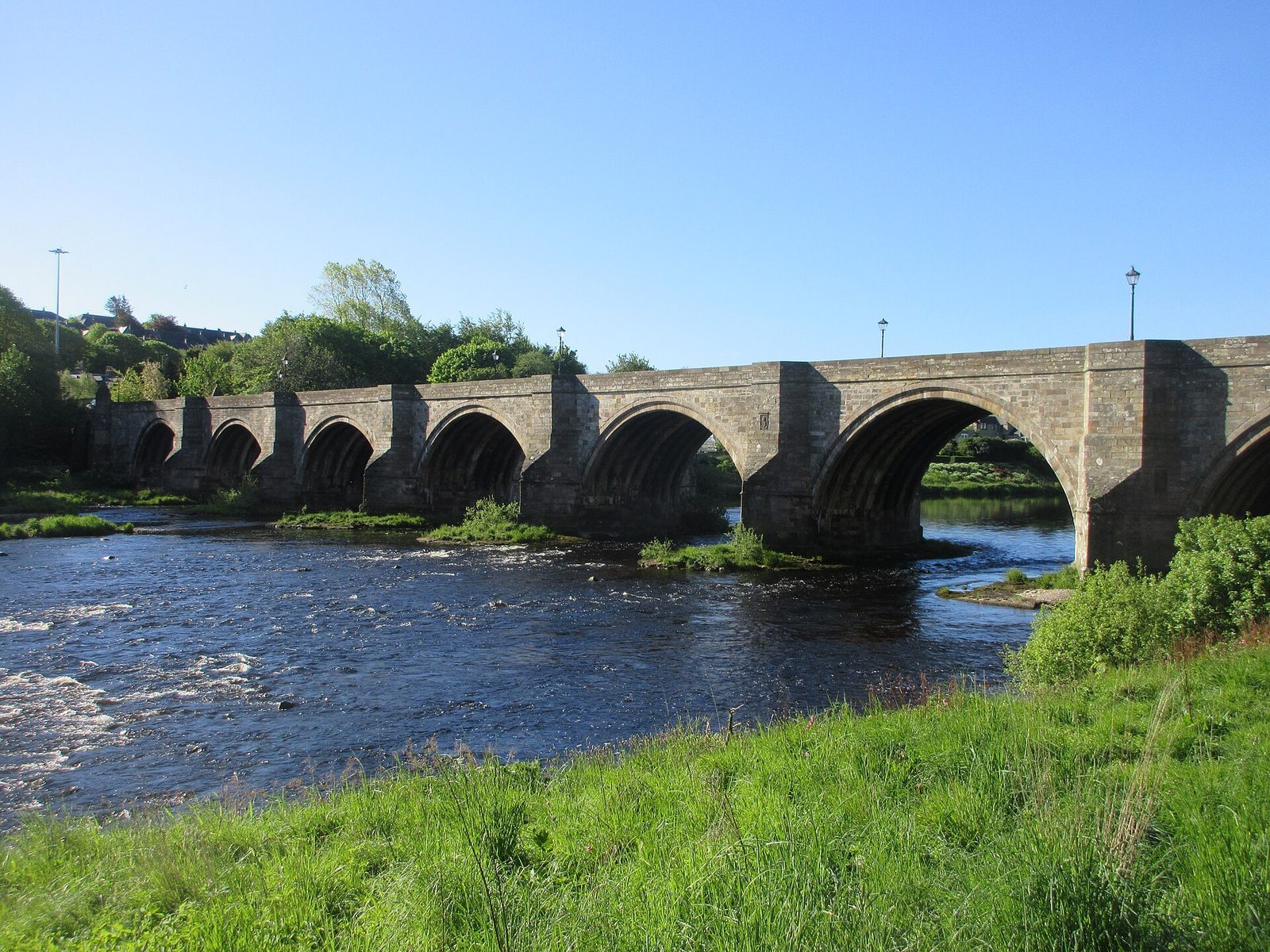
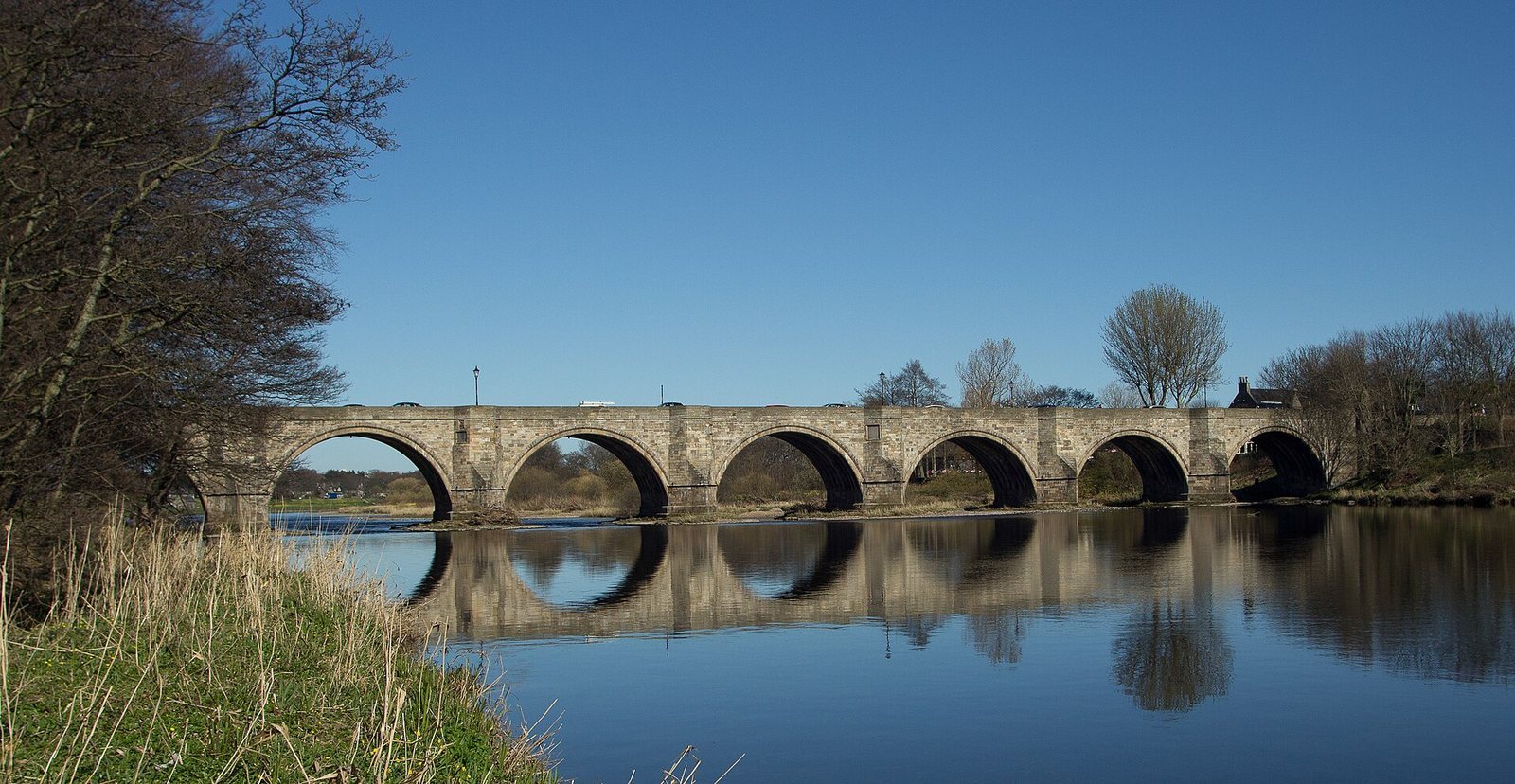
The Bridge of Dee crosses the river on seven nearly semicircular arches and stands about 10 metres above typical water level. Granite and Elgin sandstone form the structure, with projecting lengthwise masonry ribs that reinforce or articulate the arches. The bridge is about 8 metres wide, increased from its earlier width of roughly 4 metres during the 1841 widening. Sixteenth-century piers and coats of arms survive, along with passing places, spaces that allow traffic to pass on the bridge. A sundial is also part of the bridge ensemble.