Church of Saint Procopius (Letovice): A Gothic Parish Church in Czechia
Site at a Glance
- Rating
- 4.5
- Popularity
- Very Low
- Country
- Czechia
- Primary era
- Medieval
- External website
- Open
- Eras represented
- Medieval, Early Modern, Modern
- Civilizations
- Habsburg, Holy Roman Empire, Kingdom of Bohemia, Margraviate of Moravia
- Site type
- Religious
- Remains
- Church
On this page15 sections
History
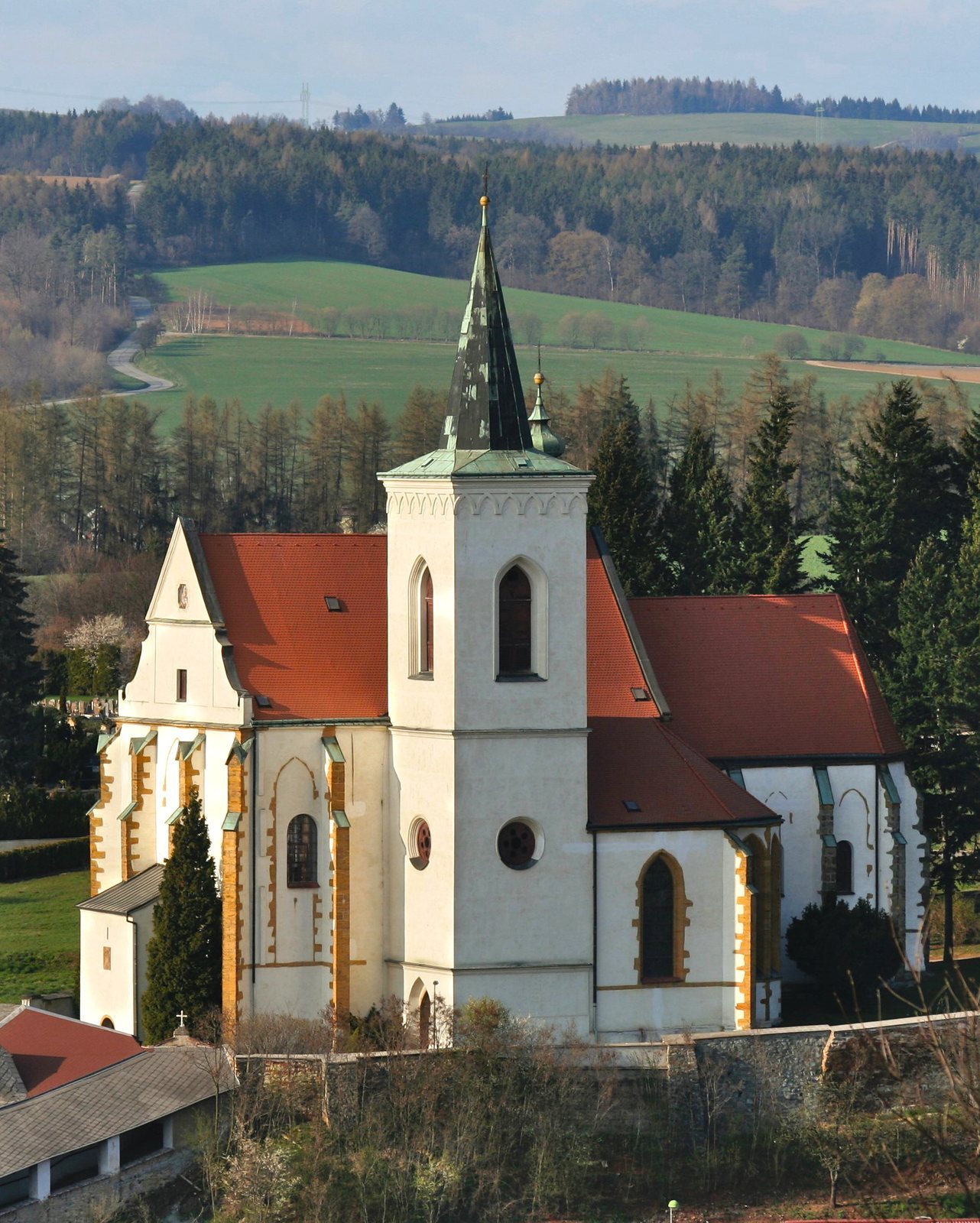
The Church of Saint Procopius (Letovice) is a Roman Catholic parish church in Czechia, probably built in the last quarter of the fourteenth century in the Gothic style. An earlier church probably stood in Letovice by the thirteenth century and is mentioned in 1353. The present building belongs to the Diocese of Brno, within the Moravian ecclesiastical province and the Boskovice Deanery. Dedicated to Saint Procopius, a medieval Christian saint and abbot who became a major patron of Bohemia and Moravia, it remains one of Letovice’s landmarks.
Medieval foundation
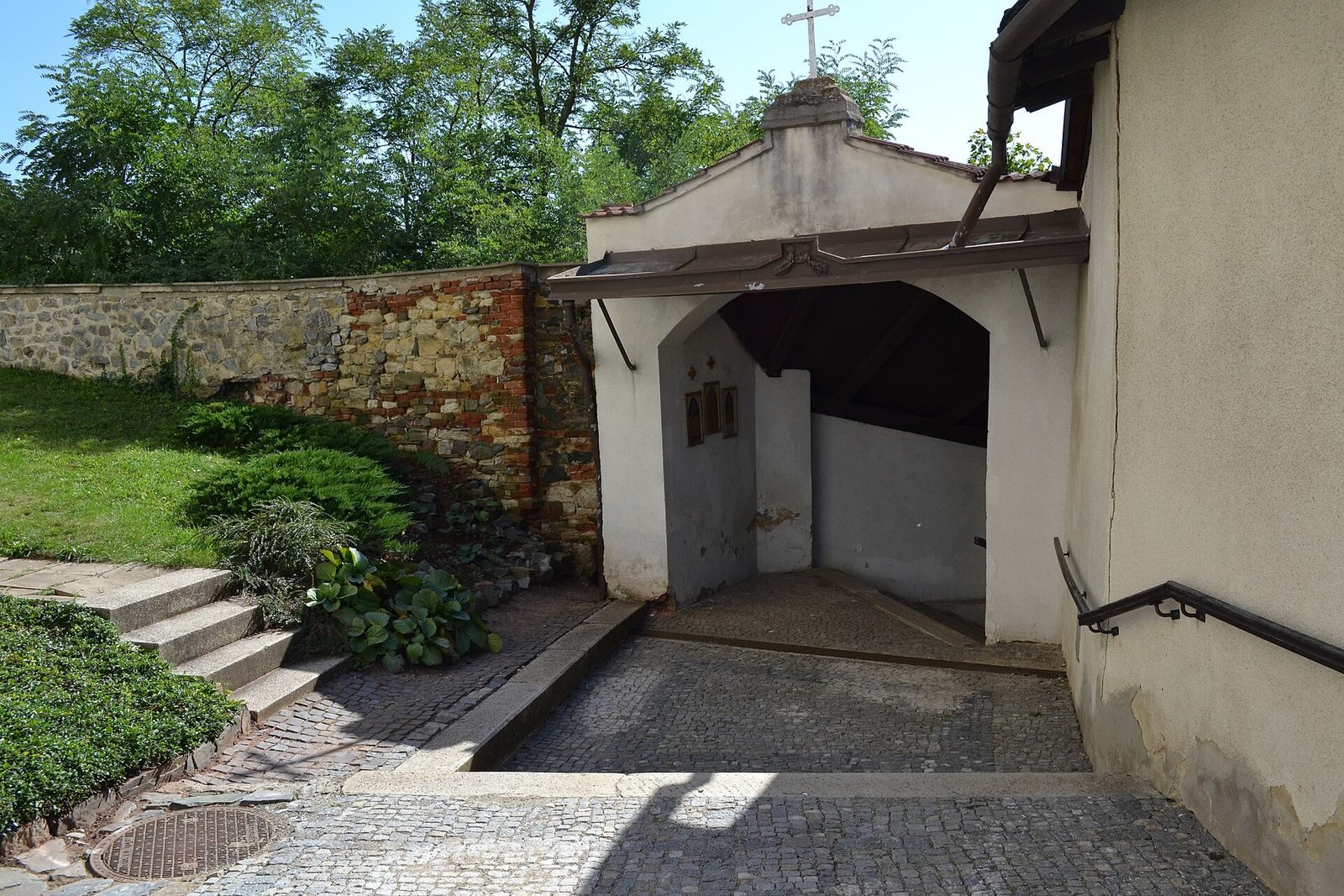
The original fourteenth-century project was not completed in every intended form. The chancel, Marian chapel, and sacristy were finished, while the planned nave vault was never constructed. The nave instead received a flat beam ceiling. A fourteenth-century rectory and a covered passage known as a fortna, meaning a pedestrian route connecting a town with a church or religious institution, formed part of the wider church complex.
Baroque rebuilding
When Letovice was held by George Pohronec-Slepčiansky, Archbishop of Esztergom, the church was rebuilt between 1668 and 1685. This Baroque transformation, using a more unified and richly treated spatial approach, removed the earlier chancel vault and nave ceiling and replaced them with a single barrel vault. The Gothic windows were walled up and replaced by openings with semicircular arches. The rebuilding also introduced a music gallery, a Baroque gable on the western facade, and an entrance vestibule.
Nineteenth- and twentieth-century changes
Further alterations reshaped the building in the nineteenth century. The lower parts of the windows were bricked up in 1840. In 1847, a Neo-Gothic tower replaced the earlier low Gothic turret, and the southern nave entrance was closed in favour of a new portal on the north side. The bells were moved into the new tower after its construction and hung there in 1859. Facade work in 1934 revealed the original Gothic window reveals. The fortna was repaired in 1920.
The interior was painted in 1932 by Jan Daněk, who represented all the Czech saints. The organ was repaired, painted, and gilded in 1858. The crypt contains tombstones belonging to the lords of Hardeka, Lomnice, and Vojenice, together with those of local lesser nobles. The church’s history is also associated with a local story about a bell carried by floodwater from Bohuňov. According to the tradition, animals uncovered the bell and a girl found it in a meadow near Letovice; after it was hung in Saint Procopius’s church, its ringing was said to recall this unusual discovery.
Remains
The surviving church is a single-nave Gothic building with a long chancel ending in a five-sided termination. A Marian chapel projects from the south side of the nave, while the sacristy stands on the north. Later Baroque work unified the interior beneath a barrel vault and added features to the western and entrance fronts. The Neo-Gothic tower occupies the position of the former low Gothic turret, while the fortna and fourteenth-century rectory extend the church complex toward the town.
Church architecture
Medieval plan
The chancel forms the principal eastern part of the church and was one of the elements completed during the original Gothic construction. The south-side Marian chapel and north-side sacristy belong to the medieval arrangement. The earlier belfry stood before the main entrance on a masonry foundation measuring 8 by 8 metres, with walls 2 metres thick. A wooden tower with a pyramidal turret stood on this substantial base before the nineteenth-century tower was built.
Baroque and later fabric
The seventeenth-century rebuilding gave the church its unified barrel-vaulted interior and semicircular-arched windows. A music gallery occupies part of the nave, and the western facade carries a Baroque gable. The entrance vestibule was also added during this phase. The 1847 tower introduced a Neo-Gothic vertical element, while the later opening of the original Gothic window reveals made aspects of the medieval fabric visible again.
Interior furnishings and memorials
Altars and decoration
The furnishings and decoration are predominantly Baroque. They include seven altars, paintings, sculptures, coloured mosaic windows by Karel Svolinský, and a Stations of the Cross by Vaněk of Brno. A stone holy-water stoup dated 1642 survives inside the church. The historically most notable altar is dedicated to Saint John of Nepomuk, a fourteenth-century Bohemian priest and martyr who became one of Bohemia’s principal patron saints; the altar is mentioned as early as 1658. Stone sedilia, permanent seats for clergy beside the altar, are also part of the interior.
Crypt and organ
The crypt preserves tombstones of the lords of Hardeka, Lomnice, and Vojenice, as well as local lesser nobles. The organ received repairs, paint, and gilding in 1858. Jan Daněk’s 1932 interior painting depicts all the Czech saints and forms part of the church’s twentieth-century decorative history.
Bells
Historic bells
The oldest and largest bell is Procopius, cast in 1528 during the period of the lords of Boskovice. It has a diameter of 158 centimetres, weighs 2,800 kilograms, and is tuned to D. Its relief shows the Crucifixion with the Virgin Mary and Saint John beneath the cross, accompanied by the coats of arms of the lords of Letovice and Boskovice. An inscription grants the town community’s permission that no priest should receive payment from the bell and declares that it should be rung for everyone, poor and rich alike. A Latin frieze dedicates it to the glory of God, the Assumption of the Virgin Mary, and Saint Procopius.
The Jan Kapistrán bell was cast in 1597. Before its confiscation for military purposes during the First World War, it measured 124 centimetres in diameter, weighed 1,062 kilograms, and bore the Letovice coat of arms. The Jan Nepomucký bell measured 80 centimetres and weighed 404 kilograms before it was also confiscated during the First World War. The small Sanctus bell, located in a small church turret, weighed 54 kilograms before its confiscation in 1942 during the Second World War.
Later bells
The Saint Anne bell, cast in 1729, measured 23 centimetres in diameter and weighed 20 kilograms. It served as a death bell until 1995, when it was replaced by a new 60-kilogram bell tuned to A2. Two bells cast in 1926, Maria and Jan Nepomuk, were confiscated in 1942. Maria measured 126 centimetres, weighed 1,100 kilograms, and was tuned to F; Jan Nepomuk measured 108 centimetres, weighed 803 kilograms, and was tuned to G.
A replacement Maria bell was cast in 1956. It measures 132 centimetres in diameter, weighs 1,676 kilograms, and is tuned to F. In the same year, the confiscated Jan Nepomuk bell was replaced by the Joseph bell, which measures 118 centimetres, weighs 1,196 kilograms, and is tuned to G.
Church complex
The covered fortna creates the pedestrian passage between the town and the church, while the fourteenth-century rectory forms another surviving component of the complex. Together with the church, these structures preserve the historic relationship between the parish institution and Letovice’s built environment.