Borwick Hall: A Medieval Tower and Historic Manor House
Site at a Glance
- Popularity
- Medium
- Country
- United Kingdom
- Primary era
- Early Modern
- Eras represented
- Medieval, Early Modern, Modern
- Civilizations
- British, English
- Site type
- Domestic
- Remains
- Manor House
On this page7 sections
History
Medieval manor and tower
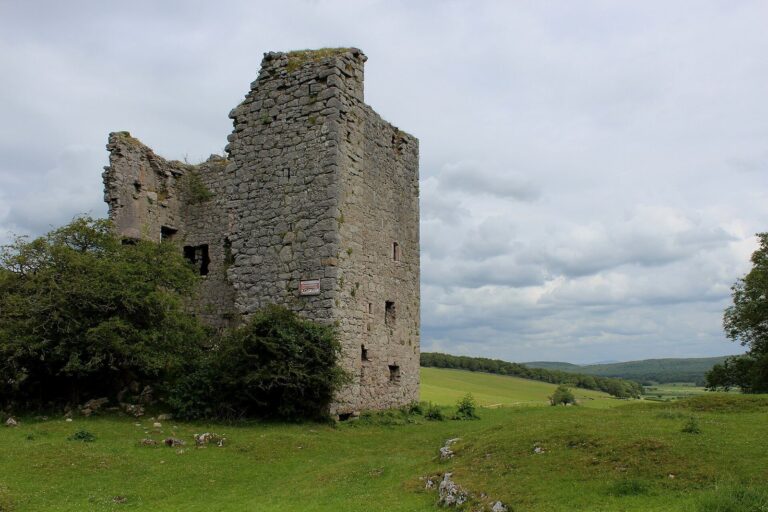
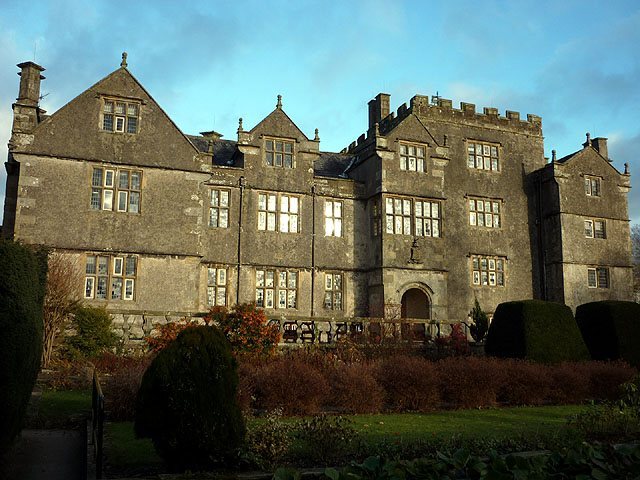
Borwick Hall is a historic manor house in the United Kingdom, with a surviving fourteenth-century pele tower, a fortified tower type associated with the Anglo-Scottish border region. The manor of Borwick appears in the Domesday Book, an eleventh-century survey of English landholding, among the estates of Roger of Poitou, a Norman nobleman.
The Bindlosse family
Roger Bindlosse purchased the Hall around 1590 and enlarged the tower into a manor house in the early 1590s, before his death in 1595. His son Robert inherited the estate and became High Sheriff of Lancashire, a senior county official, in 1615. Robert’s grandson, also named Robert, inherited after his father Francis died before his own father. He became a baronet, holder of a hereditary title, in 1641, was elected Member of Parliament for Lancashire in 1660, and served twice as High Sheriff. He also established a private oratory, a small place for prayer, on the estate.
Later owners and modern use
Robert died in 1688 without a male heir, ending the baronetcy. His only daughter Cecilia, who was married to William Standish, inherited the estate. After her death, it passed to a daughter who had married Thomas Strickland of the Sizergh family. In 1745, a Scottish soldier named Charlie MacDougal is believed to have died in the grounds after fighting among Scots returning from England with Bonnie Prince Charlie, the name commonly used for Charles Edward Stuart, leader of the 1745 Jacobite rising.
By the early nineteenth century the Hall had fallen into disrepair. The Stricklands sold it in 1854 to Colonel Marton of Capernwray for £28,000. Music critic John Alexander Fuller Maitland leased the building on the condition that it be restored, and repairs took place in 1911. The Hall served as a military base during the Second World War. Afterward, the estate was sold to the Lancashire Youth Clubs Association and later passed to Lancashire County Council, which uses it as a residential centre for outdoor activities and conferences.
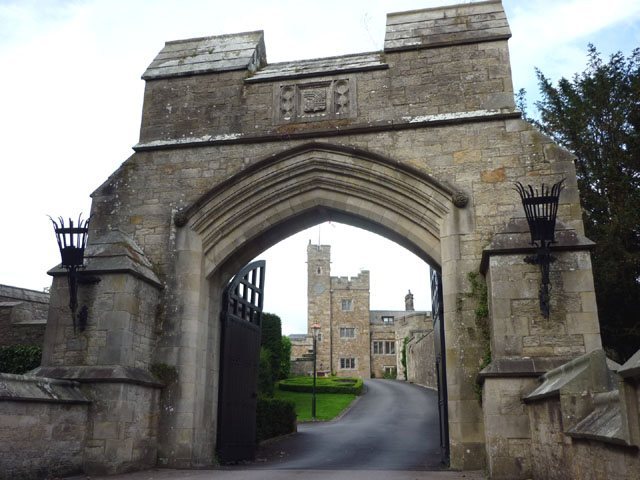
The Hall, gatehouse and stables have been Grade I listed since 1967, the highest English listing category for buildings of exceptional interest. The garden balustrade, barn, cottages, walls and gate have held Grade II status, for buildings of special interest, since 1983.
Remains
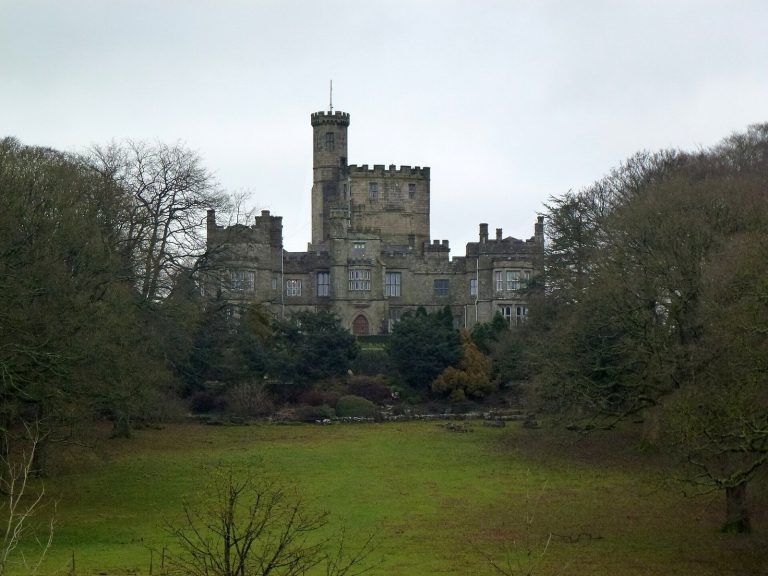
The stone house has a slate roof and brings together a four-storey tower, later extensions and a courtyard behind the building.
Tower and extensions
The tower dates to the fourteenth century. A five-bay addition was built on the north-west side in 1595, while extensions behind and to the right of the tower are thought to be earlier than that year. These additions form part of the house’s development from a fortified tower into a manor house.
Courtyard and principal rooms
The courtyard contains an open gallery known as a spinning gallery, a feature found commonly in the Lake District. Architectural historian Nikolaus Pevsner noted that no comparable example had been identified in a high-status building or so far south. The great hall has seventeenth-century wooden panelling, brought from elsewhere by Maitland during the 1911 restoration. At that time, the first-floor great chamber was remodelled as a library. Pevsner considered Borwick close in style and date to Levens Hall, while judging Borwick more accomplished architecturally.